


6 months 3 weeks ago
The Fathers of the Church can well afford to preach the gospel of Christ. It contains nothing dangerous to the regime of authority and wealth; it stands for self-denial and self-abnegation, for penance and regret, and is absolutely inert in the face of every indignity, every outrage imposed upon mankind.
8 months 1 week ago
My purpose is to explain, not the meaning of words, but the nature of things.
▼
Source
source
Part III, Def. XX
4 months 1 week ago
I have ever deemed it more honorable and profitable, too, to set a good example than to follow a bad one.
▼
Source
source
As quoted in The Life and Writings of Thomas Jefferson : Including All of His Important Utterances on Public Questions (1900) by Samuel E. Forman, p. 429

8 months 1 week ago
If you're certain, you're certainly wrong, because nothing deserves certainty.
▼
Source
source
Bertrand Russell Speaks His Mind (1960), p. 14 (video)
6 months 3 weeks ago
Forty years ago Germany proclaimed the slogan: "Germany above everything. Germany for the Germans, first, last and always. We want peace; therefore we must prepare for war. Only a well armed and thoroughly prepared nation can maintain peace, can command respect, can be sure of its national integrity." And Germany continued to prepare, thereby forcing the other nations to do the same. The terrible European war is only the culminating fruition of the hydra-headed gospel, military preparedness.

5 months ago
Enjoying things which are pleasant; that is not the evil: it is the reducing of our moral self to slavery by them that is.

8 months 1 week ago
Monsieur ... I do not believe in God; his existence has been disproved by Science. But in the concentration camp, I learned to believe in men.
5 months 4 days ago
Friendship ... flourishes not so much by kindnesses as by sincerity.
▼
Source
source
Part 3
8 months 1 week ago
The rules of logic are to mathematics what those of structure are to architecture.
6 months 3 weeks ago
Station, power, wealth-how inadequate they have proved! How useless and insecure!
5 months 3 days ago
All laws are... deduced from experiment; but to enunciate them, a special language is needful... ordinary language is too poor...This... is one reason why the physicist can not do without mathematics; it furnishes him the only language he can speak. And a well-made language is no indifferent thing;...the analyst, who pursues a purely esthetic aim, helps create, just by that, a language more fit to satisfy the physicist....law springs from experiment, but not immediately. Experiment is individual, the law deduced from it is general; experiment is only approximate, the law is precise...In a word, to get the law from experiment, it is necessary to generalize... But how generalize? ...in this choice what shall guide us?It can only be analogy. ...What has taught us to know the true profound analogies, those the eyes do not see but reason divines?It is the mathematical spirit, which disdains matter to cling only to pure form.
8 months 3 weeks ago
Yet God hath not only granted these faculties, by which we may bear every event without being depressed or broken by it, but like a good prince and a true father, hath placed their exercise above restraint, compulsion, or hindrance, and wholly within our own control.
▼
Source
source
Book I, ch. 6, 40.
6 months 2 weeks ago
The pleasures of the imagination are as it were only drawings and models which are played with by poor people who cannot afford the real thing.
▼
Source
source
C 38

7 months 2 days ago
Enter by the narrow gate; for wide is the gate and broad is the way that leads to destruction, and there are many who go in by it. Because narrow is the gate and difficult is the way which leads to life, and there are few who find it.
▼
Source
source
Matthew 7:13-14 (NKJV) (Also Luke 13:24)
6 months 3 weeks ago
A philosopher of imposing stature doesn't think in a vacuum. Even his most abstract ideas are, to some extent, conditioned by what is or is not known in the time when he lives.
▼
Source
source
Ch. 29, June 10, 1943.

8 months 4 days ago
It is understandable then that tragic heroes, unlike the baroque characters who had preceded them, could never be mad, and that inversely madness could never take on the tragic value we have known since Nietzsche and Artaud. In the classical epoch, tragic characters and the mad face each other without any possible dialogue or common language, for the one can only pronounce the decisive language of being, where the truth of light and the depths of night meet in a flash, and the other repeats endlessly an indifferent murmur where the empty chatter of the day is cancelled out by the deceptive lies of the shadows.
▼
Source
source
Part Two: 2. The Transcendence of Delirium


6 months 3 weeks ago
Hegel made famous his aphorism that all the rational is real and all the real rational; but there are many of us who, unconvinced by Hegel, continue to believe that the real, the really real, is irrational, that reason builds upon irrationalities. Hegel, a great framer of definitions, attempted with definitions to reconstruct the universe, like that artillery sergeant who said that cannon were made by taking a hole and enclosing it with steel.
7 months 1 week ago
They say in the grave there is peace, and peace and the grave are one and the same.
▼
Source
source
Act I.

6 months 3 weeks ago
A Pharisee is someone who is virtuous out of obedience to the Great Beast.
▼
Source
source
p. 125
8 months 1 week ago
Belief in God and a future life makes it possible to go through life with less of stoic courage than is needed by skeptics. A great many young people lose faith in these dogmas at an age at which despair is easy, and thus have to face a much more intense unhappiness than that which falls to the lot of those who have never had a religious upbringing. Christianity offers reasons for not fearing death or the universe, and in so doing it fails to teach adequately the virtue of courage. The craving for religious faith being largely an outcome of fear, the advocates of faith tend to think that certain kinds of fear are not to be deprecated. In this, to my mind, they are gravely mistaken. To allow oneself to entertain pleasant beliefs as a means of avoiding fear is not to live in the best way. In so far as religion makes its appeal to fear, it is lowering to human dignity.
▼
Source
source
p. 107
5 months ago
A million blockheads looking authoritatively into one man of what you call genius, or noble sense, will make nothing but nonsense out of him and his qualities, and his virtues and defects, if they look till the end of time. He understands them, sees what they are; but that they should understand him, and see with rounded outline what his limits are,-this, which would mean that they are bigger than he, is forever denied them. Their one good understanding of him is that they at last should loyally say, "We do not quite understand thee; we perceive thee to be nobler and wiser and bigger than we, and will loyally follow thee."


8 months 5 days ago
Freud's fanciful pseudo-explanations (precisely because they are brilliant) perform a disservice. (Now any ass has these pictures available to use in "explaining" symptoms of an illness).
▼
Source
source
p. 55e

5 months 4 days ago
I can die when I wish to: that is my elixir of life.
▼
Source
source
The Republic.

8 months 1 week ago
In the sphere of thought, absurdity and perversity remain the masters of the world, and their dominion is suspended only for brief periods.
▼
Source
source
"The Art of Controversy" as translated by T. Bailey Saunders

7 months 1 week ago
Justice was in all countries originally administered by the priesthood; nor indeed could laws in their first feeble state have either authority or sanction, so as to compel men to relinquish their natural independence, had they not appeared to come down to them enforced by beings of more than human power. The first openings of civility have been everywhere made by religion. Amongst the Romans, the custody and interpretation of the laws continued solely in the college of the pontiffs for above a century.
▼
Source
source
An Essay towards an Abridgment of English History (1757-c. 1763), quoted in The Works of the Right Honourable Edmund Burke, Vol. VI (1856), p. 196
6 months 2 weeks ago
To me, believing that some correspondence intrinsically just is reference (not as a result of our operational and theoretical constraints, or our intentions, but as an ultimate metaphysical fact) amounts to a magical theory of reference. Reference itself becomes what Locke called a 'substantial form' (an entity which intrinsically belongs with a certain name) on such a view. Even if one is willing to contemplate such unexplainable metaphysical facts, the epistemological problems that accompany such a metaphysical view seem insuperable. For, assuming a world of mind- independent, discourse-independent entities (this is the presupposition of the view we are discussing), there are, as we have seen, many different 'correspondences' which represent possible or candidate reference relations (infinitely many, in fact, if there are infinitely many things in the universe).
▼
Source
source
Chap. 2 : A problem about reference
4 months 1 week ago
'Induction' is a term applied to describe the 'process' of a true Colligation of Facts by means of an exact and appropriate Conception. 'An Induction' is also employed to denote the 'proposition' which results from this process. An Induction is not the mere sum of the Facts which are colligated. The Facts are not only brought together, but seen in a new point of view. 'The Consilience of Inductions' takes place when an Induction, obtained from one class of facts, coincides with an Induction, obtained from another different class.
6 months 3 weeks ago
The art of progress is to preserve order amid change, and to preserve change amid order.
8 months 1 week ago
Hatred comes from the heart; contempt from the head; and neither feeling is quite within our control.
▼
Source
source
"Psychological Observations"

8 months 1 week ago
Pray go back and recollect one of the conclusions to which I sought to lead you in my very first lecture. You may remember how I there argued against the notion that the worth of a thing can be decided by its origin. Our spiritual judgment, I said, our opinion of the significance and value of a human event or condition, must be decided on empirical grounds exclusively. If the fruits for life of the state of conversion are good, we ought to idealize and venerate it, even though it be a piece of natural psychology; if not, we ought to make short work of it, no matter what supernatural being may have infused it.
▼
Source
source
Lecture IX, "Conversion, concluded"
8 months 1 week ago
It is the duty of all who care for their country or for civilisation to point out that we cannot further any of our ideals by participation in the next war, and that we ought therefore to resist all measures based upon the assumption that we shall take part in it. In the late war it was arguable that victory, being possible, might do some good. With the modern technique of gas attack, no belligerent can hope for victory. Absolute pacifism, therefore, in every country, in which it is politically possible, is the only sane policy both for Governments and individuals.
▼
Source
source
Letter to The New Statesman and Nation (10 August 1935), quoted in Yours Faithfully, Bertrand Russell

7 months 1 week ago
There is nothing enduring, permanent, either in me or out of me, nothing but everlasting change. I know of no existence, not even of my own. I know nothing and am nothing. Images - pictures - only are, pictures which wander by without anything existing past which they wander, without any corresponding reality which they might represent, without significance and without aim. I myself am one of these images, or rather a confused image of these images. All reality is transformed into a strange dream, without a world of which the dream might be, or a mind that might dream it. Contemplation is a dream; thought, the source of all existence and of all that I fancied reality, of my own existence, my own capacities, is a dream of that dream.
▼
Source
source
Jane Sinnett, trans 1846 p. 60

7 months 2 weeks ago
It is proof of a base and low mind for one to wish to think with the masses or majority, merely because the majority is the majority. Truth does not change because it is, or is not, believed by a majority of the people.
▼
Source
source
Included as a quotation in The Great Quotations (1977) by George Seldes, p. 35
6 months 5 days ago
They are in you and me; they created us, body and mind; and their preservation is the ultimate rationale for our existence. They have come a long way, those replicators. Now they go by the name of genes, and we are their survival machines.
▼
Source
source
Ch. 2. The replicators
7 months 1 week ago
Example is the school of mankind, and they will learn at no other.
▼
Source
source
No. 1, volume v, p. 331
5 months ago
A man perfects himself by work much more than by reading.
4 months 1 week ago
The system of banking we have both equally and ever reprobated. I contemplate it as a blot left in all our constitutions, which, if not covered, will end in their destruction, which is already hit by the gamblers in corruption, and is sweeping away in its progress the fortunes and morals of our citizens.
6 months 3 weeks ago
By incestuous symbiosis is meant the tendency to stay tied to the mother and to her equivalents - blood, family, tribe - to fly from the unbearable weight of responsibility, of freedom, of awareness, and to be protected and loved in a state of certainty dependence that the individual pays for with the ceasing of his own human development.


8 months 2 weeks ago
A Christian has no need of any law in order to be saved, since through faith we are free from every law. Thus all the acts of a Christian are done spontaneously, out of a sense of pure liberty. As Christians we do not seek our own advantage or salvation because we are already fully satisfied and saved by God's grace through faith. Now our only motive is to do that which is pleasing to God.
▼
Source
source
pp. 75-76

8 months 1 week ago
"And I say also this. I do not think the forest would be so bright, nor the water so warm, nor love so sweet, if there were no danger in the lakes."
▼
Source
source
Hyoi, p. 76

4 months 6 days ago
Not to live as if you had endless years ahead of you. Death overshadows you. While you're alive and able-be good.
▼
Source
source
(Hays translation) IV, 17
8 months 1 week ago
As if there could be true stories: things happen in one way, and we retell them in the opposite way.
5 months 5 days ago
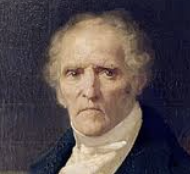
There was very little that prevented the vandalism of 1793 from suddenly producing a second revolution as marvelous as the first was horrible. The whole human race was approaching its release; the civilized, barbarian, and savage order would have disappeared forever if the Convention, which trampled down all prejudices, had not bowed down before the only one that had to be destroyed, the institution of marriage.
▼
Source
source
Charles Fourier: The Visionary and His World, J. Beecher (1986), p. 304-5
9 months 1 week ago
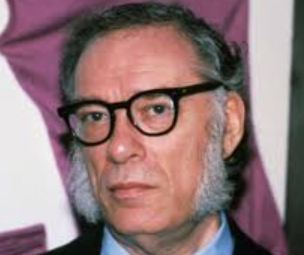
The Law of conservation of energy tells us we can't get something for nothing, but we refuse to believe it.
CivilSimian.com created by AxiomaticPanic, CivilSimian, Kalokagathia