

2 weeks 5 days ago
Use these rules then, and trouble thyself about nothing else.
▼
Source
source
X, 2


3 weeks 1 day ago
You will recollect that before the Revolution, Coke Littleton was the universal elementary book of law students, and a sounder Whig never wrote, nor of profounder learning in the orthodox doctrines of the British constitution, or in what were called English liberties. You remember also that our lawyers were then all Whigs. But when his black-letter text, and uncouth, but cunning learning got out of fashion, and the honeyed Mansfieldism of Blackstone became the students' hornbook, from that moment, that profession (the nursery of our Congress) began to slide into toryism, and nearly all the young brood of lawyers now are of that hue. They suppose themselves, indeed, to be Whigs, because they no longer know what Whigism or republicanism means.
▼
Source
source
Letter to James Madison (February 17, 1826), quoted in The Writings of Thomas Jefferson, Vol. XVI (1905; 1907), p. 156

3 months 3 weeks ago
Who knows whether the best of men be known, or whether there be not more remarkable persons forgot, than any that stand remembered in the known account of time? Without the favour of the everlasting register, the first man had been as unknown as the last, and Methuselah's long life had been his only chronicle.Oblivion is not to be hired. The greater part must be content to be as though they had not been, to be found in the register of God, not in the record of man. Twenty seven names make up the first story before the flood, and the recorded names ever since contain not one living century. The number of the dead long exceedeth all that shall live. The night of time far surpasseth the day, and who knows when was the Æquinox? Every hour adds unto that current arithmetick, which scarce stands one moment.
▼
Source
source
Chapter V

4 months 5 days ago
There are two sides to every question.
▼
Source
source
As quoted in Lives of Eminent Philosophers, by Diogenes Laërtius, Book IX, Sec. 51

2 months 2 weeks ago
Man in the electronic age has no possible environment except the globe and no possible occupation except information-gathering.
3 months 2 weeks ago
... I once shook hands with Longfellow at a garden party in 1881; and I often saw Dr. Holmes, who was our neighbor in Beacon Street: but Emerson I never saw.
▼
Source
source
p. 50
2 months 2 weeks ago
Where are these rational practices to be taught and acquired? Not within the four walls of a bare building, in which formality predominates... But in the nursery, play-ground, fields, gardens, workshops, manufactures, museums and class-rooms. ...The facts collected from all these sources will be concentrated, explained, discussed, made obvious to all, and shown in their direct application to practice in all the business of life.
▼
Source
source
3rd Part

1 month 2 weeks ago
When the general population no longer constitutes the armed forces, when the army is no longer the people in arms, then empires fall. Today all armies are again tending to become mercenary armies.
▼
Source
source
49

3 months 2 weeks ago
What pride to discover that nothing belongs to you - what a revelation.
5 months 3 weeks ago
I have gained this by philosophy ... I do without being ordered what some are constrained to do by their fear of the law.


2 weeks 5 days ago
Waste not the remnant of thy life in those imaginations touching other folk, whereby thou contributest not to the common weal.
▼
Source
source
III, 4
8 months 4 weeks ago
What is really disturbing about The Name of the Rose, however, is the underlying belief in the liberating, anti-totalitarain force of laughter, of ironic distance. Our thesis here is almost the exact opposite of the underlying premise of Eco's novel: in contemporary socities, democratic or totalitarian, that cynical distance, laughter, irony, are so to speak, part of the game. The ruling ideology is not meant to be taken seriously or literally. Perhaps the greatest danger for totalitarianism is people who take ideology seriously.
3 months 2 weeks ago
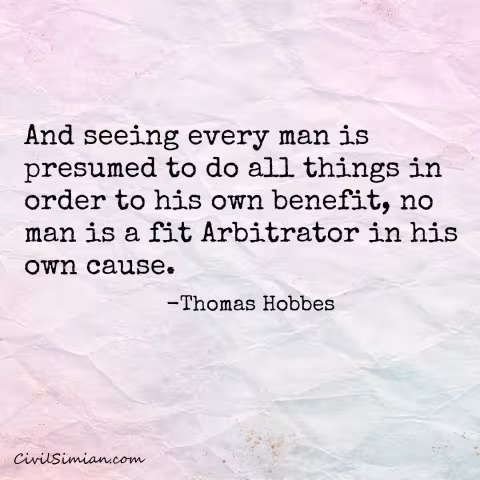
To resign oneself or to blow out one's brains, that is the choice one faces at certain moments. In any case, the only real dignity is that of exclusion.

4 months 3 weeks ago
We never have a full demonstration, although there is always an underlying reason for the truth, even if it is only perfectly understood by God, who alone penetrated the infinite series in one stroke of the mind.
▼
Source
source
The Shorter Leibniz Texts (2006) edited by Lloyd H. Strickland, p. 111

4 months 3 weeks ago
You must love the crust of the earth on which you dwell more than the sweet crust of any bread or cake; you must be able to extract nutriment out of a sand heap.
▼
Source
source
January 25, 1858

4 months 3 weeks ago
If the Communists conquered the world, it would be very unpleasant for a while, but not forever. But if the human race is wiped out, that is the end.
▼
Source
source
Television interview on March 24, 1958, as quoted in The United States in World Affairs (1959), p. 12
3 months 1 day ago
I am convinced we do not only love ourselves in others but hate ourselves in others too.
▼
Source
source
F 54

4 months 4 weeks ago
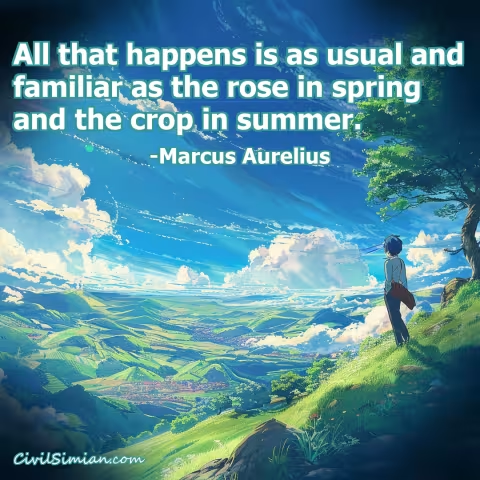
She [virtue] requires a rough and stormy passage; she will have either outward difficulties to wrestle with, ... or internal difficulties.
▼
Source
source
Book II, Ch. 11. Of Cruelty

1 month 1 week ago
We are to remember what an umpire Nature is; what a greatness, composure of depth and tolerance there is in her. You take wheat to cast into the Earth's bosom; your wheat may be mixed with chaff, chopped straw, barn-sweepings, dust and all imaginable rubbish; no matter: you cast it into the kind just Earth; she grows the wheat, - the whole rubbish she silently absorbs, shrouds it in, says nothing of the rubbish. The yellow wheat is growing there; the good Earth is silent about all the rest, - has silently turned all the rest to some benefit too, and makes no complaint about it! So everywhere in Nature! She is true and not a lie; and yet so great, and just, and motherly in her truth. She requires of a thing only that it be genuine of heart; she will protect it if so; will not, if not so. There is a soul of truth in all the things she ever gave harbor to. Alas, is not this the history of all highest Truth that comes or ever came into the world?
3 months 3 weeks ago
The most important subject, and the first problem of philosophy, is the restoration in man of the lost image of God; so far as this relates to science.Should this restoration in the internal consciousness be fully understood, and really brought about, the object of pure philosophy is attained.
1 month 2 weeks ago
But among all the discoveries and corrections probably none has resulted in a deeper influence on the human spirit than the doctrine of Copernicus.... Possibly mankind has never been demanded to do more, for considering all that went up in smoke as a result of realizing this change: a second Paradise, a world of innocence, poetry and piety: the witness of the senses, the conviction of a poetical and religious faith. No wonder his contemporaries did not wish to let all this go and offered every possible resistance to a doctrine which in its converts authorized and demanded a freedom of view and greatness of thought so far unknown indeed not even dreamed of.
▼
Source
source
Zur Farbenlehre, Materialien zur Geschichte der Farbenlehre (1810), Frankfurt am Main, 1991, Seite 666.
1 month ago
The best and most authentic reaction against feminism and against every other female aberration should not be aimed at women as such, but at men instead. It should not be expected of women that they return to what they really are and thus reestablish the necessary inner and outer conditions for a reintegration of a superior race, when men themselves retain only the semblance of true virility.
3 months 1 day ago
We accumulate our opinions at an age when our understanding is at its weakest.
▼
Source
source
H 4
2 months 3 weeks ago
Quite apart from assiduous efforts to restrict the use of violence as means rather than an end, the actualization of violence as a means can inadvertently become its own end, producing new violence, producing violence anew, reiterating the license, and licensing further violence. Violence does not exhaust itself in the realization of a just end; rather, it renews itself in directions that exceed both deliberate intention and instrumental schemes. In other words, by acting as if the use of violence can be a means to achieve a nonviolent end, one imagines that the practice of violence does not in the act posit violence as its own end. The technē is undermined by the praxis, and the use of violence only makes the world into a more violent place, by bringing more violence into the world.
▼
Source
source
p. 20
5 months 5 days ago
The whole title by which you possess your property, is not a title of nature but of a human institution.
3 months 2 weeks ago
Most men's conscience, habits, and opinions are borrowed from convention and gather continual comforting assurances from the same social consensus that originally suggested them.
▼
Source
source
Ch. VIII: Ideal Society

1 month 1 week ago
"What progress, you ask, have I made? I have begun to be a friend to myself." That was indeed a great benefit; such a person can never be alone. You may be sure that such a man is a friend to all mankind.
▼
Source
source
Seneca is quoting Hecato.

4 months 3 days ago
To use Virtue is perfect blessedness.
4 months 3 weeks ago
All the interests of my reason, speculative as well as practical, combine in the three following questions: 1. What can I know? 2. What ought I to do? 3. What may I hope?
▼
Source
source
B 832-833

4 months 3 weeks ago
The Quaestor turned back the pages until he found himself among the Pensées. "We are not satisfied," he read, "with the life we have in ourselves and our own being; we want to live an imaginary life in other people's idea of us. Hence all our efforts are directed to seeming what we are not. We labor incessantly to preserve and embellish this imaginary being, and neglect that which is really ours." The Quaestor put down the book, ... and ruefully reflected that all his own troubles had arisen from this desire to seem what in fact he was not. To seem a man of action, when in fact he was a contemplative; to seem a politician, when nature had made him an introspective psychologist; to seem a wit, which God had intended him for a sage.
▼
Source
source
"Variations on a Philosopher" in Themes and Variations (1943), p. 2
4 months 3 weeks ago
It is a political axiom that power follows property.
▼
Source
source
Chapter 12 (p. 113)
3 months 2 weeks ago
"Neither this world, nor the next, nor happiness are for the being abandoned to doubt." - This point in the Gita is my death sentence.
2 weeks 6 days ago
Wherever an altar is found, there civilization exists.
▼
Source
source
Original text:Partout où vous verrez un autel, là se trouve la civilisation. "Second Dialogue," p. 44
3 months 2 weeks ago
If to describe a misery were as easy to live through it!
2 months 4 days ago
No being can be what he is unless he is putting his essence into action in his field.
▼
Source
source
Vol. 3

3 months 3 weeks ago
The sky was horribly dark, but one could distinctly see tattered clouds, and between them fathomless black patches. Suddenly I noticed in one of these patches a star, and began watching it intently. That was because that star had given me an idea: I decided to kill myself that night.
3 months 3 weeks ago
Moderation is the spirit of castrated narrow-mindedness.
▼
Source
source
"Selected Aphorisms from the Athenaeum (1798)", Dialogue on Poetry and Literary Aphorisms, Ernst Behler and Roman Struc, trans. (Pennsylvania University Press:1968) #64
2 months 4 days ago
Compassion is the desire that moves the individual self to widen the scope of its self-concern to embrace the whole of the universal self.
▼
Source
source
The Toynbee-Ikeda Dialogue: Man Himself Must Choose
5 months 5 days ago
Rules necessary for axioms. Not to demand in axioms any but things perfectly evident.

4 months 3 weeks ago
It is sublime as night and a breathless ocean. It contains every religious sentiment, all the grand ethics, which visit in turn each noble poetic mind .... It is of no use to put away the book if I trust myself in the woods or in a boat upon the pond. Nature makes a Brahmin of me presently: eternal compensation, unfathomable power, unbroken silence .... This is her creed. Peace, she saith to me, and purity and absolute abandonment - these panaceas expiate all sin and bring you to the beatitude of the Eight Gods.
▼
Source
source
Quoted in Nani Ardeshir Palkhivala, India's Priceless Heritage, 1st ed. (Bombay: Bharatiya Vidya Bhavan, 1980) pp. 9-24
1 month 6 days ago
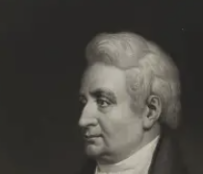
In the four quarters of the globe, who reads an American book? Or goes to an American play? or looks at an American picture or statue? What does the world yet owe to American physicians or surgeons? What new substances have their chemists discovered? Or what old ones have they advanced? What new constellations have been discovered by the telescopes of Americans? Who drinks out of American glasses? Or eats from American plates? Or wears American coats or gowns? or sleeps in American blankets? Finally, under which of the old tyrannical governments of Europe is every sixth man a slave, whom his fellow-creatures may buy and sell and torture?
▼
Source
source
Referring to the lack of established culture and the established institution of slavery in the United States, in "Review of Seybert's Annals of the United States", The Edinburgh Review (1820), pp. 79-80
2 months 1 week ago
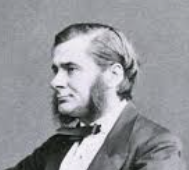
History warns us, however, that it is the customary fate of new truths to begin as heresies and to end as superstitions; and, as matters now stand, it is hardly rash to anticipate that, in another twenty years, the new generation, educated under the influences of the present day, will be in danger of accepting the main doctrines of the 'Origin of Species' with as little reflection, and it may be with as little justification, as so many of our contemporaries, twenty years ago, rejected them. Against any such a consummation let us all devoutly pray; for the scientific spirit is of more value than its products, and irrationally held truths may be more harmful than reasoned errors.
▼
Source
source
The Coming of Age of The Origin of Species (1880); Collected Essays, vol. 2
2 months 3 weeks ago
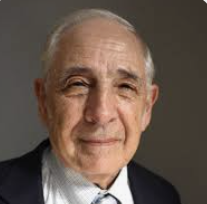
It seems to me obvious that infants and many animals that do not in any ordinary sense have a language or perform speech acts nonetheless have Intentional states. Only someone in the grip of a philosophical theory would deny that small babies can literally be said to want milk and that dogs want to be let out or believe that their master is at the door.
▼
Source
source
P. 5.
3 months 5 days ago
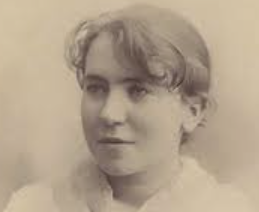
"What I believe" is a process rather than a finality. Finalities are for gods and governments, not for the human intellect. While it may be true that Herbert Spencer's formulation of liberty is the most important on the subject, as a political basis of society, yet life is something more than formulas. In the battle for freedom, as Ibsen has so well pointed out, it is the struggle for, not so much the attainment of, liberty, that develops all that is strongest, sturdiest and finest in human character.
4 months 3 weeks ago
Whatever my own practice may be, I have no doubt that it is a part of the destiny of the human race, in its gradual improvement, to leave off eating animals, as surely as the savage tribes have left off eating each other when they came in contact with the more civilized.
▼
Source
source
p. 245
CivilSimian.com created by AxiomaticPanic, CivilSimian, Kalokagathia