

2 months 2 weeks ago
Conservatism starts from a sentiment that all mature people can readily share: the sentiment that good things are easily destroyed, but not easily created. This is especially true of the good things that come to us as collective assets: peace, freedom, law, civility, public spirit, the security of property and family life, in all of which we depend on the cooperation of others while having no means singlehandedly to obtain it. In respect of such things, the work of destruction is quick, easy, and exhilarating; the work of creation slow, laborious, and dull. That is one of the lessons of the twentieth century. It is also one reason why conservatives suffer such a disadvantage when it comes to public opinion. Their position is true but boring, that of their opponents exciting but false.

4 months 4 weeks ago
We are no nearer heaven on the top of Mount Cenis than at the bottom of the sea; take the distance with your astrolabe. They debase God even to the carnal knowledge of women, to so many times, and so many generations.
▼
Source
source
Ch. 12
3 weeks 1 day ago
You are not a miserable and momentary body; behind your fleeting mask of clay, a thousand-year-old face lies in ambush. Your passions and your thoughts are older than your heart or brain.

3 months 3 weeks ago
Is there in the whole world a being who would have the right to forgive and could forgive? I don't want harmony. From love for humanity I don't want it. I would rather be left with the unavenged suffering. I would rather remain with my unavenged suffering and unsatisfied indignation, even if I were wrong. Besides, too high a price is asked for harmony; it's beyond our means to pay so much to enter on it. And so I hasten to give back my entrance ticket, and if I am an honest man I am bound to give it back as soon as possible. And that I am doing. It's not God that I don't accept, Alyosha, only I most respectfully return him the ticket.
▼
Source
source
Book II, Chapter 4: Rebellion (trans. Constance Garnett)

4 months 3 weeks ago
England's genius filled all measure Of heart and soul, of strength and pleasure, Gave to the mind its emperor, And life was larger than before: Nor sequent centuries could hit Orbit and sum of Shakespeare's wit. The men who lived with him became Poets, for the air was fame.
▼
Source
source
Solution, ll. 35-42

3 months 5 days ago
Rightness of limitation is essential for growth of reality.Unlimited possibility and abstract creativity can procure nothing. The limitation, and the basis arising from what is already actual, are both of them necessary and interconnected.
▼
Source
source
Religion in the Making (February 1926), Lecture IV: "Truth and Criticism".

4 months 3 weeks ago
Consumption is also immediately production, just as in nature the consumption of the elements and chemical substances is the production of the plant.
▼
Source
source
Introduction, p. 10.
4 months 4 weeks ago
Mother Mary, like us, was born in sin of sinful parents, but the Holy Spirit covered her, sanctified and purified her so that this child was born of flesh and blood, but not with sinful flesh and blood. The Holy Spirit permitted the Virgin Mary to remain a true, natural human being of flesh and blood, just as we. However, he warded off sin from her flesh and blood so that she became the mother of a pure child, not poisoned by sin as we are. For in that moment when she conceived, she was a holy mother filled with the Holy Spirit and her fruit is a holy pure fruit, at once God and truly man, in one person.
▼
Source
source
The Precious and Sacred Writings of Martin Luther (1905) edited by John Nicholas Lenker; republished as Sermons of Martin Luther (1996), p. 291
1 month 1 week ago
The subject of a gestalt demonstration knows that his perception has shifted because he can make it shift back and forth repeatedly while he holds the same book or piece of paper in his hands. Aware that nothing in his environment has changed, he directs his attention increasingly not to the figure (duck or rabbit) but to the lines of the paper he is looking at. Ultimately he may even learn to see those lines without seeing either of the figures, and he may then say (what he could not legitimately have said earlier) that it is these lines that he really sees but that he sees them alternately as a duck and as a rabbit. ...As in all similar psychological experiments, the effectiveness of the demonstration depends upon its being analyzable in this way. Unless there were an external standard with respect to which a switch of vision could be demonstrated, no conclusion about alternate perceptual possibilities could be drawn.
▼
Source
source
p. 114 (3rd edn.)

4 months 3 weeks ago
To some extent, mythology is only the most ancient history and biography. So far from being false or fabulous in the common sense, it contains only enduring and essential truth, the I and you, the here and there, the now and then, being omitted. Either time or rare wisdom writes it. Before printing was discovered, a century was equal to a thousand years. The poet is he who can write some pure mythology to-day without the aid of posterity.
4 months 4 days ago
There are two sides to every question.
▼
Source
source
As quoted in Lives of Eminent Philosophers, by Diogenes Laërtius, Book IX, Sec. 51
2 weeks 4 days ago
It is not given to a cylinder to move everywhere by its own motion, nor yet to water nor to fire nor to anything else which is governed by nature or an irrational soul, for the things which check them and stand in the way are many. But intelligence and reason are able to go through everything that opposes them, and in such manner as they are formed by nature and as they choose. Place before thy eyes this facility with which the reason will be carried through all things, as fire upwards, as a stone downwards, as a cylinder down an inclined surface, and seek for nothing further. For all other obstacles either affect the body only, which is a dead thing; or, except for opinion and the yielding of reason itself, they do not crush nor do any harm of any kind; for if they did, he who felt it would immediately become bad.
▼
Source
source
X, 33

3 months 2 weeks ago
No one should try to live if he has not completed his training as a victim.
4 months 2 weeks ago
It is a sign of wisdom to be able to use parrhesia without falling into the garrulousness of athuroglossos... One of the problems... how to distinguish that which must be said from that which should be kept silent.
2 months 4 weeks ago
Much early alchemy seems to have been adventure. You heated and mixed and burnt and pounded and to see what would happen. An adventure might suggest an hypothesis that can subsequently be tested, but adventure is prior to theory.
▼
Source
source
Chapter 4, Evidence, p. 36.
2 months 1 week ago
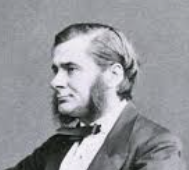
The consciousness of brutes would appear to be related to the mechanism of their body simply as a collateral product of its working, and to be as completely without any power of modifying that working as the steam-whistle which accompanies the work of a locomotive engine is without influence upon its machinery. Their volition, if they have any, is an emotion indicative of physical changes, not a cause of such changes.

3 months 1 week ago
Yes perhaps, as the Sage says, "nothing worthy of proving can be proven, nor yet disproven"; but can we restrain that instinct which urges man to wish to know, and above all to wish to know the things which conduce to life, to eternal life? Eternal life, not eternal knowledge as the Alexandrian gnostic said. For living is one thing and knowing is another; and... perhaps there is an opposition between the two that we may say that everything vital is anti-rational, not merely irrational, and that everything rational is anti-vital. And this is the basis of the tragic sense of life.
3 months 1 week ago
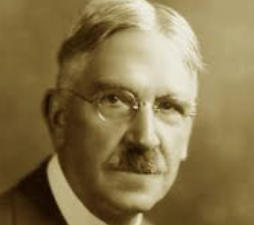
The determination of the mot juste, of the right incident in the right place, of exquisiteness of proportion, of the precise tone, hue, and shade that helps unify the whole while it defines a part, is accomplished by emotion. Not every emotion, however, can do this work, but only one informed by material that is grasped and gathered. Emotion is informed and carried forward when it is spent indirectly in search for material and in giving it order, not when it is directly expended.
▼
Source
source
p. 73
3 months 5 days ago
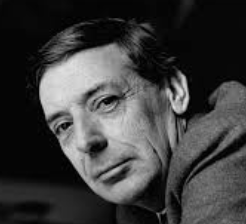
If the passion for truthfulness is merely controlled and stilled without being satisfied, it will kill the activities it is supposed to support. This may be one of the reasons why, at the present time, the study of the humanities runs a risk of sliding from professional seriousness, through professionalization, to a finally disenchanted careerism.
▼
Source
source
p. 3
3 months 1 week ago
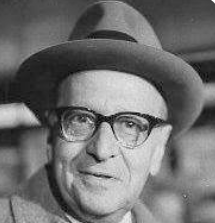
When even the dictators of today appeal to reason, they mean that they possess the most tanks. They were rational enough to build them; others should be rational enough to yield to them.
▼
Source
source
p. 28.
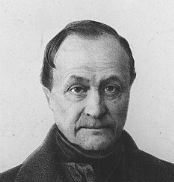
3 months 3 weeks ago
The object of all true Philosophy is to frame a system which shall comprehend human life under every aspect, social as well as individual. It embraces, therefore, the three kinds of phenomena of which our life consists, Thoughts, Feelings, and Actions.
▼
Source
source
p. 9

3 months 1 week ago
Have no fear, little flock, for your Father has approved of giving you the Kingdom.
▼
Source
source
12:32
3 months 2 weeks ago
Once man loses his faculty of indifference he becomes a potential murderer; once he transforms his idea into a god the consequences are incalculable. We kill only in the name of a god or of his counterfeits: the excesses provoked by the goddess Reason, by the concept of nation, class, or race are akin to those of the Inquisition or of the Reformation.

4 months 3 weeks ago
All registers which, it is acknowledged, ought to be kept secret, ought certainly never to exist.
▼
Source
source
Chapter II, Part II, Appendix to Articles I and II, p. 935.
4 months 3 weeks ago
Homeliness is almost as great a merit in a book as in a house, if the reader would abide there. It is next to beauty, and a very high art.
▼
Source
source
Pearls of Thought (1881) p. 32
4 months 3 weeks ago
In its beginnings, the credit system sneaks in as a modest helper of accumulation and draws by invisible threads the money resources scattered all over the surface of society into the hands of individual or associated capitalists. But soon it becomes a new and formidable weapon in the competitive struggle, and finally it transforms itself into an immense social mechanism for the centralisation of capitals.
▼
Source
source
Vol. I, Ch. 25, Section 2, pg. 687.

1 month 1 week ago
Men do reverence men. Men do worship in that 'one temple of the world,' as Novalis calls it, the Presence of a Man! Hero-worship, true and blessed, or else mistaken, false and accursed, goes on everywhere and everywhen. In this world there is one godlike thing, the essence of all that was or ever will be of godlike in this world: the veneration done to Human Worth by the hearts of men. Hero-worship, in the souls of the heroic, of the clear and wise,-it is the perpetual presence of Heaven in our poor Earth: when it is not there, Heaven is veiled from us; and all is under Heaven's ban and interdict, and there is no worship, or worthship, or worth or blessedness in the Earth any more!-
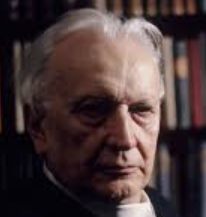
3 months 1 week ago
Rohde became more and more firmly bound to the bourgeois world, its institutions and accepted opinions. ... The contrast between the two natures makes Rohde and Nietzsche exemplary representatives of two distinctive worlds. In their youth they both live in the realm of boundless possibilities and feel an affinity through the exuberance of their noble aspirations. Subsequently they go in opposite directions. Nietzsche remains young, leaving concrete reality as his task assumes existential import. Rohde grows old, bourgeois, stable, and skeptical. Hence courage is a fundamental trait in Nietzsche, plaintive self-irony in Rohde. ... Rohde retained the interests but not the attitudes of his youth; he looked to the world of the Greeks for the object of his contemplation rather than the norm of obligation.
▼
Source
source
pp. 61-62



4 months 3 weeks ago
Fanaticism is the danger of the world, and always has been, and has done untold harm. I might almost say that I was fanatical against fanaticism.
▼
Source
source
The Future of Science (1959), p. 79; also in BBC The Listener, Vol. 61 (1959), p. 505

3 months 3 weeks ago
Where popular authority is absolute and unrestrained, the people have an infinitely greater, because a far better founded, confidence in their own power. They are themselves, in a great measure, their own instruments. They are nearer to their objects. Besides, they are less under responsibility to one of the greatest controlling powers on the earth, the sense of fame and estimation. The share of infamy that is likely to fall to the lot of each individual in public acts is small indeed; the operation of opinion being in the inverse ratio to the number of those who abuse power. Their own approbation of their own acts has to them the appearance of a public judgment in their favor. A perfect democracy is, therefore, the most shameless thing in the world. As it is the most shameless, it is also the most fearless. No man apprehends in his person that he can be made subject to punishment.

4 months 3 weeks ago
Actions may be laudable or blameable; but they cannot be reasonable: Laudable or blameable, therefore, are not the same with reasonable or unreasonable. The merit and demerit of actions frequently contradict, and sometimes controul our natural propensities. But reason has no such influence. Moral distinctions, therefore, are not the offspring of reason. Reason is wholly inactive, and can never be the source of so active a principle as conscience, or a sense of morals.
▼
Source
source
Part 1, Section 1
3 months 2 weeks ago
The surest means of not losing your mind on the spot: remembering that everything is unreal, and will remain so...

4 months 2 weeks ago
If we cannot "practice the presence of God," it is something to practice the absence of God, to become increasingly aware of our unawareness till we feel like man who should stand beside a great cataract and hear no noise, or like a man in a story who looks in a mirror and finds no face there, or a man in a dream who stretches his hand to visible objects and gets no sensation of touch. To know that one is dreaming is to no longer be perfectly asleep. Bur for news of the fully waking world you must go to my betters.
▼
Source
source
"Charity"
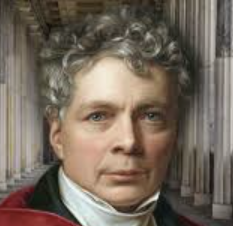
3 months 3 weeks ago
If the State, modeled after the universe, is split into two spheres or classes of beings - wherein the free represent the ideas and the unfree the concrete and sensate things - then the ultimate and uppermost order remains unrealized by both. By using sensate things as tools or organs, the ideas obtain a direct relationship to the apparitions and enter into them as souls. God, however, as identity of the highest order, remains above all reality and eternally has merely an indirect relationship. If then in the higher moral order the State represents a second nature, then the divine can never have anything other than an indirect relationship to it, never can it bear any real relationship to it, and religion, if it seeks to preserve itself in unscathed pure ideality, can therefore never exist - even in the most perfect State - other than esoterically in the form of mystery cults.
▼
Source
source
P. 51
1 month 1 week ago
Democracy, which means despair of finding any Heroes to govern you, and contented putting up with the want of them,-alas, thou too, mein Lieber, seest well how close it is of kin to Atheism, and other sad Isms: he who discovers no God whatever, how shall he discover Heroes, the visible Temples of God?
3 months 3 weeks ago
It cannot be denied that the early Indians possessed knowledge of God. All their writings are replete with sentiments and expressions, noble, clear, severely grand, as deeply conceived in any human language in which men have spoken of their God.
▼
Source
source
quoted in Knapp, Stephen Proof of Vedic Culture s Global Existence. Published byThe World Relief Network Detroit 2000. p. vii as quoted in Londhe, S. (2008)

4 months 3 weeks ago
I mean, a genuinely productive society. I mean you could produce plenty of goods without much freedom, but I think the whole sort of creative life of man is ultimately impossible without a considerable measure of individual freedom, of initiative, creation, all these things which we value, and I think value properly, are impossible without a large measure of freedom.
3 months 1 week ago
No system would have ever been framed if people had been simply interested in knowing what is true, whatever it may be. What produces systems is the interest in maintaining against all comers that some favourite or inherited idea of ours is sufficient and right.
4 months 1 week ago
Leading a human life is a full-time occupation, to which everyone devotes decades of intense concern.
▼
Source
source
"The Absurd" (1971), p. 15.
4 months 1 week ago
You may drive out Nature with a pitchfork, yet she still will hurry back.
▼
Source
source
Book I, epistle x, line 24
4 months 3 weeks ago
Ideas do not exist separately from language.
▼
Source
source
Notebook I, The Chapter on Money, p. 83.
4 months 2 weeks ago
Ideal legislators do not vote their interests.
▼
Source
source
Chapter V, Section 43, p. 284
4 months 2 weeks ago
My intention was not to deal with the problem of truth, but with the problem of the truth-teller, or of truth telling... [W]ho is able to tell the truth, about what, with what consequences, and with what relations to power. ...[W]ith the question of the importance of telling the truth, knowing who is able to tell the truth, and knowing why we should tell the truth, we have the roots of what we could call the 'critical' tradition in the West.

4 months 3 weeks ago
The union of the mathematician with the poet, fervor with measure, passion with correctness, this surely is the ideal.
▼
Source
source
Ch. 11 - Clifford's Lectures and Essays, 1879

3 weeks ago
We might as well say that the Newtonian system of philosophy is a part of the common law, as that the Christian religion is. The truth is that Christianity and Newtonianism being reason and verity itself, in the opinion of all but infidels and Cartesians, they are protected under the wings of the common law from the dominion of other sects, but not erected into dominion over them.
▼
Source
source
To Dr. Thomas Cooper Monticello, February 10, 1814
3 weeks ago
A whale is not a fish in natural history, but it is a fish in commerce and law. A plea that human laws which mention fish do not apply to whales, would be rejected at once by an intelligent judge.
3 months 1 week ago
As in the presence of the Master, the Servants are equall, and without any honour at all; So are the Subjects, in the presence of the Soveraign. And though they shine some more, some lesse, when they are out of his sight; yet in his presence, they shine no more than the Starres in presence of the Sun.
▼
Source
source
The Second Part, Chapter 18, p. 93
3 months 3 weeks ago
The recognition of the light of reality within the darkness of abstraction is a contradiction - both the affirmation and the negation of the real at one and the same time. The new philosophy, which thinks the concrete not in an abstract but a concrete way, which acknowledges the real in its reality - that is, in a way corresponding to the being of the real as true, which elevates it into the principle and object of philosophy - is consequently the truth of the Hegelian philosophy, indeed of modern philosophy as a whole.
▼
Source
source
Part III, Section 31
CivilSimian.com created by AxiomaticPanic, CivilSimian, Kalokagathia