

1 month 6 days ago
[U]nlike positive utilitarianism or so-called preference utilitarianism - neither of which can ever be wholly fulfilled - [negative utilitarianism] seems achievable in full.
▼
Source
source
The Pinprick Argument, BLTC Research, 2005

3 months 4 weeks ago
Good nature is, of all moral qualities, the one that the world needs most, and good nature is the result of ease and security, not of a life of arduous struggle. Modern methods of production have given us the possibility of ease and security for all; we have chosen, instead, to have overwork for some and starvation for the others. Hitherto we have continued to be as energetic as we were before there were machines; in this we have been foolish, but there is no reason to go on being foolish for ever.
▼
Source
source
Ch. 1: In Praise of Idleness

3 months 3 days ago
He who discommendeth others obliquely commendeth himself.
▼
Source
source
Part I, Section XXXIV

1 week 5 days ago
Would you know what makes men greedy for the future? It is because no one has yet found himself.

3 months 3 weeks ago
A utopia of judicial reticence: take away life, but prevent the patient from feeling it; deprive the prisoner of all rights, but do not inflict pain; impose penalties free of all pain. Recourse to psycho-pharmacology and to various physiological 'disconnectors', even if it is temporary, is a logical consequence of this 'non-corporal' penalty.
▼
Source
source
Chapter One, The Spectacle of the Scaffold
3 months 4 weeks ago
Acquisitiveness - the wish to possess as much as possible of goods, or the title to goods - is a motive which, I suppose, has its origin in a combination of fear with the desire for necessaries.

2 months 1 week ago
In a general way, the literature of the twentieth century is essentially psychological; and psychology consists of describing states of the soul by displaying them all on the same plane, without any discrimination of value, as though good and evil were external to them, as though the effort toward the good could be absent at any moment from the thought of any man.
▼
Source
source
"The responsibility of writers," p. 168

2 weeks 4 days ago
Blessed is he who has found his work; let him ask no other blessedness.
▼
Source
source
Bk. III, ch. 11.
3 months 4 weeks ago
The camera is as subjective as we are.
▼
Source
source
An Outline of Philosophy Ch.15 The Nature of our Knowledge of Physics, 1927

2 months 4 weeks ago
There is a boundary to men's passions when they act from feeling; none when they are under the influence of imagination.
▼
Source
source
p. 460

3 months 3 weeks ago
I wish to write such rhymes as shall not suggest a restraint, but contrariwise the wildest freedom.
▼
Source
source
June 27, 1839

1 month 3 weeks ago
It is perhaps typical of very creative minds that they hit very large nails not quite on the head.
▼
Source
source
Kenneth Boulding in McLuhan: Hot & Cool (1967) p. 68



4 months ago
Our island is this earth; and the most striking object we behold is the sun. As soon as we pass beyond our immediate surroundings, one or both of these must meet our eye. Thus the philosophy of most savage races is mainly directed to imaginary divisions of the earth or to the divinity of the sun.
2 months 2 weeks ago
It is not a question of the mass-man being a fool. On the contrary, to-day he is more clever, has more capacity of understanding than his fellow of any previous period. But that capacity is of no use to him; in reality, the vague feeling that he possesses it seems only to shut him up more within himself and keep him from using it. Once for all, he accepts the stock of commonplaces, prejudices, fag-ends of ideas or simply empty words which chance has piled up within his mind, and with a boldness only explicable by his ingenuousness, is prepared to impose them everywhere.... Why should he listen if he has within him all that is necessary? There is no reason now for listening, but rather for judging, pronouncing, deciding. There is no question concerning public life, in which he does not intervene, blind and deaf as he is, imposing his "opinions."
▼
Source
source
Chap. VIII: The Masses Intervene In Everything, And Why Their Intervention Is Solely By Violence

3 months 3 weeks ago
The live dead-man is dead as a producer and alive insofar as he consumes.
▼
Source
source
p. 139

2 months 2 weeks ago
Resignation' is a keynote in Comte's writings, deriving directly from assent to invariable social laws. 'True resignation, that is, a disposition to endure necessary evils steadfastly and without any hope of compensation therefore, can result only from a profound feeling for the invariable laws that govern the variety of natural phenomena.
▼
Source
source
P. 345
2 weeks 4 days ago
This Burns appeared under every disadvantage: uninstructed, poor, born only to hard manual toil; and writing, when it came to that, in a rustic special dialect, known only to a small province of the country he lived in. Had he written, even what he did write, in the general language of England, I doubt not he had already become universally recognized as being, or capable to be, one of our greatest men.
2 months 4 weeks ago
Justice was in all countries originally administered by the priesthood; nor indeed could laws in their first feeble state have either authority or sanction, so as to compel men to relinquish their natural independence, had they not appeared to come down to them enforced by beings of more than human power. The first openings of civility have been everywhere made by religion. Amongst the Romans, the custody and interpretation of the laws continued solely in the college of the pontiffs for above a century.
▼
Source
source
An Essay towards an Abridgment of English History (1757-c. 1763), quoted in The Works of the Right Honourable Edmund Burke, Vol. VI (1856), p. 196
2 months 2 weeks ago
Even the most elevated psychological understanding is not a loving understanding.
4 months 5 days ago
Now I say this to keep the conscience free from mischievous laws and fictitious sins, and not because I would defend images. Nor would I condemn those who have destroyed them, especially those who destroy divine and idolatrous images. But images for memorial and witness, such as crucifixes and images of saints, are to be tolerated.
▼
Source
source
p. 91

2 months 3 weeks ago
Great joys, why do they bring us sadness? Because there remains from these excesses only a feeling of irrevocable loss and desertion which reaches a high degree of negative intensity. At such moments, instead of a gain, one keenly feels loss. sadness accompanies all those events in which life expends itself. its intensity is equal to its loss. Thus death causes the greatest sadness.
3 weeks 3 days ago
In places where men are used to differences they inevitably become tolerant.
▼
Source
source
Ch. IV: "The Line of Least Resistance", p. 52
2 months ago
The student should have enough knowledge of his or her cultural tradition to know how it got to be the way it is. This involves both political and social history, on the one hand, as well as the mastery of some of the great philosophical and literary texts of the culture on the other. It involves reading not only texts that are of great value, like those of Plato, but many less valuable that have been influential, such as the works of Marx. For the United States, the dominant tradition is, and for the foreseeable future, will remain the European tradition. The United States is, after all, a product of the European Enlightenment. However, you do not understand your own tradition if you do not see it in relation to others. Works from other cultural traditions need to be studied as well.
3 months 3 weeks ago
What makes it so plausible to assume that hypocrisy is the vice of vices is that integrity can indeed exist under the cover of all other vices except this one. Only crime and the criminal, it is true, confront us with the perplexity of radical evil; but only the hypocrite is really rotten to the core.
▼
Source
source
On Revolution (1963), ch. 2

4 months 3 weeks ago
It is no one's privilege to despise another. It is only a hard-won right after long experience.

4 months 5 days ago
Arts and sciences are not cast in a mould, but are formed and perfected by degrees, by often handling and polishing, as bears leisurely lick their cubs into form.
▼
Source
source
Book II, Ch. 12. Apology for Raimond Sebond
3 months 3 weeks ago
The impulse to take life strivingly is indestructible in the race.
▼
Source
source
Ch. 21
3 months 4 weeks ago
All's well that ends well; which is the epitaph I should put on my tombstone if I were the last man left alive.
▼
Source
source
Letter to Lucy Donnely, April 22, 1906
1 week 5 days ago
Would not anyone who is a man have his slumbers broken by a war-trumpet rather than by a chorus of serenaders?
2 months 3 weeks ago
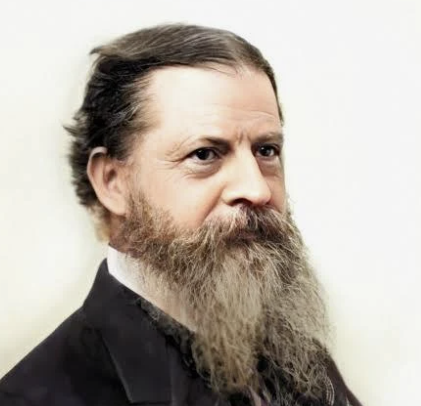
The idea does not belong to the soul; it is the soul that belongs to the idea.
▼
Source
source
Vol. I, par. 216
3 months 3 weeks ago
Freedom is only necessity understood.
▼
Source
source
The Dilemma of Determinism, 1884
1 week 1 day ago
A work of art bears within itself its own verification: conceptions which are devised or stretched do not stand being portrayed in images, they all come crashing down, appear sickly and pale, convince no one. But those works of art which have scooped up the truth and presented it to us as a living force - they take hold of us, compel us, and nobody ever, not even in ages to come, will appear to refute them.

2 months 1 week ago
Violence may capture space, but it does not create space.
3 months 3 weeks ago
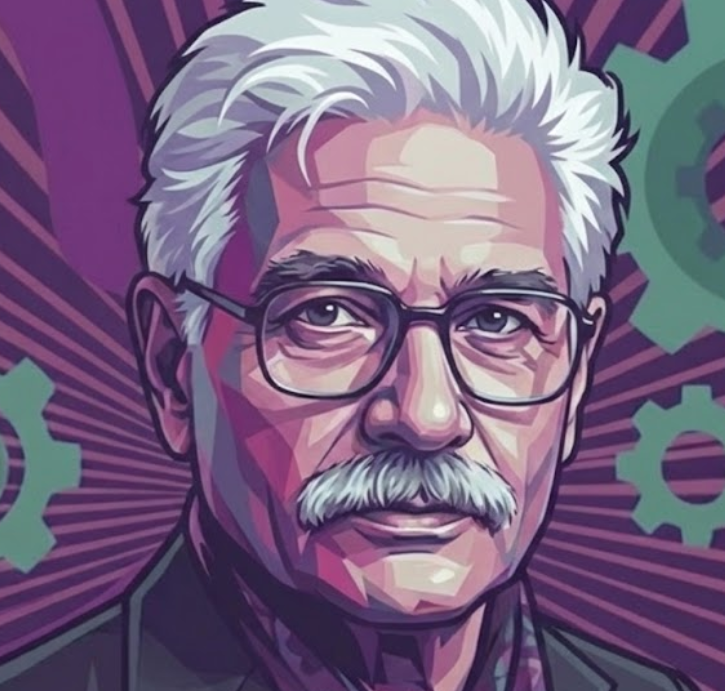
By virtue of its innermost intention, and like all questions about language, structuralism escapes the classical history of ideas which already supposes structuralism's possibility, for the latter naively belongs to the province of language and propounds itself within it.Nevertheless, by virtue of an irreducible region of irreflection and spontaneity within it, by virtue of the essential shadow of the undeclared, the structuralist phenomenon will deserve examination by the historian of ideas. For better or for worse. Everything within this phenomenon that does not in itself transparently belong to the question of the sign will merit this scrutiny; as will everything within it that is methodologically effective, thereby possessing the kind of infallibil-ity now ascribed to sleepwalkers and formerly attributed to instinct, which was said to be as certain as it was blind.
▼
Source
source
Force and Signification
3 months 4 weeks ago
That I, a funny little gesticulating animal on two legs, should stand beneath the stars and declaim in a passion about my rights - it seems so laughable, so out of all proportion. Much better, like Archimedes, to be killed because of absorption in eternal things... There is a possibility in human minds of something mysterious as the night-wind, deep as the sea, calm as the stars, and strong as Death, a mystic contemplation, the "intellectual love of God." Those who have known it cannot believe in wars any longer, or in any kind of hot struggle. If I could give to others what has come to me in this way, I could make them too feel the futility of fighting. But I do not know how to communicate it: when I speak, they stare, applaud, or smile, but do not understand.
▼
Source
source
Letter to Miss Rinder, July 30, 1918

3 months 4 weeks ago
The law of gravity thus asserts itself when a house falls about our ears.
▼
Source
source
Vol. I, Ch. 1, Section 4, pg. 86.
2 months 2 weeks ago
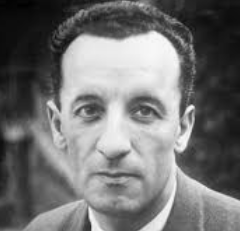
Hardness and softness, roughness and smoothness, moonlight and sunlight present themselves in our recollection not preeminently as sensory contents but as certain kinds of symbioses, certain ways outside has of invading us and certain ways we have of meets this invasion...
▼
Source
source
p. 317

5 months ago
Art furnishes us with eyes and hands and above all the good conscience to be able to turn ourselves into such a phenomenon.
1 week 5 days ago
Let every man be occupied, and occupied in the highest employment of which his nature is capable, and die with the consciousness that he has done his best.
▼
Source
source
Vol. I, ch. 6, "Of Occupation", p. 178
3 weeks 3 days ago
News and truth are not the same thing and must be clearly distinguished. The function of news is to signalize an event, the function of truth is to bring to light the hidden facts, to set them into relation with each other, and make a picture of reality on which men can act. Only at those points, where social conditions take recognizable and measurable shape, do the body of truth and the body of news coincide.
▼
Source
source
Ch. XXIV: "News, Truth, and a Conclusion", p. 358 The clause in bold is sometimes quoted on its own in the form, "The news and the truth are not the same thing."
4 months 4 weeks ago
Every art, and every system, and in like manner every action and purpose aims, it is thought, at some good; for which reason a common and by no means a bad description of the good is, that at which all things aim.
2 months 2 weeks ago
Progress, far from consisting in change, depends on retentiveness. When change is absolute there remains no being to improve and no direction is set for possible improvement: and when experience is not retained, as among savages, infancy is perpetual. Those who cannot remember the past are condemned to repeat it. This famous statement has produced many paraphrases and variants: Those who cannot learn from history are doomed to repeat it. Those who do not remember their past are condemned to repeat their mistakes. Those who do not read history are doomed to repeat it. Those who fail to learn from the mistakes of their predecessors are destined to repeat them. Those who do not know history's mistakes are doomed to repeat them.
▼
Source
source
There is a similar quote by Edmund Burke (in Revolution in France) that often leads to misattribution: "People will not look forward to posterity, who never look backward to their ancestors."
4 months 2 weeks ago
When one cultivates to the utmost the principles of his nature, and exercises them on the principle of reciprocity, he is not far from the path. What you do not like when done to yourself, do not do to others.

2 months 4 weeks ago
All is in a man's hands and he lets it all slip from cowardice, that's an axiom. It would be interesting to know what it is men are most afraid of. Taking a new step, uttering a new word is what they fear most. Variant translation: "Taking a new step, uttering a new word, is what people fear most."
3 months 2 weeks ago
Those who claim to care about the wellbeing of human beings and the preservation of our environment should become vegetarians for that reason alone. They would thereby increase the amount of grain available to feed people elsewhere, reduce pollution, save water and energy, and cease contributing to the clearing of forests; moreover, since a vegetarian diet is cheaper than one based on meat dishes, they would have more money available to devote to famine relief, population control, or whatever social or political cause they thought most urgent. ... when nonvegetarians say that "human problems come first" I cannot help wondering what exactly it is that they are doing for human beings that compels them to continue to support the wasteful, ruthless exploitation of farm animals.
▼
Source
source
Ch. 6: Speciesism Today
3 months 3 weeks ago
His heart was as great as the world, but there was no room in it to hold the memory of a wrong.
▼
Source
source
Greatness
2 months 2 weeks ago
The range of socially permissible and desirable satisfaction is greatly enlarged, but through this satisfaction, the Pleasure Principle is reduced-deprived of the claims which are irreconcilable with the established society. Pleasure, thus adjusted, generates submission.
▼
Source
source
p. 75
CivilSimian.com created by AxiomaticPanic, CivilSimian, Kalokagathia