


4 months 1 week ago
By Thy perfect Intelligence, O MazdaThou didst first create us having bodies and spiritual consciences,And by Thy Thought gave our selves the power of thought, word, and deed.Thus leaving us free to choose our faith at our own will.
▼
Source
source
Ahunuvaiti Gatha; Yasna 31, 11.
4 months 3 weeks ago
Thus, all unknown quantities can be expressed in terms of a single quantity, whenever the problem can be constructed by means of circles and straight lines, or by conic sections, or even by some other curve of degree not greater than the third or fourth.But I shall not stop to explain this in more detail, because I should deprive you of the pleasure of mastering it yourself, as well as of the advantage of training your mind by working over it, which is in my opinion the principal benefit to be derived from this science. Because, I find nothing here so difficult that it cannot be worked out by anyone at all familiar with ordinary geometry and with algebra, who will consider carefully all that is set forth in this treatise.
▼
Source
source
First Book

3 months 1 week ago
Behold, we go up to Jerusalem; and the Son of man shall be betrayed unto the chief priests and unto the scribes, and they shall condemn him to death, And shall deliver him to the Gentiles to mock, and to scourge, and to crucify him: and the third day he shall rise again.
▼
Source
source
20:18-19 (KJV)

4 months 3 weeks ago
This actual world of what is knowable, in which we are and which is in us, remains both the material and the limit of our consideration.
▼
Source
source
Vol I, Ch. 4, The World As Will: Second Aspect, § 53, as translated by Eric F. J. Payne, 1958

4 months 2 weeks ago
Every explanation is after all an hypothesis.
▼
Source
source
Ch. 7 : Remarks on Frazer's Golden Bough, p. 123
2 weeks 6 days ago
To SEE and accept the boundaries of the human mind without vain rebellion, and in these severe limitations to work ceaselessly without protest - this is where man's first duty lies.

3 months 2 weeks ago
Truths begin by a conflict with the police - and end by calling them in.

4 months 2 weeks ago
I think people who are unhappy are always proud of being so, and therefore do not like to be told that there is nothing grand about their unhappiness. A man who is melancholy because lack of exercise has upset his liver always believes that it is the loss of God, or the menace of Bolshevism, or some such dignified cause that makes him sad. When you tell people that happiness is a simple matter, they get annoyed with you.
▼
Source
source
Letter to W. W. Norton, 17 February, 1931

4 months 3 weeks ago
We are, I know not how, double in ourselves, which is the cause that what we believe we do not believe, and cannot disengage ourselves from what we condemn.
▼
Source
source
Ch. 16. Of Glory, tr. Cotton, rev. W. Carew Hazlitt, 1877
2 weeks 4 days ago
The equation state = politics becomes erroneous and deceptive at exactly the moment when state and society penetrate each other.
2 months 2 weeks ago
When things fall out opportunely for the person concerned, he is not apt to be critical about the how or why, his own immediate personal convenience seeming a sufficient reason for the strangest oddities and revolutions in our sublunary things.
▼
Source
source
The Sire de Maletroit's Door.
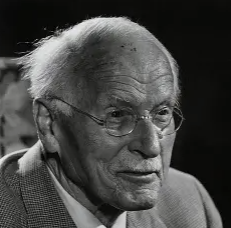
3 months 2 weeks ago
Why is psychology the youngest of the empirical sciences? Why have we not long since discovered the unconscious and raised up its treasure-house of eternal images? Simply because we had a religious formula for everything psychic - and one that is far more beautiful and comprehensive than immediate experience. Though the Christian view of the world has paled for many people, the symbolic treasure-rooms of the East are still full of marvels that can nourish for a long time to come the passion for show and new clothes. What is more, these images - be they Christian or Buddhist or what you will - are lovely, mysterious, richly intuitive.
▼
Source
source
p. 7-8


3 months 2 weeks ago
What is that one crucifixion compared to the daily kind any insomniac endures?
3 months 2 weeks ago
Once we begin to want, we fall under the jurisdiction of the Devil.
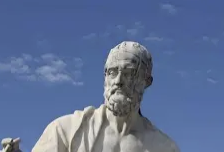
1 month 1 week ago
How highly should we honor the Macedonians, who for the greater part of their lives never cease from fighting with the barbarians for the sake of the security of Greece? For who is not aware that Greece would have constantly stood in the greater danger, had we not been fenced by the Macedonians and the honorable ambition of their kings?
▼
Source
source
Histories, IX, 35:2 (Loeb)

3 months 2 weeks ago
Men who undertake considerable things, even in a regular way, ought to give us ground to presume ability.

2 weeks 3 days ago
There comes up another difficulty which more nearly concerns our vanity: namely, the impossibility of our conceiving this property [the faculty of feeling] as a dependence or attribute of matter.
▼
Source
source
Ch. VI Concerning the Sensitive Faculty of Matter
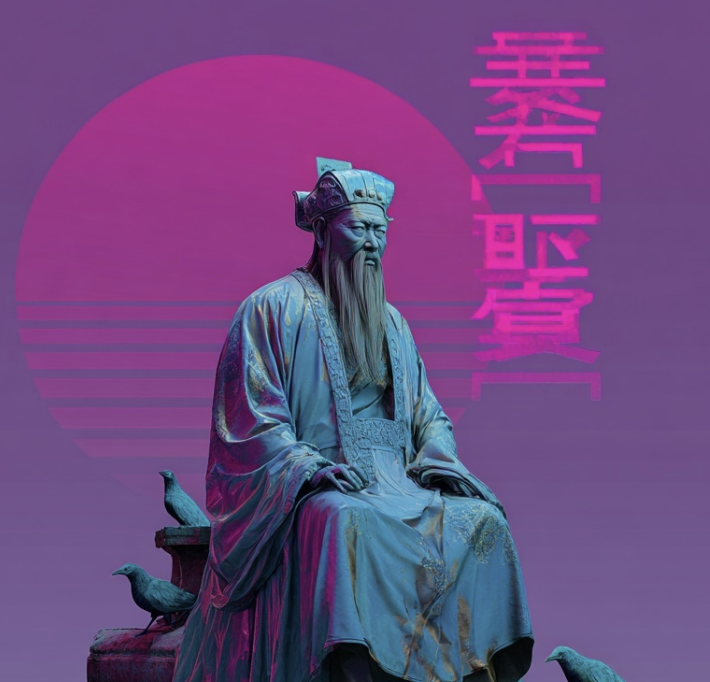
5 months 1 week ago
The superior man is satisfied and composed; the mean man is always full of distress. The virtuous is frank and open; the non-virtuous is secretive and worrying.

5 months 2 weeks ago
Lord Jesus Christ, our foolish minds are weak; they are more than willing to be drawn-and there is so much that wants to draw us to itself. There is pleasure with its seductive power, the multiplicity with its bewildering distractions, the moment with its infatuating importance and the conceited laboriousness of busyness and the careless time-wasting of light-mindedness and the gloomy brooding of heavy-mindedness-all this will draw us away from ourselves to itself in order to deceive us. But you, who are truth, only you, our Savior and Redeemer, can truly draw a person to yourself, which you have promised to do-that you will draw all to yourself. Then may God grant that by repenting we may come to ourselves, so that you, according to your Word, can draw us to yourself-from on high, but through lowliness and abasement.

4 months 2 weeks ago
Did you not read our articles about the June revolution, and was not the essence of the June revolution the essence of our paper? Why then your hypocritical phrases, your attempt to find an impossible pretext? We have no compassion and we ask no compassion from you. When our turn comes, we shall not make excuses for the terror. But the royal terrorists, the terrorists by the grace of God and the law, are in practice brutal, disdainful, and mean, in theory cowardly, secretive, and deceitful, and in both respects disreputable.
▼
Source
source
The final issue of Neue Rheinische Zeitung (18 May 1849)''Marx-Engels Gesamt-Ausgabe, Vol. VI, p. 503

4 months 3 weeks ago
A merchant, it has been said very properly, is not necessarily the citizen of any particular country.
▼
Source
source
Chapter IV, p. 456.
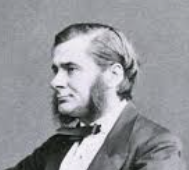
2 months 5 days ago
The great end of life is not knowledge but action.
▼
Source
source
"Technical Education"

3 months 2 weeks ago
A character is a completely fashioned will.
▼
Source
source
(vollkommen gebildeter Wille).
2 months 5 days ago
I am too much of a sceptic to deny the possibility of anything - especially as I am now so much occupied with theology - but I don't see my way to your conclusion.
▼
Source
source
Letter to Herbert Spencer (22 March 1886); this is often quoted with a variant spelling as: I am too much of a skeptic to deny the possibility of anything.
3 months 2 weeks ago
Public life is a situation of power and energy; he trespasses against his duty who sleeps upon his watch, as well as he that goes over to the enemy.
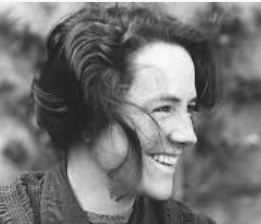
2 months 2 days ago
Lost time was like a run in a stocking. It always got worse.
▼
Source
source
The Steep Ascent
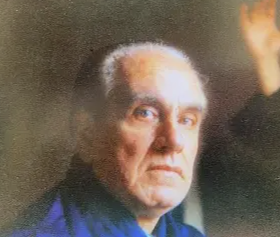
4 weeks ago
Not being able to ban sexuality altogether, Catholicism has tried to reduce it to a mere biological fact, allowing its use in marriage only for procreation. Unlike certain ancient traditions, Catholicism has recognized no higher value, not even a potential one, in the sexual experience taken in itself. There is lacking any basis for its transformation in the interests of a more intense life, to integrate and elevate the inner tension of two beings of different sexes, whereas it is in exactly these terms that one should conceive of a concrete "sacralization" of the union and the effect of a higher influence involved in the rite.
▼
Source
source
p. 190

4 months 2 weeks ago
Those things which now most engage the attention of men, as politics and the daily routine, are, it is true, vital functions of human society, but should be unconsciously performed, like the corresponding functions of the physical body. They are infra-human, a kind of vegetation. I sometimes awake to a half-consciousness of them going on about me, as a man may become conscious of some of the processes of digestion in a morbid state, and so have the dyspepsia, as it is called.
▼
Source
source
p. 495
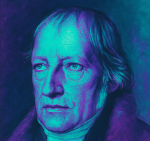
4 months 2 weeks ago
The inclination to act as the laws command, a virtue, is a synthesis in which the law ... loses its universality and the subject its particularity; both lose their opposition, while in the Kantian conception of virtue this opposition remains, and the universal becomes the master and the particular the mastered.
3 months 1 week ago
Answers determined by the social division of labor become truth as such.
▼
Source
source
p. 50: Describing the pragmatist view
2 months 4 weeks ago
Whereas economic man maximizes - selects the best alternative from among all those available to him, his cousin, administrative man, satisfices - looks for a course of action that is satisfactory or "good enough."
▼
Source
source
p. xxix.
3 months 1 week ago
The repose of sleep refreshes only the body. It rarely sets the soul at rest. The repose of the night does not belong to us. It is not the possession of our being. Sleep opens within us an inn for phantoms. In the morning we must sweep out the shadows.
▼
Source
source
Ch. 2, sect. 3

4 months 2 weeks ago
In Plato... or Xenophon... we never see Socrates requiring... examination of conscience or... confession of sins. An account of your life, your bios, is... not to give... the historical events... but... to demonstrate whether you are able to show... a relation between the rational discourse, the logos, you... use, and the way... you live. Socrates is inquiring into the way that logos gives form to a person's style of life... whether there is a harmonic relation between the two... the degree of accord between a person's life and its principle of intelligibility or logos... and the true nature of the relation between the logos and bios.

5 months 3 weeks ago
Pardon me, my friends, I have ventured to paint my happiness on the wall.
3 months 2 weeks ago
It is impossible for any man, when the most favourable circumstances concur, to acquire sufficient knowledge and strength of mind to discharge the duties of a king, entrusted with uncontrolled power; how then must they be violated when his very elevation is an insuperable bar to the attainment of either wisdom or virtue; when all the feelings of a man are stifled by flattery, and reflection shut out by pleasure! Surely it is madness to make the fate of thousands depend on the caprice of a weak fellow creature, whose very station sinks him NECESSARILY below the meanest of his subjects! But one power should not be thrown down to exalt another--for all power intoxicates weak man; and its abuse proves, that the more equality there is established among men, the more virtue and happiness will reign in society.
▼
Source
source
Ch. 1
3 months 2 weeks ago
A harmonious being cannot believe in God. Saints, criminals, and paupers have launched him, making him available to all unhappy people.
4 months 3 weeks ago
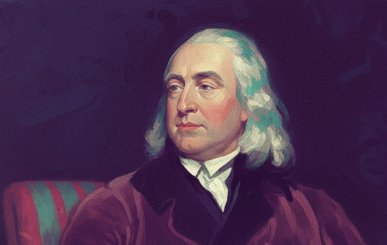
Liberty therefore not being more fit than other words in some of the instances in which it has been used, and not so fit in others, the less the use that is made of it the better. I would no more use the word liberty in my conversation when I could get another that would answer the purpose, than I would brandy in my diet, if my physician did not order me: both cloud the understanding and inflame the passions.
▼
Source
source
Jeremy Bentham, quoted in P. J. Kelly, Utilitarianism and Distributive Justice: Jeremy Bentham and the Civil Law, Oxford, 1990, p. 96
2 weeks 5 days ago
We unfold out of the Idea of Space the propositions of geometry, which are plainly truths of the most rigorous necessity and universality. But if the idea of space were merely collected from observation of the external world, it could never enable or entitle us to assert such propositions: it could never authorize us to say that not merely some lines, but all lines, not only have, but must have, those properties which geometry teaches. Geometry in every proposition speaks a language which experience never dares to utter; and indeed of which she but half comprehends the meaning.
▼
Source
source
Part I Of Ideas, Book I Of Ideas in General, Chap. 12 The Fundamental Ideas Are Not Derived From Experience

3 months 6 days ago
Religion is better described than defined and better felt than described. But if there is any one definition that latterly has obtained acceptance, it is that of Schleiermacher, to the effect that religion consists in the simple feeling of a relationship of dependence upon something above us and a desire to establish relations with this mysterious power.

2 months 2 weeks ago
Obsolescence is the moment of superabundance.
▼
Source
source
Yeats studies, Issue 2, Irish University Press, 1972, p. 135
5 months 2 weeks ago
Spontaneous love can reach the point of despair, shows that it is in despair, that even when it is happy it loves with the power of despair.
4 months 2 weeks ago
Do we call this the land of the free? What is it to be free from King George and continue the slaves of King Prejudice? What is it to be born free and not to live free? What is the value of any political freedom, but as a means to moral freedom? Is it a freedom to be slaves, or a freedom to be free, of which we boast? We are a nation of politicians, concerned about the outmost defences only of freedom. It is our children's children who may perchance be really free.
▼
Source
source
p. 493
3 months 1 day ago
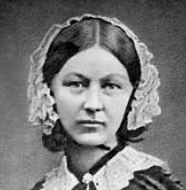
By mortifying vanity we do ourselves no good. It is the want of interest in our life which produces it; by filling up that want of interest in our life we can alone remedy it. And, did we even see this, how can we make the difference? How obtain the interest which society declares she does not want, and we cannot want?
2 months 2 weeks ago
It is experience, rather than understanding, that influences behaviour.
4 months 3 weeks ago
The greatest thing in the world is to know how to belong to oneself.
▼
Source
source
Ch. 39

4 months 4 weeks ago
Cosmus, Duke of Florence, was wont to say of perfidious friends, that "We read that we ought to forgive our enemies; but we do not read that we ought to forgive our friends."
▼
Source
source
No. 206
4 months 2 weeks ago
I cannot read a sentence in the book of the Hindoos without being elevated as upon the table-land of the Ghauts. It has such a rhythm as the winds of the desert, such a tide as the Ganges, and seems as superior to criticism as the Himmaleh Mounts. Even at this late hour, unworn by time with a native and inherent dignity it wears the English dress as indifferently as the Sanscrit.
▼
Source
source
August 6, 1841
2 months 3 weeks ago
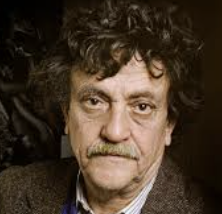
I urge you to please notice when you are happy, and exclaim or murmur or think at some point, "If this isn't nice, I don't know what is."
▼
Source
source
Knowing What's Nice, an essay from In These Times
CivilSimian.com created by AxiomaticPanic, CivilSimian, Kalokagathia