


4 months 2 weeks ago
We love those who hate our enemies, and if we had no enemies there would be very few people whom we should love. All this, however, is only true so long as we are concerned solely with attitudes towards other human beings. You might regard the soil as your enemy because it yields reluctantly a niggardly subsistence. You might regard Mother Nature in general as your enemy, and envisage human life as a struggle to get the better of Mother Nature. If men viewed life in this way, cooperation of the whole human race would become easy. And men could easily be brought to view life in this way if schools, newspapers, and politicians devoted themselves to this end. But schools are out to teach patriotism; newspapers are out to stir up excitement; and politicians are out to get re-elected. None of the three, therefore, can do anything towards saving the human race from reciprocal suicide.
1 month 1 week ago
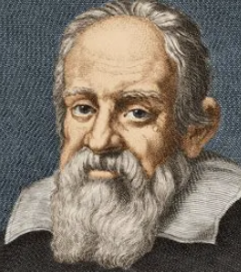
Wine is a mixture of moisture and light.
▼
Source
source
As quoted in Lorenzo Magalotti's Scientific and Scholarly Letter

3 months 2 weeks ago
Faith is not in power but in truth.

2 months 2 weeks ago
Each of our senses makes its own space, but no sense can function in isolation. Only as sight relates the touch, or kinaesthesia, or sound, can the eye see.
3 weeks 6 days ago
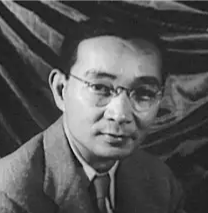
I am doing my best to glorify the scamp or vagabond. I hope I shall succeed. For things are not so simple as they sometimes seem. In this present age of threats to democracy and individual liberty, probably only the scamp and the spirit of the scamp alone will save us from being lost in serially numbered units in the masses of disciplined, obedient, regimented and uniformed coolies. The scamp will be the last and most formidable enemy of dictatorships. He will be the champion of human dignity and individual freedom, and will be the last to be conquered. All modern civilization depends entirely upon him.
▼
Source
source
Ch. I : The Awakening, p. 12
2 months 3 weeks ago
We favor hypotheses for their simplicity and explanatory power, much as the architect of the world might have done in choosing which possibility to create.
▼
Source
source
Chapter 15, Inductive Logic, p. 142.

3 months 3 weeks ago
Art is the perfection of nature.
▼
Source
source
Section 16

1 month 4 days ago
"What," say you, "are you giving me advice? Indeed, have you already advised yourself, already corrected your own faults? Is this the reason why you have leisure to reform other men?" No, I am not so shameless as to undertake to cure my fellow-men when I am ill myself. I am, however, discussing with you troubles which concern us both, and sharing the remedy with you, just as if we were lying ill in the same hospital.

3 months 2 days ago
The heart, oddly enough, seems to be the essential organ concerned. When we are in a hurry or doing something we dislike, we clench the heart, exactly like clenching a fist, and nothing can get in. When we are filled with a sense of multiplicity and excitement we somehow 'open' the heart and allow reality to flow in. But in that state we only need to entertain the shadow of some unpleasant thought for it to close again. And human beings are so naturally prone to mistrust that it is hard to maintain the openness for very long. Children on the other hand find it easy to slip into states of wonder and delight when the heart finally opens so wide that the whole world seems magical. the 'trick' of the peak experience lies in this ability to relax out of our usual defensive posture and to 'open the heart'.
▼
Source
source
p. 360

4 months 2 weeks ago
The soul of wit may become the very body of untruth.
▼
Source
source
Foreward (p. vii)

4 months 3 weeks ago
For truth itself has not the privilege to be spoken at all times and in all sorts.
▼
Source
source
Book III, Ch. 13. Of Experience
4 months 2 weeks ago
An extra-terrestrial philosopher, who had watched a single youth up to the age of twenty-one and had never come across any other human being, might conclude that it is the nature of human beings to grow continually taller and wiser in an indefinite progress towards perfection; and this generalisation would be just as well founded as the generalisation which evolutionists base upon the previous history of this planet.
▼
Source
source
Ch. 6: On the Scientific Method in Philosophy.Ethics is in origin the art of recommending to others the sacrifices required for co-operation with oneself.
2 weeks 2 days ago
Everything is in a state of metamorphosis. Thou thyself art in everlasting change and in corruption to correspond; so is the whole universe.
▼
Source
source
Meditations. ix. 19.

3 months 6 days ago
It has often been said that every man who has suffered misfortunes prefers to be himself, even with his misfortunes, rather than to be someone else without them. For unfortunate men, when they preserve their normality in their misfortune - that is to say, when they endeavor to persist in their own being - prefer misfortune to non-existence. For myself I can say that when a as a youth, and even as a child, I remained unmoved when shown the most moving pictures of hell, for even then nothing appeared to me quite so horrible as nothingness itself. It was a furious hunger of being that possessed me, an appetite for divinity, as one of our ascetics [San Juan de los Angeles] has put it.

1 month 1 week ago
The weakest living creature, by concentrating his powers on a single object, can accomplish something. The strongest, by dispensing his over many, may fail to accomplish anything. The drop, by continually falling, bores its passage through the hardest rock. The hasty torrent rushes over it with hideous uproar, and leaves no trace behind.
▼
Source
source
The life of Friedrich Schiller: Comprehending an examination of his works (1825).
4 months 2 weeks ago
You, your families, your friends and your countries are to be exterminated by the common decision of a few brutal but powerful men. To please these men, all the private affections, all the public hopes, all that has been achieved in art, and knowledge and thought and all that might be achieved hereafter is to be wiped out forever. Our ruined lifeless planet will continue for countless ages to circle aimlessly round the sun unredeemed by the joys and loves, the occasional wisdom and the power to create beauty which have given value to human life.
▼
Source
source
Leaflet issued while Russell was in Brixton Prison, 1961
4 months 2 weeks ago
Happiness is not achieved by the conscious pursuit of happiness; it is generally the by-product of other activities.
▼
Source
source
Essay "Religion and Time" in Vedanta for the Western World (1945) edited by Christopher Isherwood
4 weeks 1 day ago
In ignoring the important fundamental contribution of the followers of Marx, and by insisting exclusively on the phenomenon of superficial adaptation and variation, Sorel passed in silence over all that was healthy, live and fruitful in the Marxist doctrine.
▼
Source
source
Lucien Laurat, Marxism and Democracy, 1940, published by the Left Book Club, Victor Gollancz Ltd, London; translated by Edward Fitzgerald. Text online at the Marxists Internet Archive.

5 months 1 week ago
The best people renounce all for one goal, the eternal fame of mortals; but most people stuff themselves like cattle. For what sense or understanding have they? They follow minstrels and take the multitude for a teacher, not knowing that many are bad and few good. For the best men choose one thing above all immortal glory among mortals; but the masses stuff themselves like cattle.
3 months 2 weeks ago
Revolution is like Saturn, it devours its own children.
▼
Source
source
Act I.


3 months 2 weeks ago
So long as man is protected by madness he functions and flourishes, but when he frees himself from the fruitful tyranny of fixed ideas, he is lost, ruined.
1 month 1 week ago
It is no longer the moral, religious, spiritual condition of the people that is our concern, but their physical, practical, economical condition, as regulated by public laws.
4 months 2 weeks ago
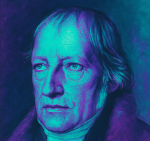
History, is a conscious, self-mediating process - Spirit emptied out into Time; but this externalization, this kenosis, is equally an externalization of itself; the negative is the negative of itself. ... Thus absorbed in itself, it is sunk in the night of its self-consciousness; but in that night its vanished outer existence is perserved, and this transformed existence - the former one, but now reborn of the Spirit's knowledge - is the new existence, a new world and a new shape of Spirit.
4 months 2 weeks ago
Who is going to educate the human race in the principles and practice of conservation?
▼
Source
source
Chapter 12 (p. 112)

4 months 2 weeks ago
Romeo wants Juliet as the filings want the magnet; and if no obstacles intervene he moves towards her by as straight a line as they. But Romeo and Juliet, if a wall be built between them, do not remain idiotically pressing their faces against its opposite sides like the magnet and the filings with the card. Romeo soon finds a circuitous way, by scaling the wall or otherwise, of touching Juliet's lips directly. With the filings the path is fixed; whether it reaches the end depends on accidents. With the lover it is the end which is fixed, the path may be modified indefinitely.
▼
Source
source
Ch. 1 : The Scope of Psychology
2 weeks 3 days ago
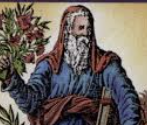
They call it "friendship" and "peace," and further "harmony" and "unanimity": for these are all cohesive and unificatory of opposites and dissimilars. Hence they also call it "marriage." And there are also three ages in life.
▼
Source
source
On the Triad
1 month 1 week ago
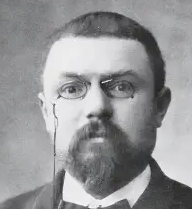
Mathematicians do not study objects, but the relations between objects; to them it is a matter of indifference if these objects are replaced by others, provided that the relations do not change. Matter does not engage their attention, they are interested in form alone.
▼
Source
source
Ch. II: Dover abridged edition (1952), p. 20
4 months 2 weeks ago
In regard to propaganda the early advocates of universal literacy and a free press envisaged only two possibilities: the propaganda might be true, or it might be false. They did not foresee what in fact has happened, above all in our Western capitalist democracies-the development of a vast mass communications industry, concerned in the main neither with the true nor the false, but with the unreal, the more or less totally irrelevant. In a word, they failed to take into account man's almost infinite appetite for distraction.
▼
Source
source
Chapter 4 (pp. 35-36)
3 months 4 days ago
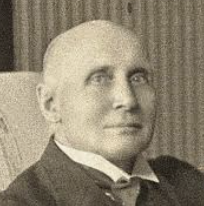
The fact of the religious vision, and its history of persistent expansion, is our one ground for optimism. Apart from it, human life is a flash of occasional enjoyments lighting up a mass of pain and misery, a bagatelle of transient experience.
▼
Source
source
Ch. 12: "Religion and Science", p. 268

4 months 4 weeks ago
Let the public good overcome all private and selfish regards of every kind and degree; though in truth, even private and selfish regards, and every man's own interest, will be best promoted by the preservation of peace.
3 months 3 weeks ago
How shall the dead arise, is no question of my faith; to believe only possibilities, is not faith, but mere philosophy.
▼
Source
source
Section 48
3 months 2 weeks ago
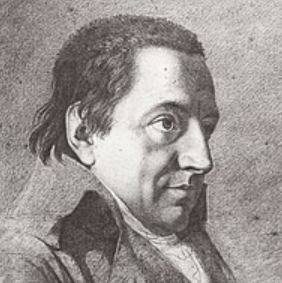
History is mere Empiricism; it has only facts to communicate, and all its proofs are founded upon facts alone. To attempt to rise to Primeval History on this foundation of fact, or to argue by this means how such or such a thing might have been, and then to take for granted that it has been so in reality,is to stray beyond the limits of History, and produce an a priori History; just as the Philosophy of Nature, referred to in our preceding lecture, endeavoured to find an a priori Science of Physics.
▼
Source
source
p. 140

2 weeks 5 days ago
No one has a natural right to the trade of a money lender, but he who has the money to lend. Let those then among us who have a moneyed capital and who prefer employing it in loans rather than otherwise, set up banks and give cash or national bills for the notes they discount. Perhaps, to encourage them, a larger interest than is legal in the other cases might be allowed them, on the condition of their lending for short periods only.
▼
Source
source
ME 13:277

4 months 2 weeks ago
For Genet, Beauty will be the offensive weapon that will enable him to beat the just on their own ground: that of value.
▼
Source
source
p. 405
1 month 4 days ago
I may become a poor man; I shall then be one among many. I may be exiled; I shall then regard myself as born in the place to which I shall be sent. They may put me in chains. What then? Am I free from bonds now? Behold this clogging burden of a body, to which nature has fettered me! "I shall die," you say; you mean to say "I shall cease to run the risk of sickness; I shall cease to run the risk of imprisonment; I shall cease to run the risk of death."

5 months 2 weeks ago
That which distinguishes the Christian narrow way from the common human narrow way is the voluntary. Christ was not someone who coveted earthly things but had to be satisfied with poverty, no, he chose poverty.

4 months 2 weeks ago
There are two godheads: the world and my independent I. I am either happy or unhappy, that is all. It can be said: good or evil do not exist. A man who is happy must have no fear. Not even in the face of death. Only a man who lives not in time but in the present is happy.
▼
Source
source
Journal entry (8 July 1916), p. 74e
2 months 2 weeks ago
Language is a form of organized stutter.
▼
Source
source
Interview with John Lennon, December 1969, CBS Television

4 months 2 weeks ago
A circuit performed by a capital and meant to be a periodical process, not an individual act, is called its turnover. The duration of this turnover is determined by the sum of its time of production and its time of circulation.
▼
Source
source
Volume II, Ch. VII, p. 158.
2 months 3 days ago
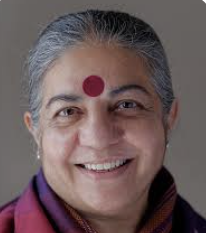
There is, I think, a spontaneous resurgence of thinking that centers on protection of life, celebrating life, enjoying life as both our highest duty and our most powerful form of resistance against a violent and brutal system that globalizes not just trade, but fascism, and denies civil liberties and freedoms.
4 months 2 weeks ago
As we take, in fact, a general view of the wonderful stream of our consciousness, what strikes us first is this different pace of its parts. Like a bird's life, it seems to be made of an alternation of flights and perchings.
▼
Source
source
Ch. 9
4 months 1 week ago
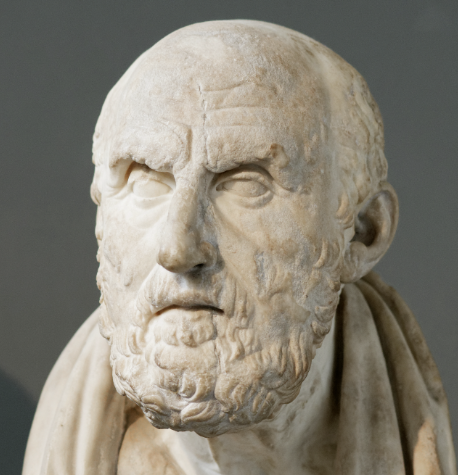
He who is running a race ought to endeavor and strive to the utmost of his ability to come off victor; but it is utterly wrong for him to trip up his competitor, or to push him aside. So in life it is not unfair for one to seek for himself what may accrue to his benefit; but it is not right to take it from another.
▼
Source
source
As quoted in De Officiis by Cicero, iii. 10.
4 months 2 weeks ago
However hard they try, men cannot create a social organism, they can only create an organization. In the process of trying to create an organism they will merely create a totalitarian despotism.
▼
Source
source
Chapter 3 (p. 24)
2 weeks 2 days ago
In our contemporary social and intellectual plight, it is nothing less than shocking to discover that those persons who claim to have discovered an absolute are usually the same people who also pretend to be superior to the rest. To find people in our day attempting to pass off to the world and recommending to others some nostrum of the absolute which they claim to have discovered is merely a sign of the loss of and the need for intellectual and moral certainty, felt by broad sections of the population who are unable to look life in the face.

4 months 3 weeks ago
In youth it is the outward aspect of things that most engages us; while in age, thought or reflection is the predominating quality of the mind. Hence, youth is the time for poetry, and age is more inclined to philosophy. In practical affairs it is the same: a man shapes his resolutions in youth more by the impression that the outward world makes upon him; whereas, when he is old, it is thought that determines his actions.
3 months 2 weeks ago
True science is distinctively the study of useless things. For the useful things will get studied without the aid of scientific men.

4 months 2 weeks ago
As medium for reaching understanding, speech acts serve: a) to establish and renew interpersonal relations, whereby the speaker takes up a relation to something in the world of legitimate social orders; b) to represent states and events, whereby the speaker takes up a relation to something in the world of existing states of affairs; c) to manifest experiences that is, to represent oneself- whereby the speaker takes up a relation to something in the subjective world to which he has privileged access.
▼
Source
source
p. 308
5 months 1 week ago
They who know the truth are not equal to those who love it, and they who love it are not equal to those who delight in it.
CivilSimian.com created by AxiomaticPanic, CivilSimian, Kalokagathia