

1 month 4 weeks ago
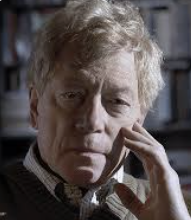
I've never been an optimist but that's fine because pessimists have the possibility of being agreeably surprised, and that's a reason for being pessimistic, but I've always defended a certain kind of pessimism because what is known as optimism is really a collection of illusions and I think one must recognise what all religious people know, which is that human beings are imperfect and fallen and there's no way in which they can alone surmount the problems which they themselves create.
▼
Source
source
From an interview with George Eaton "The Roger Scruton interview: the full transcript", New Statesman
2 months 2 weeks ago
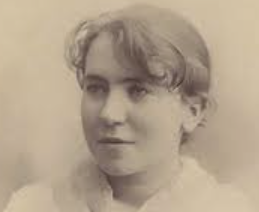
Compared with the wholesale violence of capital and government, political acts of violence are but a drop in the ocean. That so few resist is the strongest proof how terrible must be the conflict between their souls and unbearable social iniquities.
4 days ago
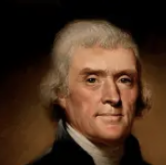
It was by the sober sense of our citizens that we were safely and steadily conducted from monarchy to republicanism, and it is by the same agency alone we can be kept from falling back.
▼
Source
source
Letter to Arthur Campbell
1 day ago
All things are the same,-familiar in enterprise, momentary in endurance, coarse in substance. All things now are as they were in the day of those whom we have buried.
▼
Source
source
IX, 14
3 months 2 days ago
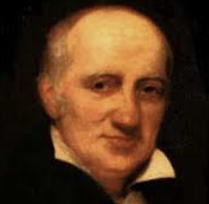
The first authentic record on this subject (alchemy) is an edict of Diocletian, about 300 years after Christ, ordering a diligent search to be made in Egypt for all the ancient books which treated of the art of making gold and silver, that they might be consigned to the flames. This edict necessarily presumes a certain antiquity to the pursuit; and fabulous history has recorded Solomon, Pythagoras, and Hermes among its distinguished votaries.
▼
Source
source
Quoted by H.P. Blavatsky, in Isis Unveiled: A Master-Key to the Mysteries of Ancient and Modern Science and Theology, Vol. I, (1877) (p. 504)
2 months 2 weeks ago
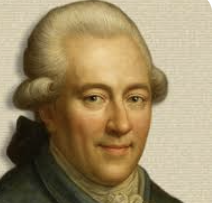
The Greeks possessed a knowledge of human nature we seem hardly able to attain to without passing through the strengthening hibernation of a new barbarism.
▼
Source
source
F 44
4 days ago
That one hundred and fifty lawyers should do business together ought not to be expected.
▼
Source
source
On the U.S. Congress, in his Autobiography, 6 January 1821
2 months 3 weeks ago
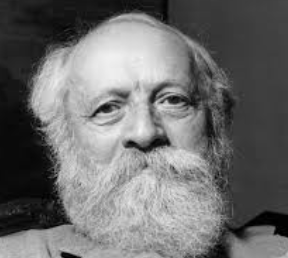
You do not attain to knowledge by remaining on the shore and watching the foaming waves, you must make the venture and cast yourself in, you must swim, alert and with all your force, even if a moment comes when you think you are losing consciousness; in this way, and in no other, do you reach anthropological insight.
▼
Source
source
p. 148

4 months 5 days ago
The industrial peak of a people when its main concern is not yet gain, but rather to gain.
▼
Source
source
Introduction, p. 7.

3 months 1 week ago
So many of my thoughts and feelings are shared by the English that England has turned into a second native land of the mind for me.
▼
Source
source
Journeys to England and Ireland, 1835.

2 weeks 5 days ago
I shall never be ashamed of citing a bad author if the line is good.
▼
Source
source
Alternate translation: I shall never be ashamed to go to a bad author for a good quotation. Chapter 11, Section 8
4 months 2 weeks ago
The Idols of Tribe have their foundation in human nature itself, and in the tribe or race of men. For it is a false assertion that the sense of man is the measure of things. On the contrary, all perceptions as well of the sense as of the mind are according to the measure of the individual and not according to the measure of the universe. And the human understanding is like a false mirror, which, receiving rays irregularly, distorts and discolors the nature of things by mingling its own nature with it.
▼
Source
source
Aphorism 41

4 weeks 1 day ago
Liberalism has been very severely threatened in recent years. It's been threatened from a number of sources. So internationally you have two great powers, Russia and China, that are definitely not liberal polities, that have expansive ambitions... As Vladimir Putin said... in an iterview with the FT in 2019 "Liberalism is an obsolete doctrine." But the threat... also comes from other places. ...You have the rise of a populist nationalist right in many countries. This is Viktor Orbán in Hungary. This is Narendra Modi in India, Donald Trump in the United States, ...Marine Le Pen in France. All of them criticizing liberalism precisely for the tolerance that it permits and tries to deal with, in diverse and increasingly ethnically and racially diverse countries.
▼
Source
source
5:36 Ref: Vladimir Putin says liberalism has 'become obsolete' (June 27, 2019) Financial Times.

2 months 3 weeks ago
With men this is impossible; but with God all things are possible.
▼
Source
source
19:26 (KJV)
4 months 3 days ago
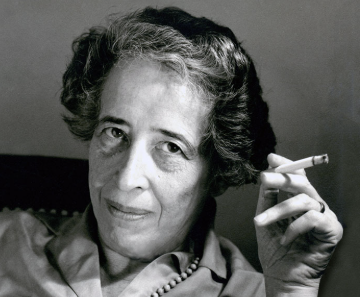
The emotions I feel are no more meant to be shown in their unadulterated state than the inner organs by which we live.
▼
Source
source
pp. 31-32
2 months 2 weeks ago
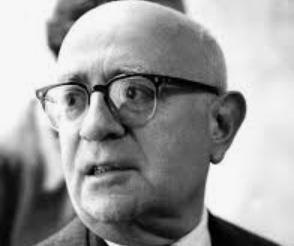
The aim of jazz is the mechanical reproduction of a regressive moment, a castration symbolism. 'Give up your masculinity, let yourself be castrated,' the eunuchlike sound of the jazz band both mocks and proclaims, 'and you will be rewarded, accepted into a fraternity which shares the mystery of impotence with you, a mystery revealed at the moment of the initiation rite.
▼
Source
source
Perennial Fashion - Jazz (1978), Prisms, p. 129, as translated by Samuel Weber and Shierry Weber

2 months 2 days ago
Does the interiorization of media such as letters alter the ratio among our senses and change mental processes?
▼
Source
source
(p. 28)
2 months 3 weeks ago
Reason ... contradicts the established order of men and things on behalf of existing societal forces that reveal the irrational character of this order - for "rational" is a mode of thought and action which is geared to reduce ignorance, destruction, brutality, and oppression.
▼
Source
source
pp. 141-142
4 months 6 days ago
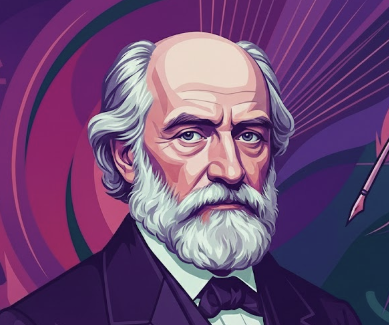
People are often reproached because their desires are directed mainly to money and they are fonder of it than of anything else. Yet it is natural and even inevitable for them to love that which, as an untiring Proteus, is ready at any moment to convert itself into the particular object of our fickle desires and manifold needs. Thus every other blessing can satisfy only one desire and one need; for instance, food is good only to the hungry, wine only for the healthy, medicine for the sick, a fur coat for winter, women for youth, and so on. Consequently, all these are only ... relatively good. Money alone is the absolutely good thing because it meets not merely one need in concreto, but needs generally in abstracto.
▼
Source
source
E. Payne, trans. (1974) Vol. 1, p. 347
2 months 2 weeks ago
The quest for certainty blocks the search for meaning. Uncertainty is the very condition to impel man to unfold his powers.
▼
Source
source
Ch. 3
2 months 1 week ago
I might try to save the view that 'future contingents' have no truth value by saying that even present-tense statements have no truth value if they refer to the outcome of events that are so far away that a causal signal informing me of the outcome could not have reached me-now without traveling faster than light. In other words, I might attempt saying that statements about events that are in neither the upper half nor the lower half of my light-cone have no truth value. In addition, statements about events in the upper half of my light-cone have no truth value, since they are in my future according to every coordinate system. So only statements about events in the lower half of my light-cone have a truth value; only events that are in 'my past* according to all observers are determined.
▼
Source
source
Time and physical geometry

3 months 5 days ago
We have an enemy, to whose virtues we can owe nothing; but on this occasion we are infinitely obliged to one of his vices. We owe more to his insolence than to our own precaution.
▼
Source
source
p.3
2 months 3 weeks ago
To live one's love and hatred, to live that which one is means defeat, resignation, and death. The crimes of society, the hell that man has made or man become unconquerable cosmic forces.
▼
Source
source
p. 61

3 months 3 weeks ago
I would rather discover one cause than gain the kingdom of Persia.
▼
Source
source
Freeman (1948), p. 155
4 months 3 days ago
We must choose for others as we have reason to believe they would choose for themselves if they were at the age of reason and deciding rationally.
▼
Source
source
Chapter IV, Section 33, p. 209
2 months 3 weeks ago
The other conclusion is that art is the complement of science. Science as I have said is concerned wholly with relations, not with individuals. Art, on the other hand, is not only the disclosure of the individuality of the artist but also a manifestation of individuality as creative of the future, in an unprecedented response to conditions as they were in the past. Some artists in their vision of what might be, but is not, have been conscious rebels. But conscious protest and revolt is not the form which the labor of the artist in creation of the future must necessarily take. Discontent with things as they are is normally the expression of the vision of what may be and is not, art in being the manifestation of individuality is this prophetic vision.
2 months 2 weeks ago
God functions like a stabilizer of time.
4 months 3 days ago
Absurd, irreducible; nothing - not even a profound and secret delirium of nature - could explain it. Obviously I did not know everything, I had not seen the seeds sprout, or the tree grow. But faced with this great wrinkled paw, neither ignorance nor knowledge was important: the world of explanations and reasons is not the world of existence. A circle is not absurd, it is clearly explained by the rotation of a straight segment around one of its extremities. But neither does a circle exist. This root, on the other hand, existed in such a way that I could not explain it. Reflections on a chestnut tree root.

3 months 1 day ago
Never to have occasion to take a position, to make up one's mind, or to define oneself - there is no wish I make more often.
1 month 1 week ago
As well as seriously - indeed exhaustively - researching everything that could conceivably go wrong, I think we should also investigate what could go right. The world is racked by suffering. The hedonic treadmill might more aptly be called a dolorous treadmill. Hundreds of millions of people are currently depressed, pain-ridden or both. Hundreds of billions of non-human animals are suffering too. If we weren't so inured to a world of pain and misery, then the biosphere would be reckoned in the throes of a global medical emergency. Thanks to breakthroughs in biotechnology, pain-thresholds, default anxiety levels, hedonic range and hedonic set-points are all now adjustable parameters in human and non-human animals alike. We are living in the final century of life on Earth in which suffering is biologically inevitable. As a society, we need an ethical debate about how much pain and misery we want to preserve and create. How do you break the hedonic treadmill?"
▼
Source
source
, Quora, 6 Apr. 2019
4 months 3 days ago
Justice is happiness according to virtue.
▼
Source
source
Chapter V, Section 48, p. 310
3 months 1 week ago
In the final, positive state, the mind has given over the vain search after Abolute notions, the origin and destination of the universe, and the cause of phenomenon, and applies itself to the tudy of their laws, - that is, their invariable relations of succession and resemblance. Reasoning and observation, duly combined, are the means of this knowledge. What is now understood when we speak of an explanation of the facts is simply the establishment of a connection between single phenomena and some general facts, the number of which continually diminishes with the progress of science.
▼
Source
source
Vol I
2 weeks 1 day ago
Macbeth's self-justifications were feeble - and his conscience devoured him. Yes, even Iago was a little lamb too. The imagination and the spiritual strength of Shakespeare's evildoers stopped short at a dozen corpses. Because they had no ideology.
▼
Source
source
The Gulag Archipelago

5 months 2 days ago
Creationists make it sound as though a "theory" is something you dreamt up after being drunk all night.
2 weeks 5 days ago
Meanwhile, hold fast to this thought, and grip it close: yield not to adversity; trust not to prosperity; keep before your eyes the full scope of Fortune's power, as if she would surely do whatever is in her power to do.
5 months 2 days ago
Trantor could win even such a war, but perhaps not without paying a price that would make victory only a pleasanter name for defeat.
4 days ago
All, too, will bear in mind this sacred principle, that though the will of the majority is in all cases to prevail, that will to be rightful must be reasonable; that the minority possess their equal rights, which equal law must protect, and to violate would be oppression. Let us, then, fellow-citizens, unite with one heart and one mind. Let us restore to social intercourse that harmony and affection without which liberty and even life itself are but dreary things.
5 days ago
"Since we cannot change reality, let us change the eyes which see reality," says one of my favorite Byzantine mystics. I did this when a child; I do it now as well in the most creative moments of my life.
▼
Source
source
"The Son", Ch. 4, p. 45

4 months 5 days ago
To those who inquire as to the purpose of mathematics, the usual answer will be that it facilitates the making of machines, the travelling from place to place, and the victory over foreign nations, whether in war or commerce. ... The reasoning faculty itself is generally conceived, by those who urge its cultivation, as merely a means for the avoidance of pitfalls and a help in the discovery of rules for the guidance of practical life.
2 months 3 weeks ago
History is full of religious wars; but, we must take care to observe, it was not the multiplicity of religions that produced these wars, it was the intolerating spirit which animated that one which thought she had the power of governing.
▼
Source
source
No. 65. (Usbek writing to his wives)
2 months 3 weeks ago
If, as I believe, the ends of men are many, and not all of them are in principle compatible with each other, then the possibility of conflict - and of tragedy - can never wholly be eliminated from human life, either personal or social. The necessity of choosing between absolute claims is then an inescapable characteristic of the human condition. This gives its value to freedom as Acton conceived of it - as an end in itself, and not as a temporary need, arising out of our confused notions and irrational and disordered lives, a predicament which a panacea could one day put right.
2 weeks 1 day ago
We must not always attach too much importance to violent attacks on the bourgeoisie; they may be motivated by the desire to reform and to perfect capitalism.
▼
Source
source
p. 125
3 months 5 days ago
The wise will determine from the gravity of the case; the irritable from sensibility to oppression; the high-minded from disdain and indignation at abusive power in unworthy hands.
2 months 3 weeks ago
Why do ye also transgress the commandment of God by your tradition? For God commanded, saying, Honour thy father and mother: and, He that curseth father or mother, let him die the death. But ye say, Whosoever shall say to his father or his mother, It is a gift, by whatsoever thou mightest be profited by me; And honour not his father or his mother, he shall be free. Thus have ye made the commandment of God of none effect by your tradition. Ye hypocrites, well did Esaias prophesy of you, saying, This people draweth nigh unto me with their mouth, and honoureth me with their lips; but their heart is far from me. But in vain they do worship me, teaching for doctrines the commandments of men.
▼
Source
source
15:3-9 (KJV)
3 months 1 week ago
The general interest of the masses might take the place of the insight of genius if it were allowed freedom of action.


3 weeks 5 days ago
Luther's merit in literary history is of the greatest: his dialect became the language of all writing. They are not well written, these Four-and-twenty Quartos of his; written hastily, with quite other than literary objects. But in no Books have I found a more robust, genuine, I will say noble faculty of a man than in these. A rugged honesty, homeliness, simplicity; a rugged sterling sense and strength. He dashes out illumination from him; his smiting idiomatic phrases seem to cleave into the very secret of the matter. Good humor too, nay tender affection, nobleness and depth: this man could have been a Poet too! He had to work an Epic Poem, not write one.
2 months 2 weeks ago
Zen Buddhism is inspired by a basic trust in the Here, a basic trust in the world.
1 day ago
You see how few things you have to do to live a satisfying and reverent life? If you can manage this, that's all even the gods can ask of you. Thou seest how few be the things, the which if a man has at his command his life flows gently on and is divine.
▼
Source
source
II, 5
3 months 1 day ago
In theory, it matters little to me whether I live as whether I die; in practice, I am lacerated by every anxiety which opens an abyss between life and death.
CivilSimian.com created by AxiomaticPanic, CivilSimian, Kalokagathia