Good...good...he's clearly outlined the warp and woof distinction...😁


In Germany, the judicial system has been the whore of the German princes for centuries.
Man alone has the power of self-realization, the power to be a self-determining subject in all processes of becoming, for he alone has an understanding of potentialities and a knowledge of 'notions.' His very existence is the process of actualizing his potentialities, of molding his life according to the notions of reason.

Would you not think him an utter fool who wept because he was not alive a thousand years ago? And is he not just as much of a fool who weeps because he will not be alive a thousand years from now? It is all the same; you will not be, and you were not. Neither of these periods of time belongs to you.

Unlike private enterprise which quickly modifies its actions to meet emergencies - unlike the shopkeeper who promptly finds the wherewith to satisfy a sudden demand - unlike the railway company which doubles its trains to carry a special influx of passengers; the law-made instrumentality lumbers on under all varieties of circumstances at its habitual rate. By its very nature it is fitted only for average requirements, and inevitably fails under unusual requirements.
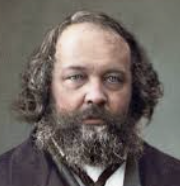
This means that no state, howsoever democratic its forms, not even the reddest political republic - a people's republic only in the sense of the lie known as popular representation - is capable of giving the people what they need: the free organization of their own interests from below upward, without any interference, tutelage, or coercion from above. That is because no state, not even the most republican and democratic, not even the pseudo-popular state contemplated by Marx, in essence represents anything but government of the masses from above downward, by an educated and thereby privileged minority which supposedly understands the real interests of the people better than the people themselves.
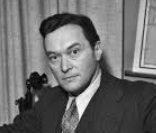
A large plural society cannot be governed without recognizing that, transcending its plural interests, there is a rational order with a superior common law.
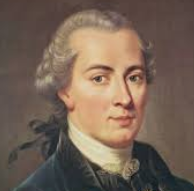
All... good and useful properties of character have a price in exchange for others which have just as much use. Talent has a market price, since the sovereign or estate-owner can use a talented person in all sorts of ways. Temperament has a fancy price,22 since one can converse well with such a person; he is a pleasant companion. But, character has an inner value[,] and it is above all price.
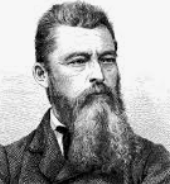
Speculative philosophy as the realisation of God is the positing of God, and at the same time his cancellation or negation; theism and at the same time atheism: for God - in the sense of theology - is God only as long as he is taken to be a being distinguished from and independent of the being of man as well as of nature. The theism that as the positing of God is simultaneously his negation or, conversely, as the negation of God equally his affirmation, is pantheism. Theological theism - that is, theism properly speaking - is nothing other than imaginary pantheism which itself is nothing other than real and true theism.

This is the moment when it becomes clear that the images of madness are nothing but dream and error, and that if the unfortunate sufferer who is blinded by them invokes them, it is the better to disappear with them into the annihilation for which they are destined.

If we could sniff or swallow something that would, for five or six hours each day, abolish our solitude as individuals, atone us with our fellows in a glowing exaltation of affection and make life in all its aspects seem not only worth living, but divinely beautiful and significant, and if this heavenly, world-transfiguring drug were of such a kind that we could wake up next morning with a clear head and an undamaged constitution-then, it seems to me, all our problems (and not merely the one small problem of discovering a novel pleasure) would be wholly solved and earth would become paradise.

For I came to cause division, with a man against his father, and a daughter against her mother, and a daughter-in-law against her mother-in-law. 36 Indeed, a man's enemies will be those of his own household.

So much of modern mathematical work is obviously on the border-line of logic, so much of modern logic is symbolic and formal, that the very close relationship of logic and mathematics has become obvious to every instructed student. The proof of their identity is, of course, a matter of detail: starting with premisses which would be universally admitted to belong to logic, and arriving by deduction at results which as obviously belong to mathematics, we find that there is no point at which a sharp line can be drawn, with logic to the left and mathematics to the right. If there are still those who do not admit the identity of logic and mathematics, we may challenge them to indicate at what point, in the successive definitions and deductions of Principia Mathematica, they consider that logic ends and mathematics begins. It will then be obvious that any answer must be quite arbitrary.
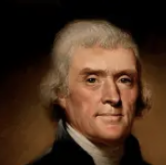
Were we directed from Washington when to sow and when to reap, we should soon want bread.
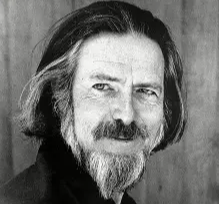
The greater part of human activity is designed to make permanent those experiences and joys which are only lovable because they are changing.
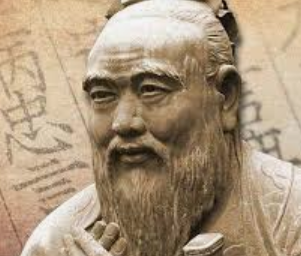
The Master said, "He who exercises government by means of his virtue may be compared to the north polar star, which keeps its place and all the stars turn towards it."

Pass by us, and forgive us our happiness.

Time is a sort of river of passing events, and strong is its current; no sooner is a thing brought to sight than it is swept by and another takes its place, and this too will be swept away.

We can act as if there were a God; feel as if we were free; consider Nature as if she were full of special designs; lay plans as if we were to be immortal; and we find then that these words do make a genuine difference in our moral life.
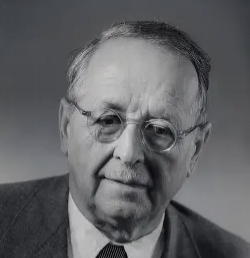
After Riemann had made known his discoveries, mathematicians busied themselves with working out his system of geometrical ideas formally; chief among these were Christoffel, Ricci, and Levi-Civita. Riemann... clearly left the real development of his ideas in the hands of some subsequent scientist whose genius as a physicist could rise to equal flights with his own as a mathematician. After a lapse of seventy years this mission has been fulfilled by Einstein.
To take Macaulay out of literature and society and put him in the House of Commons, is like taking the chief physician out of London during a pestilence.

Jung believed that alchemy is about the transmutation of the mind and the discovery of the self. Inevitably, he saw the male and female elements of the prima materia -- the king and queen of alchemy -- as the animus and anima; this seemed to indicate the (sic) alchemy is about psychological processes.
In old days the plastic arts, music, and poesy were so germane to man in his totality that his Transcendence plainly manifest in them. ... What is to-day obvious to all is a decay in the essence of art. ... the opposition to man's true nature as man.

The mind that puts everything in question, reaches, after a thousand interrogations, an almost total inertia, a situation which the inert, in fact, knows from the start, by instinct. For what is inertia but a congenital perplexity?
Why does God afflict the best of men with ill-health, or sorrow, or other troubles? Because in the army the most hazardous services are assigned to the bravest soldiers: a general sends his choicest troops to attack the enemy in a midnight ambuscade, to reconnoitre his line of march, or to drive the hostile garrisons from their strong places. No one of these men says as he begins his march, " The general has dealt hardly with me," but "He has judged well of me."
When nobody in the world loves any other, naturally the strong will overpower the weak, the many will oppress the few, the wealthy will mock the poor, the honoured will disdain the humble, the cunning will deceive the simple. Therefore all the calamities, strifes, complaints, and hatred in the world have arisen out of want of mutual love. Therefore the benevolent disapproved of this want.

The mass of men lead lives of quiet desperation. What is called resignation is confirmed desperation.

It is simply no good trying to keep any thrill: that is the very worst thing you can do. Let the thrill go-let it die away-go on through that period of death into the quieter interest and happiness that follow-and you will find you are living in a world of new thrills all the time. But if you decide to make thrills your regular diet and try to prolong them artificially, they will all get weaker and weaker, and fewer and fewer, and you will be a bored, disillusioned old man for the rest of your life. It is because so few people understand this that you find many middle-aged men and women maundering about their lost youth, at the very age when new horizons ought to be appearing and new doors opening all round them. It is much better fun to learn to swim than to go on endlessly (and hopelessly) trying to get back the feeling you had when you first went paddling as a small boy.
If your little savage were left to himself and be allowed to retain all his ignorance, he would in time join the infant's reasoning to the grown man's passion, he would strangle his father and sleep with his mother.
The more man meditates upon good thoughts, the better will be his world and the world at large.

When we reflect on the long and dense night in which France and all Europe have remained plunged by their governments and their priests, we must feel less surprise than grief at the bewilderment caused by the first burst of light that dispels the darkness.

If we love God while thinking that he does not exist, he will manifest his existence.
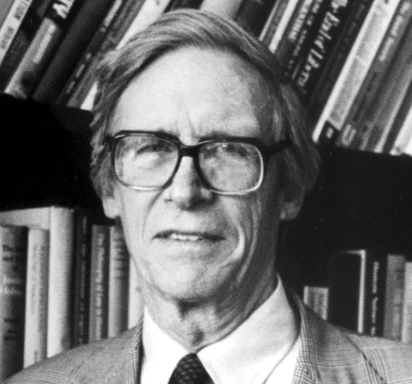
The suppression of liberty is always likely to be irrational.
Whatever bitterness and hate may be found in the movements which we are to examine, it is not bitterness or hate, but love, that is their mainspring. It is difficult not to hate those who torture the objects of our love. Though difficult, it is not impossible; but it requires a breadth of outlook and a comprehensiveness of understanding which are not easy to preserve amid a desperate contest. If ultimate wisdom has not always been preserved by Socialists and Anarchists, they have not differed in this from their opponents; and in the source of their inspiration they have shown themselves superior to those who acquiesce ignorantly or supinely in the injustices and oppressions by which the existing system is preserved.
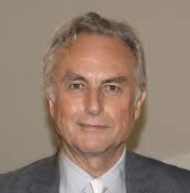
Darwin made it possible to be an intellectually fulfilled atheist.
An intolerant sect has no right to complain when it is denied an equal liberty. ... A person's right to complain is limited to principles he acknowledges himself.
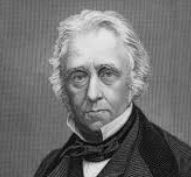
A man possessed of splendid talents, which he often abused, and of a sound judgment, the admonitions of which he often neglected; a man who succeeded only in an inferior department of his art, but who in that department succeeded pre-eminently.

When a person is haughty, he distances himself from other people and thereby deprives himself of one of life's biggest pleasures-open, joyful communication with everyone.
Opinion is ultimately determined by the feelings, and not by the intellect.
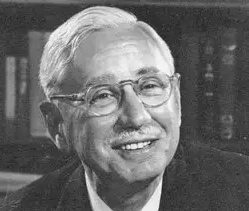
...Lucretius talked epicureanism stoically (like Heine's Englishman taking his pleasures sadly), and concluded on his stren gospel of pleasure by committing suicide. His noble epic "on the Nature of Things", follows Epicurus in damning pleasure with faint praise. Almost contemporary with Caesar and Pompey, he lived in the midst of turmoil and alarms; his nervous pen is forever inditing prayers to tranquility and peace. One pictures him as a timid soul whose youth had been darkened with religious fears; for he never tires of telling his readers that there's no hell, except here, and there are no gods except gentlemanly ones who live in a garden of Epicurus in the clouds, and never intrude in the affairs of men.
Woe unto thee, Chorazin! woe unto thee, Bethsaida! for if the mighty works, which were done in you, had been done in Tyre and Sidon, they would have repented long ago in sackcloth and ashes. But I say unto you, It shall be more tolerable for Tyre and Sidon at the day of judgment, than for you. And thou, Capernaum, which art exalted unto heaven, shalt be brought down to hell: for if the mighty works, which have been done in thee, had been done in Sodom, it would have remained until this day. But I say unto you, That it shall be more tolerable for the land of Sodom in the day of judgment, than for thee.

The mosaic form of the TV image demands participation and involvement in depth, of the whole being, as does the sense of touch.

Mark at present so much; what the essence of Scandinavian and indeed of all Paganism is: a recognition of the forces of Nature as godlike, stupendous, personal Agencies,-as Gods and Demons. Not inconceivable to us. It is the infant Thought of man opening itself, with awe and wonder, on this ever-stupendous Universe. To me there is in the Norse system something very genuine, very great and manlike. A broad simplicity, rusticity, so very different from the light gracefulness of the old Greek Paganism, distinguishes this Scandinavian System. It is Thought; the genuine Thought of deep, rude, earnest minds, fairly opened to the things about them; a face-to-face and heart-to-heart inspection of the things,-the first characteristic of all good Thought in all times. Not graceful lightness, half-sport, as in the Greek Paganism; a certain homely truthfulness and rustic strength, a great rude sincerity, discloses itself here.
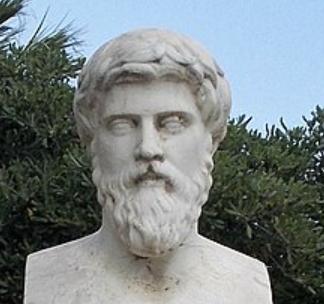
Cato the elder wondered how that city was preserved wherein a fish was sold for more than an ox.
CivilSimian.com created by AxiomaticPanic, CivilSimian, Kalokagathia