

2 months 3 weeks ago
Broadly stated, the task is to replace the global rationality of economic man with a kind of rational behavior that is compatible with the access to information and the computational capacities that are actually possessed by organisms, including man, in the kinds of environments in which such organisms exist.
▼
Source
source
Simon (1955) "A behavioral model of rational choice", The Quarterly Journal of Economics, Vol. 69 (1); As cited in: Gustavo Barros (2010, p. 462).
2 months 2 weeks ago
Fiction is to the grown man what play is to the child; it is there that he changes the atmosphere and tenor of his life.
▼
Source
source
A Gossip on Romance, printed in Longman's Magazine (November 1882).
2 months 4 weeks ago
It is at work everywhere, functioning smoothly at times, at other times in firs and starts . It breathes, it heats, it eats. It shits and fucks. What a mistake to have ever said the id. Everywhere it is machines- real ones, not figurative ones: machines driving other machines, machines being driven by other machines, with all the necessary couplings and connections. An organ-machine is plugged into an energy-source-machine: the one produces a flow that the other interrupts The breast is a machine that produces milk, and the mouth a machine coupled to it.
▼
Source
source
The Desiring Machine

4 months 2 weeks ago
The life of man is a long march through the night, surrounded by invisible foes, tortured by weariness and pain, towards a goal that few can hope to reach, and where none may tarry long.

4 months 2 weeks ago
For remember that in general we don't use language according to strict rules - it hasn't been taught us by means of strict rules, either.
▼
Source
source
p. 25
1 month ago
So in this idea, then, everybody is fundamentally the ultimate reality. Not God in a politically kingly sense, but God in the sense of being the self, the deep-down basic whatever there is. And you're all that, only you're pretending you're not. And it's perfectly OK to pretend you're not, to be perfectly convinced, because this is the whole notion of drama.
▼
Source
source
The Nature of Consciousness; also published as What Is Reality?

1 month 1 week ago
If we read History with any degree of thoughtfulness, we shall find that checks and balances of Profit and Loss have never been the grand agents with men, that they have never been roused into deep, thorough, all-pervading efforts by any computable prospect of Profit and Loss, for any visible, finite object; but always for some invisible and infinite one.

1 month 2 weeks ago
It is a commonplace of the classical literature on Empire, from Polybius to Montesquieu and Gibbon, that Empire is from its inception decadent and corrupt.
▼
Source
source
201
4 months 2 weeks ago
We, on the contrary, now send to the Brahmans English clergymen and evangelical linen-weavers, in order out of sympathy to put them right, and to point out to them that they are created out of nothing, and that they ought to be grateful and pleased about it. But it is Just the same as if we fired a bullet at a cliff. " In India, our religions wIll never at any time take root; the ancient wisdom of the human race will not be supplanted by the events in Galilee. On the contrary, Indian Wisdom flows back to Europe, and will produce a fundamental change in our knowledge and thought.
▼
Source
source
Schopenhauer, Arthur The world as will and representation. Translated from the German by E. F. J. Payne. New York, Dover Publications [c1969 - Volume I, & 63 p. 356-357. quoted in Londhe, S. (2008).
4 months 2 weeks ago
You always hear people say that philosophy makes no progress and that the same philosophical problems which were already preoccupying the Greeks are still troubling us today. But people who say that do not understand the reason why it has to be so. The reason is that our language has remained the same and always introduces us to the same questions. ... I read: "philosophers are no nearer to the meaning of 'Reality' than Plato got,...". What a strange situation. How extraordinary that Plato could have got even as far as he did! Or that we could not get any further! Was it because Plato was so extremely clever?
▼
Source
source
p. 15e

3 months 1 week ago
O woman, great is thy faith: be it unto thee even as thou wilt.
▼
Source
source
15:28 (KJV)

3 months 2 weeks ago
"No human laws are of any validity if contrary to the law of nature; and such of them as are valid derive all their force and all their authority mediately or immediately from this original." Thus writes Blackstone, to whom let all honour be given for having so far outseen the ideas of his time; and, indeed, we may say of our time. A good antidote, this, for those political superstitions which so widely prevail. A good check upon that sentiment of power-worship which still misleads us by magnifying the prerogatives of constitutional governments as it once did those of monarchs. Let men learn that a legislature is not "our God upon earth," though, by the authority they ascribe to it, and the things they expect from it, they would seem to think it is. Let them learn rather that it is an institution serving a purely temporary purpose, whose power, when not stolen, is at the best borrowed.
▼
Source
source
Pt. III, Ch. 19 : The Right to Ignore the State, § 2
2 months 3 weeks ago
One can imagine a computer simulation of the action of peptides in the hypothalamus that is accurate down to the last synapse. But equally one can imagine a computer simulation of the oxidation of hydrocarbons in a car engine or the action of digestive processes in a stomach when it is digesting pizza. And the simulation is no more the real thing in the case of the brain than it is in the case of the car or the stomach. Barring miracles, you could not run your car by doing a computer simulation of the oxidation of gasoline, and you could not digest pizza by running the program that simulates such digestion. It seems obvious that a simulation of cognition will similarly not produce the effects of the neurobiology of cognition.
▼
Source
source
"Is the Brain's Mind a Computer Program?", Scientific American (January 1990).
1 month 3 days ago
Avoid shame, but do not seek glory: nothing so expensive as glory.
▼
Source
source
Vol. I, ch. 4, pp. 134-135
2 weeks 4 days ago
The 'Diagnosis', or Scheme of the Characters, comes, in the order of philosophy, after the Classification. The characters do not 'make' the classes, they only enable us to 'recognize' them. The Diagnosis is an Artificial Key to a Natural System.
1 month ago
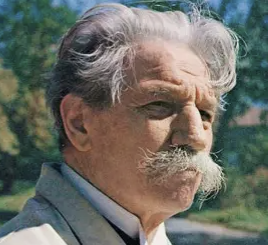
Indian thought has greatly attracted me since in my youth I first became acquainted with it through reading the works of Arthur Schopenhauer. From the very beginning I was convinced that all thought is really concerned with the great problem of how man can attain to spiritual union with infinite Being. My attention was drawn to Indian thought because it is busied with this problem and because by its nature it is mysticism. What I liked about it also was that Indian ethics are concerned with the behaviour of man to all living beings and not merely with his attitude to his fellow-man and to human society.
▼
Source
source
Preface, p. vi
1 month 4 days ago
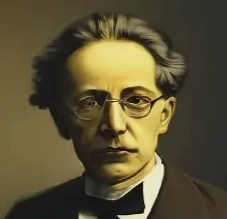
Whoever will be free must make himself free. Freedom is no fairy gift to fall into a man's lap. What is freedom? To have the will to be responsible for one's self.
▼
Source
source
Attributed in Forbes Vol 38 Iss. 2 (1936) p. 18, and in Lifetime Speaker's Encyclopedia (1962) by Jacob Morton Braude, p. 275

4 months 2 weeks ago
At the present day, civilized opinion is a curious mental mixture. The military instincts and ideals are as strong as ever, but they are confronted by reflective criticisms which sorely curb their ancient freedom. Innumerable writers are showing up the bestial side of military service. Pure loot and mastery seem no longer morally allowable motives, and pretexts must be found for attributing them solely to the enemy.
4 months 2 weeks ago
I wished, by treating Psychology like a natural science, to help her to become one.
▼
Source
source
A Plea for Psychology as a Natural Science, 1892
1 month 2 weeks ago
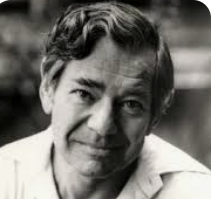
Of faith and morals, one cannot speak honestly for long without hurting feelings. Therefore, most people speak dishonestly of the most important subjects. Many recent philosophers prefer not to speak of them at all. But in some situations honesty is incompatible with silence.
4 weeks ago
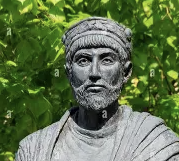
I lay it down that there is Matter, and also there are Material Species, but unless a Final Cause for them be previously assumed, we shall be, without perceiving it, introducing the doctrine of Epicurus: since if nothing be anterior to two efficient causes, a spontaneous flux and chance must have united the two together.
2 weeks 4 days ago
We have no reason to fear lest a habit of conscientious inquiry should paralyse the actions of our daily life. But because it is not enough to say, "It is wrong to believe on unworthy evidence," without saying also what evidence is worthy, we shall now go on to inquire under what circumstances it is lawful to believe on the testimony of others; and then, further, we shall inquire more generally when and why we may believe that which goes beyond our own experience, or even beyond the experience of mankind.
3 months 4 days ago
The jargon makes it seem that ... the pure attention of the expression to the subject matter would be a fall into sin.
▼
Source
source
p. 9
4 months 6 days ago
Agesilaus was very fond of his children; and it is reported that once toying with them he got astride upon a reed as upon a horse, and rode about the room; and being seen by one of his friends, he desired him not to speak of it till he had children of his own.
▼
Source
source
Of Agesilaus the Great

2 months 2 weeks ago
I am not a "culture critic" because I am not in any way interested in classifying cultural forms. I am a metaphysician, interested in the life of the forms and their surprising modalities. That is why I have no interest in the academic world.
▼
Source
source
Letters of Marshall McLuhan (1987), p. 413

4 months 4 weeks ago
Since my logic aims to teach and instruct the understanding, not that it may with the slender tendrils of the mind snatch at and lay hold of abstract notions (as the common logic does), but that it may in very truth dissect nature, and discover the virtues and actions of bodies, with their laws as determined in matter; so that this science flows not merely from the nature of the mind, but also from the nature of things.
▼
Source
source
Aphorism 52
3 months 2 weeks ago
Those who cavalierly reject the Theory of Evolution, as not adequately supported by facts, seem quite to forget that their own theory is supported by no facts at all. Like the majority of men who are born to a given belief, they demand the most rigorous proof of any adverse belief, but assume that their own needs none.
3 months 1 week ago
Men do not sufficiently realise that their future is in their own hands. Theirs is the task of determining first of all whether they want to go on living or not. Theirs is the responsibility, then, for deciding if they want merely to live, or intend to make just the extra effort required for fulfilling, even on their refractory planet, the essential function of the universe, which is a machine for the making of gods.
2 weeks 2 days ago
At this point in history when all things which concern man and the structure and elements of history itself are suddenly revealed to us in a new light, it behooves us in our scientific thinking to become masters of the situation, for it is not inconceivable that sooner than we suspect, as has often been the case before in history, this vision may disappear, the opportunity may be lost, and the world will once again present a static, uniform, and inflexible countenance.
3 months 2 weeks ago
I believe it to be this; that my will, absolutely of itself, and without the intervention of any instrument that might weaken its effect, shall act in a sphere perfectly congenial - reason upon reason, spirit upon spirit; in a sphere to which it does not give the laws of life, of activity, of progress, but which has them in itself, therefore, upon self-active reason. But spontaneous, self-active reason is will. The law of the transcendental world must, therefore, be a Will.
▼
Source
source
Jane Sinnett, trans 1846 p.110

1 month 3 days ago
The fox, when caught, is worth nothing: he is followed for the pleasure of following.
▼
Source
source
Vol. I, ch. 6, "Of Occupation", p. 177
4 months 2 weeks ago
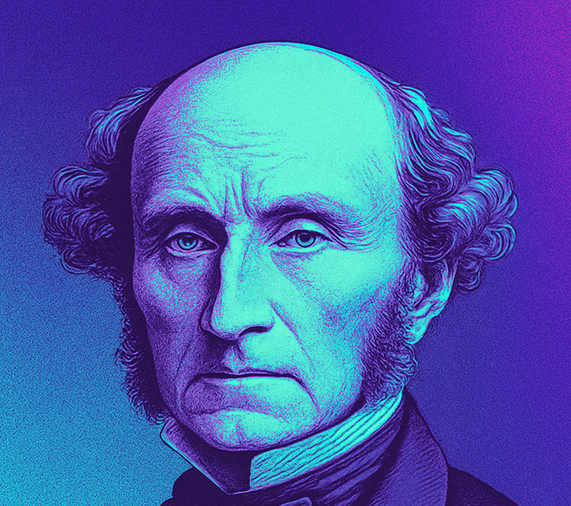
Whatever crushes individuality is despotism, by whatever name it may be called, and whether it professes to be enforcing the will of God or the injunctions of men.
▼
Source
source
Ch. III: Of Individuality, As One of the Elements of Well-Being

2 weeks 5 days ago
I agree with you that it is the duty of every good citizen to use all the opportunities, which occur to him, for preserving documents relating to the history of our country.
▼
Source
source
Letter to Hugh P. Taylor

5 months 3 weeks ago
As a genius of construction man raises himself far above the bee in the following way: whereas the bee builds with wax that he gathers from nature, man builds with the far more delicate conceptual material which he first has to manufacture from himself.
3 months 1 week ago
Long after Plato's time the concept of the Ideas still represented the sphere of aloofness, independence, and in a certain sense even freedom, an objectivity that did not submit to 'our' interests.
▼
Source
source
p. 46.

3 months 2 weeks ago
The only profound thinkers are the ones who do not suffer from a sense of the ridiculous.

4 months 2 weeks ago
The best lightning-rod for your protection is your own spine.
▼
Source
source
p. 236

5 months 2 weeks ago
Certain success evicts one from the paradise of winning against the odds.
1 month 1 week ago
As for one-party rule, it was questioned neither by the Left Opposition nor by the Right [wing of the Communist party]. All were prisoners of their own doctrine and their own past: all had worked with a will to create the apparatus of violence that crushed them. Bukharin's hopeless attempt to form a league with Kamenev was no more than a pitiful epilogue to his career. In November 1929 the deviationists performed a public act of penance, but even this did not save them. Stalin's victory was complete; the collapse of the Bukharinite opposition meant the triumph of autocracy in the party and in the country. In December 1929 Stalin's fiftieth birthday was celebrated as a major historical event, and from this point we may date the "cult of personality". Trotsky's prophecy of 1903 had come true: party rule had become Central Committee rule, and this in turn had becorne the personal tyranny of a dictator.
▼
Source
source
(pp. 42-3)

3 months 2 weeks ago
We are living in what the Greeks called the right time for a "metamorphosis of the gods," i.e. of the fundamental principles and symbols. This peculiarity of our time, which is certainly not of our conscious choosing, is the expression of the unconscious man within us who is changing. Coming generations will have to take account of this momentous transformation if humanity is not to destroy itself through the might of its own technology and science.
▼
Source
source
p 110

3 months 4 days ago
The essential characteristic of the first half of the twentieth century is the growing weakness, and almost the disappearance, of the idea of value.
▼
Source
source
"The responsibility of writers," p. 167
2 weeks 4 days ago
What we do need to worry about is the possibility that we will be reduced, in the face of the enormities of our time, to silence or to mere protest.
▼
Source
source
A Poem of Difficult Hope
3 months 2 weeks ago
Knowledge, having irritated and stimulated our appetite for power, will lead us inexorably to our ruin.

4 months 2 weeks ago
My sympathies are, of course, with the Government side, especially the Anarchists; for Anarchism seems to me more likely to lead to desirable social change than highly centralized, dictatorial Communism.
▼
Source
source
Authors Take Sides on the Spanish War (1937) edited by Nancy Cunard and publisehd by the Left Review
2 weeks 4 days ago
The system becomes more coherent as it is further extended. The elements which we require for explaining a new class of facts are already contained in our system. Different members of the theory run together, and we have thus a constant convergence to unity. In false theories, the contrary is the case.
▼
Source
source
Part II Of Knowledge, Book XI Of the Construction of Science, Chap. 5 Of Certain Characteristics of Scientific Induction

3 months 3 days ago
There is something between the gross specialised values of the mere practical man, and the thin specialised values of the mere scholar. Both types have missed something; and if you add together the two sets of values, you do not obtain the missing elements.
▼
Source
source
Ch. 13: "Requisites for Social Progress", p. 279
CivilSimian.com created by AxiomaticPanic, CivilSimian, Kalokagathia