

3 months 1 week ago
I have always thought that clarity is a form of courtesy that the philosopher owes; moreover, this discipline of ours considers it more truly a matter of honor today than ever before to be open to all minds ... This is different from the individual sciences which increasingly [interpose] between the treasure of their discoveries and the curiosity of the profane the tremendous dragon of their closed terminology.
▼
Source
source
p. 19


5 months 6 days ago
I prefer a short life with width to a narrow one with length.
4 months 2 weeks ago
We must frankly confess, then, using our empirical common sense and ordinary practical prejudices, that in the world that actually is, the virtues of sympathy, charity, and non-resistance may be, and often have been, manifested in excess. ... You will agree to this in general, for in spite of the Gospel, in spite of Quakerism, in spite of Tolstoi, you believe in fighting fire with fire, in shooting down usurpers, locking up thieves, and freezing out vagabonds and swindlers.
▼
Source
source
Lectures XIV and XV, "The Value of Saintliness"
3 months 1 week ago
I have never said that human society ought to be aristocratic, but a great deal more than that. What I have said, and still believe with ever-increasing conviction, is that human society is always, whether it will or no, aristocratic by its very essence, to the extreme that it is a society in the measure that it is aristocratic, and ceases to be such when it ceases to be aristocratic. Of course I am speaking now of society and not of the State.
▼
Source
source
Chap.II: The Rise Of The Historic Level
4 months 2 weeks ago
Every way of classifying a thing is but a way of handling it for some particular purpose.

4 months 1 week ago
Commit no lustfulness, so that harm and regret may not reach thee from thine own actions.
1 week 1 day ago
Our experience hitherto justifies us in trusting that nature is the realization of the simplest that is mathematically conceivable. I am convinced that purely mathematical construction enables us to find those concepts and those lawlike connections between them that provide the key to the understanding of natural phenomena. Useful mathematical concepts may well be suggested by experience, but in no way can they be derived from it. Experience naturally remains the sole criterion of the usefulness of a mathematical construction for physics. But the actual creative principle lies in mathematics. Thus, in a certain sense, I take it to be true that pure thought can grasp the real, as the ancients had dreamed.

3 months 5 days ago
It is the vital asserting itself, and in order to assert itself it creates, with the help of its enemy, the rational, a complete dogmatic structure, and this the Church defends against rationalism, against Protestantism, and against Modernism. The Church defends life. It stood up against Galileo, and it did right; for his discovery, in its inception and until it became assimilated to the general body of human knowledge, tended to shatter the anthropomorphic belief that the universe was created for man. It opposed Darwin, and it did right, for Darwinism tends to shatter our belief that man is an exceptional animal, created expressly to be eternalized. And lastly, Pius IX, the first Pontiff to be proclaimed infallible, declared he was irreconcilable with the so-called modern civilization. And he did right.

4 months 2 weeks ago
No nation was ever so virtuous as each believes itself, and none was ever so wicked as each believes the other.
▼
Source
source
Justice in War-Time (1916), p. 70

4 months 3 weeks ago
There is as much difference between us and ourselves as between us and others.
▼
Source
source
Ch. 1. Of the Inconstancy of Our Actions, tr. Cotton, rev. W. Carew Hazlitt, 1877
3 months 1 week ago
Domination has its own aesthetics, and democratic domination has its democratic aesthetics.
▼
Source
source
p. 65

3 months 2 weeks ago
Neither the few nor the many have a right to act merely by their will, in any matter connected with duty, trust, engagement, or obligation.
▼
Source
source
p. 440

4 months 2 weeks ago
A new word is like a fresh seed sown on the ground of the discussion.
4 months 2 weeks ago
I think all the great religions of the world - Buddhism, Hinduism, Christianity, Islam, and Communism - both untrue and harmful. It is evident as a matter of logic that, since they disagree, not more than one of them can be true. With very few exception, the religions which a man accepts is that of the community in which he lives, which makes it obvious that the influence of environment is what has led him to accept the religion in question.
▼
Source
source
Preface, 1957

4 months 4 weeks ago
Animals only follow their natural instincts; but man, unless he has experienced the influence of learning and philosophy, is at the mercy of impulses that are worse than those of a wild beast. There is no beast more savage and dangerous than a human being who is swept along by the passions of ambition, greed, anger, envy, extravagance, and sensuality.
▼
Source
source
Translated by Beert C. Verstraete as On Education for Children, in The Erasmus Reader (University of Toronto Press: 1990), p. 73
3 months 1 day ago
There can be no freedom in the large sense of the word, no harmonious development, so long as mercenary and commercial considerations play an important part in the determination of personal conduct.
2 months 4 days ago
There is no alleviation for the sufferings of mankind except veracity of thought and of action, and the resolute facing of the world as it is, when the garment of make-believe, by which pious hands have hidden its uglier features, is stripped off.
▼
Source
source
Autobiography
4 months 2 weeks ago
The Few assume to be the deputies, but they are often only the despoilers of the Many.
▼
Source
source
Pt. IV, sec. 3, ch. 3
3 months 1 day ago
With all our boasted reforms, our great social changes, and our far-reaching discoveries, human beings continue to be sent to the worst of hells, wherein they are outraged, degraded, and tortured, that society may be "protected" from the phantoms of its own making.

4 months 2 weeks ago
Music is the poor man's Parnassus.
▼
Source
source
Poetry and Imagination
1 month 3 days ago
I do not mean to be disrespectful, but the attempt of the Lords to stop the progress of reform reminds me very forcibly of the great storm at Sidmouth, and of the conduct of the excellent Mrs Partington on that occasion. In the winter of 1824 there set in a great flood upon that town - the tide rose to an incredible height - the waves rushed in upon the houses, and everything was threatened with destruction. In the midst of this sublime and terrible storm, Dame Partington, who lived upon the beach, was seen at the door of her house with mop and pattens, trundling her mop, squeezing out the sea-water, and vigorously pushing away the Atlantic Ocean. The Atlantic was roused; Mrs. Partington's spirit was up. But I need not tell you that the contest was unequal.
▼
Source
source
The Atlantic Ocean beat Mrs. Partington. Speech at Taunton

4 months 3 weeks ago
Whenever the legislature attempts to regulate the differences between masters and their workmen, its counsellors are always the masters. When the regulation, therefore, is in favor of the workmen, it is always just and equitable; but it is sometimes otherwise when in favor of the masters.
▼
Source
source
Chapter x, Part II, p. 168.
4 months 2 weeks ago
In some lyceums they tell me that they have voted to exclude the subject of religion. But how do I know what their religion is, and when I am near to or far from it? I have walked into such an arena and done my best to make a clean breast of what religion I have experienced, and the audience never suspected what I was about.
▼
Source
source
p. 490
3 months 5 days ago
I have always observed that to succeed in the world one should appear like a fool but be wise.
5 months 2 weeks ago
Indeed, it may well be argued that one reason for the decline in science, art, and literature was the increasing absorption of the better minds into a new sort of intellectual pursuit, theology.
2 months 2 weeks ago
He doubly benefits the needy who gives quickly. Maxim 6
4 months 3 weeks ago
Whensoever therefore the legislative shall transgress this fundamental rule of society; and either by ambition, fear, folly or corruption, endeavour to grasp themselves, or put into the hands of any other, an absolute power over the lives, liberties, and estates of the people; by this breach of trust they forfeit the power the people had put into their hands for quite contrary ends, and it devolves to the people, who have a right to resume their original liberty, and, by the establishment of a new legislative, (such as they shall think fit) provide for their own safety and security, which is the end for which they are in society.
▼
Source
source
Second Treatise of Civil Government, Ch. XIX, sec. 222
4 months 1 week ago
Look round and round the man you recommend, for yours will be the shame should he offend.
▼
Source
source
Book I, epistle xviii, line 76 (translated by John Conington).

4 months 2 weeks ago
The Ideal Man of the eighteenth century was the Rationalist; of the seventeenth, the Christian Stoic; of the Renaissance, the Free Individual; of the Middle Ages, the Contemplative Saint. And what is our Ideal Man? On what grand and luminous mythological figure does contemporary humanity attempt to model itself? The question is embarrassing. Nobody knows. And, in spite of all the laudable efforts of the Institute for Intellectual Co-operation to fabricate an acceptable Ideal Man for the use of Ministers of Education, nobody, I suspect, will know until such time as a major poet appears upon the scene with the unmistakable revelation. Meanwhile, one must be content to go on piping up for reason and realism and a certain decency.
▼
Source
source
p. 5

3 months 2 days ago
The case is a good example of what Van Vogt came to call "the violent man" or the "Right Man." He is a man driven by a manic need for self-esteem - to feel that he is a "somebody." He is obsessed by the question of "losing face," so will never, under any circumstances, admit that he might be in the wrong.
▼
Source
source
p. 211
4 months 2 weeks ago
I do not know but it is too much to read one newspaper a week. I have tried it recently, and for so long it seems to me that I have not dwelt in my native region. The sun, the clouds, the snow, the trees say not so much to me. You cannot serve two masters. It requires more than a day's devotion to know and to possess the wealth of a day.
▼
Source
source
p. 491
4 months 2 weeks ago
One must care about a world one will not see.
▼
Source
source
Attributed to Russell in The Wordsworth Dictionary of Quotations (1997), p. 450, and in Robertson's Dictionary of Quotations (1998), p. 362, but no specific source is given.

1 month 3 weeks ago
Many people today hold to a Gnostic view of things without realizing the fact. Believing that human beings can be fully understood in the terms of scientific materialism, they reject any idea of free will. But they cannot give up hope of being masters of their destiny. So they have come to believe that science will somehow enable the human mind to escape the limitations that shape its natural condition. Throughout much of the world, and particularly in western countries, the Gnostic faith that knowledge can give humans a freedom no other creature can possess has become the predominant religion.
▼
Source
source
The Faith of Puppets: The Freedom of the Marionette (p. 9)
4 months 2 weeks ago
In modern eyes, precious though wars may be they must not be waged solely for the sake of the ideal harvest. Only when forced upon one, is a war now thought permissible. It was not thus in ancient times. The earlier men were hunting men, and to hunt a neighboring tribe, kill the males, loot the village and possess the females, was the most profitable, as well as the most exciting, way of living. Thus were the more martial tribes selected, and in chiefs and peoples a pure pugnacity and love of glory came to mingle with the more fundamental appetite for plunder. Modern war is so expensive that we feel trade to be a better avenue to plunder; but modern man inherits all the innate pugnacity and all the love of glory of his ancestors. Showing war's irrationality and horror is of no effect on him. The horrors make the fascination. War is the strong life; it is life in extremis; war taxes are the only ones men never hesitate to pay, as the budgets of all nations show us.
1 month 3 weeks ago
Through all of history and pre-history it has been accepted that there is something wrong with the human animal. Health may be the natural condition of other species, but in humans it is sickness that is normal. To be chronically unwell is part of what it means to be human. It is no accident that every culture has its own versions of therapy. Tribal shamans and modern psychotherapists answer the same needs and practise the same trade.
▼
Source
source
Beyond the Last Thought: Freud's cigars and the long way round to Nirvana (p. 84)
4 months 1 week ago
He who feared that he would not succeed sat still.
▼
Source
source
Book I, epistle xvii, line 37
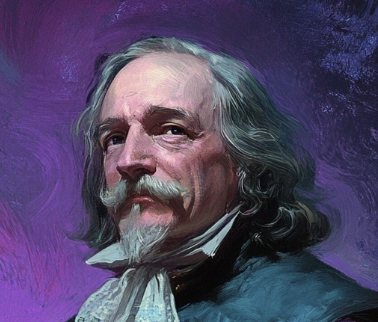
3 months 1 week ago
Men looke not at the greatnesse of the evill past, but the greatnesse of the good to follow.
▼
Source
source
The First Part, Chapter 15, p. 76 (Italics as per text)
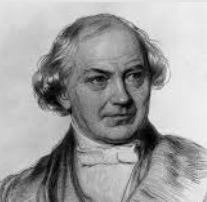
2 weeks 4 days ago
The Logic of Induction is the 'Criterion of Truth' inferred from Facts, as the Logic of Deduction is the 'Criterion of Truth' deduced from necessary Principle. In Art, Truth is a means to an end; in Science, it is the only end.
2 months 2 weeks ago
Let a fool hold his tongue and he will pass for a sage.
▼
Source
source
Maxim 914
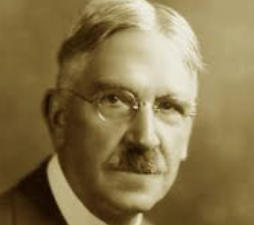
3 months 1 week ago
It is a familiar and significant saying that a problem well-put is half-solved.
▼
Source
source
"The Pattern of Inquiry"
4 months 1 week ago
Herbert Spencer is little read now. Philosophers do not regard him as a major thinker.
▼
Source
source
Social Darwinism has long been in disrepute. Chapter 3, From Evolution To Ethics?, p. 61
4 months 2 weeks ago
The soul of wit may become the very body of untruth.
▼
Source
source
Foreward (p. vii)

2 months 2 weeks ago
Sentimentality, like pornography, is fragmented emotion; a natural consequence of a high visual gradient in any culture.
3 months 1 week ago
O faithless and perverse generation, how long shall I be with you? how long shall I suffer you? bring him hither to me.
▼
Source
source
17:17 (KJV)

4 months 3 weeks ago
Speaking generally, he holds dominion, to whom are entrusted by common consent affairs of state - such as the laying down, interpretation, and abrogation of laws, the fortification of cities, deciding on war and peace, &c. But if this charge belong to a council, composed of the general multitude, then the dominion is called a democracy; if the council be composed of certain chosen persons, then it is an aristocracy ; and, if, lastly, the care of affairs of state, and, consequently, the dominion rest with one man, then it has the name of monarchy.
▼
Source
source
Ch. 2, Of Natural Right
3 months 1 day ago
Corruption of politics has nothing to do with the morals, or the laxity of morals, of various political personalities. Its cause is altogether a material one. Politics is the reflex of the business and industrial world, the mottos of which are: "To take is more blessed than to give"; "buy cheap and sell dear"; "one soiled hand washes the other." There is no hope even that woman, with her right to vote, will ever purify politics.
4 months 2 weeks ago
Philosophy ... is a science, and as such has no articles of faith; accordingly, in it nothing can be assumed as existing except what is either positively given empirically, or demonstrated through indubitable conclusions.
▼
Source
source
Vol I
4 weeks 1 day ago
The old view was that delicacy of language was part of the nature, the sacred nature, of eros and that to speak about it in any other way would be to misunderstand it. What has disappeared is the risk and the hope of human connectedness embedded in eros. Ours is a language that reduces the longing for an other to the need for individual, private satisfaction and safety.
▼
Source
source
pp. 13-14.
CivilSimian.com created by AxiomaticPanic, CivilSimian, Kalokagathia