


3 months 2 weeks ago
A man full of warm, speculative benevolence may wish his society otherwise constituted than he finds it, but a good patriot and a true politician always considers how he shall make the most of the existing materials of his country. A disposition to preserve and an ability to improve, taken together, would be my standard of a statesman. Everything else is vulgar in the conception, perilous in the execution.
3 months 3 weeks ago
The infant runs toward it with its eyes closed, the adult is stationary, the old man approaches it with his back turned.
▼
Source
source
"Death"

3 months 2 weeks ago
The preposterous distinction of rank, which render civilization a curse, by dividing the world between voluptuous tyrants and cunning envious dependents, corrupt, almost equally, every class of people, because respectability is not attached to the discharge of the relative duties of life, but to the station, and when the duties are not fulfilled, the affections cannot gain sufficient strength to fortify the virtue of which they are the natural reward. Still there are some loop-holes out of which a man may creep, and dare to think and act for himself; but for a woman it is an herculean task, because she has difficulties peculiar to her sex to overcome, which require almost super-human powers.
▼
Source
source
Ch. 9

2 weeks 4 days ago
The liberty of the whole earth was depending on the issue of the contest, and was ever such a prize won with so little innocent blood? My own affections have been deeply wounded by some of the martyrs to this cause, but rather than it should have failed, I would have seen half the earth desolated. Were there but an Adam & an Eve left in every country, & left free, it would be better than as it now is.
▼
Source
source
Letter to William Short (January 3, 1793), quoted in Stanley Elkins and Eric McKitrick, The Age of Federalism (1995), pp. 316-317
3 months 1 week ago
If I compare arithmetic with a tree that unfolds upward into a multitude of techniques and theorems while its root drives into the depths, then it seems to me that the impetus of the root.
▼
Source
source
Gottlob Frege, Montgomery Furth (1964). The Basic Laws of Arithmetic: Exposition of the System. p. 10
2 months 4 days ago
We have always thought that Mr. Darwin has unnecessarily hampered himself by adhering so strictly to his favourite "Natura non facit saltum." We greatly suspect that she does make considerable jumps in the way of variation now and then, and that these saltations give rise to some of the gaps which appear to exist in the series of known forms.

1 month 3 weeks ago
Hayek's blind spot with regard to politics was clear in the early 1980s when the first Thatcher government, in an attempt to reduce inflation and bring the public finances closer to a balanced budget, was raising interest rates and cutting public spending. As he had done during the 1930s, Hayek attacked these policies as not being severe enough. It would be better, he told me in a conversation we had around this time, if Thatcher imposed a more drastic contraction on the economy so that the wage-setting power of the trade unions could be broken. He appeared unfazed by unemployment, which was already higher (more than three million people) than at any time since the 1930s, and would rise much further if his recommendations were accepted.
2 weeks ago
And if the matter of the Philosophers Stone, and the manner of preparing it, be such Mysteries as they would have the World believe them, they may Write Intelligibly and Clearly of the Principles of mixt Bodies in General, without Discovering what they call the Great Work.

4 months 2 weeks ago
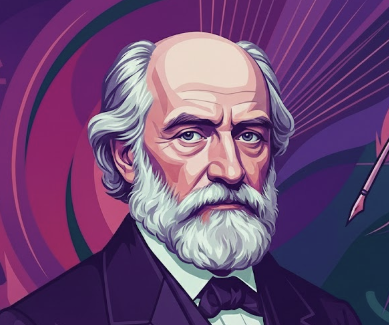
The human imagination has seldom had before it an object so sublimely ordered as the medieval cosmos. If it has an aesthetic fault, it is perhaps, for us who have known romanticism, a shade too ordered. For all its vast spaces it might in the end afflict us with a kind of claustrophobia. Is there nowhere any vagueness? No undiscovered by-ways? No twilight? Can we never really get out of doors?
▼
Source
source
The Discarded Image: An Introduction to Medieval and Renaissance Literature, 1964
4 months 2 weeks ago
A great affliction of all Philistines is that idealities afford them no entertainment, but to escape from boredom they are always in need of realities.
▼
Source
source
E. Payne, trans. (1974) Vol. 1, p. 345

4 months 3 weeks ago
The education of the common people requires, perhaps, in a civilized and commercial society, the attention of the public more than that of people of some rank and fortune.
▼
Source
source
Chapter I, Part III, p. 845.

4 months 2 weeks ago
None of the things they learn, should ever be made a burthen to them, or impos's on them as a task. Whatever is so proposed, presently becomes irksome; the mind takes an aversion to it, though before it were a thing of delight or indifferency. Let a child but be ordered to whip his top at a certain time every day, whether he has or has not a mind to it; let this be but requir'd of him as a duty, wherein he must spend so many hours morning and afternoon, and see whether he will not soon be weary of any play at this rate. Is it not so with grown men?
▼
Source
source
Sec. 73

5 months 2 weeks ago
A Roman emperor sitting at the table surrounded by his bodyguard is a magnificent sight, but when the reason is fear, the magnificence pales. So also when the individual does not dare stand taciturnly by his word, does not stand freely and confidently on the pedestal of a conscious act, but is surrounded by a host of deliberations before and after that render him incapable of getting his eye on the action.

5 months 2 weeks ago
One recognizes one's course by discovering the paths that stray from it.
2 months 1 week ago
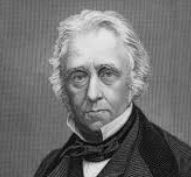
I believe that the progress of experimental science, the free intercourse of nation with nation, the unrestricted influx of commodities from countries where they are cheap, and the unrestricted efflux of labour towards countries where it is dear, will soon produce, nay, I believe that they are beginning to produce, a great and most blessed social revolution.
▼
Source
source
Speech in Edinburgh (2 November 1852), quoted in Speeches of the Right Honourable T. B. Macaulay, M.P. (1854), p. 517
2 weeks 4 days ago
There is not a sprig of grass that shoots uninteresting to me.
▼
Source
source
Thomas Jefferson Letter (23 Dec 1790) to Martha Jefferson Randolph. Collected in B.L. Rayner (ed.), Sketches of the Life, Writings, and Opinions of Thomas Jefferson (1832), 192.

4 months 2 weeks ago
I do not think it can be questioned that sympathy is a genuine motive, and that some people at some times are made somewhat uncomfortable by the sufferings of some other people. It is sympathy that has produced the many humanitarian advances of the last hundred years. We are shocked when we hear stories of the ill-treatment of lunatics, and there are now quite a number of asylums in which they are not ill-treated. Prisoners in Western countries are not supposed to be tortured, and when they are, there is an outcry if the facts are discovered. We do not approve of treating orphans as they are treated in Oliver Twist.
2 months 1 week ago
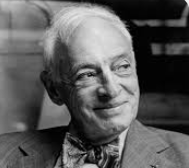
The late philosopher Morris R. Cohen of CCNY was asked by a student in the metaphysics course, "Professor Cohen, how do I know that I exist?" The keen old prof replied, "And who is asking?"
▼
Source
source
Humboldt's Gift (1996), p. 163
3 months 4 days ago
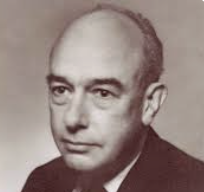
No particular experiences are linked with any particular statements in the interior of the field, except indirectly through considerations of equilibrium affecting the field as a whole.
▼
Source
source
"Two Dogmas of Empiricism"

4 months 1 week ago
The child learns to believe a host of things. I.e. it learns to act according to these beliefs. Bit by bit there forms a system of what is believed, and in that system some things stand unshakeably fast and some are more or less liable to shift. What stands fast does so, not because it is intrinsically obvious or convincing; it is rather held fast by what lies around it.
5 months 6 days ago
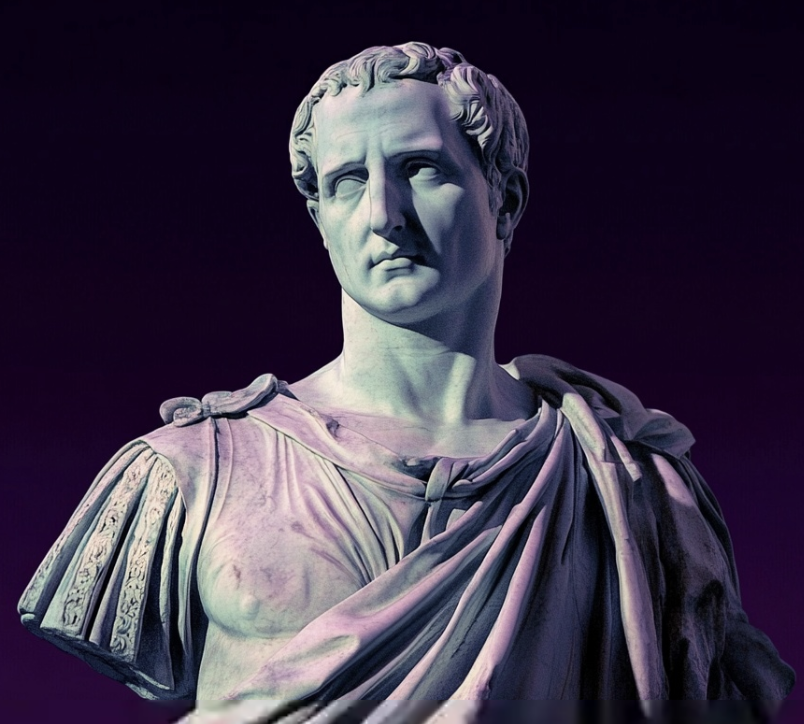
They are such fools that they seem to expect that, though the Republic is lost, their fish-ponds will be safe.
▼
Source
source
Letters to Atticus, Book I, 18.

5 months 2 weeks ago
Economics is on the side of humanity now.
3 weeks 6 days ago
Self-respect is the cornerstone of all virtue.
▼
Source
source
As quoted in A Toolbox for Humanity : More Than 9000 Years of Thought (2004) by Lloyd Albert Johnson, p. 147
4 weeks 1 day ago
Additionally, in the United States, we define manliness in terms of aggression. I think it must be because we're frightened. We put on a show of being tough guys, but it's completely unnecessary, you know. If you have what it takes, you don't need to put on an act, and you certainly don't need to beat nature into submission. Why be hostile to nature?
▼
Source
source
p. 8
4 months 2 weeks ago
Two men who differ as to the ends of life cannot hope to agree about education.
▼
Source
source
Ch. 12: Education and Discipline
3 months 4 days ago
It is difficult to fit the work of Nikolai Berdyaev into any neat category. The label that was used most frequently to characterize him was that of an "existential Christian philosopher" but ... his voice is equally relevant to psychology and psychoanalysis and it also constitutes a uniquely original commentary on the very nature of the person in our postmodern world especially in relation to spirituality.
▼
Source
source
Renos K. Papadopoulos, in C.G. Jung and Nikolai Berdyaev: Individuation and the Person (2011) by Georg Nicolaus, Foreword, p. xiii
2 months 1 week ago
I have been deep in Plato, Aristotle, and Theocritus ever since I left home, and admiring more and more every day the powers of that mighty language which is incomparably the best vehicle both for reasoning and for imagery that mankind have ever discovered, and which is richer both in abstract philosophical terms and poetical expressions than the English, French, and Latin tongues put together.
▼
Source
source
Letter to Zachary Macaulay (19? August 1820), quoted in The Letters of Thomas Babington Macaulay, Volume I: 1807-February 1831, ed. Thomas Pinney (1974), p. 145
3 months ago
The most important misunderstanding seems to me to lie in a confusion between the human necessities which I consider part of human nature, and the human necessities as they appear as drives, needs, passions, etc., in any given historical period. This division is not very different from Marx's concept of "human nature in general", to be distinguished from "human nature as modified in each historical period". The same distinction exists in Marx when he distinguishes between "constant" or "fixed" drives and "relative" drives. The constant drives "exist under all circumstances and ... can be changed by social conditions only as far as form and direction are concerned". The relative drives "owe their origin only to a certain type of social organization".

1 month 3 days ago
"What," say you, "are you giving me advice? Indeed, have you already advised yourself, already corrected your own faults? Is this the reason why you have leisure to reform other men?" No, I am not so shameless as to undertake to cure my fellow-men when I am ill myself. I am, however, discussing with you troubles which concern us both, and sharing the remedy with you, just as if we were lying ill in the same hospital.

1 month 1 week ago
In the Thirty Years' War... a third of the population of central Europe were killed in a bloody struggle between different Christian religious sects, and the pragmatic part of liberalism was to take final ends [defined by religions] out of political discussion... and to lower the sights of politics to defend life itself, and not "the good life"... as defined by a particular sect of a particular religion.
▼
Source
source
8:28
4 months 2 weeks ago
The boundaries of the species, whereby men sort them, are made by men.
▼
Source
source
Book III, Ch. 6, sec. 37

4 months 2 weeks ago
One of the ideas I had discussed in The Poverty of Historicism was the influence of a prediction upon the event predicted. I had called this the "Oedipus effect", because the oracle played a most important role in the sequence of events which led to the fulfilment of its prophecy. ... For a time I thought that the existence of the Oedipus effect distinguished the social from the natural sciences. But in biology, too-even in molecular biology-expectations often play a role in bringing about what has been expected.
▼
Source
source
Page 29
5 months 1 day ago
I make no doubt... that these rules are simple, artless, and natural.
4 months 1 week ago
... our maturation has consisted in the gradual realization that, if we can rely on one another, we need not rely on anything else. In religious terms, this is the Feuerbachian thesis that God is just a projection of the best, and sometimes the worst, of humanity. In philosophical terms, it is the thesis that anything that talk of objectivity can do to make our practices intelligible can be done equally well by talk of intersubjectivity.
▼
Source
source
"John Searle on Realism and Relativism." Truth and Progress: Philosophical Papers, Volume 3 (1998).

4 months 2 weeks ago
That what we seek we shall find; what we flee from flees from us.
▼
Source
source
Fate


4 months ago
Do not even think of doing what ought not to be done.
▼
Source
source
Pythagorean Ethical Sentences From Stobæus
5 months 2 weeks ago
...there are more things to admire in men than to despise.

4 months 2 weeks ago
Modern transcendental idealism, Emersonianism, for instance, also seems to let God evaporate into abstract Ideality. Not a deity in concreto, not a superhuman person, but the immanent divinity in things, the essentially spiritual structure of the universe, is the object of the transcendentalist cult. In that address of the graduating class at Divinity College in 1838 which made Emerson famous, the frank expression of this worship of mere abstract laws was what made the scandal of the performance.
▼
Source
source
Lecture II, "Circumscription of the Topic"
3 months 2 weeks ago
I have never yet seen any plan which has not been mended by the observation of those who were much inferior in understanding to the person who took the lead in the business.
3 months 1 week ago
All the cases in which means and ends are external to one another are non-esthetic.
▼
Source
source
p. 205

1 month 1 week ago
Tell me what kind of man governs a People, you tell me, with much exactness, what the net sum-total of social worth in that People has for some time been.

1 month 3 days ago
He who wants to govern must have insight into the hearts of men and act accordingly.
4 months 2 weeks ago
At best the principles that economists have supposed the choices of rational individuals to satisfy can be presented as guidelines for us to consider when we make our decisions.
▼
Source
source
Chapter IX, Section 84, p. 558

2 months 2 weeks ago
The mother tongue is propaganda.
▼
Source
source
The University of Windsor review, Volumes 1-2, 1965, p. 10

2 months 4 weeks ago
Astronomy is perhaps the science whose discoveries owe least to chance, in which human understanding appears in its whole magnitude, and through which man can best learn how small he is.
▼
Source
source
C 23

2 weeks 1 day ago
The mind, like the body, has its contagious diseases and its scurvy. …We catch everything from those with whom we come in contact; their gestures, their accent, etc.

2 weeks 4 days ago
We cannot hope to be secure when our government has declared, by its readiness "to act alone," its willingness to be everybody's enemy.

3 months 2 weeks ago
We are all of us in error, the humorists excepted. They alone have discerned, as though in jest, the inanity of all that is serious and even of all that is frivolous.
3 months 2 weeks ago
Always to have lived with the nostalgia to coincide with something, but not really knowing with what - it is easy to shift from unbelief to belief, or conversely. But what is there to convert to, and what is there to abjure, in a state of chronic lucidity?
CivilSimian.com created by AxiomaticPanic, CivilSimian, Kalokagathia