

8 months 1 week ago
Men are disturbed, not by things, but by the principles and notions which they form concerning things.
▼
Source
source
(5). (Enchiridion 5)

6 months 3 weeks ago
I think that the principal and most basic spiritual need of the Russian People is the need for suffering, incessant and unslakeable suffering, everywhere and in everything. I think the Russian People have been infused with this need to suffer from time immemorial. A current of martyrdom runs through their entire history, and it flows not only from external misfortunes and disasters but springs from the very heart of the People themselves. There is always an element of suffering even in the happiness of the Russian People, and without it their happiness is incomplete.
▼
Source
source
A Writer's Diary, Vol. 1: 1873-1876 (1994), pp. 161-162
3 months 2 weeks ago
I believe with Schopenhauer: We can do what we wish, but we can only wish what we must. Practically, I am, nevertheless, compelled to act as if freedom of the will existed. If I wish to live in a civilized community, I must act as if man is a responsible being. I know that philosophically a murderer is not responsible for his crime; nevertheless, I must protect myself from unpleasant contacts. I may consider him guiltless, but I prefer not to take tea with him.

7 months 3 weeks ago
Is not marriage an open question, when it is alleged, from the beginning of the world, that such as are in the institution wish to get out, and such as are out wish to get in?
▼
Source
source
Montaigne; or, The Skeptic
4 months 2 days ago
Universal love is really the way of the sage-kings. It is what gives peace to the rulers and sustenance to the people. The gentleman would do well to understand and practise universal love; then he would be gracious as a ruler, loyal as a minister, affectionate as a father, filial as a son, courteous as an elder brother, and respectful as a younger brother. So, if the gentleman desires to be a gracious ruler, a loyal minister, an affectionate father, a filial son, a courteous elder brother, and a respectful younger brother, universal love must be practised. It is the way of the sage-kings and the great blessing of the people.
▼
Source
source
Book 4; Universal Love III

7 months 3 weeks ago
He was free, free in every way, free to behave like a fool or a machine, free to accept, free to refuse, free to equivocate; to marry, to give up the game, to drag this death weight about with him for years to come. He could do what he liked, no one had the right to advise him, there would be for him no Good or Evil unless he thought them into being.
▼
Source
source
L'âge de raison (The Age of Reason)
5 months 2 weeks ago
Times are changed with him who marries; there are no more by-path meadows, where you may innocently linger, but the road lies long and straight and dusty to the grave. Idleness, which is often becoming and even wise in the bachelor, begins to wear a different aspect when you have a wife to support.
▼
Source
source
Virginibus Puerisque, Ch. 2.
8 months 3 weeks ago
He realized now that to be afraid of this death he was staring at with animal terror meant to be afraid of life. Fear of dying justified a limitless attachment to what is alive in man. And all those who had not made the gestures necessary to live their lives, all those who feared and exalted impotence — they were afraid of death because of the sanction it gave to a life in which they had not been involved. They had not lived enough, never having lived at all.
5 months 1 week ago
For every man the world is as fresh as it was at the first day, and as full of untold novelties for him who has the eyes to see them.

7 months 3 weeks ago
As for my own business, even that kind of surveying which I could do with most satisfaction my employers do not want. They would prefer that I should do my work coarsely and not too well, ay, not well enough. When I observe that there are different ways of surveying, my employer commonly asks which will give him the most land, not which is most correct.
▼
Source
source
p. 486

7 months 3 weeks ago
The prospect for the human race is sombre beyond all precedent. Mankind are faced with a clear-cut alternative: either we shall all perish, or we shall have to acquire some slight degree of common sense. A great deal of new political thinking will be necessary if utter disaster is to be averted.

5 months 3 weeks ago
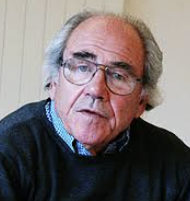
Our entire linear and accumulative culture collapses if we cannot stockpile the past in plain view. "
▼
Source
source
The Precession of Simulacra," p. 10

6 months 1 week ago
May we not say, perhaps, that the evil man is annihilated because he wished to be annihilated, or that he did not wish strongly enough to eternalize himself because he was evil? May we say that it is not believing in the other life which causes a man to be good, but rather that being good causes him believe in it? And what is being good and being evil? These states belong to the sphere of ethics, not of religion; or rather, does not the doing good though being evil pertain to ethics, and the being good [forgivable] though doing evil, to religion?
5 months 2 weeks ago
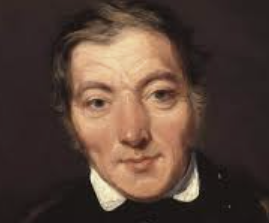
The will of man has no power whatever over his opinions; he must, and ever did, and ever will, believe what has been, is, or may be impressed on his mind by his predecessors, and the circumstances which surround him.
3 months 3 weeks ago
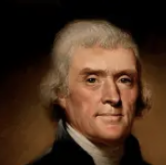
One loves to possess arms, though they hope never to have occasion for them.
▼
Source
source
Letter to George Washington (1796); published in The Writings of Thomas Jefferson, 20 Vols., Washington, D.C., (1903-04), 9:341
4 months 2 weeks ago
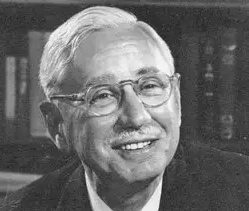
It is life that educates, and perhaps love more than anything else in life.
▼
Source
source
Ch. 2 : On Youth
8 months 3 weeks ago
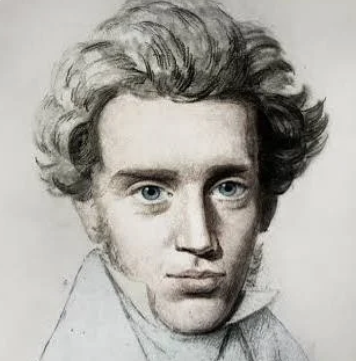
As soon as the discourse is about a holy spirit, about believing in the holy spirit, how many do you think believe in that? Or when the discourse is about an evil spirit that should be renounced: how many do you think believe in such a thing? How can this be? Is it perhaps because the subject becomes too earnest when it is the holy spirit? For I can talk about, believe in, the spirit of the age, the spirit of the world, and the like and do not thereby need to think of anything specific. It is a kind of spirit, but I am not absolutely bound by what I say. And not being bound by what one says is highly prized.
3 months 2 weeks ago
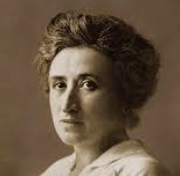
The proletarian revolution ought now, by a little ray of kindness, to illuminate the gloomy life of prisoners, shorten Draconian sentences, abolish barbarous punishments - the use of manacles and whippings - improve, as far as possible, the medical attention, the food allowance, and the conditions of labor. That is a duty of honor.
▼
Source
source
Against Capital Punishment (1918), Rosa Luxemburg Speaks
6 months 3 weeks ago
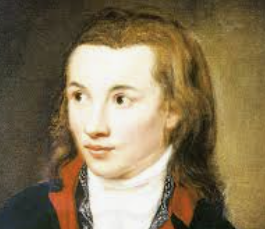
Love works magic. It is the final purpose Of the world story, The Amen of the universe.
6 months 2 weeks ago
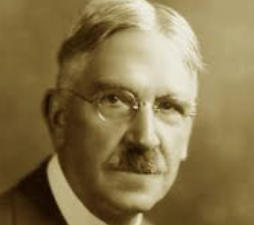
The discovery that mass changes with velocity, a discovery made when minute bodies came under consideration, finally forced surrender of the notion that mass is a fixed and inalienable possession of ultimate elements or individuals, so that time is now considered to be their fourth dimension.

4 months 2 weeks ago
Some economists also use the terms Fordism and pos-Fordism to mark the shift from an economy characterized by the stable-long-term employment typical of factory workers to one marked by flexible, mobile, and precarious labor relations: flexible because workers have to adapt to different tasks, mobile because workers have to move frequently between jobs, and precarious because no contracts guarantee stable, long-term employment. Whereas economic modernization, which developed Fordist labor relations, centered on the conomies of scale and larga systems of production and exchange, economic postmodernization, with its post-Fordist labor relations, develops smaller-scale, flexible systems.
▼
Source
source
112
4 months 3 weeks ago
The person attempting to travel two roads at once will get nowhere.
▼
Source
source
Quoted in: Errick A. Ford (2010) Iron Sharpens Iron: Wisdom of the Ages, p. 48
7 months 3 weeks ago
Only that day dawns to which we are awake. There is more day to dawn. The sun is but a morning star.
▼
Source
source
p. 375
7 months 3 weeks ago
Yet it seems extraordinary that the justice of increasing the expectations of the better placed by a billion dollars, say, should turn on whether the prospects of the least favored increase or decrease by a penny.
▼
Source
source
Chapter III, Section 26, pg. 157
4 months 2 weeks ago
Happiness is the free play of the instincts, and so is youth.
▼
Source
source
Ch. 2 : On Youth
3 months 3 weeks ago
A 'Natural System' is one which attempts to make 'all' the divisions natural, the widest as well as the narrowest; and therefore applies 'no' characters 'peremptorily'.

3 months 3 weeks ago
There's nothing under the ground that's worthmore than the little layer of topsoil sitting on top of it.
3 months 3 weeks ago
Everything predicted by the enemies of banks, in the beginning, is now coming to pass. We are to be ruined now by the deluge of bank paper. It is cruel that such revolutions in private fortunes should be at the mercy of avaricious adventurers, who, instead of employing their capital, if any they have, in manufactures, commerce, and other useful pursuits, make it an instrument to burden all the interchanges of property with their swindling profits, profits which are the price of no useful industry of theirs.
▼
Source
source
Letter to Thomas Cooper, 1814. ME 14:61
5 months 2 weeks ago
There is but one art, to omit.
▼
Source
source
As cited in The Harper Book of Quotations, Revised Edition (1993), Ed. R. Fitzhenry, HarperCollins, p. 498 : ISBN 0062732137, 9780062732132

5 months 2 weeks ago
Just because science can't in practice explain things like the love that motivates a poet to write a sonnet, that doesn't mean that religion can. It's a simple and logical fallacy to say, 'If science can't do something, therefore religion can'.
7 months 3 weeks ago
Real life is, to most men, a long second-best, a perpetual compromise between the ideal and the possible; but the world of pure reason knows no compromise, no practical limitations, no barrier to the creative activity embodying in splendid edifices the passionate aspiration after the perfect from which all great work springs. Remote from human passions, remote even from the pitiful facts of nature, the generations have gradually created an ordered cosmos, where pure thought can dwell as in its natural home, and where one, at least, of our nobler impulses can escape from the dreary exile of the actual world.
6 months 1 week ago
The bourgeoisie hides the fact that it is the bourgeoisie and thereby produces myth; revolution announces itself openly as revolution and thereby abolishes myth.
▼
Source
source
p. 146

7 months 3 weeks ago
I believe that the early success and reputation of Carlyle's French Revolution, were considerably accelerated by what I wrote about it in the Review. Immediately on its publication, and before the commonplace critics, all whose rules and modes of judgment it set at defiance, had time to preoccupy the public with their disapproval of it, I wrote and published a review of the book, hailing it as one of those productions of genius which are above all rules, and are a law to themselves.
▼
Source
source
(p. 217)
4 months 5 days ago
There are two kinds of openness, the openness of indifference-promoted with the twin purposes of humbling our intellectual pride and letting us be whatever we want to be, just as long as we don't want to be knowers-and the openness that invites us to the quest for knowledge and certitude, for which history and the various cultures provide a brilliant array of examples for examination.
▼
Source
source
p. 41.
3 months 3 weeks ago
If a due participation of office is a matter of right, how are vacancies to be obtained? Those by death are few; by resignation, none.
▼
Source
source
Letter to Elias Shipman and others of New Haven (12 July 1801). Often misquoted as, "few die and none resign".

6 months 2 weeks ago
It is not meet to take the children's bread, and to cast it to dogs.
▼
Source
source
15:26 (KJV)

4 months 1 week ago
Would you really know what philosophy offers to humanity? Philosophy offers counsel.
6 months 2 weeks ago
Every philosophical, ethical, and political idea-its lifeline connecting it with its historical origins having been severed-has a tendency to become the nucleus of a new mythology, and this is one of the reasons why the advance of enlightenment tends at certain points to revert to superstition and paranoia. The majority principle ... has become the sovereign force to which thought must cater. It is a new god, not in the sense in which the heralds of the great revolutions conceived it, namely, as a power of resistance to existing injustice, but as a power of resistance to anything that does not conform.
▼
Source
source
p. 30.

5 months 3 weeks ago
Acoustic space is totally discontinuous, like touch. It is a sphere without centers or margins.

7 months 3 weeks ago
The little honesty that exists among authors is discernible in the unconscionable way they misquote from the writings of others.
5 months 2 weeks ago
We do not merely study the past: we inherit it, and inheritance brings with it not only the rights of ownership, but the duties of trusteeship. Things fought for and died for should not be idly squandered. For they are the property of others, who are not yet born.
6 months 1 week ago
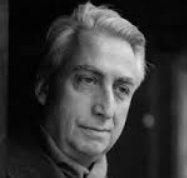
When I was a student I was assigned "Mythologies" and "A Lover's Discourse," by Roland Barthes, and felt at once that something momentous had happened to me, that I had met a writer who had changed my course in life somehow; and looking back now, I think he did.
▼
Source
source
Zadie Smith Interview
8 months 3 weeks ago
Deception, flattering, lying, deluding, talking behind the back, putting up a false front, living in borrowed splendor, wearing a mask, hiding behind convention, playing a role for others and for oneself, in short, a continuous fluttering around the solitary flame of vanity is so much the rule and the law among men that there is almost nothing which is less comprehensible than how an honest and pure drive for truth could have arisen among them. They are deeply immersed in illusions and in dream images; their eyes merely glide over the surface of things and see "forms." Variant translation: The constant fluttering around the single flame of vanity is so much the rule and the law that almost nothing is more incomprehensible than how an honest and pure urge for truth could make its appearance among men.

6 months 2 weeks ago
What I know at sixty, I knew as well at twenty. Forty years of a long, a superfluous, labor of verification.
3 months 3 weeks ago
I subdue matter and force it to become my mind's good medium. I rejoice in plants, in animals, in man and in gods, as though they were my children. I feel all the universe nestling about me and following me as though it were my own body.
6 months 2 weeks ago
Art is the final cunning of the human soul which would rather do anything than face the gods.
▼
Source
source
"Art and Eros: A Dialogue about Art", Acastos: Two Platonic Dialogues (1986).
CivilSimian.com created by AxiomaticPanic, CivilSimian, Kalokagathia