

3 months 4 days ago
To a lesser degree, a secret ressentiment underlies every way of thinking which attributes creative power to mere negation and criticism. Thus modern philosophy is deeply penetrated by a whole type of thinking which is nourished by ressentiment. I am referring to the view that the "true" and the "given" is not that which is self-evident, but rather that which is "indubitable" or "incontestable," which can be maintained against doubt and criticism.
▼
Source
source
L. Coser, trans. (1973), p. 67
1 month 3 weeks ago
Societies, not states, are 'the social atoms' with which students of history have to deal.
▼
Source
source
Vol. 1
4 months 1 week ago
The simple-minded positivism that believes it has found a firm ground of certainty if it only excludes all mental phenomena from consideration and holds fast to observable facts.
▼
Source
source
p. 39
2 months 4 weeks ago
In all philosophic theory there is an ultimate which is actual in virtue of its accidents. It is only then capable of characterization through its accidental embodiments, and apart from these accidents is devoid of actuality. In the philosophy of organism this ultimate is termed creativity; and [[God] is its primordial, non-temporal accident. In monistic philosophies, Spinoza's or absolute idealism, this ultimate is God, who is also equivalently termed The Absolute. In such monistic schemes, the ultimate is illegitimately allowed a final, eminent reality, beyond that ascribed to any of its accidents. In this general position the philosophy of organism seems to approximate more to some strains of Indian, or Chinese, thought, than to western Asiatic, or European, thought. One side makes process ultimate; the other side makes fact ultimate.
▼
Source
source
Pt. I, ch. 1, sec. 2.
5 months 1 week ago
Even before the bomb, one did not breathe too easily in this tortured world. Now we are given a new source of anguish; it has all the promise of being our greatest anguish ever. There can be no doubt that humanity is being offered its last chance. Perhaps this is an occasion for the newspapers to print a special edition. More likely, it should be cause for a certain amount of reflection and a great deal of silence.

4 months 3 weeks ago
Even opinion is of force enough to make itself to be espoused at the expense of life.
▼
Source
source
Book I, Ch. 40. Of Good and Evil, tr. Cotton, rev. W. Hazlitt, 1842

4 months 3 days ago
Of all things the worst to teach the young is dalliance, for it is this that is the parent of those pleasures from which wickedness springs.

3 months 1 week ago
When we cannot be delivered from ourselves, we delight in devouring ourselves.

1 month 4 days ago
A mystic bond of brotherhood makes all men one.
▼
Source
source
Essays, Goethe's Works.
3 months 1 week ago
I react like everyone else, even like those I most despise; but I make up for it by deploring every action I commit, good or bad.

5 months 3 days ago
If the people have no faith in their rulers, there is no standing for the state.
1 month 3 weeks ago
I don't believe in total freedom for the artist. Left on his own, free to do anything he likes, the artist ends up doing nothing at all. If there's one thing that's dangerous for an artist, it's precisely this question of total freedom, waiting for inspiration and the rest of it.
▼
Source
source
Artistic Freedom
2 months 1 week ago
Time passes quickly with lovers.
▼
Source
source
The Pavilion on the Links, ch. V.
3 months 2 weeks ago
The object of all true Philosophy is to frame a system which shall comprehend human life under every aspect, social as well as individual. It embraces, therefore, the three kinds of phenomena of which our life consists, Thoughts, Feelings, and Actions.
▼
Source
source
p. 9
3 months 1 week ago
An anxious man constructs his terrors, then installs himself within them: a stay-at-home in a yawning chasm.
4 months 2 weeks ago
A man of intellect is like an artist who gives a concert without any help from anyone else, playing on a single instrument - a piano, say, which is a little orchestra in itself. Such a man is a little world in himself; and the effect produced by various instruments together, he produces single-handed, in the unity of his own consciousness. Like the piano, he has no place in a symphony; he is a soloist and performs by himself - in solitude, it may be; or if in the company with other instruments, only as principal; or for setting the tone, as in singing.
5 months 3 days ago
It is only the individual possessed of the most entire sincerity that can exist under Heaven, who can adjust the great invariable relations of mankind, establish the great fundamental virtues of humanity, and know the transforming and nurturing operations of Heaven and Earth; shall this individual have any being or anything beyond himself on which he depends? Call him man in his ideal, how earnest is he! Call him an abyss, how deep is he! Call him Heaven, how vast is he! Who can know him, but he who is indeed quick in apprehension, clear in discernment, of far-reaching intelligence, and all-embracing knowledge, possessing all Heavenly virtue?

3 months 1 week ago
Many counterrevolutionary books have been written in favor of the Revolution. But Burke has written a revolutionary book against the Revolution.
▼
Source
source
Fragment No. 104; on Edmund Burke's Reflections on the Revolution in France (1790).
3 months 1 week ago
True science is distinctively the study of useless things. For the useful things will get studied without the aid of scientific men.

4 months 4 weeks ago
Christ is not valued at all unless He be valued above all.
▼
Source
source
p. 395

4 months 1 week ago
I don't think that there are any sinister persons deliberately trying to rob people of their freedom but I do think, first of all, that there are a number of impersonal forces which are pushing in the direction of less and less freedom. And I also thing there are a number of technological devices which anybody who wishes to use, can use, to accelerate this process of going away from freedom, of imposing control.

4 months 1 week ago
The ceremonial (hot or cold) as opposed to the haphazard (lukewarm) characterizes piety.
▼
Source
source
Ch. 7 : Remarks on Frazer's Golden Bough, p. 127
3 months 1 week ago
Nothing is indefensible - from the absurdest proposition to the most monstrous crime.

3 months 6 days ago
And be sure of this: I am with you always, even to the end of the age.
▼
Source
source
Jesus in Matthew 28:20
4 months 2 weeks ago
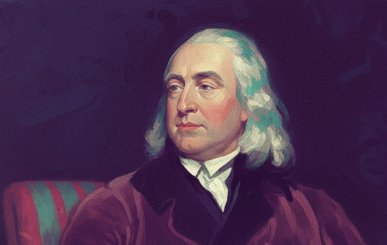
Figure to yourself the mixture of surprise and delight which has this instant been poured into my mind by the sound of my name, as uttered by you, in the speech just read to me out of the Morning Herald... By one and the same man, not only Parliamentary Reform, but Law Reform advocated. Advocated? and by what man? By one who, in the vulgar sense of profit and loss, has nothing to gain by it... Yes, only from Ireland could such self-sacrifice come; nowhere else: least of all in England, cold, selfish, priest-ridden, lawyer-ridden, lord-ridden, squire-ridden, soldier-ridden England, could any approach to it be found.
▼
Source
source
Letter to Daniel O'Connell (15 July 1828) , quoted in The Works of Jeremy Bentham, Vol. X (1843), pp. 594-595

4 months 2 weeks ago
Lincoln is not the product of a popular revolution. This plebeian, who worked his way up from stone-breaker to Senator in Illinois, without intellectual brilliance, without a particularly outstanding character, without exceptional importance-an average person of good will, was placed at the top by the interplay of the forces of universal suffrage unaware of the great issues at stake. The new world has never achieved a greater triumph than by this demonstration that, given its political and social organisation, ordinary people of good will can accomplish feats which only heroes could accomplish in the old world!

5 months 3 days ago
Moderation, in the pursuit of honors or riches, is the only security against disappointment and vexation. A wise man, therefore, will prefer the simplicity of rustic life to the magnificence of courts.

3 months 2 weeks ago
Nothing is so fatal to Religion as indifference which is, at least, half Infidelity.
▼
Source
source
Letter to William Smith, Member of the Irish Parliament (29 January 1795), quoted in R. B. McDowell (ed.)

4 months 3 weeks ago
When speaking of the spiritual nature or the soul, we are referring to that which is "inner" or "new." When speaking of the bodily nature, or that which is flesh and blood, we are referring to that which is called "sensual," "outward," or "old." Paul writes in 2 Corinthians 4:16: "Even though our outer nature is wasting away, our inner nature is being renewed day by day."
▼
Source
source
p. 51
3 months 6 days ago
Gentile himself call his doctrine 'absolute formalism': there is no; 'matter' apart from the pure 'form' of acting. 'The only matter there is in the spiritual act is the form itself, as activity.'
▼
Source
source
P. 407
3 months 1 week ago
The bourgeoisie ... lets him have the appearance of acting from a free choice, of making a contract with free, unconstrained consent, as a responsible agent who has attained his majority. Fine freedom, where the proletarian has no other choice than that of either accepting the conditions which the bourgeoisie offers him, or of starving, of freezing to death, of sleeping naked among the beasts of the forests!
▼
Source
source
p. 112
4 months 4 weeks ago
The confession of evil works is the first beginning of good works.
▼
Source
source
Tractates on the Gospel of John; tractate XII on John 3:6-21, and 13
2 months 6 days ago
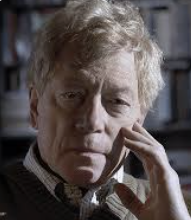
Liberty is not the same thing as equality, and that those who call themselves liberals are far more interested in equalizing than in liberating their fellows.
▼
Source
source
The Limits of Liberty, The American Spectator
3 months 1 week ago
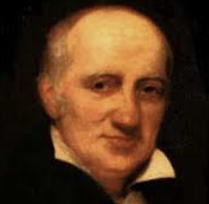
Government was intended to suppress injustice, but it offers new occasions and temptations for the commission of it.
▼
Source
source
"Summary of Principles" 2.4

4 months 3 weeks ago
Aristotle, a mere bond-servant to his logic, thereby rendering it contentious and well nigh useless.
▼
Source
source
Rerum Novarum
1 week 2 days ago
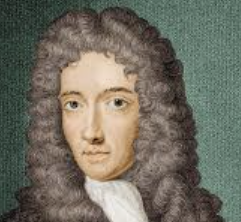
As for silver, I never could see any degree of fire make it part with any of its three principles. ...But admitting, that some parts of the silver were driven away by the violence of the fire, what proof is there, that it was either the salt, the sulphur, or the mercury of the metal, and not rather a part of it homogeneous to what remained? for besides that the silver, that was left, seemed not sensibly altered, which probably would have appeared, had so much of any one of its principles been separated from it.
3 months 1 week ago
The benefit of the governed is made to lie on one side and the benefit of the governors on the other.
▼
Source
source
Book III, Chapter 9

5 months 2 weeks ago
Whoever has overthrown an existing law of custom has hitherto always first been accounted a bad man: but when, as did happen, the law could not afterwards be reinstated and this fact was accepted, the predicate gradually changed: - history treats almost exclusively of these bad men who subsequently became good men!
1 month 2 weeks ago
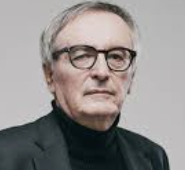
Hayek's blind spot with regard to politics was clear in the early 1980s when the first Thatcher government, in an attempt to reduce inflation and bring the public finances closer to a balanced budget, was raising interest rates and cutting public spending. As he had done during the 1930s, Hayek attacked these policies as not being severe enough. It would be better, he told me in a conversation we had around this time, if Thatcher imposed a more drastic contraction on the economy so that the wage-setting power of the trade unions could be broken. He appeared unfazed by unemployment, which was already higher (more than three million people) than at any time since the 1930s, and would rise much further if his recommendations were accepted.

2 months 4 weeks ago
He who does not realize to what extent shifting fortune and necessity hold in subjection every human spirit, cannot regard as fellow-creatures nor love as he loves himself those whom chance separated from him by an abyss. The variety of constraints pressing upon man give rise to the illusion of several distinct species that cannot communicate.
▼
Source
source
p. 192

4 months 2 weeks ago
All students of man and society who possess that first requisite for so difficult a study, a due sense of its difficulties, are aware that the besetting danger is not so much of embracing falsehood for true, as of mistaking part of the truth for the whole.
▼
Source
source
"Coleridge". London and Westminster Review., March 1840

5 months 1 day ago
We can open our hearts to God, but only with Divine help.
▼
Source
source
q. 24, art. 15, ad 2
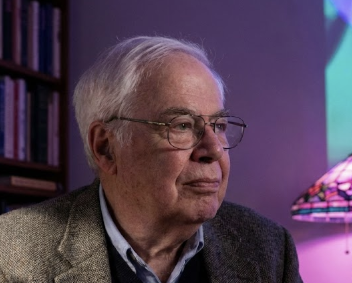
4 months 4 days ago
If I had to lay bets, my bet would be that everything is going to go to hell, but, you know, what else have we got except hope?
▼
Source
source
"Richard Rorty Interviewed by Gideon Lewis-Kraus." The Believer, June 2003.
3 months 1 week ago
Ministers and favorites are a sort of people who have a state prisoner in their custody, the whole management of whose understanding and actions they can easily engross.
▼
Source
source
Book V, Ch. 5
4 months 3 weeks ago
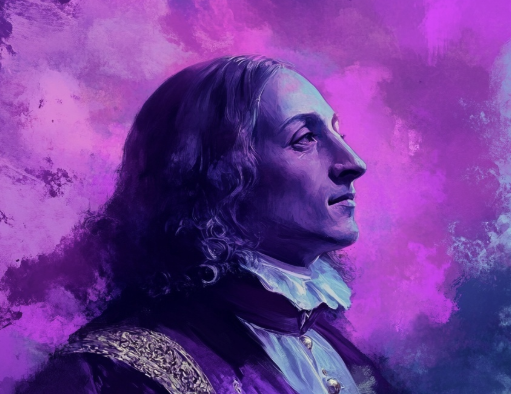
In reading this author Montaigne and comparing him with Epictetus, I have found that they are assuredly the two greatest defenders of the two most celebrated sects of the world, and the only ones conformable to reason, since we can only follow one of these two roads, namely: either that there is a God, and then we place in him the sovereign good; or that he is uncertain, and that then the true good is also uncertain, since he is incapable of it.
1 month 5 days ago
He who exerts his mind to the utmost knows his nature.
▼
Source
source
7A:1, as translated by Wing-tsit Chan in A Source Book in Chinese Philosophy (1963), p. 62

3 months 2 weeks ago
The Americans never use the word peasant, because they have no idea of the class which that term denotes; the ignorance of more remote ages, the simplicity of rural life, and the rusticity of the villager have not been preserved among them; and they are alike unacquainted with the virtues, the vices, the coarse habits, and the simple graces of an early stage of civilization.
▼
Source
source
Chapter XVII.
CivilSimian.com created by AxiomaticPanic, CivilSimian, Kalokagathia