

2 months 2 weeks ago
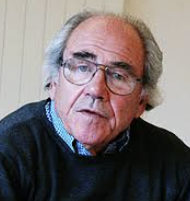
Picturing others and everything which brings you closer to them is futile from the instant that 'communication' can make their presence immediate.
▼
Source
source
(p. 42)

1 month 1 week ago
Putin told the Financial Times that liberalism has become an "obsolete" doctrine. While it may be under attack from many quarters today, it is in fact more necessary than ever. It is more necessary because it is fundamentally a means of governing over diversity, and the world is more diverse than it ever has been. Democracy disconnected from liberalism will not protect diversity, because majorities will use their power to repress minorities.
▼
Source
source
Emphasis in original.

2 months 2 weeks ago
The savage recognizes life only in himself and his personal desires. His interest in life is concentrated on himself alone. The highest happiness for him is the fullest satisfaction of his desires. The motive power of his life is personal enjoyment. His religion consists in propitiating his deity and in worshiping his gods, whom he imagines as persons living only for their personal aims.
▼
Source
source
Chapter IV, Christianity Misunderstood by Men of ScienceChapter IV, Christianity Misunderstood by Men of Science

2 months 3 weeks ago
Thinking is more erotic than calculating.

2 months 1 week ago
The business of art is no longer the communication of thoughts or feelings which are to be conceptually ordered, but a direct participation in an experience. The whole tendency of modern communication...is towards participation in a process, rather than apprehension of concepts.
▼
Source
source
Letter to Harold Adam Innis (14 March 1951), published in Essential McLuhan (1995), edited by Eric McLuhan and Frank Zingrone, p. 73

4 months 1 week ago
I mistrust illuminations: what we take for a discovery is very often only a familiar thought that we have not recognized.
▼
Source
source
p. 439



3 months 3 weeks ago
If it is not true, it is a good story.
▼
Source
source
as quoted in A Book of Quotations, Proverbs and Household Words (1907) edited by Sir William Gurney Benham
3 months 1 week ago
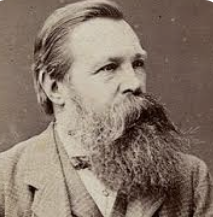
What will be the attitude of communism to existing nationalities? The nationalities of the peoples associating themselves in accordance with the principle of community will be compelled to mingle with each other as a result of this association and thereby to dissolve themselves, just as the various estate and class distinctions must disappear through the abolition of their basis, private property.
2 months 2 weeks ago
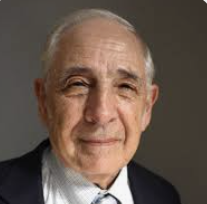
Just acquiring this amount of "education" will not, by itself, make you an educated person, even less will it give you what Oakeshott calls "judgment." But if the manner of instruction is adequate, the student should be able to acquire this much knowledge in a way that combines intellectual openness, critical scrutiny, and logical clarity. If so, learning will not stop when the student leaves the university.

5 months 4 days ago
Continence is a branch of temperance, which prevents the diseases, infamy, remorse, and punishment, to which those are exposed, who indulge themselves in unlawful amours.

4 months 2 weeks ago
I have lived in the pursuit of a vision, both personal and social. Personal: to care for what is noble, for what is beautiful, for what is gentle; to allow moments of insight to give wisdom at more mundane times. Social: to see in imagination the society that is to be created, where individuals grow freely, and where hate and greed and envy die because there is nothing to nourish them. These things I believe, and the world, for all its horrors, has left me unshaken.
1 month 1 week ago
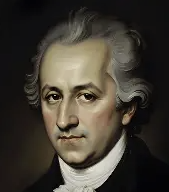
Nothing is great but truth, and the smallest truth is great. The other day I had a thought, which I put like this: Even a harmful truth is useful, for it can be harmful only for the moment and will lead to other truths, which must always become useful, very much so. Conversely, even a useful error is harmful, for it can be useful only for the moment, enticing us into other errors, which become more and more harmful.
▼
Source
source
Letter to Charlotte von Stein (1787) in Goethe's World View: Presented in His Reflections and Maxims (1963), Edited with an Introduction by Frederick Ungar, Translated by Heinz Norden, pp. 72-73, Frederick Ungar Publishing Company, New York.

5 months 1 week ago
At this point of his effort man stands face to face with the irrational. He feels within him his longing for happiness and for reason. The absurd is born of this confrontation between the human need and the unreasonable silence of the world. This must not be forgotten. This must be clung to because the whole consequence of a life can depend on it. The irrational, the human nostalgia, and the absurd that is born of their encounter, these are the three characters in the drama that must necessarily end with all the logic of which an existence is capable.
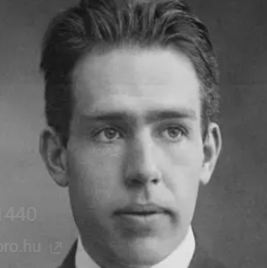
3 weeks 1 day ago
Isolated material particles are abstractions, their properties being definable and observable only through their interaction with other systems.
▼
Source
source
"Atomic Physics and the Description of Nature"
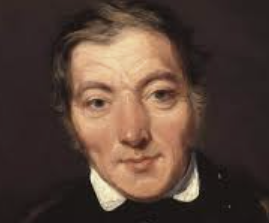
2 months 1 week ago
My life was not useless; I gave important truths to the world, and it was only for want of understanding that they were disregarded. I have been ahead of my time.
▼
Source
source
Deathbed statement (November 1858), in response to a church minister who asked if he regretted wasting his life on fruitless projects; as quoted in Harold Hill : A People's History
2 months 1 week ago
At the speed of light there is no sequence; everything happens at the same instant.
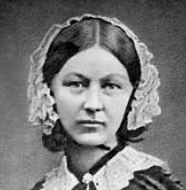
2 months 3 weeks ago
Why have women passion, intellect, moral activity - these three - and a place in society where no one of the three can be exercised? Men say that God punishes for complaining. No, but men are angry with misery. They are irritated with women for not being happy. They take it as a personal offence. To God alone may women complain without insulting Him!

3 months 3 weeks ago
Wind indeed increases fire, but custom love.
▼
Source
source
Pythagorean Ethical Sentences From Stobæus
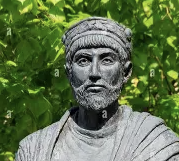
3 weeks 2 days ago
It is not sufficient to say, "God spake and it was so." For the natures of things that are created ought to harmonise with the commands of God. I will say more clearly what I mean. Did God ordain that fire should mount upwards by chance and earth sink down? Was it not necessary, in order that the ordinance of God should be fulfilled, for the former to be light and the latter to weigh heavy? And in the case of other things also this is equally true.
4 months 2 weeks ago
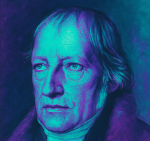
This final aim is God's purpose with the world; but God is the absolutely perfect Being, and can, therefore, will nothing but himself.
2 months 2 weeks ago
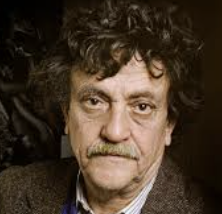
What should young people do with their lives today? Many things, obviously. But the most daring thing is to create stable communities in which the terrible disease of loneliness can be cured.
▼
Source
source
Commencement Address to Hobart and William Smith Colleges, May 26, 1974
1 month 3 weeks ago
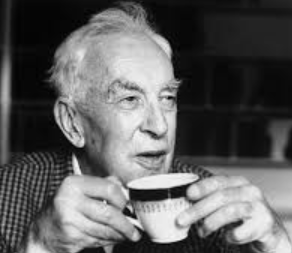
No collection of facts is ever complete, because the Universe is without bounds. And no synthesis or interpretation is ever final, because there are always fresh facts to be found after the first collection has been provisionally arranged.
▼
Source
source
Vol. 1
3 months 5 days ago
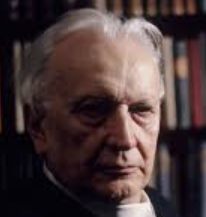
We are sorely deficient in talking with each other and listening to each other. We lack mobility, criticism and self-criticism. We incline to doctrinism. What makes it worse is that so many people do not really want to think. They want only slogans and obedience. They ask no questions and they give no answers, except by repeating drilled-in phrases. They can only assert and obey, neither probe nor apprehend. Thus they cannot be convinced, either. How shall we talk with people who will not go where others probe and think, where men seek independence in insight and conviction?

4 months 2 weeks ago
Is a fixed income not a good thing? Does not everyone love to count on a sure thing? Especially every petty-bourgeois, narrow-minded Frenchman? the 'ever needy' man?
▼
Source
source
(Bastiat and Carey), pp. 809-810.

4 weeks 1 day ago
What else is there which you would regret to have taken from you? Friends? But who can be a friend to you? Country? What? Do you think enough of your country to be late to dinner? The light of the sun? You would extinguish it, if you could; for what have you ever done that was fit to be seen in the light?

4 months 2 weeks ago
Justice, however, never was in reality administered gratis in any country. Lawyers and attornies, at least, must always be paid by the parties; and, if they were not, they would perform their duty still worse than they actually perform it.
▼
Source
source
Chapter I, Part II, p. 778.
1 month 3 weeks ago
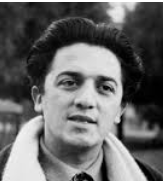
I don't believe in total freedom for the artist. Left on his own, free to do anything he likes, the artist ends up doing nothing at all. If there's one thing that's dangerous for an artist, it's precisely this question of total freedom, waiting for inspiration and the rest of it.
▼
Source
source
Artistic Freedom

1 week 4 days ago
The universal nature has no external space; but the wondrous part of her art is that though she has circumscribed herself, everything which is within her which appears to decay and to grow old and to be useless she changes into herself, and again makes other new things from these very same, so that she requires neither substance from without nor wants a place into which she may cast that which decays. She is content then with her own space, and her own matter, and her own art.
▼
Source
source
VIII, 50

3 months 6 days ago
But fantasy kills imagination, pornography is death to art.
▼
Source
source
The Message to the Planet (1989) p. 43.
3 months 1 week ago
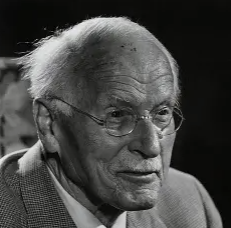
We know as little of a supreme being as of Matter. But there is as little doubt of the existence of a supreme being as of Matter. The world beyond is reality, and experiential fact. We only don't understand it.
▼
Source
source
Letter to Morton Kelsey (1958) as quoted by Morton Kelsey, Myth, History & Faith: The Mysteries of Christian Myth & Imagination (1974) Ch.VIII

4 months 1 week ago
If in this book harsh words are spoken about some of the greatest among the intellectual leaders of mankind, my motive is not, I hope, the wish to belittle them. It springs rather from my conviction that, if our civilization is to survive, we must break with the habit of deference to great men. Great men may make great mistakes; and as the book tries to show, some of the greatest leaders of the past supported the perennial attack on freedom and reason. Their influence, too rarely challenged, continues to mislead those on whose defence civilization depends, and to divide them. The responsibility of this tragic and possibly fatal division becomes ours if we hesitate to be outspoken in our criticism of what admittedly is a part of our intellectual heritage. By reluctance to criticize some of it, we may help to destroy it all.
▼
Source
source
Preface to the First Edition

5 months 2 days ago
O saving Victim, opening wideThe gate of heaven to man below,Our foes press on from every side,Thine aid supply, Thy strength bestow.
▼
Source
source
Verbum Supernum Prodiens (hymn for Lauds on Corpus Christi), stanza 5 (O Salutaris Hostia)
2 months 3 weeks ago
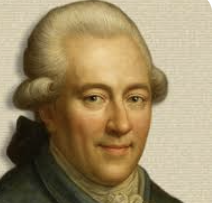
The most successful tempters and thus the most dangerous are the deluded deluders.
▼
Source
source
F 120
3 months 1 week ago
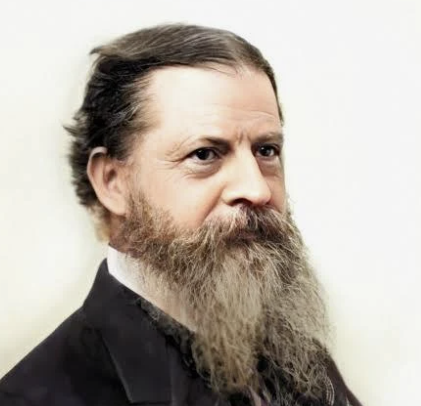
A difficulty which confronts the synechistic philosophy is this. In considering personality, that philosophy is forced to accept the doctrine of a personal God; but in considering communication, it cannot but admit that if there is a personal God, we must have a direct perception of that person and indeed be in personal communication with him. Now, if that be the case, the question arises how it is possible that the existence of this being should ever have been doubted by anybody. The only answer that I can at present make is that facts that stand before our face and eyes and stare us in the face are far from being, in all cases, the ones most easily discerned. That has been remarked since time immemorial.
3 weeks 4 days ago
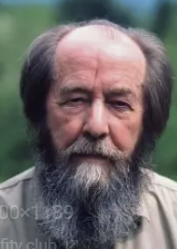
From time immemorial man has been made in such a way that his vision of the world, so long as it has not been instilled under hypnosis, his motivations and scale of values, his actions and intentions are determined by his personal and group experience of life.

3 months 2 weeks ago
The first and the simplest emotion which we discover in the human mind is Curiosity.
▼
Source
source
Part I Section I

4 months 3 weeks ago
My mind is calm, for my fortune is not my felicity. I know I have clean hands and a clean heart, and I hope a clean house for friends or servants; but Job himself, or whoever was the justest judge, by such hunting for matters against him as hath been used against me, may for a time seem foul, especially in a time when greatness is the mark and accusation is the game.
▼
Source
source
Quoted by Thomas Fowler in "Francis Bacon 1561-1626
3 months 2 weeks ago
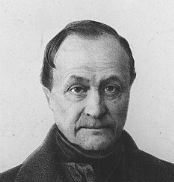
There are three successive states of morality answering to the three principal stages of human life; the personal, the domestic, and the social stage.
▼
Source
source
p. 104

4 months 2 weeks ago
The original scriptures of most religions are poetical and unsystematic. Theology, which generally takes the form of a reasoned commentary on the parables and aphorisms of the scriptures, tends to make its appearance at a later stage of religious history. The Bhagavad-Gita occupies an intermediate position between scripture and theology; for it combines the poetical qualities of the first with the clear-cut methodicalness of the second... one of the clearest and most comprehensive summaries of the Perennial Philosophy ever to have been made. Hence its enduring value, not only for Indians, but for all mankind.

3 months 2 weeks ago
It is almost never when a state of things is the most detestable that it is smashed, but when, beginning to improve, it permits men to breathe, to reflect, to communicate their thoughts with each other, and to gauge by what they already have the extent of their rights and their grievances. The weight, although less heavy, seems then all the more unbearable.
▼
Source
source
Letter to Pierre Freslon, 23 September 1853 Selected Letters, p. 296 as cited in Toqueville's Road Map p. 103

4 months 2 weeks ago
Every genuine work of art has as much reason for being as the earth and the sun.
▼
Source
source
Art
4 months 2 weeks ago
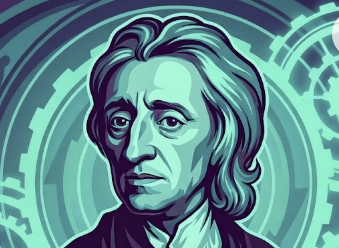
New opinions are always suspected, and usually opposed, without any other reason but because they are not already common.
▼
Source
source
Dedicatory epistle, as quoted in Fred R Shapiro (2006). The Yale Book of Quotations. Yale University Press. p. 468. ISBN 0-300-10798-6.
3 months 2 weeks ago
I am obliged to confess that I do not regard the abolition of slavery as a means of warding off the struggle of the two races in the Southern states. The Negroes may long remain slaves without complaining; but if they are once raised to the level of freemen, they will soon revolt at being deprived of almost all their civil rights; and as they cannot become the equals of the whites, they will speedily show themselves as enemies.
▼
Source
source
Chapter XVIII.

1 week 4 days ago
A good prescription is still more profitable than an absolution.
▼
Source
source
As quoted by Friedrich Albert Lange, History of Materialism and Critique of its Present Importance Tr. Ernest Chester Thomas (1882) 2nd edition, Vol. 2, p. 55.
1 month 6 days ago
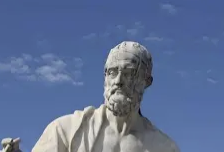
In all human affairs, and especially in those that relate to war, ...leave always some room to fortune, and to accidents which cannot be foreseen.
▼
Source
source
The General History, Book II, Ch. 4 (trans. by Hampton)
3 months 1 week ago
Let a man once overcome his selfish terror at his own finitude, and his finitude is, in one sense, overcome.
4 months 3 weeks ago
The Idols of the Cave are the idols of the individual man. For everyone (besides the errors common to human nature in general) has a cave or den of his own, which refracts and discolors the light of nature, owing either to his own proper and peculiar nature; or to his education and conversation with others; or to the reading of books, and the authority of those whom he esteems and admires; or to the differences of impressions, accordingly as they take place in a mind preoccupied and predisposed or in a mind indifferent and settled; or the like. So that the spirit of man (according as it is meted out to different individuals) is in fact a thing variable and full of perturbation, and governed as it were by chance. Whence it was well observed by Heraclitus that men look for sciences in their own lesser worlds, and not in the greater or common world.
▼
Source
source
Aphorism 42

5 months 2 weeks ago
That which does not kill us makes us stronger.
3 months ago
Logic chases truth up the tree of grammar.
▼
Source
source
Philosophy of Logic
CivilSimian.com created by AxiomaticPanic, CivilSimian, Kalokagathia