


4 months 2 weeks ago
Now, what is 'unrighteousness' in practice? It is in practice behavior of a kind disliked by the herd. By calling it unrighteousness, and by arranging an elaborate system of ethics around this conception, the herd justifies itself in wreaking punishment upon the objects of its own dislike, while at the same time, since the herd is righteous by definition, it enhances its own self-esteem at the very moment when it lets loose its impulse to cruelty. This is the psychology of lynching, and of the other ways in which criminals are punished. The essence of the conception of righteousness, therefore, is to afford an outlet for sadism by cloaking cruelty as justice.
▼
Source
source
"The Idea of Righteousness"

1 month 3 weeks ago
In the world as we find it, even the barest requirements of a life worth living cannot all be always met in full. Toppling a tyranny may trigger civil war. Protecting a broad range of liberal freedoms may result in the regime that guarantees them being short lived. At the same time, supporting a strong state as a bulwark against anarchy may worsen the abuse of power. Wise policy can temper these conflicts. It cannot hope to overcome them.
▼
Source
source
'Modus Vivendi' (p.28)

1 month 1 week ago
The idea of universal human dignity ultimately comes out of Christianity... the view that all human beings are equal in the sight of God because they have the capacity for moral choice. As Western thought developed in the 17th-18th centuries, this took on a secular form under thinkers like Jean-Jacques Rousseau or Immanuel Kant or Georg Hegel, who argued that human equality is... based on human autonomy.
▼
Source
source
11:12


2 weeks 1 day ago
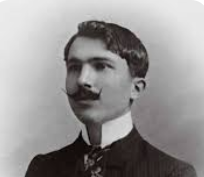
A slave's soul has no worth, my brothers; it lacks strengthto tread on this great earth with gallantry and freedom.I pity the poor slaves, they're nought but airy mist,a light breeze scatters them, a fragrance knocks them down;it's only just they crawl on the earth on hands and knees.Today I'll write a hymn to God and pray for this great grace.
▼
Source
source
Egyptian high priest, Book X, line 90

4 months 2 weeks ago
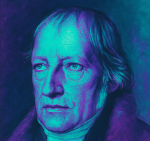
Discord which appears at first to be a lamentable breach and dissolution of the unity of a party, is really the crowning proof of its success.
▼
Source
source
§ 575
3 months 1 week ago
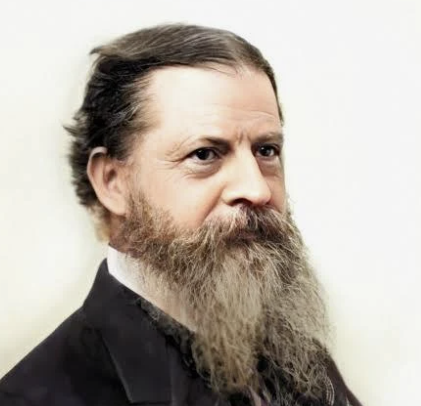
Wherever ideas come together they tend to weld into general ideas; and whenever they are generally connected, general ideas govern the connection; and these general ideas are living feelings spread out.

1 month 1 week ago
The gentleman knows that whatever is imperfect and unrefined does not deserve praise. ... He makes his eyes not want to see what is not right, makes his ears not want to hear what is not right, makes his mouth not want to speak what is not right, and makes his heart not want to deliberate over what is not right. ... For this reason, power and profit cannot sway him, the masses cannot shift him, and nothing in the world can shake him.
▼
Source
source
Readings in Classical Chinese Philosophy (2001), p. 260

4 months 1 week ago
Recalling all the erroneous things that doctors have been able to say about sex or madness does us a fat lot of good. I think that what is currently politically important is to determine the regime of verediction established at a given moment ... on the basis of which you can now recognize, for example, that doctors in the nineteenth century said so many stupid things about sex. ... It is not so much the history of the true or the history of the false as the history of verediction which has a political significance.
▼
Source
source
Lecture 2, January 17, 1979, p. 36

5 months 1 week ago
If anyone can be considered the greatest writer who ever lived, it is Shakespeare.
1 month 1 week ago
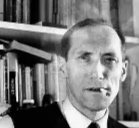
The history of utopias is no less fascinating than the history of metallurgy or of chemical engineering.
▼
Source
source
New Preface, p. vi

1 month 5 days ago
If you find many people who are hard and indifferent to you in a world that you consider to be unhospitable and cruel-as often, indeed, happens to a tender-hearted, stirring young creature-you will also find there are noble hearts who will look kindly on you, and their help will be precious to you beyond price.

3 months 2 weeks ago
It is said that desire is a product of the will, but the converse is in fact true: will is a product of desire.
▼
Source
source
"Will, Freedom"

4 months 2 weeks ago
In every province, the chief occupations, in order of importance, are lovemaking, malicious gossip, and talking nonsense.

1 month 3 weeks ago
True hedonic engineering, as distinct from mindless hedonism or reckless personal experimentation, can be profoundly good for our character. Character-building technologies can benefit utilitarians and non-utilitarians alike. Potentially, we can use a convergence of biotech, nanorobotics and information technology to gain control over our emotions and become better (post-)human beings, to cultivate the virtues, strength of character, decency, to become kinder, friendlier, more compassionate: to become the type of (post)human beings that we might aspire to be, but aren't, and biologically couldn't be, with the neural machinery of unenriched minds. Given our Darwinian biology, too many forms of admirable behaviour simply aren't rewarding enough for us to practise them consistently: our second-order desires to live better lives as better people are often feeble echoes of our baser passions.
▼
Source
source
Utopian Neuroscience, BLTC Research, 2019


2 months 1 week ago
Electric circuitry profoundly involves men with one another. Information pours upon us, instantaneously and continuously.
3 months 1 week ago
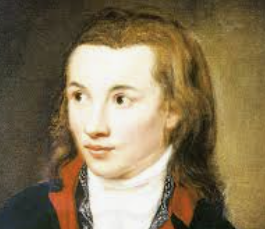
Every beloved object is the center point of a paradise.
▼
Source
source
Fragment No. 51; Jeder geliebte Gegenstand ist der Mittelpunkt eines Paradieses. Variant translations:
4 months 1 day ago
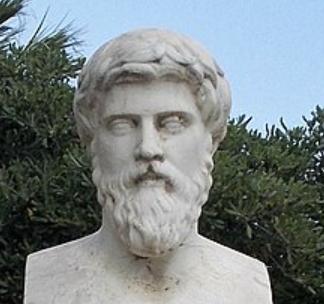
Themistocles being asked whether he would rather be Achilles or Homer, said, "Which would you rather be,-a conqueror in the Olympic games, or the crier that proclaims who are conquerors?"
▼
Source
source
48 Themistocles
4 months 4 days ago
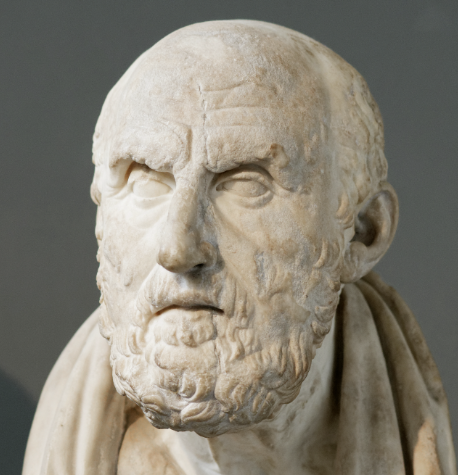
If I had followed the multitude, I should not have studied philosophy.
▼
Source
source
As quoted by Diogenes Laërtius, vii. 182.


3 months 2 weeks ago
The power of the periodical press is second only to that of the people.
▼
Source
source
Chapter XI.
4 months 2 weeks ago
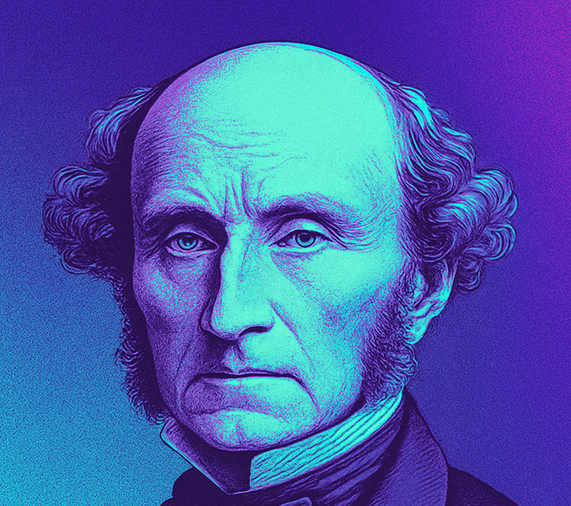
I regard utility as the ultimate appeal on all ethical questions; but it must be utility in the largest sense, grounded on the permanent interests of man as a progressive being.
▼
Source
source
Ch. 1: Introductory
1 month 1 week ago
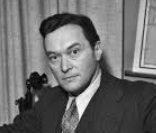
There can be no liberty for a community which lacks the information by which to detect lies.
▼
Source
source
What Modern Liberty Means, p. 64

4 months 2 weeks ago
You have just dined, and however scrupulously the slaughterhouse is concealed in the graceful distance of miles, there is complicity.
▼
Source
source
Fate
4 months 2 weeks ago
Life seems to me essentially passion, conflict, rage... It is only intellect that keeps me sane; perhaps this makes me overvalue intellect against feeling.
▼
Source
source
Letter to Lady Ottoline Morrell in 1912, as quoted in Clark The life of Bertrand Russell (1976), p. 174
4 months 2 weeks ago
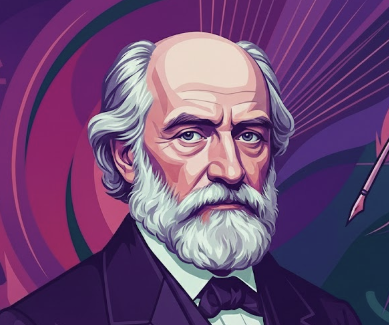
So that it will be found that the fundamental fault in the character of women is that they have no "sense of justice ." This arises from their deficiency in the power of reasoning already referred to, and reflection, but is also partly due to the fact that Nature has not destined them, as the weaker sex, to be dependent on strength but on cunning; this is why they are instinctively crafty, and have an ineradicable tendency to lie.
▼
Source
source
On Women

4 months 1 week ago
People who live in society have learned how to see themselves in mirrors as they appear to their friends. I have no friends. Is that why my flesh is so naked?
▼
Source
source
Diary entry of Friday (2 February)

5 months 4 days ago
How abundantly do spiritual beings display the powers that belong to them! We look for them, but do not see them; we listen to, but do not hear them; yet they enter into all things, and there is nothing without them.
4 months 2 weeks ago
Life is just a notebook with blank pages. Every time we make a mistake, the pages get stained and living in it becomes impossible.

5 months 1 week ago
Knowing that certain nights whose sweetness lingers will keep returning to the earth and sea after we are gone, yes, this helps us to die.

2 months 2 weeks ago
If you are going to be a writer, you must be paranoid. The thing is, in the arts if you don't overreact, you fall asleep.

4 months 2 weeks ago
Though thou loved her as thyself, As a self of purer clay, Tho' her parting dims the day, Stealing grace from all alive, Heartily know, When half-gods go, The gods arrive.
▼
Source
source
Give All to Love, st. 4
4 months 1 week ago
Be quiet! Anyone can spit in my face, and call me a criminal and a prostitute. But no one has the right to judge my remorse.
▼
Source
source
Act 1
4 months 1 week ago
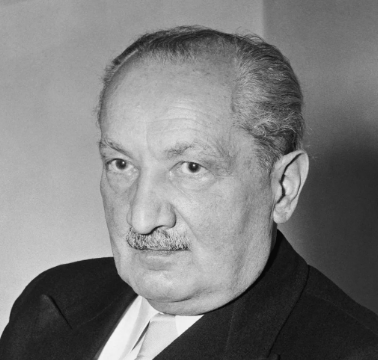
Kant speaks of the "thing-in-itself" (Ding an sich) in order to distinguish it from the "thing-for-us" (Ding fur uns), that is, as a "phenomenon." A thing-in-itself is that which is not approachable through experience as are the rocks, plants, and animals. Every thing-for-us is as a thing and also a thing-in-itself, which means that it is recognized absolutely withing the absolute knowledge of God. But not every thing-in-itself is also a thing-for-us: God, for instance, is a thing-in-itself, as Kant uses the word, according to the meaning of Christian theology.
▼
Source
source
p. 5
4 months 1 week ago
Fascism is not defined by the number of its victims, but by the way it kills them.
▼
Source
source
On the Execution of Julius and Ethel Rosenberg, Libération
2 months 3 weeks ago
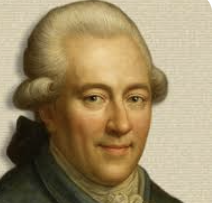
Food probably has a very great influence on the condition of men. Wine exercises a more visible influence, food does it more slowly but perhaps just as surely. Who knows if a well-prepared soup was not responsible for the pneumatic pump or a poor one for a war?
▼
Source
source
A 14
4 months 2 weeks ago
For what are they all in their high conceit, When man in the bush with God may meet?
▼
Source
source
Good-bye, st. 4

4 months 4 weeks ago
Violence and injury enclose in their net all that do such things, and generally return upon him who began.
▼
Source
source
Book V, lines 1152-1153 (tr. Rouse)

4 months 2 weeks ago
Assembled in a crowd, people lose their powers of reasoning and their capacity for moral choice.
▼
Source
source
Chapter 5 (p. 42)

3 months 2 weeks ago
A trade begun with savage war, prosecuted with unheard of cruelty, continued during the mid passage with the most loathsome imprisonment, and ending in perpetual exile and unremitting slavery, was a trade so horrid in all its circumstances, that it was impossible a single argument could be adduced in its favour. On the score of prudence nothing could be said in defence of it, nor could it be justified by necessity, and no case of inhumanity could be justified, but upon necessity; but no such necessity could be made out strong enough to bear out such a traffick. It was the duty of that House, therefore, to put an end to it. If it were said, that the interest of individuals required that it should continue, that argument ought not to be listened to.
▼
Source
source
Speech in the House of Commons against the slave trade (12 May 1789), quoted in The Parliamentary History of England, From the Earliest Period to the Year 1803, Vol. XXVIII (1816), columns 68-69

4 months 3 weeks ago
Above all, every relation must be considered as suspicious, which depends in any degree upon religion, as the prodigies of Livy: And no less so, everything that is to be found in the writers of natural magic or alchemy, or such authors, who seem, all of them, to have an unconquerable appetite for falsehood and fable.
▼
Source
source
Aphorism 29
5 months 1 week ago
Life continues, and some mornings, weary of the noise, discouraged by the prospect of the interminable work to keep after, sickened also by the madness of the world that leaps at you from the newspaper, finally convinced that I will not be equal to it and that I will disappoint everyone, all I want to do is sit down and wait for evening. This is what I feel like, and sometimes I yield to it.

4 months 2 weeks ago
Even the free importation of foreign corn could very little affect the interest of the farmers of Great Britain. Corn is a much more bulky commodity than butcher's-meat. A pound of wheat at a penny is as dear as a pound of butcher's-meat at fourpence. The small quantity of foreign corn imported even in times of the greatest scarcity, may satisfy our farmers that they can have nothing to fear from the freest importation.
▼
Source
source
Chapter II
4 months 2 weeks ago
Certain forms of sex which do not lead to children are at present punished by the criminal law: this is purely superstitious, since the matter is one which affects no one except the parties directly concerned... The peculiar importance attached, at present, to adultery is quite irrational... Moral rules ought not to be such as to make instinctive happiness impossible.
4 months 2 weeks ago
If God has made us in his image, we have returned him the favor.
▼
Source
source
Notebooks, c.1735-c.1750
3 weeks 4 days ago
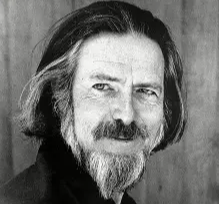
The psychotherapist ... tries to help the individual to be himself and to go it alone without giving unnecessary offense to his community, to be in the world (of social convention) but not of the world.
▼
Source
source
p. 7
2 months 1 week ago
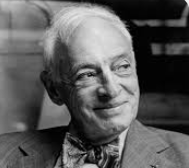
Apparently the rise of consciousness is linked to certain kinds of privation. It is the bitterness of self-consciousness that we knowers know best. Critical of the illusions that sustained mankind in earlier times, this self-consciousness of ours does little to sustain us now. The question is: which is disenchanted, the world itself or the consciousness we have of it?
▼
Source
source
A Matter of the Soul (1975), pp. 75-76
CivilSimian.com created by AxiomaticPanic, CivilSimian, Kalokagathia