

7 months 5 days ago
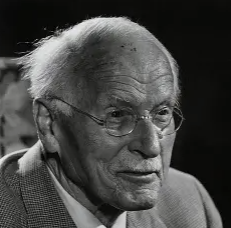
Unconscious assumptions or opinions are the worst enemy of woman; they can even grow into a positively demonic passion that exasperates and disgusts men, and does the woman herself the greatest injury by gradually smothering the charm and meaning of her femininity and driving it into the background. Such a development naturally ends in profound psychological disunion, in short, in a neurosis.
▼
Source
source
P.245

6 months 6 days ago
The message of radio is one of violent, unified implosion and resonance.
▼
Source
source
(p. 263)




7 months 1 week ago
I am beginning to feel that I am growing old; soon, I shall have to eat mush like children. I shall no longer be able to speak, which will be a rather great advantage for others and but a small inconvenience for myself.... The time in which I count in years is gone; that in which I count in days is here.... I had thought that the fibers of the heart would grow callous with age, it's not at all the case. I am not sure that my sensitivity hasn't increased; everything moves me, affects me.... To fade out between a man feeling your pulse and another bothering your head; not to know where one comes from, why one came, where one is going ...
▼
Source
source
Letter to his sister Denise, as quoted in Diderot, Reason and Resonance (1982) by Élisabeth de Fontenay, pp. 270-271


8 months 4 weeks ago
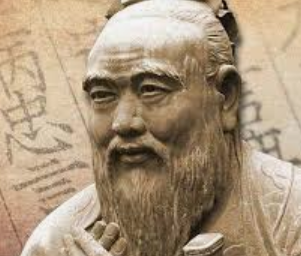
Sincerity is the way of Heaven. The attainment of sincerity is the way of men. He who possesses sincerity is he who, without an effort, hits what is right, and apprehends, without the exercise of thought — he is the sage who naturally and easily embodies the right way. He who attains to sincerity is he who chooses what is good, and firmly holds it fast. To this attainment there are requisite the extensive study of what is good, accurate inquiry about it, careful reflection on it, the clear discrimination of it, and the earnest practice of it.

7 months 6 days ago
Taught from their infancy that beauty is woman's sceptre, the mind shapes itself to the body, and roaming round its gilt cage, only seeks to adorn its prison.
▼
Source
source
Ch. 3

4 months 6 days ago
Providence has already begun the punishment of the guilty; more than sixty regicides, the most guilty among them, have already died a violent death.
▼
Source
source
Chapter X, p. 97

8 months 2 weeks ago
There are also Idols formed by the intercourse and association of men with each other, which I call Idols of the Market Place, on account of the commerce and consort of men there. For it is by discourse that men associate, and words are imposed according to the apprehension of the vulgar. And therefore the ill and unfit choice of words wonderfully obstructs the understanding. Nor do the definitions or explanations wherewith in some things learned men are wont to guard and defend themselves, by any means set the matter right. But words plainly force and overrule the understanding, and throw all into confusion, and lead men away into numberless empty controversies and idle fancies.
▼
Source
source
Aphorism 43

5 months 3 weeks ago
Being a planetary citizen does not need space travel. It means being conscious that we are part of the universe and of the earth. The most fundamental law is to recognise that we share the planet with other beings, and that we have a duty to care for our common home.
6 months 6 days ago
America is 100% 18th Century. The 18th century had chucked out the principle of metaphor and analogy - the basic fact that as A is to B so is C to D. AB:CD. It can see AB relations. But relations in four terms are still verboten. This amounts to deep occultation of nearly all human thought for the USA.
▼
Source
source
Letter to Ezra Pound

7 months 1 day ago
It is not for you to know the times or the seasons, which the Father hath put in his own power. But ye shall receive power, after that the Holy Ghost is come upon you: and ye shall be witnesses unto me both in Jerusalem, and in all Judaea, and in Samaria, and unto the uttermost part of the earth.
▼
Source
source
1:7-8 (KJV)
4 months 2 weeks ago
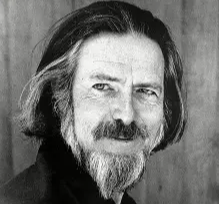
If you get the message, hang up the phone. For psychedelic drugs are simply instruments, like microscopes, telescopes, and telephones. The biologist does not sit with eye permanently glued to the microscope, he goes away and works on what he has seen.
▼
Source
source
p. 26 (This statement was redacted from later editions.)

6 months 1 week ago
When the world presents as a force field of violence, the task of nonviolence is to find ways of living and acting in that world such that violence is checked or ameliorated, or its direction turned, precisely at moments when it seems to saturate that world and offer no way out.
▼
Source
source
p. 10

6 months 3 weeks ago
The 'open' mind of the poet and artist can sense realities beyond the reach of our normal senses. The real problem is that our materialistic assumptions have a number of false premises built into them: it is only when we recognize this that we see there is no sharp dividing line between the everyday world and the invisible world of the clairvoyant.
▼
Source
source
p. 294

7 months 5 days ago
The wrinkles of a nation are as visible as those of an individual.

5 months 2 weeks ago
The heterodox current in Judaism led by Jesus seems to have had no notion of an immortal soul, created by God and then infused into the body: immortality meant being raised from the dead in the body one had in life, then living for ever in a world without decay or corruption. In the Christian religion invented by Paul and Augustine, which was strongly influenced by Plato, immortality meant something quite different - a life out of time, enjoyed by the 'soul' or 'spirit' of the departed. How this Platonic immortality could preserve anything like the persons that once lived was not made clear.
▼
Source
source
Cross-correspondences (pp. 32-3)

8 months 2 weeks ago
What I have given in the second book on the nature and properties of curved lines, and the method of examining them, is, it seems to me, as far beyond the treatment in the ordinary geometry, as the rhetoric of Cicero is beyond the a, b, c of children.
▼
Source
source
Letter to Marin Mersenne (1637) as quoted by D. E. Smith & M. L. Latham Tr. The Geometry of René Descartes
8 months 1 week ago
That a joint stock company should be able to carry on successfully any branch of foreign trade, when private adventurers can come into any sort of open and fair competition with them, seems contrary to all experience.
▼
Source
source
Chapter I, Part III, Article I, p. 810.
7 months 5 days ago
We should not pretend to understand the world only by the intellect; we apprehend it just as much by feeling. Therefore, the judgment of the intellect is, at best, only the half of truth, and must, if it be honest, also come to an understanding of its inadequacy. Variant translation: We should not pretend to understand the world only by the intellect. The judgement of the intellect is only part of the truth.
▼
Source
source
Conclusion, p. 628
6 months 2 weeks ago
The techniques of the practitioner are usually called 'synthetic'. He designs by organizing known principles and devices into larger systems.
▼
Source
source
Simon (1945, p. 353); As cited in: Philosophy of Technology and Engineering Sciences (2009) p. 425.

4 months 1 week ago
The teachers are everywhere. What is wanted is a learner.
▼
Source
source
"Healing"
8 months 4 weeks ago
Only after Winter comes do we know that the pine and the cypress are the last to fade.
5 months 5 days ago
There is no idea more novel, more surprising, than that of associating three hundred families of different degrees of fortune, knowledge and capacity.
▼
Source
source
The Theory of Social Organization. Harmonian Man: Selected Writings of Charles Fourier, p. 5.

7 months 1 week ago
Men who undertake considerable things, even in a regular way, ought to give us ground to presume ability.

8 months 1 week ago
The very port and gait of a swan, or turkey, or peacock show the high idea he has entertain'd of himself; and his contempt of all others. This is the more remarkable, that in the two last species of animals, the pride always attends the beauty, and is discover'd in the male only. The vanity and emulation of nightingales in singing have been commonly remark'd [...] All these are evident proofs, that pride and humility are not merely human passions, but extend themselves over the whole animal creation.
▼
Source
source
Part 1, Section 12

8 months 3 weeks ago
The philosophers who wished us to have the gods for our friends rank the friendship of the holy angels in the fourth circle of society, advancing now from the three circles of society on earth to the universe, and embracing heaven itself. And in this friendship we have indeed no fear that the angels will grieve us by their death or deterioration. But as we cannot mingle with them as familiarly as with men (which itself is one of the grievances of this life), and as Satan, as we read, sometimes transforms himself into an angel of light, to tempt those whom it is necessary to discipline, or just to deceive, there is great need of God's mercy to preserve us from making friends of demons in disguise, while we fancy we have good angels for our friends; for the astuteness and deceitfulness of these wicked spirits is equalled by their hurtfulness.
▼
Source
source
XIX, 9
7 months 5 days ago
For a woman, the typical danger emanating from the unconscious comes from above, from the "spiritual" sphere personified by the animus, whereas for a man it comes from the chthonic realm of the "world and woman," i.e., the anima projected on to the world.
▼
Source
source
"A Study in the Process of Individuation" (1934) In CW 9, Part I: The Archetypes and the Collective Unconscious. P. 559
6 months 3 weeks ago
Faculty X is simply that latent power in human beings possess to reach beyond the present. After all, we know perfectly well that the past is as real as the present, and that New York and Singapore and Lhasa and Stepney Green are all as real as the place I happen to be in at the moment. Yet my senses do not agree. They assure me that this place, here and now, is far more real than any other place or any other time. Only in certain moments of great inner intensity do I know this to be a lie. Faculty X is a sense of reality, the reality of other places and other times, and it is the possession of it - fragmentary and uncertain though it is - that distinguishes man from all other animals.
▼
Source
source
p. 59

8 months 1 week ago
Change alone is eternal, perpetual, immortal.
▼
Source
source
Unverified attribution noted in Respectfully Quoted: A Dictionary of Quotations (1993), ed. Suzy Platt, Library of Congress, p. 39;
7 months 1 week ago
No passion so effectually robs the mind of all its powers of acting and reasoning as fear.
▼
Source
source
Part II Section II
6 months 2 days ago
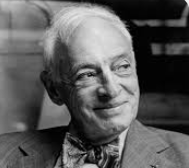
The book of the world, so richly studied by autodidacts, is being closed by the "learned," who are raising walls of opinions to shut the world out.
▼
Source
source
p. 15
7 months 5 days ago
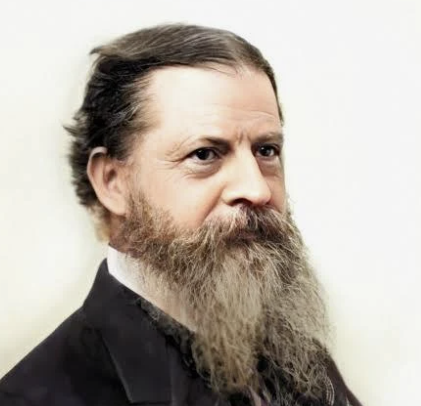
Fourth, this supreme law, which is celestial and living harmony, does not so much as demand that the special ideas shall surrender their peculiar arbitrariness and caprice entirely; for that would be self-destructive. It only requires that they influence and be influenced by one another.

6 months 3 weeks ago
Creation spirituality replaced a patriarchal spirituality rooted in notions of fall and redemption.
▼
Source
source
Feminism is for Everybody: Passionate Politics (2014), p.106.

4 months 1 week ago
Delay is preferable to error.
▼
Source
source
Letter to George Washington
6 months 4 weeks ago
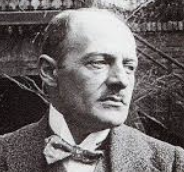
Existential envy which is directed against the other person's very nature, is the strongest source of ressentiment. It is as if it whispers continually: "I can forgive everything, but not that you are- that you are what you are-that I am not what you are-indeed that I am not you." This form of envy strips the opponent of his very existence, for this existence as such is felt to be a "pressure," a "reproach," and an unbearable humiliation. In the lives of great men there are always critical periods of instability, in which they alternately envy and try to love those whose merits they cannot but esteem. Only gradually, one of these attitudes will predominate. Here lies the meaning of Goethe's reflection that "against another's great merits, there is no remedy but love."
▼
Source
source
L. Coser, trans. (1973), pp. 52-53

7 months 6 days ago
Poets and priests were one in the beginning, and they only separated in later times. But the real poet is always a priest, just as the real priest always remains a poet.
▼
Source
source
Fragment No. 71

5 months 5 days ago
Philosophy is not the owl of Minerva that takes flight after history has been realized in order to celebrate its happy ending; rather, philosophy is subjective proposition, desire, and praxis that are applied to the event.
▼
Source
source
49
6 months 3 weeks ago
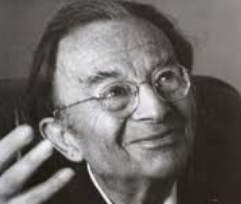
Neurosis can be understood best as the battle between tendencies within an individual; deep character analysis leads, if successful, to the progressive solution.
▼
Source
source
p. 264
4 months 6 days ago
How can the Universe tell its own story save by making use of human speech; how convey its meanings to finite minds save by employing a thinker to declare them? So long as the story remains unspoken, unwritten, can we say it exists at all? Does not the significance of things become a story by the very process which ends in the movement of an intelligently guided pen over a sheet of paper, in the reading of printed types, in the utterance of recognised vocables; and until this process has been accomplished is not the "meaning" a mere promise or unrealized potency? Can we learn the history of the world, and of human life, otherwise than by reading, or hearing it spoken? How, then, can we receive it without the intermediation of a writer, a speaker?
4 months 1 week ago
No mathematician can give any meaning to language about matter, force, inertia, used in text-books of mechanics.
7 months 5 days ago
What a judgment upon the living, if it is true, as has been maintained, that what dies has never existed!
7 months 5 days ago
May some future student go over this ground again, and have the leisure to give his results to the world.

6 months 3 weeks ago
America had declared war with Spain.... It did not require much political wisdom to see that America's concern was a matter of sugar and had nothing to do with humanitarian feelings. Of course there were plenty of credulous people, not only in the country at large, but even in liberal ranks, who believed in America's claim. I could not join them. I was sure that no one, be it individual or government, engaged in enslaving and exploiting at home, could have the integrity or the desire to free people in other lands.
▼
Source
source
(p. 226)

8 months 4 days ago
The aim of philosophy is to erect a wall at the point where language stops anyway.
▼
Source
source
Ch. 9 : Philosophy, p. 187
CivilSimian.com created by AxiomaticPanic, CivilSimian, Kalokagathia