


4 months 5 days ago
Fanaticism is the danger of the world, and always has been, and has done untold harm. I might almost say that I was fanatical against fanaticism.
▼
Source
source
The Future of Science (1959), p. 79; also in BBC The Listener, Vol. 61 (1959), p. 505

1 week 5 days ago
The purpose of the magnanimous is to be found in procuring benefits for the world and eliminating its calamities. ... Mutual attacks among states, mutual usurpation among houses, mutual injuries among individuals; the lack of grace and loyalty between ruler and ruled, the lack of affection and filial piety between father and son, the lack of harmony between elder and younger brothers - these are the major calamities in the world.
▼
Source
source
Book 4; Universal Love II
5 days ago
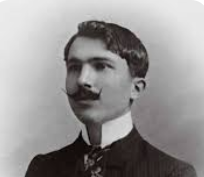
Which of the two eternal roads shall I choose? Suddenly I know that my whole life hangs on this decision - the life of the entire Universe. Of the two, I choose the ascending path. Why? For no intelligible reason, without any certainty; I know how ineffectual the mind and all the small certainties of man can be in this moment of crisis. I choose the ascending path because my heart drives me toward it. "Upward! Upward! Upward!" my heart shouts, and I follow it trustingly.
1 month 3 weeks ago
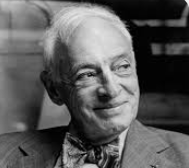
Psychoanalysis pretends to investigate the Unconscious. The Unconscious by definition is what you are not conscious of. But the Analysts already know what's in it. They should, because they put it all in beforehand. It's like an Easter Egg hunt.
▼
Source
source
The Dean's December (1982), ch. 18, p. 298
5 days ago
Who holds a sword is tempted, who has youth must play,he who does not fear death on earth does not fear God.
▼
Source
source
Odysseus, Book VIII, line 560
2 months 1 week ago
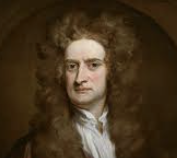
We are to admit no more causes of natural things than such as are both true and sufficient to explain their appearances.
▼
Source
source
"Rules of Reasoning in Philosophy" : Rule I
4 months 5 days ago
He asked my religion and I replied 'agnostic'. He asked how to spell it, and remarked with a sigh: 'Well, there are many religions, but I suppose they all worship the same God. This remark kept me cheerful for about a week.

4 months 1 week ago
People who invented the word charity, and used it in a good sense, inculcated more clearly, and much more efficaciously, the precept, Be charitable, than any pretended legislator or prophet, who should insert such a maxim in his writings.
▼
Source
source
Part I, Essay 22: Of the Standard of Taste

4 months 6 days ago
Though the managing ourselves well in this part of our behavior has the name good-breeding, as if a peculiar effect of education; yet... young children should not be much perplexed about it... Teach them humility, and to be good-natur'd, if you can, and this sort of manners will not be wanting; civility being in truth nothing but a care not to shew any slighting or contempt of any one in conversation.
▼
Source
source
Sec. 145

4 months 5 days ago
What we principally thought of, was to alter people's opinions; to make them believe according to evidence, and know what was their real interest, which when they once knew, they would, we thought, by the instrument of opinion, enforce a regard to it upon one another. While fully recognizing the superior excellence of unselfish benevolence and love of justice, we did not expect the regeneration of mankind from any direct action on those sentiments, but from the effect of educated intellect, enlightening the selfish feelings. Although this last is prodigiously important as a means of improvement in the hands of those who are themselves impelled by nobler principles of action, I do not believe that any one of the survivors of the Benthamites or Utilitarians of that day, now relies mainly upon it for the general amendment of human conduct.
▼
Source
source
(pp. 111-112)

2 months 3 weeks ago
I disclose my mysteries to those who are worthy of my mysteries.
2 months 3 weeks ago
People will become faint out of fear and expectation of the things coming upon the inhabited earth, for the powers of the heavens will be shaken. And then they will see the Son of man coming in a cloud with power and great glory.
▼
Source
source
21:26-27, NWT
2 months 3 weeks ago
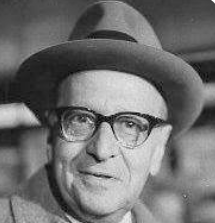
If the subjectivist view hold true, thinking cannot be of any help in determining the desirability of any goal in itself. The acceptability of ideals, the criteria for our actions and beliefs, the leading principles of ethics and politics, all our ultimate decisions are made to depend upon factors other than reason. They are supposed to be matters of choice and predilection, and it has become meaningless to speak of truth in making practical, moral or esthetic decisions.
▼
Source
source
pp. 7-8.
4 months 5 days ago
Conformity to nature has no connection whatever with right and wrong. The idea can never be fitly introduced into ethical discussions at all, except, occasionally and partially, into the question of degrees of culpability. To illustrate this point, let us consider the phrase by which the greatest intensity of condemnatory feeling is conveyed in connection with the idea of nature - the word "unnatural." That a thing is unnatural, in any precise meaning which can be attached to the word, is no argument for its being blamable; since the most criminal actions are to a being like man not more unnatural than most of the virtues.
▼
Source
source
page 62; Broadview Press, page 102

4 months 4 days ago
Alexander's career was piracy pure and simple, nothing but an orgy of power and plunder, made romantic by the character of the hero. There was no rational purpose in it, and the moment he died his generals and governors attacked one another.
3 months ago
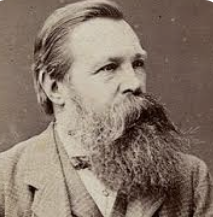
There have always been poor and working classes; and the working class have mostly been poor. But there have not always been workers and poor people living under conditions as they are today.
1 day ago
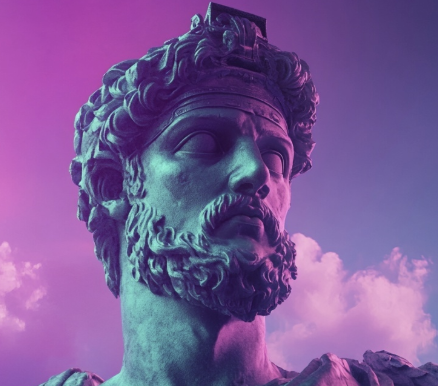
Rememberest the gods, and that they wish not to be flattered, but wish all reasonable beings to be made like themselves; and... rememberest that what does the work of a fig-tree is a fig-tree, and that what does the work of a dog is a dog, and that what does the work of a bee is a bee, and that what does the work of a man is a man.
▼
Source
source
X, 8

4 months 5 days ago
I would say to the readers of the Scriptures, if they wish for a good book, read the Bhagavad-Gita...translated by Charles Wilkins. It deserves to be read with reverence even by yankees...Besides the Bhagvat-Geeta, our Shakespeare seems sometimes youthfully green...Ex oriente lux may still be the motto of scholars, for the Western world has not yet derived from the East all the light it is destined to derive thence.
▼
Source
source
Quoted in Sushama Londhe, A Tribute to Hinduism (New Delhi: Pragun Publication, 2008) p. 26

4 months 3 weeks ago
Temperance is that discreet regulation of the desires and passions, by which we are enabled to enjoy pleasures without suffering any consequent inconvenience. They who maintain such a constant self-command, as never to be enticed by the prospect of present indulgence, to do that which will be productive of evil, obtain the truest pleasure by declining pleasure.

4 months 4 days ago
All is riddle, and the key to a riddle is another riddle.
▼
Source
source
Illusions

3 weeks 4 days ago
What you see, yet can not see over, is as good as infinite.
▼
Source
source
Bk. II, ch. 1.
2 months 1 week ago
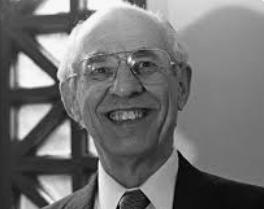
To require that all of these must be reducible to a single version is to make the mistake of supposing that 'Which are the real objects?' is a question that makes sense independently of our choice of concepts.
▼
Source
source
Lecture I: Is There Still Anything to Say about Reality and Truth?

4 months 1 week ago
I have in this treatise followed the mathematical method, if not with all strictness, at least imitatively, not in order, by a display of profundity, to procure a better reception for it, but because I believe such a system to be quite capable of it, and that perfection may in time be obtained by a cleverer hand, if stimulated by this sketch, mathematical investigators of nature should find it not unimportant to treat the metaphysical portion, which anyway cannot be got rid of, as a special fundamental department of general physics, and to bring it into unison with the mathematical doctrine of motion.
▼
Source
source
Preface, Tr. Bax, 1883

4 weeks 1 day ago
In Kant's words, human beings are uncaused causes, and therefore have infinite value, and a liberal regime protects that autonomy by giving people rights... The right to speak, to organize, to associate, and ultimately to have a share of power by being able to vote. ...This is ...the moral status, the dignity that life in a liberal regime that does respect individual rights, gives us, and it is one of the reasons that to this day, people do not want to live in authoritarian countries that do not recognize the fundamental dignity of their... citizens.
▼
Source
source
11:47
4 months 4 days ago
I look forward to a future when acts of war shall be formally outlawed as between civilized peoples. All these beliefs of mine put me firmly into the anti-military party. But I do not believe that peace either ought to be or will be permanent on this globe, unless the states, pacifically organized, preserve some of the old elements of army-discipline. A permanently successful peace-economy cannot be a simple pleasure-economy. In the more or less socialistic future toward which mankind seems drifting we must still subject ourselves collectively to those severities which answer to our real position upon this only partly hospitable globe. We must make new energies and hardihoods continue the manliness to which the military mind so faithfully clings.

2 weeks 5 days ago
No one is able to rule unless he is also able to be ruled.
▼
Source
source
De Ira (On Anger): Book 2, cap. 15, line 4

2 months 2 days ago
The artist is the person who invents the means to bridge biological inheritance and the environments created by technological innovation.
▼
Source
source
p. 98
4 months 1 week ago
In all determinations of morality, this circumstance of public utility is ever principally in view; and wherever disputes arise, either in philosophy or common life, concerning the bounds of duty, the question cannot, by any means, be decided with greater certainty, than by ascertaining, on any side, the true interests of mankind. If any false opinion, embraced from appearances, has been found to prevail; as soon as farther experience and sounder reasoning have given us juster notions of human affairs, we retract our first sentiment, and adjust anew the boundaries of moral good and evil.
▼
Source
source
§ 2.17 : Of Benevolence, Pt. 2

2 months 4 days ago
To recognize this clearly is enough to drive a man out of his senses or to make him shoot himself. And this is just what does happen, and especially often among military men. A man need only come to himself for an instant to be impelled inevitably to such an end.
▼
Source
source
Chapter V, Contradiction Between our Life and our Christian Conscience
2 weeks ago
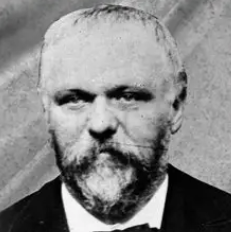
It seems that it was the Jews who had entered the revolutionary movement who are primarily responsible for the terroristic measures blamed upon the bolsheviks. This hypothesis appears to me to be all the more reasonable given that the intervention of the Jews in the Hungarian Soviet Republic has not been a happy one.
▼
Source
source
p. 290

4 months 6 days ago
The charlatan takes very different shapes according to circumstances; but at bottom he is a man who cares nothing about knowledge for its own sake, and only strives to gain the semblance of it that he may use it for his own personal ends, which are always selfish and material.
▼
Source
source
"Similes, Parables and Fables" Parerga and Paralipomena, vol. 2, § 394

4 months 1 week ago
She is rightly called not only the mother of the man, but also the Mother of God ... It is certain that Mary is the Mother of the real and true God.
▼
Source
source
Weimar edition of Martin Luther's Works, English translation edited by J. Pelikan [Concordia: St. Louis], Vol. 11, Vol. 24, 107
4 months 4 days ago
A genuine first-hand religious experience like this is bound to be a heterodoxy to its witnesses, the prophet appearing as a mere lonely madman. If his doctrine prove contagious enough to spread to any others, it becomes a definite and labeled heresy. But if it then still prove contagious enough to triumph over persecution, it becomes itself an orthodoxy; and when a religion has become an orthodoxy, its day of inwardness is over: the spring is dry; the faithful live at second hand exclusively and stone the prophets in their turn. The new church, in spite of whatever human goodness it may foster, can be henceforth counted on as a staunch ally in every attempt to stifle the spontaneous religious spirit, and to stop all later bubblings of the fountain from which in purer days it drew its own supply of inspiration.
▼
Source
source
Lectures XIV and XV, "The Value of Saintliness"
2 months 3 weeks ago
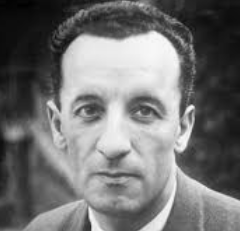
The sensate body possesses an art of interrogating the sensible according to its own wishes, an inspired exegesis The Visible and the Invisible, trans.
▼
Source
source
A. Lingis (Evanston: 1968), p. 135
4 months 5 days ago
Science seems to be at war with itself.... Naive realism leads to physics, and physics, if true, shows naive realism to be false. Therefore naive realism, if true, is false; therefore it is false.
▼
Source
source
An Inquiry into Meaning and Truth (1940), Introduction, p. 15
1 day ago
Disturbance comes only from within-from our own perceptions.
▼
Source
source
(Hays translation) IV, 4

5 months 1 day ago
One does not discover the absurd without being tempted to write a manual of happiness. "What! — by such narrow ways — ?" There is but one world, however. Happiness and the absurd are two sons of the same earth. They are inseparable. It would be a mistake to say that happiness necessarily springs from the absurd discovery. It happens as well that the feeling of the absurd springs from happiness.

5 months 5 days ago
The similarity between Christ and Socrates consists essentially in their dissimilarity. Just as philosophy begins with doubt, so also a life that may be called human begins with irony.
4 days ago
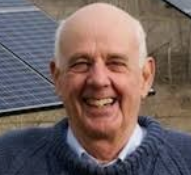
Ask the questions that have no answers. Invest in the millenium.
▼
Source
source
Manifesto: The Mad Farmer Liberation Front in Farming: A Hand Book
3 days ago
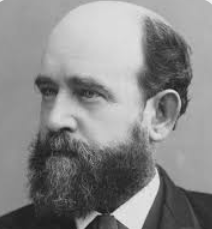
Those who are most to be considered, those for whose help the struggle must be made, if labor is to be enfranchised, and social justice won, are those least able to help or struggle for themselves, those who have no advantage of property or skill or intelligence, - the men and women who are at the very bottom of the social scale. In securing the equal rights of these we shall secure the equal rights of all. Hence it is, as Mazzini said, that it is around the standard of duty rather than around the standard of self-interest that men must rally to win the rights of man. And herein may we see the deep philosophy of Him who bade men love their neighbors as themselves. In that spirit, and in no other, is the power to solve social problems and carry civilization onward.
▼
Source
source
Ch. 21 : Conclusion

3 months 5 days ago
A conscientious man would be cautious how he dealt in blood.
▼
Source
source
Letter to the Sheriffs of Bristol (3 April 1777); as published in The Works of the Right Hon. Edmund Burke (1899), vol. 2, p. 206

4 days ago
And for the support of this Declaration, with a firm reliance on the protection of divine Providence, we mutually pledge to each other our Lives, our Fortunes and our sacred Honor.
4 months 5 days ago
Every man, wherever he goes, is encompassed by a cloud of comforting convictions, which move with him like flies on a summer day.
▼
Source
source
Ch. 2: Dreams and Facts
1 month 2 weeks ago
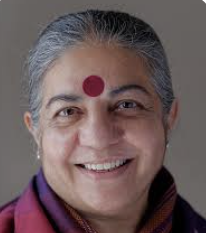
Principles of Earth Democracy, #10: Earth Democracy connects people in circles of care, cooperation, and compassion instead of dividing them through competition and conflict, fear and hatred. In the face of a world of greed, inequality, and overconsumption, Earth Democracy globalizes compassion, justice, and sustainability.
▼
Source
source
(p. 11)
3 months 5 days ago
Parliament is not a congress of ambassadors from different and hostile interests; which interests each must maintain, as an agent and advocate, against other agents and advocates; but parliament is a deliberative assembly of one nation, with one interest, that of the whole; where, not local purposes, not local prejudices ought to guide, but the general good, resulting from the general reason of the whole. You choose a member indeed; but when you have chosen him, he is not a member of Bristol, but he is a member of parliament.
▼
Source
source
Speech to the Electors of Bristol (3 November 1774); as published in The Works of the Right Hon. Edmund Burke
2 months 2 weeks ago
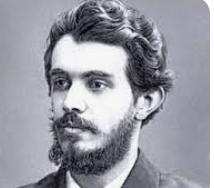
Berdyaev has been categorized as a Christian existentialist and a mystical philosopher. He never avoided the label of "mystic" since he felt it was the mystics of the world who came closest to understanding the role of spirit. Many of the philosophers he quoted were mystics - Meister Eckhart, Angelus Silesius and especially Jacob Boehme. The influence of Dostoevsky was central to his thought. Nevertheless, Berdyaev is not a naively irrational thinker; he brings an enormous fund of philosophical knowledge combined with the profundity of his own thought to support his view of existence. There are no dogmas in his writings to offend one's intellectual conscience.
▼
Source
source
Richard Schain, in In Love with Eternity : Philosophical Essays and Fragments (2005), Ch. 7 : Nikolai Alexandrovich Berdyaev - A Champion of the Spirit, p. 47
4 months 1 week ago
The guardians who have kindly undertaken the supervision will see to it that by far the largest part of mankind, including the entire "beautiful sex," should consider the step into maturity, not only as difficult but as very dangerous. After having made their domestic animals dumb and having carefully prevented these quiet creatures from daring to take any step beyond the lead-strings to which they have fastened them, these guardians then show them the danger which threatens them, should they attempt to walk alone.
4 months 6 days ago
It was the excess to which imaginary systems of religion had been carried, and the intolerance, persecutions, burnings, and massacres, they occasioned, that first induced certain persons to propagate infidelity; thinking, that upon the whole, that it was better not to believe at all, than to believe a multitude of things and complicated creeds, that occasioned so much mischief in the world. But those days are past, persecution has ceased, and the antidote then set up against it has no longer even the shadow of apology. We profess, and we proclaim in peace, the pure, unmixed, comfortable, and rational belief of a God, as manifested to us in the universe. We do this without any apprehension of that belief being made a cause of persecution as other beliefs have been, or of suffering persecution ourselves. To God, and not to man, are all men to account for their belief.
▼
Source
source
A Discourse, &c. &c.

2 months 2 weeks ago
The number 2 thought of by one man cannot be added to the number 2 thought of by another man so as to make up the number 4.
▼
Source
source
Oppression and Liberty (1958), p. 82
2 months 1 week ago
The real significance of the Russell paradox, from the standpoint of the modal-logic picture, is this: it shows that no concrete structure can be a standard model for the naive conception of the totality of all sets; for any concrete structure has a possible extension that contains more 'sets'. (If we identify sets with the points that represent them in the various possible concrete structures, we might say: it is not possible for all possible sets to exist in any one world!) Yet set theory does not become impossible. Rather, set theory becomes the study of what must hold in, e.g. any standard model for Zermelo set theory.
▼
Source
source
Mathematics without foundations
CivilSimian.com created by AxiomaticPanic, CivilSimian, Kalokagathia