


7 months 3 weeks ago
The live dead-man is dead as a producer and alive insofar as he consumes.
▼
Source
source
p. 139
6 months 3 weeks ago
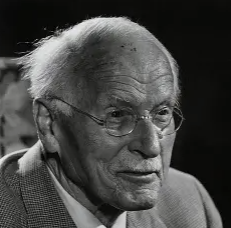
So it is that you come to know what a real God is. ... The God wants my life. He wants to go with me, sit at the table with me, work with me. Above all he wants to be ever-present.
▼
Source
source
P. 291

8 months 3 weeks ago
We all have a weakness for beauty.

5 months 3 weeks ago
Privacy invasion is now one of biggest knowledge industries.
▼
Source
source
(p. 24)
8 months 3 days ago
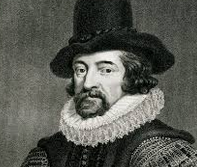
Let men learn (as we have said above) the difference that exists between the idols of the human mind, and the ideas of the Divine mind. The former are mere arbitrary abstractions; the latter the true marks of the Creator on his creatures, as they are imprinted on, and defined in matter, by true and exquisite touches. Truth, therefore, and utility are here perfectly identical.
▼
Source
source
Aphorism 124

8 months 1 week ago
These five rules [above] form all that is necessary to render proofs convincing, immutable, and to say all, geometrical; and the eight rules together render them even more perfect.

7 months 3 weeks ago
I wish to propose for the reader's favourable consideration a doctrine which may, I fear, appear wildly paradoxical and subversive. The doctrine in question is this: that it is undesirable to believe a proposition when there is no ground whatever for supposing it true.
▼
Source
source
Ch. 1: The Value of Scepticism
6 months 2 weeks ago
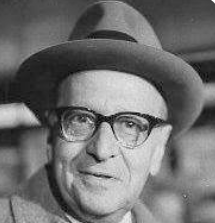
The blessing that the market does not ask about birth is paid for in the exchange society by the fact that the possibilities conferred by birth are molded to fit the production of goods that can be bought on the market.
▼
Source
source
E. Jephcott, trans., p. 9.
6 months 2 weeks ago
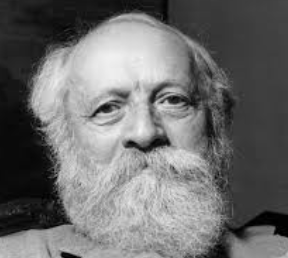
Life, in that it is life, necessarily entails justice.
▼
Source
source
"Politics and Morality" in Be'ayot (April 1945), as published in A Land of Two Peoples : Martin Buber on Jews and Arabs (1983) edited by Paul Mendes-Flohr, p. 169
6 months 3 weeks ago
There is, properly speaking, no Misfortune in the world. Happiness and Misfortune stand in continual balance. Every Misfortune is, as it were, the obstruction of a stream, which, after overcoming this obstruction, but bursts through with the greater force.

7 months 3 weeks ago
If we could sniff or swallow something that would, for five or six hours each day, abolish our solitude as individuals, atone us with our fellows in a glowing exaltation of affection and make life in all its aspects seem not only worth living, but divinely beautiful and significant, and if this heavenly, world-transfiguring drug were of such a kind that we could wake up next morning with a clear head and an undamaged constitution-then, it seems to me, all our problems (and not merely the one small problem of discovering a novel pleasure) would be wholly solved and earth would become paradise.
▼
Source
source
Wanted, A New Pleasure
4 months 1 week ago
When people were committed to the idea that in the field of religion only one plan must be adopted, bloody wars resulted. With the acknowledgment of the principle of religious freedom these wars ceased. The market economy safeguards peaceful economic co-operation because it does not use force upon the economic plans of the citizens. If one master plan is to be substituted for the plans of each citizen, endless fighting must emerge. Those who disagree with the dictator's plan have no other means to carry on than to defeat the despot by force of arms.

3 months 3 weeks ago
Rememberest the gods, and that they wish not to be flattered, but wish all reasonable beings to be made like themselves; and... rememberest that what does the work of a fig-tree is a fig-tree, and that what does the work of a dog is a dog, and that what does the work of a bee is a bee, and that what does the work of a man is a man.
▼
Source
source
X, 8
8 months 1 week ago
No one is ignorant that there are two avenues by which opinions are received into the soul, which are its two principal powers: the understanding and the will.
7 months 2 weeks ago
The relation of feeling toward art and its bringing-forth can be one of production or one of reception and enjoyment.
▼
Source
source
p. 78
7 months 3 weeks ago
Man is always separated from what he is by all the breadth of the being which he is not. He makes himself known to himself from the other side of the world and he looks from the horizon toward himself to recover his inner being.

6 months 4 days ago
Popular presentation today is all too often that which puts the mob in a position to talk about something without understanding it.
▼
Source
source
G 32

6 months 1 week ago
Some will ask, what about weak natures, must they not be protected? Yes, but to be able to do that, it will be necessary to realize that education of children is not synonymous with herdlike drilling and training. If education should really mean anything at all, it must insist upon the free growth and development of the innate forces and tendencies of the child. In this way alone can we hope for the free individual and eventually also for a free community, which shall make interference and coercion of human growth impossible.
7 months 3 weeks ago
The average man's opinions are much less foolish than they would be if he thought for himself: in science, at least, his respect for authority is on the whole beneficial.
▼
Source
source
On Education, Especially in Early Childhood (1926), Ch. 2: The Aims of Education, p. 63

3 months 2 weeks ago
We Jews have been too adaptable. We have been too eager to sacrifice our idiosyncrasies for the sake of social conformity. ... Even in modern civilization, the Jew is most happy if he remains a Jew.
5 months 1 week ago
There is a strong affinity between the forces of empire and a politics of hate that justifies policies of domination and exclusion. So long as people's attention is focused on fear and hatred of foreigners or members of a particular religious group, such as Muslims, they are distracted from organizing to deal with the system of institutional domination and exploitation that is the real source of their insecurity.

6 months 2 weeks ago
We return to our analysis of qualities. Something preserves itself throughout this flux, something that passes into other things, but also stands against them as a being for itself. This something can exist only as the product of a process through which it integrates its otherness with its own proper being. Hegel says that its existence comes about through 'the negation of the negation.' The first negation is the otherness in which it turns, and the second is the incorporation of this other into its own self. Such a process presupposes that things possess a certain power over their movement, that they exist in a certain self-relation that enables them to 'mediate' their existential conditions.
▼
Source
source
P. 132-133
6 months 2 weeks ago
In this initial illimitableness of possibilities that characterizes one who has no nature there stands out only one fixed, pre-established, and given line by which he may chart his course, only one limit: the past.
▼
Source
source
"Man has no nature"
7 months 6 days ago
The most momentous thing in human life is the art of winning the soul to good or to evil.
▼
Source
source
As quoted in Lives and Opinions of Eminent Philosophers, as translated by Robert Drew Hicks (1925)

6 months 2 weeks ago
Hereby it is manifest, that during the time men live without a common Power to keep them all in awe, they are in that conditions called Warre; and such a warre, as is of every man, against every man.
▼
Source
source
The First Part, Chapter 13, p. 62

6 months 1 week ago
The English never abolish anything. They put it in cold storage.
▼
Source
source
Ch. 36, January 19, 1945.
5 months 1 week ago
Nature shrinks as capital grows. The growth of the market cannot solve the very crisis it creates.
▼
Source
source
Soil Not Oil: Environmental Justice in an Age of Climate Crisis
6 months 3 days ago
The first task of administrative theory is to develop a set of concepts that will permit the description, in terms relevant to the theory, of administrative situations. These concepts, to be scientifically useful, must be operational; that is, their meanings must correspond to empirically observable facts or situations.
▼
Source
source
p. 43.
4 months 2 days ago
Suppose we try to locate the cause of disorder, we shall find it lies in the want of mutual love.
▼
Source
source
Book 4; Universal Love I
5 months 1 week ago
The wave of the future is coming and there is no fighting it.
▼
Source
source
The Wave of the Future
4 months 1 week ago
My idea of heaven is, eating pâté de foie gras to the sound of trumpets.
▼
Source
source
View ascribed by Smith to his friend Henry Luttrell; reported in Hesketh Pearson, The Smith of Smiths (London: Hamish Hamilton, 1934), p. 236
6 months 1 week ago
Corruption of politics has nothing to do with the morals, or the laxity of morals, of various political personalities. Its cause is altogether a material one. Politics is the reflex of the business and industrial world, the mottos of which are: "To take is more blessed than to give"; "buy cheap and sell dear"; "one soiled hand washes the other." There is no hope even that woman, with her right to vote, will ever purify politics.
4 months 1 week ago
The truth is, that most men want knowledge, not for itself, but for the superiority which knowledge confers; and the means they employ to secure this superiority, are as wrong as the ultimate object, for no man can ever end with being superior, who will not begin with being inferior.
▼
Source
source
Lecture IX : On the Conduct of the Understanding
3 months 2 weeks ago
But what can be the attraction of getting to know such a tiny section of nature thoroughly, while one leaves everything subtler and more complex shyly and timidly alone? Does the product of such a modest effort deserve to be called by the proud name of a theory of the universe? In my belief the name is justified; for the general laws on which the structure of theoretical physics is based claim to be valid for any natural phenomenon whatsoever. With them, it ought to be possible to arrive at the description, that is to say, the theory, of every natural process, including life, by means of pure deduction, if that process of deduction were not far beyond the capacity of the human intellect. The physicist's renunciation of completeness for his cosmos is therefore not a matter of fundamental principle.
6 months 3 weeks ago
Every stage of education begins with childhood. That is why the most educated person on earth so much resembles a child.
▼
Source
source
"Miscellaneous Observations," Philosophical Writings, M. Stolijar, trans. (Albany: 1997) #48
8 months 1 week ago
Every habit and faculty is confirmed and strengthened by the corresponding actions, that of walking by walking, that of running by running.
▼
Source
source
Book II, ch. 18, 1
7 months 3 weeks ago
The economic concept of value does not occur in antiquity.
▼
Source
source
Notebook VII, The Chapter on Capital, p. 696.
6 months 2 weeks ago
True, the law is sacred to the bourgeois, for it is his own composition, enacted with his consent, and for his benefit and protection. He knows that, even if an individual law should injure him, the whole fabric protects his interests; and more than all, the sanctity of the law, the sacredness of order as established by the active will of one part of society, and the passive acceptance of the other, is the strongest support of his social position. Because the English bourgeois finds himself reproduced in his law, as he does in his God, the policeman's truncheon which, in a certain measure, is his own club, has for him a wonderfully soothing power. But for the working-man quite otherwise! The working-man knows too well, has learned from too oft-repeated experience, that the law is a rod which the bourgeois has prepared for him; and when he is not compelled to do so, he never appeals to the law.

5 months 3 weeks ago
A Frenchman is self-assured because he regards himself personally, both in mind and body, as irresistibly attractive to men and women. An Englishman is self-assured, as being a citizen of the best-organized state in the world, and therefore as an Englishman always knows what he should do and knows that all he does as an Englishman is undoubtedly correct. An Italian is self-assured because he is excitable and easily forgets himself and other people. A Russian is self-assured just because he knows nothing and does not want to know anything, since he does not believe that anything can be known. The German's self-assurance is worst of all, stronger and more repulsive than any other, because he imagines that he knows the truth - science - which he himself has invented but which is for him the absolute truth.
▼
Source
source
Bk. IX, ch. 10

3 months 3 weeks ago
Above all things, lose no occasion of exercising your dispositions to be grateful, to be generous, to be charitable, to be humane, to be true, just, firm, orderly, courageous, &c. Consider every act of this kind, as an exercise which will strengthen your moral faculties and increase your worth.

1 year 1 week ago
Survive in such a way that you avoid limiting others who are also trying to survive. We all live in limited systems. This is the core of ethics.
8 months 3 weeks ago
A robot may not injure a human being, or, through inaction, allow a human being to come to harm.
5 months 1 day ago
As the Genesis story teaches, knowledge cannot save us from ourselves. If we know more than before, it means only that we have greater scope to enact our fantasies. But - as the Genesis myth also teaches - there is no way we can rid ourselves of what we know. If we try to regain a state of innocence, the result can only be a worse madness. The message of Genesis is that in the most vital areas of human life there can be no progress, only an unending struggle with our own nature.
▼
Source
source
An Old Chaos: Humanism and Flying Saucers (pp. 79-80)
6 months 6 days ago
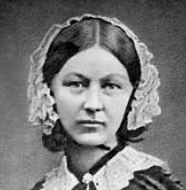
I use the word nursing for want of a better. It has been limited to signify little more than the administration of medicines and the application of poultices. It ought to signify the proper use of fresh air, light, warmth, cleanliness, quiet, and the proper selection and administration of diet - all at the least expense of vital power to the patient.
▼
Source
source
Notes on Nursing
8 months 2 days ago
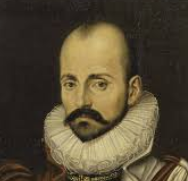
There is no pleasure to me without communication: there is not so much as a sprightly thought comes into my mind that it does not grieve me to have produced alone, and that I have no one to tell it to.
CivilSimian.com created by AxiomaticPanic, CivilSimian, Kalokagathia