

1 month 2 weeks ago
Should I not be proud, when for twenty years I have had to admit to myself that the great Newton and all the mathematicians and noble calculators along with him were involved in a decisive error with respect to the doctrine of color, and that I among millions was the only one who knew what was right in this great subject of nature?
▼
Source
source
Letter to Eckermann

3 months 2 weeks ago
Tears do not burn except in solitude.

4 months 3 weeks ago
Science is not a system of certain, or well established, statements; nor is it a statement which steadily advances towards state of finality. Our science is not knowledge (epistēmē): it can newer claim to have attained truth, or even substitute for it, such as probability. . . . We do not know; we can only guess.
▼
Source
source
Ch. 10 "Corroboration, or How a Theory Stands up to Tests", section 85: The Path of Science, p. 278.

4 months 3 weeks ago
"Ah, Psyche," I said, "have I made you so little happy as that?"
▼
Source
source
Orual
4 months 2 weeks ago
If someone is merely ahead of his time, it will catch up to him one day.
▼
Source
source
p. 8e

1 month 2 weeks ago
The End of History was never linked to a specifically American model of social or political organisation. Following Alexandre Kojève, the Russian-French philosopher who inspired my original argument, I believe that the European Union more accurately reflects what the world will look like at the end of history than the contemporary United States. The EU's attempt to transcend sovereignty and traditional power politics by establishing a transnational rule of law is much more in line with a "post-historical" world than the Americans' continuing belief in God, national sovereignty, and their military.
▼
Source
source
In "The history at the end of history", The Guardian
3 months 1 week ago
Reason as an organ for perceiving the true nature of reality and determining the guiding principles of our lives has come to be regarded as obsolete.
▼
Source
source
p. 18.

3 months 3 weeks ago
But what is liberty without wisdom, and without virtue? It is the greatest of all possible evils; for it is folly, vice, and madness, without tuition or restraint.
5 months ago
Faith ever says, "If Thou wilt," not "If Thou canst."
▼
Source
source
p. 241

4 months 3 weeks ago
The art of music is good, for the reason, among others, that it produces pleasure; but what proof is it possible to give that pleasure is good? If, then, it is asserted that there is a comprehensive formula, including all things which are in themselves good, and that whatever else is good, is not so as an end, but as a mean, the formula may be accepted or rejected, but is not a subject of what is commonly understood by proof.
▼
Source
source
Ch. 1
2 months 3 weeks ago
I sometimes wondered what the use of any of the arts was. The best thing I could come up with was what I call the canary in the coal mine theory of the arts. This theory says that artists are useful to society because they are so sensitive. They are super-sensitive. They keel over like canaries in poison coal mines long before more robust types realize that there is any danger whatsoever.
▼
Source
source
Physicist, Purge Thyself in the Chicago Tribune Magazine

4 months 3 weeks ago
The Hudson's Bay Company, before their misfortunes in the late war, had been much more fortunate than the Royal African Company.
▼
Source
source
Chapter I, Part III, p. 806.
8 months 4 weeks ago
I already am eating from the trash can all the time. The name of this trash can is ideology. The material force of ideology makes me not see what I am effectively eating.
5 months 2 weeks ago
Straightforward preaching spoils the effectiveness of a story. If you can't resist the impulse to improve your fellow human beings, do it subtly.
4 months 3 weeks ago
Of all those expensive and uncertain projects, however, which bring bankruptcy upon the greater part of the people who engage in in them, there is none perhaps more perfectly ruinous than the search after new silver and gold mines. It is perhaps the most disadvantageous lottery in the world, or the one in which the gain of those who draw the prizes bears the least proportion to the loss of those who draw the blanks: for though the prizes are few and the blanks are many, the common price of a ticket is the whole fortune of a very rich man.
▼
Source
source
Chapter VII, Part First, p. 610.

3 months 6 days ago
This is a strange -- and rather alarming -- realisation. For it clearly implies that masturbation is one of our highest faculties that human beings have developed. Many animals masturbate -- but never without the presence of another animal, or some similar stimulus. A human being can masturbate in an empty room: a triumph of pure imagination.
▼
Source
source
p. 90

1 month 2 weeks ago
We call that fire of the black thunder-cloud "electricity," and lecture learnedly about it, and grind the like of it out of glass and silk: but what is it? What made it? Whence comes it? Whither goes it? Science has done much for us; but it is a poor science that would hide from us the great deep sacred infinitude of Nescience, whither we can never penetrate, on which all science swims as a mere superficial film. This world, after all our science and sciences, is still a miracle; wonderful, inscrutable, magical and more, to whosoever will think of it.
1 month 1 week ago
Ever since prehistoric antiquity one field of study after another has crossed the divide between what the historian might call its prehistory as a science and its history proper. These transitions to maturity have seldom been so sudden or so unequivocal as my necessarily schematic discussion may have implied. But neither have they been historically gradual, coextensive, that is to say, with the entire development of the fields within which they occurred.
▼
Source
source
p. 22

1 month 2 weeks ago
Because the President has undisputed authority over foreign policy, President Biden... will be able to reinsert the United States into the international system. He will rejoin the World Health Organization, the Paris Climate Accords, he will go to NATO and reaffirm support for... our Asian allies, for Australia, for every other country that has depended on... American power, but... it's going to be extremely difficult to return to the kind of world that we assumed existed before 2016, because America does remain fundamentally divided. That bipartisan support for the liberal international order that we thought was extremely strong is no longer...
▼
Source
source
29:41:00

4 months 3 weeks ago
I hung my verse in the wind Time and tide their faults will find.
▼
Source
source
"The Test", as quoted in Emerson As A Poet (1883) by Joel Benton, p. 40
4 months 3 weeks ago
I am not asking anyone to accept Christianity if his best reasoning tells him that the weight of the evidence is against it.
▼
Source
source
Book III, Chapter 11, "Faith"

3 months 3 weeks ago
It was evident that he revived by fits and starts. He would suddenly come to himself from actual delirium for a few minutes; he would remember and talk with complete consciousness, chiefly in disconnected phrases which he had perhaps thought out and learnt by heart in the long weary hours of his illness, in his bed, in sleepless solitude.
▼
Source
source
Part 2, Chapter 10
3 weeks 1 day ago
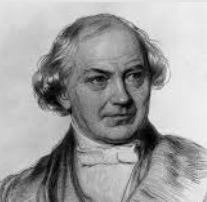
When common words are appropriated as technical terms, this must be done so that they are not ambiguous in their application.
3 months 2 weeks ago
Even more than in a poem, it is the aphorism that the word is god.
4 months 3 weeks ago
If the importation of foreign cattle, for example, were made ever so free, so few could be imported, that the grazing trade of Great Britain could be little affected by it. Live cattle are, perhaps, the only commodity of which the transportation is more expensive by sea than by land.
▼
Source
source
Chapter II
3 months 1 week ago
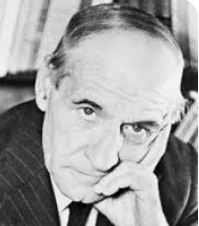
The direction of society has been taken over by a type of man who is not interested in the principles of civilisation. Not of this or that civilisation but - from what we can judge to-day - of any civilisation. ...The type of man dominant to-day is a primitive one, a Naturmensch rising up in the midst of a civilised world.
▼
Source
source
Chap.IX: The Primitive and the Technical
1 month 2 weeks ago
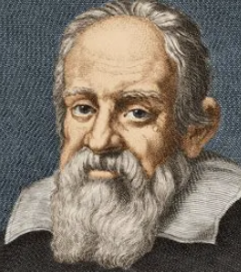
See now the power of truth; the same experiment which at first glance seemed to show one thing, when more carefully examined, assures us of the contrary.
▼
Source
source
Salviati, Third Day. Naturally Accelerated Motion
3 months 1 week ago
The masses are our masters; and for every one who looks facts in the face his existence has become dependent on them, so that the thought of them must control his doings, his cares, and his duties. Even an articulated mass always tends to become unspiritual and inhuman. It is life without existence, superstitions without faith. It may stamp all flat; it is disinclined to tolerate independence and greatness, but prone to constrain people to become as automatic as ants.
4 months 3 weeks ago
I am a democrat because I believe in the Fall of Man. I think most people are democrats for the opposite reason.
2 weeks 6 days ago
The Triad has a special beauty and fairness beyond all numbers, primarily because it is the very first to make actual the potentiality of the Monad - oddness, perfection, proportionality, unification, limit.
▼
Source
source
On the Triad
2 months 1 week ago
The students of physical science are not unfrequently told that their pursuits unfit them for the estimation of moral probability. And it may be so, for I am afraid that to those who are accustomed to severe reasoning, either in the province of Science or in that of Law, reasoning from 'moral probability' is apt to be regarded as a process of accumulating inconclusive arguments, in the hope that a great heap of them may, at least, look as firm as one good demonstration.
▼
Source
source
The Evidence of the Miracle of the Resurrection
3 months 3 weeks ago
Morals are in all countries the result of legislation and government; they are not African or Asian or European: they are good or bad.

3 months 2 weeks ago
If any man will come after me, let him deny himself, and take up his cross, and follow me. For whosoever will save his life shall lose it: and whosoever will lose his life for my sake shall find it. For what is a man profited, if he shall gain the whole world, and lose his own soul? or what shall a man give in exchange for his soul? For the Son of man shall come in the glory of his Father with his angels; and then he shall reward every man according to his works. Verily I say unto you, There be some standing here, which shall not taste of death, till they see the Son of man coming in his kingdom.
▼
Source
source
16:24-28 (KJV)
2 months 1 week ago
That is the best government which desires to make the people happy, and knows how to make them happy.
▼
Source
source
p. 160
5 months ago
There is nothing so easy, so sweet, and so favourable, as the divine law: it calls and invites us to her, guilty and abominable as we are; extends her arms and receives us into her bosom, foul and polluted as we at present are, and are for the future to be. But then, in return, we are to look upon her with a respectful eye; we are to receive this pardon with all gratitude and submission, and for that instant at least, wherein we address ourselves to her, to have the soul sensible of the ills we have committed, and at enmity with those passions that seduced us to offend her.
▼
Source
source
Ch. 56, tr. Cotton, rev. W. Carew Hazlitt, 1877
1 month 3 weeks ago
Whatever the practical origins of aesthetic discernment may have been, it has been used to create great works of art. When the very loftiest human creations are seen to derive from humble origins and functions, what needs revision is not our esteem for these creations but our notion of nobility.
▼
Source
source
The Nature of Rationality (1993), Ch. V : Instrumental Rationality and Its Limits; Rationality's Imagination, p. 181

4 months 3 weeks ago
I was looking at my furniture, not as the utilitarian who has to sit on chairs, to write at desks and tables, and not as the cameraman or scientific recorder, but as the pure aesthete whose concern is only with forms and their relationships within the field of vision or the picture space. But as I looked, this purely aesthetic, Cubist's-eye view gave place to what I can only describe as the sacramental vision of reality. I was back where I had been when I was looking at the flowers-back in a world where everything shone with the Inner Light, and was infinite in its significance.
▼
Source
source
describing his experiment with mescaline, p. 22
4 months 6 days ago
The Athenians are right to accept advice from anyone, since it is incumbent on everyone to share in that sort of excellence, or else there can be no city at all.
▼
Source
source
As quoted in Protagoras by Plato
4 months 2 weeks ago
The aim of the book is to set a limit to thought, or rather - not to thought, but to the expression of thoughts: for in order to be able to set a limit to thought, we should have to find both sides of the limit thinkable (i.e. we should have to be able to think what cannot be thought). It will therefore only be in language that the limit can be set, and what lies on the other side of the limit will simply be nonsense.
3 months 1 week ago
Nationalism is always an effort in a direction opposite to that of the principle which creates nations. The former is exclusive in tendency, the latter inclusive. In periods of consolidation, nationalism has a positive value, and is a lofty standard. But in Europe everything is more than consolidated, and nationalism is nothing but a mania, a pretext to escape from the necessity of inventing something new, some great enterprise.
▼
Source
source
Chapter XIV: Who Rules The World?
3 months 2 weeks ago
Sooner or later, each desire must encounter its lassitude: its truth . . .
3 months 3 weeks ago
Do you know that ages will pass and mankind will proclaim in its wisdom and science that there is no crime and, therefore no sin, but that there are only hungry people. "Feed them first and then demand virtue of them!" - that is what they will inscribe on their banner which they will raise against you and which will destroy your temple.
5 months 1 week ago
Show me someone who is ill and yet happy, in danger and yet happy, dying and yet happy, exiled and yet happy. Show me such a person; by the gods, how greatly I long to see a Stoic!
▼
Source
source
Book II, ch. 19, 24.
1 month 2 weeks ago
If I shall have sufficient strength to improve and amplify what was written and published by me up to now about motion by adding some little speculations, and in particular those relating to the force of percussion, in the investigation of which I have consumed hundreds and thousands of hours, and finally reduced this to very easy explanation, so that people can understand it in less than half an hour of time.

1 month 1 week ago
A good mind possesses a kingdom.
▼
Source
source
line 380; (Chorus)
3 months 3 weeks ago
People will not look forward to posterity, who never look backward to their ancestors.
▼
Source
source
Volume iii, p. 274
1 month 1 week ago
The principle of the family was mutual aid; but the principle of society is competition, the struggle for existence, the elimination of the weak and the survival of the strong.
▼
Source
source
Ch. 2 : On Youth
3 months 5 days ago
An elaborated culture has a density, complexity, and historical-semantic value that is so strong as to make politics possible... Gramsci's insight is to have recognised that subordination, fracturing, diffusion, reproducing, as much as producing, creating, forcing, guiding, are necessary aspects of elaboration.
▼
Source
source
Quoted in Richard Middleton, Studying Popular Music (Philadelphia: Open University Press, 1990, ISBN 0-335-15275-9), p. 248
CivilSimian.com created by AxiomaticPanic, CivilSimian, Kalokagathia