



6 months 3 weeks ago
Every book is a quotation; and every house is a quotation out of all forests and mines and stone-quarries; and every man is a quotation from all his ancestors.
▼
Source
source
Quotation and Originality
3 months 1 week ago
One is not worthy to have what one, through weakness, lets be taken from him; one is not worthy of it because one is not capable of it.
5 months 2 weeks ago
The chief requirement of the good life... is to live without any image of oneself.
▼
Source
source
The Bell (1958), ch. 9; 2001, p. 119.
6 months 3 weeks ago
"To stamp becoming with the character of being-that is the supreme will to power." (WM 617) This suggests that becoming only is if it is grounded in being as being: "That everything recurs is the closest approximation of a world of becoming to one of being."
▼
Source
source
p. 19
5 months 3 weeks ago
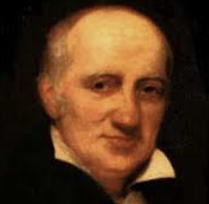
I took some pains to convince you that the Whigs, as a party in the state, were of the highest value to the public welfare, and constituted the party to which a liberal-minded and enlightened man would adhere.
▼
Source
source
Letter to H. B. Rosser (7 March 1820), quoted in C. Kegan Paul, William Godwin: His Friends and Contemporaries, Vol. II (1876), p. 263

6 months 3 weeks ago
Political Economy regards the proletarian ... like a horse, he must receive enough to enable him to work. It does not consider him, during the time when he is not working, as a human being. It leaves this to criminal law, doctors, religion, statistical tables, politics, and the beadle. ... (1) What is the meaning, in the development of mankind, of this reduction of the greater part of mankind to abstract labor? (2) What mistakes are made by the piecemeal reformers, who either want to raise wages and thereby improve the situation of the working class, or - like Proudhon - see equality of wages as the goal of social revolution?.
▼
Source
source
First Manuscript - Wages of Labour, p. 6.
5 months 3 weeks ago
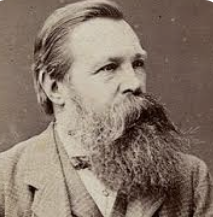
Every change in the social order, every revolution in property relations, is the necessary consequence of the creation of new forces of production which no longer fit into the old property relations. Private property has not always existed. When, towards the end of the Middle Ages, there arose a new mode of production which could not be carried on under the then existing feudal and guild forms of property, this manufacture, which had outgrown the old property relations, created a new property form, private property. And for manufacture and the earliest stage of development of big industry, private property was the only possible property form; the social order based on it was the only possible social order.
7 months 1 day ago
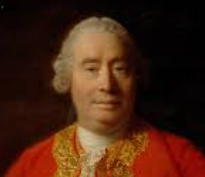
From the comparison of theism and idolatry, we may form some other observations, which will also confirm the vulgar observation that the corruption of the best things gives rise to the worst.
▼
Source
source
Part X - With regard to courage or abasement
2 months 3 weeks ago
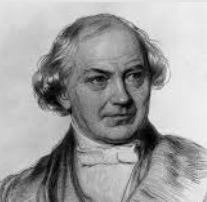
In the 'Induction of Causes' the principal maxim is, that we must be careful to possess, and to apply, with perfect clearness, the Fundamental Idea on which the Induction depends. The Induction of Substance, of Force, of Polarity, go beyond mere laws of phenomena, and may be considered as the Induction cf Causes. The Cause of certain phenomena being inferred, we are led to inquire into the Cause of this Cause, which inquiry must be conducted in the same manner as the previous one; and thus we have the Induction of Ulterior Causes.

3 months 1 week ago
No easy way leads from the earth to heaven..
▼
Source
source
line 437; (Megara).

2 months 3 weeks ago
The ruling power within, when it is in its natural state, is so related to outer circumstances that it easily changes to accord with what can be done and what is given it to do.
▼
Source
source
IV, 1
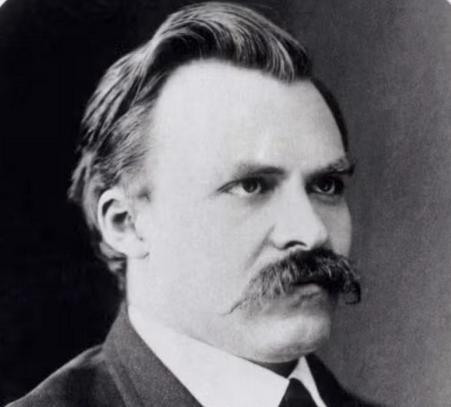
7 months 4 weeks ago
Without art we would be nothing but foreground and live entirely in the spell of that perspective which makes what is closest at hand and most vulgar appear as if it were vast, and reality itself.
7 months 5 days ago
No wind serves him who addresses his voyage to no certain port.
▼
Source
source
Book II, Ch. 1

4 months 3 weeks ago
All meaning alters with acceleration, because all patterns of personal and political interdependence change with any acceleration of information.
▼
Source
source
(p. 178-179)

5 months 1 week ago
I also am other than what I imagine myself to be. To know this is forgiveness.
▼
Source
source
p. 200
6 months 3 weeks ago
Religious suffering is, at one and the same time, the expression of real suffering and a protest against real suffering. Religion is the sigh of the oppressed creature, the heart of a heartless world, and the soul of soulless conditions. It is the opium of the people.The abolition of religion as the illusory happiness of the people is the demand for their real happiness. To call on them to give up their illusions about their condition is to call on them to give up a condition that requires illusions. The criticism of religion is, therefore, in embryo, the criticism of that vale of tears of which religion is the halo.Criticism has plucked the imaginary flowers on the chain not in order that man shall continue to bear that chain without fantasy or consolation, but so that he shall throw off the chain and pluck the living flower.
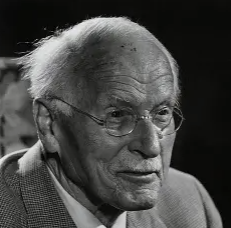
5 months 3 weeks ago
Seldom, or perhaps never, does a marriage develop into an individual relationship smoothly and without crises; there is no coming to consciousness without pain.
▼
Source
source
p. 193
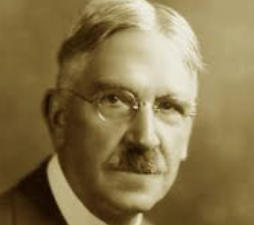
5 months 2 weeks ago
The utmost possible regarding an individual is a statement as to some order of probability about the future. Heisenberg's principle has been seized upon as a basis for wild statements to the effect that the doctrine of arbitrary free will and totally uncaused activity are now scientifically substantiated. Its actual force and significance is generalization of the idea that the individual is a temporal career whose future cannot logically be deduced from its past.

6 months 2 days ago
In a revolution, as in a novel, the most difficult part to invent is the end.
▼
Source
source
Recollections of Alexis de Tocqueville, p. 71.

6 months 4 weeks ago
People are said to believe in God, or to disbelieve in Adam and Eve. But in such cases what is believed or disbelieved is that there is an entity answering a certain description. This, which can be believed or disbelieved is quite different from the actual entity (if any) which does answer the description. Thus the matter of belief is, in all cases, different in kind from the matter of sensation or presentation, and error is in no way analogous to hallucination. A hallucination is a fact, not an error; what is erroneous is a judgment based upon it.
▼
Source
source
On the Nature of Acquaintance: Neutral Monism, 1914
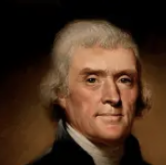
2 months 3 weeks ago
Murdering the people upon whom he also obtruded them, thus paying off former crimes committed against the liberties of one people, with crimes which he urges them to commit against the lives of another. In every stage of these repressions, we have petitioned for redress in the most humble terms, our repreated petitions have been answered only by repreated injury.
▼
Source
source
Article No. 20

5 months 2 weeks ago
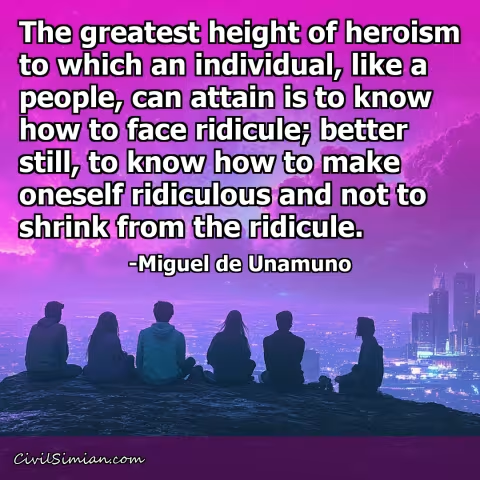
And what has Don Quixote left, do you ask? I answer, he has left himself, and a man, a living and eternal man, is worth all the theories and all the philosophies. Other peoples have left chiefly institutions, books; we have left souls; St. Teresa is worth any institution, any Critique of Pure Reason.

6 months 3 weeks ago
By 'arguing...' I mean... criticizing... inviting... criticism; and trying to learn from it.
3 months 1 week ago
He who does not wish to die cannot have wished to live.

7 months 6 days ago
I doubt if a single individual could be found from the whole of mankind free from some form of insanity. The only difference is one of degree. A man who sees a gourd and takes it for his wife is called insane because this happens to very few people.
▼
Source
source
As quoted in Words from the Wise : Over 6,000 of the Smartest Things Ever Said (2007) by Rosemarie Jarski, p. 312. From The Praise of Folly.
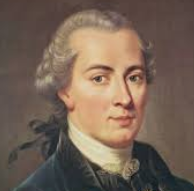
7 months ago
... happiness is not an ideal of reason, but of imagination, resting on merely empirical grounds…
▼
Source
source
4:418-19, p.29

6 months 4 weeks ago
I wish to suggest that a man may be very industrious, and yet not spend his time well. There is no more fatal blunderer than he who consumes the greater part of his life getting his living. All great enterprises are self-supporting. The poet, for instance, must sustain his body by his poetry, as a steam planing-mill feeds its boilers with the shavings it makes. You must get your living by loving.
▼
Source
source
pp. 486-7

6 months 3 weeks ago
Experience teaches only the teachable...
▼
Source
source
Tragedy and the Whole Truth
6 months 3 weeks ago
From each according to his abilities, to each according to his needs.
▼
Source
source
The Criticism of the Gotha Program (1875) Variant translation: From each according to his ability, to each according to his need.
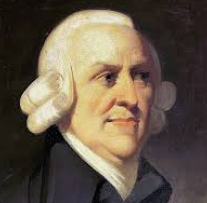
7 months 1 day ago
Such taxes [upon the necessaries of life], when they have grown up to a certain height, are a curse equal to the barrenness of the earth and the inclemency of the heavens; and yet it is in the richest and most industrious countries that they have been most generally imposed. No other countries could support so great a disorder.
▼
Source
source
Chapter II, paragraph 36, p. 500.
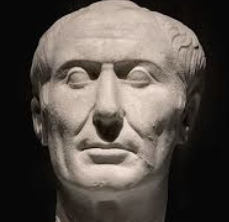
4 months 3 weeks ago
To do two things at once is to do neither.
6 months 4 weeks ago
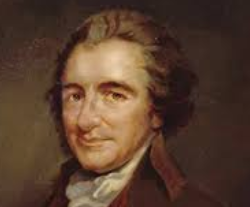
There ought to be some regulation with respect to the spirit of denunciation that now prevails. If every individual is to indulge his private malignancy or his private ambition, to denounce at random and without any kind of proof, all confidence will be undermined and all authority be destroyed. Calumny is a species of treachery that ought to be punished as well as any other kind of treachery. It is a private vice productive of public evils; because it is possible to irritate men into disaffection by continual calumny who never intended to be disaffected. It is therefore equally as necessary to guard against the evils of unfounded or malignant suspicion as against the evils of blind confidence. It is equally as necessary to protect the characters of public officers from calumny as it is to punish them for treachery or misconduct.
▼
Source
source
Letter to George Jacques Danton
6 months 3 weeks ago
The unitive knowledge of the Divine Ground has, as its necessary condition, self-abnegation and charity. Only by means of self-abnegation and charity can we clear away the evil, folly and ignorance which constitute the thing we call our personality and prevent us from becoming aware of the spark of divinity illuminating the inner man.
7 months 1 day ago
A very poor man may be said in some sense to have a demand for a coach and six; he might like to have it; but his demand is not an effectual demand, as the commodity can never be brought to market in order to satisfy it.
▼
Source
source
Chapter VII, p. 67.
6 months 3 weeks ago
Diversity makes critical argument fruitful. ...[P]artners in an argument must share ...the wish to know, and the readiness to learn from the other ...by severely criticizing his views... and hearing... [the] reply. ...the so-called method of science consists in this kind of criticism.
2 months 3 weeks ago
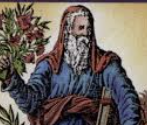
Hence the Pythagoreans in their theology called it sometimes "universe," sometimes "heaven," sometimes "all," sometimes "Fate" and "eternity," "power" and "trust" and "Necessity," "Atlas" and "unwearying," and simply "God" and "Phanes" and "sun."They called it "universe," because all things are arranged by it both in general and in particular, and because it is the most perfect boundary of number, in the sense that "decad" is, as it were, "receptacle," just as heaven is the receptacle of all things, they called it "heaven" and, among the Muses, "Ourania."
▼
Source
source
On the Decad
4 months 3 weeks ago
It is a consolation to the wretched to have companions in misery.
▼
Source
source
Maxim 995

6 months 4 weeks ago
Every true thinker for himself is so far like a monarch; he is absolute, and recognises nobody above him. His judgments, like the decrees of a monarch, spring from his own sovereign power and proceed directly from himself. He takes as little notice of authority as a monarch does of a command; nothing is valid unless he has himself authorised it. On the other hand, those of vulgar minds, who are swayed by all kinds of current opinions, authorities, and prejudices, are like the people which in silence obey the law and commands.
▼
Source
source
"Thinking for Oneself," H. Dirks, trans.
6 months 4 weeks ago
The violence of love is as much to be dreaded as that of hate. When it is durable, it is serene and equable. Even its famous pains begin only with the ebb of love, for few are indeed lovers, though all would fain be.
▼
Source
source
Pearls of Thought (1881) p. 158
3 months 1 week ago
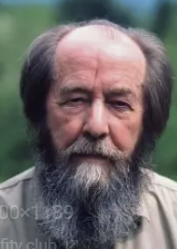
Literature that is not the breath of contemporary society, that dares not transmit the pains and fears of that society, that does not warn in time against threatening moral and social dangers - such literature does not deserve the name of literature; it is only a façade. Such literature loses the confidence of its own people, and its published works are used as wastepaper instead of being read.
▼
Source
source
Open letter to the Fourth Soviet Writers' Congress (16 May 1967) "The Struggle Intensifies," Solzhenitsyn: A Documentary Record, ed. Leopold Labedz
3 months 6 days ago
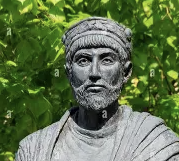
The good effects that emanate from the same source are equally diffused upon the earth. Different regions become partakers in these benefits in different ways; so that neither their production comes to an end, nor does the Deity confer his blessings upon the recipient world with any degree of variation. For where the substance is the same, so is the action thereof, in the case of Divine Powers; especially with him who is king of them all, namely, the Sun; of whom the motion is the most simple amongst all the bodies that move in a contrary direction to the world, which fact that most excellent philosopher, Aristotle, adduces to prove the superiority of that luminary to the others.
4 months 2 weeks ago
Democracies owe their existence to national loyalties - the loyalties that are supposedly shared by government and opposition, by all political parties, and by the electorate as a whole. Wherever the experience of nationality is weak or non-existent, democracy has failed to take root. For without national loyalty, opposition is a threat to government, and political disagreements create no common ground.
7 months 1 week ago
Since it is Reason which shapes and regulates all other things, it ought not itself to be left in disorder.
▼
Source
source
Book I, ch. 17, 1.
3 months 1 week ago
It would be some consolation for the feebleness of our selves and our works, if all things should perish as slowly as they come into being; but as it is, increases are of sluggish growth, but the way to ruin is rapid.
7 months 3 weeks ago
And surely to know what this good is, is of great importance for the conduct of life, for in that case we shall be like archers shooting at a definite mark, and shall be more likely to do what is right. But, if this is the case, we must try to comprehend, in outline at least, what it is and to which of the sciences it belongs.
2 months 3 weeks ago
And even should the cloud of barbarism and despotism again obscure the science and libraries of Europe, this country remains to preserve and restore light and liberty to them. In short, the flames kindled on the fourth of July, 1776, have spread over too much of the globe to be extinguished by the feeble engines of despotism; on the contrary, they will consume these engines and all who work them.
▼
Source
source
Letter to John Adams, 12 September 1821

7 months 4 days ago
It is easier for the prince to make friends of those men who were contented under the former government, and are therefore his enemies, than of those who, being discontented with it, were favourable to him and encouraged him to seize it.
▼
Source
source
Ch. 20

5 months 3 weeks ago
Woe to the book you can read without constantly wondering about the author!
CivilSimian.com created by AxiomaticPanic, CivilSimian, Kalokagathia