Being>identity. Existence>essence.



There may be a rationalist who has never wavered in his conviction of the mortality of the soul, and there may be a vitalist who has never wavered in his faith in immortality; but at the most this would prove that just as there are natural monstrosities, so there are those who are stupid as regards heart and feeling, however great their intelligence, and those who are stupid intellectually, however great their virtue. But, in normal cases, I cannot believe those who assure me that never, not in a fleeting moment, not in the hours of direst loneliness and grief, has this murmur of uncertainty breathed upon their consciousness.
Catastrophic fatality abruptly switches over into salvation.

It is likely that America will be more important during the next century or two, but after that it may well be the turn of China.
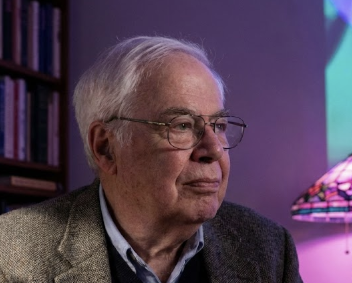
Kripke tries to sober us up by denying that meaning determines reference. Rather, we name things by confronting them and baptising them, not by creating them out of a list of qualities. Names are not, pace Russell, shorthand for such lists. They are not abbreviations for descriptions, but (in Kripke's coinage) 'rigid designators' - that is, they would name the same things in any possible world, including worlds in which their bearers did not have the properties we, in this world, use to identify them.

It is better to suffer, than to do, wrong.

Virtue by premeditation isn't worth much.
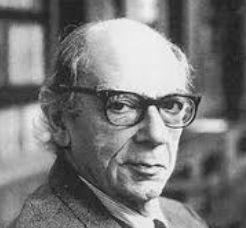
Everyone knows what made Berkeley notorious. He said that there were no material objects. He said the external world was in some sense immaterial, that nothing existed save ideas - ideas and their authors. His contemporaries thought him very ingenious and a little mad.

A man who for a long time has gone around hiding a secret becomes mentally deranged. At this point one would imagine that his secret would have to come out, but despite his derangement his soul still sticks to its hideout, and those around him become even more convinced that the false story he told to deceive them is the truth. He is healed of his insanity, knows everything that has gone on, and thereby perceives that nothing has been betrayed. Was this gratifying to him or not; he might wish to have disposed of his secret in his madness; it seems as if there were a fate which forced him to remain in his secret and would not let him go away from it. Or was it for the best, was there a guardian spirit who helped him keep his secret.

There are two classes of poets - the poets by education and practice, these we respect; and poets by nature, these we love.
It occurs to me that artists go forward by going backward, something which I have nothing against intrinsically when it is a reproduced retreat - as is the case with the better artists. But it does not seem right that they stop with the historical themes already given and, so to speak, think that only these are suitable for poetic treatment, because these particular themes, which intrinsically are no more poetic than others, are now again animated and inspirited by a great poetic nature. In this case the artists advance by marching on the spot. - Why are modern heroes and the like not just as poetic? Is it because there is so much emphasis on clothing the content in order that the formal aspect can be all the more finished?

He who gives himself entirely to his fellow-men appears to them useless and selfish; but he who gives himself partially to them is pronounced a benefactor and philanthropist.
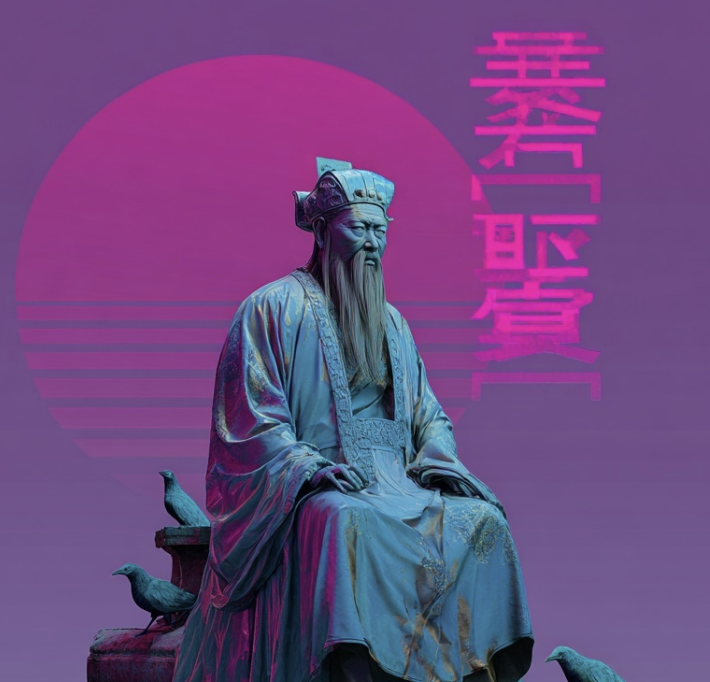
I hear and I forget. I see and I remember. I do and I understand.
The highest proof of virtue is to possess boundless power without abusing it.
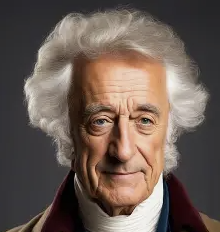
To ascend to the origin of things and speculate on the creation, is not the business of the natural philosopher. An humbler field is sufficient for him in the endeavor to discover, as far as our faculties will permit; what are these primary qualities impressed on matter, and to discover the spirit of the laws of nature
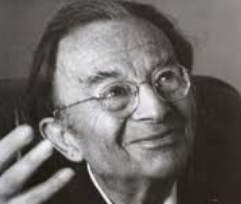
I believe that love is the main key to open the doors to the "growth" of man. Love and union with someone or something outside of oneself, union that allows one to put oneself into relationship with others, to feel one with others, without limiting the sense of integrity and independence. Love is a productive orientation for which it is essential that there be present at the same time: concern, responsibility, and respect for and knowledge of the object of the union. I believe that the experience of love is the most human and humanizing act that it is given to man to enjoy and that it, like reason, makes no sense if conceived in a partial way.
Uncertainty, doubt, perpetual wrestling with the mystery of our final destiny, mental despair, and the lack of any solid and stable foundation, may be the basis of an ethic.

If you press me to say why I loved him, I can say no more than it was because he was he, and I was I. Variants: If a man urge me to tell wherefore I loved him, I feel it cannot be expressed but by answering: Because it was he, because it was myself. If a man should importune me to give a reason why I loved him, I find it could no otherwise be expressed, than by making answer: because it was he, because it was I.

The concept of labor is not peripheral in Hegel's system, but is the central notion through which he conceives the development of society. Driven by the insight that opened this dimension to him, Hegel describes the mode of integration prevailing in a commodity-producing society in terms that clearly fore-shadow Marx's critical approach.
As the few adepts in such things well know, universal morality is to be found in little everyday penny-events just as much as in great ones. There is so much goodness and ingenuity in a raindrop that an apothecary wouldn't let it go for less than half-a-crown.

Both of us victims of the same twentieth-century plague. Not the Black Death, this time; the Grey Life.
To know something is to make this something that I know myself; but to avail myself of it, to dominate it, it has to remain distinct from myself.

Science may fall back on its stupid excuse that science works for science, and that when it has been developed by the scientists it will become accessible to the people also; but art, if it be art, should be accessible to all, and particularly to those for whom it is produced. And the position of our art strikingly arraigns the producers of art for not wishing, not knowing how, and being unable, to serve the people.

The crop of spiritual talent that is born to you, of human nobleness and intellect and heroic faculty, this is infinitely more important than your crops of cotton or corn, or wine or herrings or whale-oil, which the Newspapers record with such anxiety every season.

Those of our pleasures which come most rarely give the greatest delight.
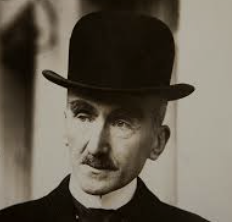
People talk, indeed, of a "primitive mentality", as, for example, to-day that of the inferior races, and in days gone by that of humanity in general, at whose door the responsibility for superstition should be laid.

Philosophy can bake no bread; but she can procure for us God, Freedom, Immortality. Which, then, is more practical, Philosophy or Economy?

It might otherwise appear paradoxical that money can be replaced by worthless paper; but that the slightest alloying of its metallic content depreciates it.

Suppose that I wish to deserve the title of "robber of remorse" and that I place in myself all [the townspeople's] repentence?
Chi Wan thought thrice, and then acted. When the Master was informed of it, he said, "Twice may do."
The silent organ loudest chants The master's requiem.

...out of the tomb of the murdered Monarchy in France, has arisen a vast, tremendous, unformed spectre, in a far more terrific guise than any which ever yet have overpowered the imagination and subdued the fortitude of man.
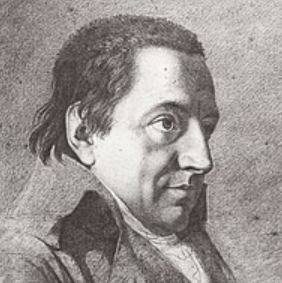
This tendency towards a Christian-European Universal Monarchy has shown itself successively in the several States which could make pretensions to such a dominion, and, since the fall of the Papacy, it has become the sole animating principle of our History. We by no means seek to determine whether this notion of Universal Monarchy has ever been distinctly entertained as a definite plan .... Thus each State either strives to attain this Universal Christian Monarchy, or at least to acquire the power of striving after it;-to maintain the Balance of Power when it is in danger of being disturbed by another; and, in secret, for power, that it may eventually disturb it itself.
Obey the voice at eve obeyed at prime.
Each human reality is at the same time a direct project to metamorphose its own For-itself into an In-itself-For-itself, a project of the appropriation of the world as a totality of being-in-itself, in the form of a fundamental quality. Every human reality is a passion in that it projects losing itself so as to found being and by the same stroke to constitute the In-itself which escapes contingency by being its own foundation, the Ens causa sui, which religions call God. Thus the passion of man is the reverse of that of Christ, for man loses himself as man in order that God may be born. But the idea of God is contradictory and we lose ourselves in vain.
...the impossible must be supposed in order to explain the superdetermination of the event
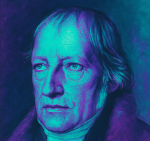
Every philosophy is complete in itself and, like a genuine work of art, contains the totality. Just as the works of Apelles and Sophocles, if Raphael and Shakespeare had known them, should not have appeared to them as mere preliminary exercises for their own work, but rather as a kindred force of the spirit, so, too reason cannot find in its own earlier forms mere useful preliminary exercises for itself.

Morality knows nothing of geographical boundaries, or distinctions of race.
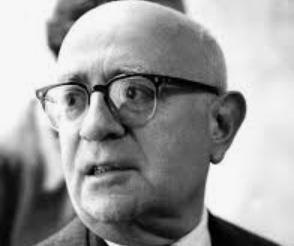
Bourgeois sport [wants] to differentiate itself strictly from play. Its bestial seriousness consists in the fact that instead of remaining faithful to the dream of freedom by getting away from purposiveness, the treatment of play as a duty puts it among useful purposes and thereby wipes out the trace of freedom in it. This is particularly valid for contemporary mass music. It is only play as a repetition of prescribed models, and the playful release from responsibility which is thereby achieved does not reduce at all the time devoted to duty except by transferring the responsibility to the models, the following of which one makes into a duty for himself.

...no matter how many instances of white swans we may have observed, this does not justify the conclusion that all swans are white.
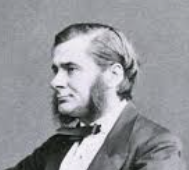
The man-like Apes... have certain characters of structure and of distribution in common.
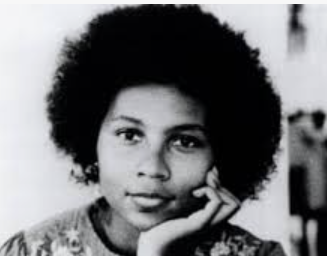
While it is in no way racist for any author to write a book exclusively about white women, it is fundamentally racist for books to be published that focus solely on the American white woman's experience in which that experience is assumed to be the American woman's experience.

And all the time - such is the tragi-comedy of our situation - we continue to clamor for those very qualities we are rendering impossible. You can hardly open a periodical without coming across the statement that what our civilization needs is more "drive", or dynamism, or self-sacrifice, or "creativity". In a sort of ghastly simplicity we remove the organ and demand the function. We make men without chests and expect of them virtue and enterprise. We laugh at honour and are shocked to find traitors in our midst. We castrate and bid the geldings be fruitful.

If you want me to believe in God, you must make me touch him.
But what is liberty without wisdom, and without virtue? It is the greatest of all possible evils; for it is folly, vice, and madness, without tuition or restraint.
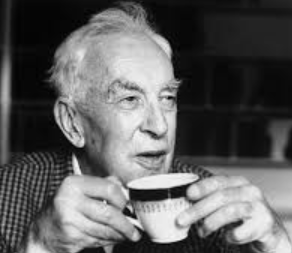
Now who are the individuals who are the greatest benefactors of the living generation of mankind? I should say: Confucius and Lao-Tse; the Buddha; the Prophets of Israel and Judah; Zoroaster, Jesus, Muhammad; and Socrates.
Even to have come forth is something, since I see that being able to conquer is placed in the hands of fate. However, there was in me, whatever I was able to do, that which no future century will deny to be mine, that which a victor could have for his own: Not to have feared to die, not to have yielded to any equal in firmness of nature, and to have preferred a courageous death to a noncombatant life.
Dialectical logic undoes the abstractions of formal logic and of transcendental philosophy, but it also denies the concreteness of immediate experience. To the extent to which this experience comes to rest with the things as they appear and happen to be, it is a limited and even false experience. It attains its truth if it has freed itself from the deceptive objectivity which conceals the factors behind the facts - that is, if it understands its world as a historical universe, in which the established facts are the work of the historical practice of man.
CivilSimian.com created by AxiomaticPanic, CivilSimian, Kalokagathia