



5 months 3 weeks ago
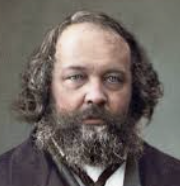
At the present time a serious, strong state can have but one sound foundation - military and bureaucratic centralization. Between a monarchy and the most democratic republic there is only one essential difference: in the former, the world of officialdom oppresses and robs the people for the greater profit of the privileged and propertied classes, as well as to line its own pockets, in the name of the monarch; in the latter, it oppresses and robs the people in exactly the same way, for the benefit of the same classes and the same pockets, but in the name of the people's will. In a republic a fictitious people, the "legal nation" supposedly represented by the state, smothers the real, live people. But it will scarcely be any easier on the people if the cudgel with which they are beaten is called the people's cudgel.
7 months ago
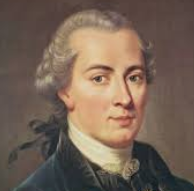
As the analysis of a substantial composite terminates only in a part which is not a whole, that is, in a simple part, so synthesis terminates only in a whole which is not a part, that is, the world.

6 months 4 weeks ago
Most people, at a crisis, feel more loyalty to their nation than to their class.
▼
Source
source
Ch. 8: Economic Power
7 months 4 days ago
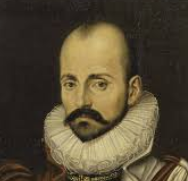
Saying is one thing, doing another.
▼
Source
source
Book II, Ch. 31. Of Anger

7 months 6 days ago
Most Christians are superstitious rather than pious, and except for the name of Christ differ hardly at all from superstitious pagans.
▼
Source
source
The Erasmus Reader (1990), pp. 140-141.

5 months 3 weeks ago
If you were to destroy in mankind the belief in immortality, not only love but every living force maintaining the life of the world would at once be dried up. Moreover, nothing then would be immoral, everything would be lawful, even cannibalism.
▼
Source
source
Book II, ch. 6 (trans. Constance Garnett) Pyotr Miusov, summarizing an argument made by Ivan at a social gathering

4 months 2 weeks ago
The picture of modern philosophy as centered in epistemology and driven by the desire to ground our representations is so tenacious that some philosophers are prepared to bite the bullet and declare the effort simply wasted. Rorty, for example, finds it easier to reject modern philosophy altogether than to reject the standard accounts of its history. His narrative is more polemical than most, but it's a polemical version of the story told in most philosophy departments in the second half of the twentieth century. The story is one of tortuously decreasing interest. Philosophy, like some people, was prepared to accept boredom in exchange for certainty as it grew to middle age.

3 months 2 weeks ago
World,-this man is not a slave with thee! None of thy promotions is necessary for him. His place is with the stars of Heaven: to thee it may be momentous, to him it is indifferent, whether thou place him in the lowest hut, or forty feet higher at the top of thy stupendous high tower, while here on Earth. The joys of Earth that are precious, they depend not on thee and thy promotions. Food and raiment, and, round a social hearth, souls who love him, whom he loves: these are already his. He wants none of thy rewards;


6 months 3 weeks ago
Poetry must be new as foam, and as old as the rock.
▼
Source
source
March 1845
2 months 3 weeks ago
While experiencing happiness, we have difficulty in being conscious of it. Only when the happiness is past and we look back on it we do suddenly realize - sometimes with astonishment - how happy we had been.
▼
Source
source
Ch. 6
7 months 3 weeks ago
In my fiction I am careful to make everything probable and to tie up all loose ends. Real life is not hampered by such considerations.
6 months 4 weeks ago
I cannot believe - and I say this with all the emphasis of which I am capable - that there can ever be any good excuse for refusing to face the evidence in favour of something unwelcome. It is not by delusion, however exalted, that mankind can prosper, but only by unswerving courage in the pursuit of truth.
▼
Source
source
"The Pursuit of Truth" in The Collected Papers of Bertrand Russell, 1993
5 months 2 weeks ago
Saint-Simon, like Hegel, begins with the assertion that the social order engendered by the French Revolution proved that mankind has reached the adult state. In contrast to Hegel, however, he described this stage primarily in terms of its economy; the industrial process was the sole integrating factor in the new social order.
▼
Source
source
P. 330

5 months 3 weeks ago
Education has for its object the formation of character. To curb restive propensities, to awaken dormant sentiments, to strengthen the perceptions, and cultivate the tastes, to encourage this feeling and repress that, so as finally to develop the child into a man of well proportioned and harmonious nature - this is alike the aim of parent and teacher.
▼
Source
source
Pt. II, Ch. 17 : The Rights of Children
7 months 2 weeks ago
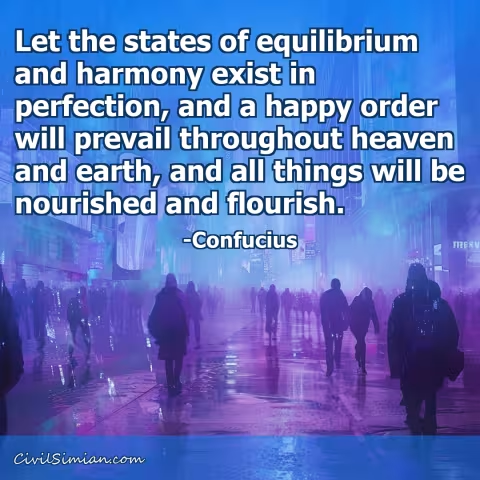
The superior man, even when he is not moving, has a feeling of reverence, and while he speaks not, he has the feeling of truthfulness.

3 months 3 weeks ago
Disobedience to authority is one of the most natural and healthy acts.
▼
Source
source
210
7 months 4 days ago
God's justice and His power are inseparable; 'tis in vain we invoke His power in an unjust cause. We are to have our souls pure and clean, at that moment at least wherein we pray to Him, and purified from all vicious passions; otherwise we ourselves present Him the rods wherewith to chastise us; instead of repairing anything we have done amiss, we double the wickedness and the offence when we offer to Him, to whom we are to sue for pardon, an affection full of irreverence and hatred. Which makes me not very apt to applaud those whom I observe to be so frequent on their knees, if the actions nearest to the prayer do not give me some evidence of amendment and reformation
▼
Source
source
Ch. 56. Of Prayers, tr. Cotton, rev. W. Carew Hazlitt, 1877

2 months 3 weeks ago
Deem not life a thing of consequence. For look at the yawning void of the future, and at that other limitless space, the past.
▼
Source
source
IV, 50

6 months 3 weeks ago
I assert(1) There is no method of discovering a scientific theory.(2) There is no method of ascertaining the truth [i.e., verification] of a scientific hypothesis...(3) There is no method of ascertaining whether a hypothesis is 'probable', in the sense of the probability calculus.
5 months 2 weeks ago
The endeavor of scientific research to see events in their more general connection in order to determine their laws, is a legitimate and useful occupation. Any protest against such efforts, in the name of freefom from restrictive conditions, would be fruitless if science did not naïvely identify the abstractions called rules and laws with the actually efficacious forces, and confuse the probability that B will follow A with the actual effort make B follow A.
▼
Source
source
p. 150.
7 months 3 weeks ago
"My field," said Goethe, "is time." That is indeed the absurd speech. What, in fact, is the Absurd Man? He who, without negating it, does nothing for the eternal. Not that nostalgia is foreign to him. But he prefers his courage and his reasoning. The first teaches him to live without appeal and to get along with what he has; the second informs him of his limits. Assured of his temporally limited freedom, of his revolt devoid of future, and of his mortal consciousness, he lives out his adventure within the span of his lifetime.
7 months 1 week ago
What is the first business of one who practices philosophy? To get rid of self-conceit. For it is impossible for anyone to begin to learn that which he thinks he already knows.
▼
Source
source
Book II, ch. 17, 1.
7 months 3 weeks ago
I accept nothing on authority. A hypothesis must be backed by reason, or else it is worthless.
6 months 2 weeks ago
But what is lawful for all extends across wide-ruling aether and, without cease, through endless sunshine.
▼
Source
source
fr. 135, as quoted in Aristotle's Rhetoric, 1373 b16
2 months 3 weeks ago
Stir up thy mind, and recall thy wits again from thy natural dreams, and visions, and when thou art perfectly awoken, and canst perceive that they were but dreams that troubled thee, as one newly awakened out of another kind of sleep look upon these worldly things with the same mind as thou didst upon those, that thou sawest in thy sleep.
▼
Source
source
VI, 29
4 months 3 weeks ago
Either be silent or say something better than silence.
▼
Source
source
Maxim 960

5 months 1 week ago
Power turns pure being into a having.
3 months 2 weeks ago
The uttered part of a man's life, let us always repeat, bears to the unuttered, unconscious part a small unknown proportion. He himself never knows it, much less do others.
6 months 3 weeks ago
There is always a certain meanness in the argument of conservatism, joined with a certain superiority in its fact.
6 months 3 weeks ago
The word "art" does not designate the concept of a mere eventuality; it is a concept of rank.
▼
Source
source
p. 125

3 months 3 weeks ago
Never has any one been less a priest than Jesus, never a greater enemy of forms, which stifle religion under the pretext of protecting it. By this we are all his disciples and his successors; by this he has laid the eternal foundation-stone of true religion; and if religion is essential to humanity, he has by this deserved the Divine rank the world has accorded him.
▼
Source
source
Ch. 5.

5 months 3 weeks ago
Applaud us when we run, console us when we fall, cheer us when we recover.
▼
Source
source
Speech at Bristol Previous to the Election (6 September 1780), quoted in The Works of the Right Honourable Edmund Burke, Vol. II (1855), p. 129

5 months 3 weeks ago
As the mathematics are now understood, each branch - or, if you please, each problem, - is but the study of the relations of a collection of connected objects, without parts, without any distinctive characters, except their names or designating letters. These objects are commonly called points; but to remove all notion of space relations, it may be better to name them monads. The relations between these points are mere complications of two different kinds of elementary relations, which may be termed immediate connection and immediate non-connection. All the monads except as serve as intermediaries for the connections have distinctive designations.
▼
Source
source
p. 268
7 months 2 weeks ago
If teleological study of the world is philosophy, and if the Law commands such a study, then the Law commands philosophy.
7 months 1 day ago
And as every present state of a simple substance is naturally a consequence of its preceding state, so its present is pregnant with its future.
▼
Source
source
La monadologie (22).

6 months 4 weeks ago
To this I answer: That force is to be opposed to nothing, but to unjust and unlawful force. Whoever makes any opposition in any other case, draws on himself a just condemnation, both from God and man...
▼
Source
source
Second Treatise of Government, Ch. XVIII, sec. 204
3 months 5 days ago
There are two kinds of animals on earth. One kind minds his own business, the other minds other people's business. The former are vegetarians, like cows, sheep and thinking men. The latter are carnivorous, like hawks, tigers and men of action.
▼
Source
source
As quoted by Tai-yi Lin (Lin Yutang's daughter) in her Foreword (26 March 1950) to The Importance of Living, p. x
6 months 3 weeks ago
The dissimulation of the woven texture can in any case take centuries to undo its web: a web that envelops a web, undoing the web for centuries; reconstituting it too as an organism, indefinitely regenerating its own tissue behind the cutting trace, the decision of each reading. There is always a surprise in store for the anatomy or physiology of any criticism that might think it had mastered the game, surveyed all the threads at once, deluding itself, too, in wanting to look at the text without touching it, without laying a hand on the "object," without risking- which is the only chance of entering into the game, by getting a few fingers caught- the addition of some new thread.
▼
Source
source
Plato's Pharmacy

6 months 3 weeks ago
For passionate emotions of all sorts, and for everything which has been said or written in exaltation of them, he professed the greatest contempt. He regarded them as a form of madness. "The intense" was with him a bye-word of scornful disapprobation. He regarded as an aberration of the moral standard of modern times, compared with that of the ancients, the great stress laid upon feeling.
▼
Source
source
(p. 49)

6 months 3 weeks ago
Without risks or prizes for the darer, history would be insipid indeed; and there is a type of military character which every one feels that the race should never cease to breed, for everyone is sensitive to its superiority. The duty is incumbent on mankind, of keeping military character in stock - if keeping them, if not for use, then as ends in themselves and as pure pieces of perfection, - so that Roosevelt's weaklings and mollycoddles may not end by making everything else disappear from the face of nature.
6 months 3 weeks ago
O tenderly the haughty day Fills his blue urn with fire; One morn is in the mighty heaven, And one in our desire.
▼
Source
source
Ode, st. 1
3 months 5 days ago
The lesser war here corresponds to the exoteric war, the bloody battle which is fought with material arms against the enemy, against the 'barbarian', against an inferior race over whom a superior right is claimed, or, finally, when the event is motivated by a religious justification, against the 'infidel'. No matter how terrible and tragic the events, no matter how huge the destruction, this war, metaphysically, still remains a 'lesser war'. The 'greater' or 'holy war' is, contrarily, of the interior and intangible order - it is the war which is fought against the enemy, the 'barbarian', the 'infidel', whom everyone bears in himself, or whom everyone can see arising in himself on every occasion that he tries to subject his whole being to a spiritual law.
▼
Source
source
pp. 44-45

5 months 3 weeks ago
No one should try to live if he has not completed his training as a victim.

6 months 3 weeks ago
[Mortals] say of some temporal suffering, "No future bliss can make up for it," not knowing Heaven, once attained, will work backwards and turn even that agony into a glory. And of some sinful pleasure they say "Let me have but this and I'll take the consequences": little dreaming how damnation will spread back and back into their past and contaminate the pleasure of the sin. Both processes begin even before death.
▼
Source
source
Ch. 9
5 months 3 weeks ago
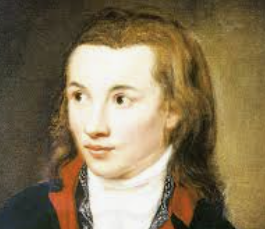
Our life is no dream, but it should and perhaps will become one.
▼
Source
source
Fragmente I, Magische Philosophie Variant: "Our life is no dream; but it ought to become one, and perhaps will." George MacDonald, Phantastes, epigraph to Chapter XXV
CivilSimian.com created by AxiomaticPanic, CivilSimian, Kalokagathia