



7 months 6 days ago
It is not possible to run a course aright when the goal itself has not been rightly placed.
▼
Source
source
Aphorism 81

3 months 3 weeks ago
The other big issue is an emotional one. We tend to feel the greatest bonds of solidarity with people that are close to us. There are very few true citizens of the world. We're citizens of individual countries and we really feel the closest bonds to people that live within our nation, and therefore... the nation becomes a kind of social glue. But if you're going to make a national identity compatible with liberalism, it has to be the right kind of national identity. It has to be one that is open to all of the citizens that actually live in the territory of the nation. It can't exclude certain groups by race, by ethnicity, by religious belief and the like, and therefore it needs to be an open identity that is based on essentially liberal ideas.
▼
Source
source
24:46:00
5 months 3 weeks ago
Women are systematically degraded by receiving the trivial attentions which men think it manly to pay to the sex, when, in fact, men are insultingly supporting their own superiority.
▼
Source
source
Ch. 4
5 months 2 weeks ago
Dialectical logic undoes the abstractions of formal logic and of transcendental philosophy, but it also denies the concreteness of immediate experience. To the extent to which this experience comes to rest with the things as they appear and happen to be, it is a limited and even false experience. It attains its truth if it has freed itself from the deceptive objectivity which conceals the factors behind the facts - that is, if it understands its world as a historical universe, in which the established facts are the work of the historical practice of man.
▼
Source
source
p. 141

6 months 3 weeks ago
We are aware of all the inconveniences of prison, and that it is dangerous when it is not useless. And yet one cannot 'see' how to replace it. It is the detestable solution, which one seems unable to do without.
▼
Source
source
Part Four, Complete and austere institutions
6 months 2 weeks ago
It is sweet and honorable to die for one's country.
▼
Source
source
Book III, ode ii, line 13

6 months 3 weeks ago
I have often thought that the best way to define a man's character would be to seek out the particular mental or moral attitude in which, when it came upon him, he felt himself most deeply and intensely active and alive. At such moments there is a voice inside which speaks and says: "This is the real me!"
▼
Source
source
To his wife, Alice Gibbons James, 1878
5 months 3 weeks ago
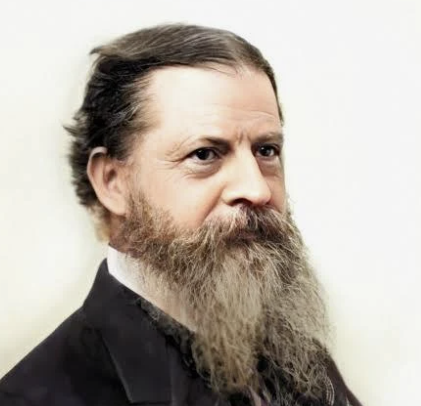
But the extraordinary insight which some persons are able to gain of others from indications so slight that it is difficult to ascertain what they are, is certainly rendered more comprehensible by the view here taken.
5 months 1 week ago
God is nothingness: He is 'beyond all speech.'
7 months 4 weeks ago
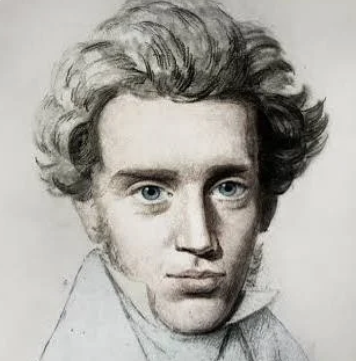
The reason I cannot really say that I positively enjoy nature is that I do not quite realize what it is that I enjoy. A work of art, on the other hand, I can grasp. I can - if I may put it this way - find that Archimedian point, and as soon as I have found it, everything is readily clear for me. Then I am able to pursue this one main idea and see how all the details serve to illuminate it.

6 months 4 weeks ago
Wherever one finds oneself inclined to bitterness, it is a sign of emotional failure: a larger heart, and a greater self-restraint, would put a calm autumnal sadness in the place of the instinctive outcry of pain.
▼
Source
source
The Collected Papers of Bertrand Russell: Contemplation and Action, 1902-1914, ed. Richard A. Rempel, Andrew Brink and Margaret Moran (Routledge, 1993

6 months 3 weeks ago
The progress from an absolute to a limited monarchy, from a limited monarchy to a democracy, is a progress toward a true respect for the individual.

6 months 2 weeks ago
One common strategy on which we should all be able to agree is to take steps to reduce the risk of human extinction when those steps are also highly effective in benefiting existing sentient beings. For example, eliminating or decreasing the consumption of animal products will benefit animals, reduce greenhouse gas emissions, and lessen the chances of a pandemic resulting from a virus evolving among the animals crowded into today's factory farms, which are an ideal breeding ground for viruses. That therefore looks like a high-priority strategy.
▼
Source
source
Chapter 15: Preventing Human Extinction (p. 177)

6 months 3 weeks ago
Thou animated torrid-zone.
▼
Source
source
To the Humble Bee, st. 1
6 months 2 weeks ago
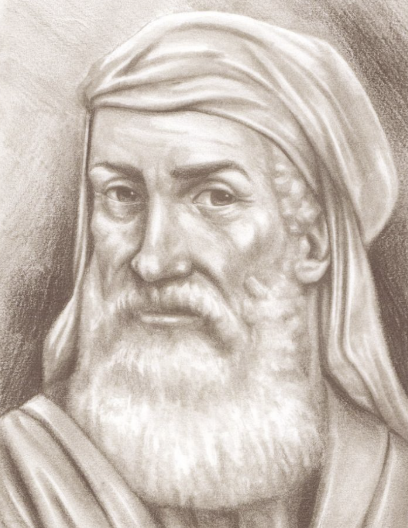
What needs saying is worth saying twice.
▼
Source
source
fr. 25

2 months 3 weeks ago
Look within. Within is the fountain of the good, and it will ever bubble up, if thou wilt ever dig.
▼
Source
source
VII, 59

6 months 3 weeks ago
To be shaken out of the ruts of ordinary perception, to be shown for a few timeless hours the outer and inner world, not as they appear to an animal obsessed with survival or to a human being obsessed with words and notions, but as they are apprehended, directly and unconditionally, by Mind at Large - this is an experience of inestimable value to everyone and especially to the intellectual.
2 months 2 weeks ago
One reason why mathematics enjoys special esteem, above all other sciences, is that its laws are absolutely certain and indisputable, while those of other sciences are to some extent debatable and in constant danger of being overthrown by newly discovered facts.

2 months 3 weeks ago
I have the consolation to reflect that during the period of my administration not a drop of the blood of a single fellow citizen was shed by the sword of war or of the law.
▼
Source
source
Letter to papal nuncio Count Dugnani
6 months 2 weeks ago
Valour, however unfortunate, commands great respect even from enemies: but the Romans despise cowardice, even though it be prosperous.
▼
Source
source
Aemilius Paulus 26 (Tr. Stewart and Long)
2 months 3 weeks ago
What a stupendous, what an incomprehensible machine is man! Who can endure toil, famine, stripes, imprisonment and death itself in vindication of his own liberty, and the next moment, be deaf to all those motives whose powers supported him through his trial, and inflict on his fellow men a bondage, one hour of which is fraught with more misery than ages of that which he rose in rebellion to oppose.
▼
Source
source
Letter to Jean Nicholas Demeunier (24 January 1786) Bergh 17:103
2 months 3 weeks ago
Human life. Duration: momentary. Nature: changeable. Perception: dim. Condition of Body: decaying. Soul: spinning around. Fortune: unpredictable. Lasting Fame: uncertain. Sum Up: The body and its parts are a river, the soul a dream and mist, life is warfare and a journey far from home, lasting reputation is oblivion.
▼
Source
source
(Hays translation) II, 17
2 months 3 weeks ago
How much time he gains who does not look to see what his neighbor says or does or thinks, but only at what he does himself, to make it just and holy.
▼
Source
source
IV, 18
6 months 2 weeks ago
A person may be greedy, envious, cowardly, cold, ungenerous, unkind, vain, or conceited, but behave perfectly by a monumental effort of will.
▼
Source
source
"Moral Luck" (1976), p. 32.
6 months 3 weeks ago
Clearly when the liberties are left unrestricted they collide with one another.
▼
Source
source
Chapter IV, Section 32, p. 203

4 months 3 weeks ago
Try not to have Emily exposed to hours and hours of TV. It is a vile drug which permeates the nervous system, especially in the young.
▼
Source
source
Letter to son Eric McLuhan, regarding one of Eric's daughters, 1976
2 months 3 weeks ago
We are all made for mutual assistance, as the feet, the hands, and the eyelids, as the rows of the upper and under teeth, from whence it follows that clashing and opposition is perfectly unnatural.
▼
Source
source
II, 1
4 months 1 week ago
Now civilizations, I believe, come to birth and proceed to grow by successfully responding to successive challenges. They break down and go to pieces if and when a challenge confronts them which they fail to meet.
▼
Source
source
Ch. 8: Civilization on Trial
2 months 3 weeks ago
I say, the earth belongs to each of these generations during its course, fully and in its own right. The second generation receives it clear of the debts and incumbrances of the first, the third of the second, and so on. For if the first could charge it with a debt, then the earth would belong to the dead and not to the living generation. Then, no generation can contract debts greater than may be paid during the course of its own existence.
▼
Source
source
Letter to James Madison (6 September 1789) ME 7:455, Papers 15:393
2 months 3 weeks ago
The major and almost only theme of all my work is the struggle of man with "God": the unyielding, inextinguishable struggle of the naked worm called "man" against the terrifying power and darkness of the forces within him and around him.
▼
Source
source
As quoted in Nikos Kazantzakis (1968) by Helen Kazantzakis, p. 507

5 months 3 weeks ago
Isn't history ultimately the result of our fear of boredom?
6 months 1 day ago
There is not a Musselman alive who would not imagine that he was performing an action pleasing to God and his Holy Prophet by exterminating every Christian on earth, while the Christians are scarcely more tolerant on their side.

3 months 2 weeks ago
Truly it is a sad thing for a people, as for a man, to fall into Scepticism, into dilettantism, insincerity; not to know Sincerity when they see it. For this world, and for all worlds, what curse is so fatal?
6 months 4 weeks ago
Marriage is for women the commonest mode of livelihood, and the total amount of undesired sex endured by women is probably greater in marriage than in prostitution.

7 months 5 days ago
Women . . . have . . . small and narrow chests, and broad hips, to the end they should remain at home, sit still, keep house, and bear and bring up children. . . . A woman is, or at least should be, a friendly, courteous, and a merry companion in life . . . the honor and ornament of the house, and inclined to tenderness, for thereunto are they chiefly created, to bear children, and to be the pleasure, joy and solace of their husbands.
▼
Source
source
-- Table Talk, quoted in Luther On "Woman"
5 months 2 weeks ago
The specialist serves as a striking concrete example of the species, making clear to us the radical nature of the novelty. For, previously, men could be divided simply into the learned and the ignorant, those more or less the one, and those more or less the other. But your specialist cannot be brought in under either of these two categories. He is not learned , for he is formally ignorant of all that does not enter into his speciality; but neither is he ignorant, because he is "a scientist," and "knows" very well his own tiny portion of the universe. We shall have to say that he is a learned ignoramus, which is a very serious matter, as it implies that he is a person who is ignorant, not in the fashion of the ignorant man, but with an the petulance of one who is learned in his own special line.
▼
Source
source
Chapter XII: The Barbarism Of "Specialisation"

4 months 3 weeks ago
Survival machines that can simulate the future are one jump ahead of survival machines that who can only learn of the basis of trial and error. The trouble with overt trial is that it takes time and energy. The trouble with overt error is that it is often fatal. ...The evolution of the capacity to simulate seems to have culminated in subjective consciousness. Why this should have happened is, to me, the most profound mystery facing modern biology.
▼
Source
source
Ch. 4. The Gene machine
5 months 2 weeks ago
The notion contradicts reality when the latter has become self-contradictory. Hegel says that a prevailing social form can be successfully attacked by thought only if this form has come into open contradiction with its own 'truth,' in other words, if it can no longer fulfill the demands of its own contents.

5 months 1 week ago
Why is it so hard to keep the mind concentrated, and to live up to our good resolutions? The problem is the basically mechanical nature of our left-brain consciousness. We have a kind of robot servant who does things for us: we learn to type or drive a car, painfully and consciously, then our robot takes over, and does it far more quickly and efficiently. Because man is the most complex creature on Earth, he is forced to rely on his robot far more than other animals. The result is that, whenever he gets tired, the robot takes over. For the modern city dweller, most of his everyday living is done by the robot. This is why it takes an emergency to concentrate the mind 'wonderfully', and why we forget so quickly.
▼
Source
source
p. 344

5 months 3 weeks ago
They made and recorded a sort of institute and digest of anarchy, called the rights of man, in such a pedantic abuse of elementary principles as would have disgraced boys at school; but this declaration of rights was worse than trifling and pedantic in them; as by their name and authority they systematically destroyed every hold of authority by opinion, religious or civil, on the minds of the people. By this mad declaration they subverted the state; and brought on such calamities as no country, without a long war, has ever been known to suffer, and which may in the end produce such a war, and perhaps, many such.
▼
Source
source
Speech in the House of Commons (9 February 1790), quoted in The Parliamentary History of England, From the Earliest Period to the Year 1803, Vol. XXVIII (1816), column 358
6 months 2 weeks ago
The animals themselves are incapable of demanding their own liberation, or of protesting against their condition with votes, demonstrations, or boycotts. Human beings have the power to continue to oppress other species forever, or until we make this planet unsuitable for living beings. Will our tyranny continue, proving that morality counts for nothing when it clashes with selfinterest, as the most cynical of poets and philosophers have always said? Or will we rise to the challenge and prove our capacity for genuine altruism by ending our ruthless exploitation of the species in our power, not because we are forced to do so by rebels or terrorists, but because we recognize that our position is morally indefensible? The way in which we answer this question depends on the way in which each one of us, individually, answers it.
▼
Source
source
Ch. 6: Speciesism Today
6 months 4 weeks ago
I should say that the universe is just there, and that is all.
▼
Source
source
BBC Radio Debate on the Existence of God, Bertrand Russell v. Frederick Copleston, 1948
6 months 4 weeks ago
Government by majorities can be made less oppressive by devolution, by placing the decision of questions primarily affecting only a section of the community in the hands of that section, rather than of a Central Chamber. In this way, men are no longer forced to submit to decisions made in a hurry by people mostly ignorant of the matter in hand and not personally interested.
▼
Source
source
Ch VIII: The World As It Could Be Made
6 months 3 weeks ago
Aeschylus had a clear eye for the commonest things. His genius was only an enlarged common sense. He adverts with chaste severity to all natural facts. His sublimity is Greek sincerity and simpleness, naked wonder which mythology had not helped to explain... Whatever the common eye sees at all and expresses as best it may, he sees uncommonly and describes with rare completeness. The multitude that thronged the theatre could no doubt go along with him to the end... The social condition of genius is the same in all ages. Aeschylus was undoubtedly alone and without sympathy in his simple reverence for the mystery of the universe.
▼
Source
source
January 29, 1840

5 months 3 weeks ago
If there is no immortality, there is no virtue. ... Without God and immortal life? All things are lawful then, they can do what they like?
▼
Source
source
Quoted in M. M. Bakhtin, Problems of Dostoevsky's Poetics, trans. R. W. Rotsel (Ann Arbor, MI: Ardis, 1973) p. 70
4 months 2 weeks ago
All human accomplishment has the same origin, identically. Imagination is a force of nature. Is this not enough to make a person full of ecstasy? Imagination, imagination, imagination. It converts to actual. It sustains, it alters, it redeems!
▼
Source
source
Henderson the Rain King (1959) [Viking/Penguin, 1984, ISBN 0-140-07269-1], ch. XVIII, p. 271
4 months 3 weeks ago
We now live in a technologically prepared environment that blankets the earth itself. The humanly contrived environment of electric information and power has begun to take precedence over the old environment of "nature." Nature, as it were, begins to be the content of our technology.
▼
Source
source
p. 276
CivilSimian.com created by AxiomaticPanic, CivilSimian, Kalokagathia