


5 months 3 weeks ago
The wrinkles of a nation are as visible as those of an individual.
7 months 2 weeks ago
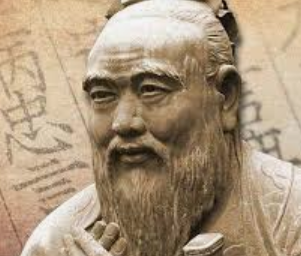
Fine words and an insinuating appearance are seldom associated with true virtue.
▼
Source
source
Variant: Someone who is a clever speaker and maintains a 'too-smiley' face is seldom considered a humane person.
6 months 2 weeks ago
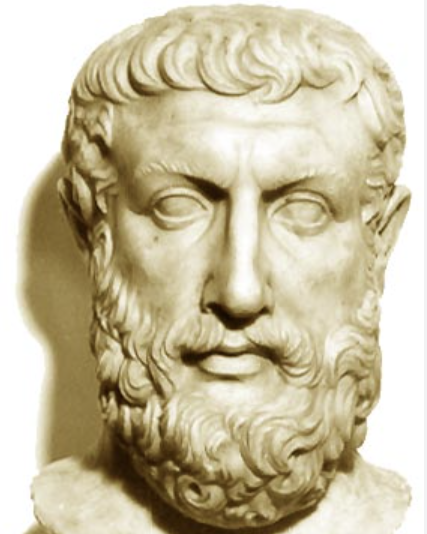
There is one story left, one road: that it is. And on this road there are very many signs that, being, is uncreated and imperishable, whole, unique, unwavering, and complete.
▼
Source
source
Frag. B 8.1-4, quoted by Simplicius, Commentary on the Physics, 144

6 months 4 weeks ago
Philosophy of religion ... really amounts to ... philosophizing on certain favorite assumptions that are not confirmed at all.
▼
Source
source
E. Payne, trans. (1974) Vol. 1, p. 143

7 months 1 week ago
People almost invariably arrive at their beliefs not on the basis of proof but on the basis of what they find attractive.
▼
Source
source
De l'Art de persuader ["On the Art of Persuasion"], written 1658; published posthumously.

6 months 4 weeks ago
If man in the state of nature be so free, as has been said; if he be absolute lord of his own person and possessions, equal to the greatest, and subject to no body, why will he part with his freedom, this empire, and subject himself to the dominion and control of any other power?
▼
Source
source
Second Treatise of Government, Ch. IX, sec. 123
4 months 5 days ago
The existence of the mind-independent environment beyond one's world-simulation is a theoretical inference, not an empirical observation.
▼
Source
source
Postscript to review of Michael Lockwood's Mind, Brain and the Quantum, BLTC Research, Dec. 2016
2 months 3 weeks ago
I hold the brimming wineglass and relive the toils of my grandfathers and great-grandfathers. The sweat of my labor runs down like a fountain from my tall, intoxicated brow. I am a sack filled with meat and bones, blood, sweat, and tears, desires and visions.


4 months 1 week ago
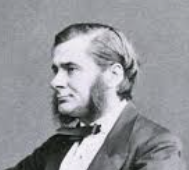
Identical in the physical processes by which he originates-identical in the early stages of his formation-identical in the mode of his nutrition before and after birth, with the animals which lie immediately below him in the scale-Man, if his adult and perfect structure be compared with theirs, exhibits, as might be expected, a marvellous likeness of organization. He resembles them as they resemble one another-he differs from them as they differ from one another.-And, though these differences and resemblances cannot be weighed and measured, their value may be readily estimated; the scale or standard of judgment, touching that value, being afforded and expressed by the system of classification of animals now current among zoologists.
▼
Source
source
Ch.2, p. 83
3 months 1 week ago
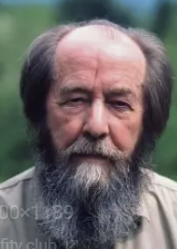
Let us not violate the RIGHT of the artist to express exclusively his own experiences and introspections, disregarding everything that happens in the world beyond. Let us not DEMAND of the artist, but - reproach, beg, urge and entice him - that we may be allowed to do. After all, only in part does he himself develop his talent; the greater part of it is blown into him at birth as a finished product, and the gift of talent imposes responsibility on his free will. Let us assume that the artist does not OWE anybody anything: nevertheless, it is painful to see how, by retiring into his self-made worlds or the spaces of his subjective whims, he CAN surrender the real world into the hands of men who are mercenary, if not worthless, if not insane.

5 months 3 weeks ago
In order to have the stuff of a tyrant, a certain mental derangement is necessary.

4 months 3 weeks ago
The young are really the heirs to a generation of incompetence.
5 months 3 weeks ago
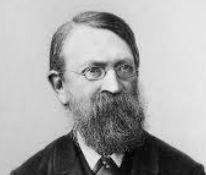
Scientists believe there is a hierarchy of facts and that among them may be made a judicious choice. They are right, since otherwise there would be no science... One need only open the eyes to see that the conquests of industry which have enriched so many practical men would never have seen the light, if these practical men alone had existed and if they had not been preceded by unselfish devotees who died poor, who never thought of utility, and yet had a guide far other than caprice.As Mach says, these devotees have spared their successors the trouble of thinking.
▼
Source
source
Henri Poincaré, The Value of Science (1907) Author's Essay Prefatory to the Translation: "The Choice of Facts," p.4, Tr. George Bruce Halsted
2 months 3 weeks ago
As I watched the seagulls, I thought: "That's the road to take; find the absolute rhythm and follow it with absolute trust."
▼
Source
source
Ch. 21
5 months 2 weeks ago
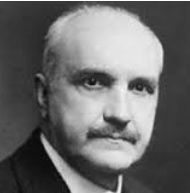
Our dignity is not in what we do, but in what we understand.
▼
Source
source
p. 50
4 months 4 weeks ago
In cloning, the Father and the Mother have disappeared, not in the service of an aleatory liberty of the subject, but in the service of a matrix called code.
▼
Source
source
"Clone Story," p. 96

7 months 1 week ago
Although life is a matter of indifference, the use which you make of it is not a matter of indifference.
▼
Source
source
Book II, ch. 6, 1.

5 months 1 week ago
When we are the victims of illusion we do not feel it to be an illusion but a reality. It is the same perhaps with evil. Evil when we are in its power is not felt as evil but as a necessity, or even a duty.
▼
Source
source
p. 64
6 months 3 weeks ago
As soon as we cease to believe in such an engineer and in a discourse which breaks with the received historical discourse, and as soon as we admit that every finite discourse is bound by a certain bricolage and that the engineer and the scientist are also species of bricoleurs, then the very idea of bricolage is menaced and the difference in which it took on its meaning breaks down.
▼
Source
source
"Structure, Sign, and Play in the Discourse of the Human Sciences," Writing and Difference, tr. w/ intro & notes by Alan Bass. The University of Chicago Press. Chicago, 1978. p. 285

5 months 3 weeks ago
A standing army, for instance, is incompatible with freedom; because subordination and rigour are the very sinews of military discipline; and despotism is necessary to give vigour to enterprise that one will directs. A spirit inspired by romantic notions of honour, a kind of morality founded on the fashion of the age, can only be felt by a few officers, whilst the main body must be moved by command, like the waves of the sea; for the strong wind of authority pushes the crowd of subalterns forward, they scarcely know or care why, with headlong fury.
▼
Source
source
Ch. 1

6 months 3 weeks ago
One of the ideas I had discussed in The Poverty of Historicism was the influence of a prediction upon the event predicted. I had called this the "Oedipus effect", because the oracle played a most important role in the sequence of events which led to the fulfilment of its prophecy. ... For a time I thought that the existence of the Oedipus effect distinguished the social from the natural sciences. But in biology, too-even in molecular biology-expectations often play a role in bringing about what has been expected.
▼
Source
source
Page 29
5 months 3 weeks ago
The reason a man lives under any particular government is partly a necessity; he cannot easily avoid living under some government, and it is often scarcely in his power to abandon the country in which he was born: it is also partly, a choice of evil; no man can be said, in this case, to enjoy that freedom which is essential to the forming a contract unless it could be shown that he had a power of instituting, somewhere, a government adapted to his own conceptions.
▼
Source
source
Book III, "Of Obedience"

3 months 1 week ago
Or, if you enjoy living with Greeks also, spend your time with Socrates and with Zeno: the former will show you how to die if it be necessary; the latter how to die before it is necessary. Live with Chrysippus, with Posidonius: they will make you acquainted with things earthly and things heavenly; they will bid you work hard over something more than neat turns of language and phrases mouthed forth for the entertainment of listeners; they will bid you be stout of heart and rise superior to threats. The only harbour safe from the seething storms of this life is scorn of the future, a firm stand, a readiness to receive Fortune's missiles full in the breast, neither skulking nor turning the back.
4 months 3 weeks ago
Think about the two qualities that a virus, or any sort of parasitic replicator, demands of a friendly medium, the two qualities that make cellular machinery so friendly towards parasitic DNA, and that make computers so friendly towards computer viruses. These qualities are, firstly, a readiness to replicate information accurately, perhaps with some mistakes that are subsequently reproduced accurately; and, secondly, a readiness to obey instructions encoded in the information so replicated.
6 months 4 weeks ago
We see in tragedy the noblest men, after a long conflict and suffering, finally renounce forever all the pleasure of life and the aims till then pursued so keenly, or cheerfully and willingly give up life itself.
▼
Source
source
Book 1
7 months ago
But though all the general rules of art are founded only on experience and on the observation of the common sentiments of human nature, we must not imagine, that, on every occasion, the feelings of men will be conformable to these rules.


4 months 3 days ago
There is no more consensus on what justice means than there is on the character of the good. If anything, there is less. Among the virtues, justice is one of the most shaped by convention. For that reason it is among the most changeable.
▼
Source
source
'Modus Vivendi' (p.34)

5 months 3 weeks ago
He had no failings which were not owing to a noble cause; to an ardent, generous, perhaps an immoderate passion for fame; a passion which is the instinct of all great souls.
▼
Source
source
The reference is to Charles Townshend
4 months 2 weeks ago
Many Britons...feel strongly about something which was once called "the alien wedge". And surely it cannot be doubted, even by those who profess allegiance to the "multicultural society", that our society, unlike America, is not of that kind, and therefore that immigration cannot be an object of merely passive contemplation on the part of the present citizenship. There is perhaps no greater sign of the strength of liberalism (a strength which issues, not from popular consensus, but from the political power of the liberal elite) than that it has made it impossible for any but the circumlocutory to argue that the English, the Scots and the Welsh have a prior claim to the benefits of the civilization that their ancestors created, which entitles them to reserve its benefits for themselves.
▼
Source
source
The Meaning of Conservatism: Third Edition (2001), p. 62
6 months 3 weeks ago
The difference principle, for example, requires that the higher expectations of the more advantaged contribute to the prospects of the least advantaged.
▼
Source
source
Chapter II, Section 16, pg. 95

4 months 3 weeks ago
Like computer viruses, successful mind viruses will tend to be hard for their victims to detect. If you are the victim of one, the chances are that you won't know it, and may even vigorously deny it. Accepting that a virus might be difficult to detect in your own mind, what tell-tale signs might you look out for? I shall answer by imaging how a medical textbook might describe the typical symptoms of a sufferer (arbitrarily assumed to be male).

6 months 3 weeks ago
I wanted for the moments in my life to follow each other and order themselves like those of a life remembered. It would be just as well to try to catch time by the tail.

7 months 4 days ago
It is an article of faith that Mary is Mother of the Lord and still a Virgin.
▼
Source
source
Weimar edition of Martin Luther's Works, English translation edited by J. Pelikan [Concordia: St. Louis], Vol. 11, 319-320
6 months 4 weeks ago
A whole from necessary substances is impossible. The whole, therefore, of substances is a whole of contingent things, and the world consists essentially of only contingent things.

7 months 4 days ago
One must never forget to look at the aim of a matter.
▼
Source
source
Act III, scene xi

2 months 3 weeks ago
The result of your fifty or sixty years of religious reading in the four words: 'Be just and good,' is that in which all our enquiries must end.
▼
Source
source
Letter to John Adams
2 months 3 weeks ago
The non-evaluative general total conception of ideology is to be found primarily in those historical investigations, where, provisionally and for the sake of the simplification of the problem, no judgments are pronounced as to the correctness of the ideas to be treated. This approach confines itself to discovering the relations between certain mental structures and the life-situations in which they exist. We must constantly ask ourselves how it comes about that a given type of social situation gives rise to a given interpretation. Thus the ideological element in human thought, viewed at this level, is always bound up with the existing life-situation of the thinker. According to this view human thought arises, and operates, not in a social vacuum but in a definite social milieu.
4 months 3 weeks ago
Be your money's master, not its slave.
▼
Source
source
Maxim 657
6 months 3 weeks ago
To live, by definition, is not something one learns. Not from oneself, it is not learned from life, taught by life. Only from the other and by death. In any case from the other at the edge of life. At the internal border or the external border, it is a heterodidactics between life and death.
▼
Source
source
Exordium
5 months 1 week ago
It is a sign of sovereignty to risk one's life, that is, to turn life into a game.
7 months 3 weeks ago
If you suspect that my interest in the Bible is going to inspire me with sudden enthusiasm for Judaism and make me a convert of mountain‐moving fervor and that I shall suddenly grow long earlocks and learn Hebrew and go about denouncing the heathen — you little know the effect of the Bible on me. Properly read, it is the most potent force for atheism ever conceived.
5 months 1 week ago
We cannot think any true thought unless we want the true. Thinking is itself an aspect of practice.
▼
Source
source
p. 45

4 months 2 weeks ago
It is our deliberate opinion that the French Revolution, in spite of all its crimes and follies, was a great blessing to mankind.
▼
Source
source
'Sir James Mackintosh', The Edinburgh Review (July 1835), quoted in T. B. Macaulay, Critical and Historical Essays Contributed to The Edinburgh Review, Vol. II (1843), p. 215

7 months 6 days ago
A speech comes alive only if it rises from the heart, not if it floats on the lips.
▼
Source
source
in The Erasmus Reader (1990), p. 130.
CivilSimian.com created by AxiomaticPanic, CivilSimian, Kalokagathia