



5 months 1 week ago
There are pretenses which are very sincere, and marriage is their school.
▼
Source
source
Tres novelas ejemplares y un prólogo [Three Exemplary Novels and a Prologue] (1920); Two Mothers
4 months 2 weeks ago
Schopenhauer argues that the empirical world exists only as a representation: 'every object, whatever its origin, is, as object, already conditioned by the subject, and thus is essentially only the subject's representation.' A representation is a subjective state that has been ordered according to space, time and causality - the primary forms of sensibility and understanding. So long as we turn our thoughts towards the natural world, and search for the thing-in-itself behind the representation is futile. Every argument and every experience leads only to the same end: the system of representations, standing like a veil between the subject and the thing-in-itself. No scientific investigation can penetrate the veil; and yet it is only a veil, Schopenhauer affirms, a tissue of illusions which we can, if we choose, penetrate by other means. The way to penetrate the veil was stumbled upon by Kant.
▼
Source
source
A Short History of Modern Philosophy (1981; 2nd ed. 1995), p. 177

2 months 3 weeks ago
Compulsion in religion is distinguished peculiarly from compulsion in every other thing. I may grow rich by art I am compelled to follow, I may recover health by medicines I am compelled to take against my own judgment, but I cannot be saved by a worship I disbelieve & abhor.
▼
Source
source
Notes on Religion (October 1776), published in The Works of Thomas Jefferson in Twelve Volumes, Federal Edition, Paul Leicester Ford, ed., New York: G. P. Putnam's Sons, 1904, Vol. 2, p. 266

3 months 2 weeks ago
Happy the people whose annals are blank in history books!
▼
Source
source
Life of Frederick the Great, Bk. XVI, ch. 1.

6 months 3 weeks ago
All traditional logic habitually assumes that precise symbols are being employed. It is therefore not applicable to this terrestial life but only to an imagined celestial existence... logic takes us nearer to heaven than other studies.
▼
Source
source
Vagueness', first published in The Australasian Journal of Psychology and Philosophy, 1 June, 1923
6 months 2 weeks ago
For already, sometime, I have been a boy and a girl, a shrub, a bird, and a silent fish in the sea.
▼
Source
source
fr. 117

6 months 3 weeks ago
The militarily-patriotic and the romantic-minded everywhere, and especially the professional military class, refuse to admit for a moment that war may be a transitory phenomenon in social evolution. The notion of a sheep's paradise like that revolts, they say, our higher imagination. Where then would be the steeps of life? If war had ever stopped, we should have to re-invent it, on this view, to redeem life from flat degeneration. Reflective apologists for war at the present day all take it religiously. It is a sort of sacrament. It's profits are to the vanquished as well as to the victor; and quite apart from any question of profit, it is an absolute good, we are told, for it is human nature at its highest dynamic.

5 months 1 week ago
We are now living in an age of literary exhaustion; we get used to the bleak landscape. Cyril Connolly said that the writer's business is to produce masterpieces; but what masterpieces have been produced in the past fifty years?
▼
Source
source
p. 11

4 months 3 weeks ago
The reader is the content of any poem or of the language he employs, and in order to use any of these forms, he must put them on.
▼
Source
source
"Roles, Masks, and Performances", New Literary History, Vol. 2, No. 3, Performances in Drama, the Arts, and Society (Spring, 1971), p. 520
2 months 3 weeks ago
The monopoly of a single bank is certainly an evil. The multiplication of them was intended to cure it; but it multiplied an influence of the same character with the first, and completed the supplanting the precious metals by a paper circulation. Between such parties the less we meddle the better.
▼
Source
source
Letter to Albert Gallatin, 1802. ME 10:323
4 months 4 weeks ago
To affirm equality is to affirm a cohabitation defined in part by an interdependency that takes the edge off the individual boundaries of the body, or that works that edge for its social and political potential.
▼
Source
source
p. 148
6 months 4 weeks ago
Let us not forget what befits our present state in the pursuit of vain fancies. Mankind has its place in the sequence of things; childhood has its place in the sequence of human life; the man must be treated as a man and the child as a child. Give each his place, and keep him there. Control human passions according to man's nature; that is all we can do for his welfare. The rest depends on external forces, which are beyond our control.
5 months 1 week ago
I was aggressively nonpolitical. I believed that people who make a fuss about politics do so because their heads are too empty to think about more important things. So I felt nothing but impatient contempt for Osborne's Jimmy Porter and the rest of the heroes of social protest.
▼
Source
source
p. 2
6 months 4 weeks ago
The right of voting for representatives is the primary right by which other rights are protected. To take away this right is to reduce a man to slavery, for slavery consists in being subject to the will of another, and he that has not a vote in the election of representatives is in this case.
5 months 2 weeks ago
Similarly a work of art vanishes from sight for a beholder who seeks in it nothing but the moving fate of John and Mary or Tristan and Isolde and adjusts his vision to this. Tristan's sorrows are sorrows and can evoke compassion only in so far as they are taken as real. But an object of art is artistic only in so far as it is not real. In order to enjoy Titian's portrait of Charles the Fifth on horseback we must forget that this is Charles the Fifth in person and see instead a portrait - that is, an image, a fiction. The portrayed person and his portrait are two entirely different things; we are interested in either one or the other. In the first case we "live" with Charles the Fifth, in the second we look at an object of art.
▼
Source
source
"The Dehumanization of Art"

6 months 4 weeks ago
Another thing wherein they shew their love of dominion, is, their desire to have things to be theirs: They would have propriety and possession, pleasing themselves with the power which that seems to give, and the right that they thereby have, to dispose of them as they please. He that has not observ's these two humours working very betimes in children, has taken little notice of their actions: And he who thinks that these two roots of almost all the injustice and contention that so disturb human life, are not early to be weeded out, and contrary habits introduc'd, neglects the proper season to lay the foundations of a good and worthy man.
▼
Source
source
Sec. 105

6 months 3 weeks ago
It is hard to have patience with people who say 'There is no death' or 'Death doesn't matter.' There is death. And whatever is matters. And whatever happens has consequences, and it and they are irrevocable and irreversible. You might as well say that birth doesn't matter.
3 months 2 weeks ago
Innumerable men had passed by, across this Universe, with a dumb vague wonder, such as the very animals may feel; or with a painful, fruitlessly inquiring wonder, such as men only feel;-till the great Thinker came, the original man, the Seer; whose shaped spoken Thought awakes the slumbering capability of all into Thought. It is ever the way with the Thinker, the spiritual Hero. What he says, all men were not far from saying, were longing to say. The Thoughts of all start up, as from painful enchanted sleep, round his Thought; answering to it, Yes, even so! Joyful to men as the dawning of day from night;-is it not, indeed, the awakening for them from no-being into being, from death into life? We still honor such a man; call him Poet, Genius, and so forth: but to these wild men he was a very magician, a worker of miraculous unexpected blessing for them; a Prophet, a God!
6 months 2 weeks ago
As we speak cruel time is fleeing. Seize the day, believing as little as possible in the morrow.
▼
Source
source
Book I, ode xi, line 7
7 months 4 days ago
What if he has borrowed the matter and spoiled the form, as it oft falls out?
▼
Source
source
Book III, Ch. 8. Of the Art of Conversation
6 months 3 weeks ago
The facts of science, as they appeared to him [Heraclitus], fed the flame in his soul, and in its light, he saw into the depths of the world.
▼
Source
source
Ch. 1: Mysticism and Logic
6 months 4 weeks ago
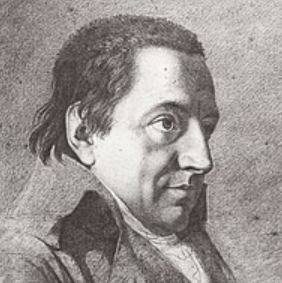
The deceiver is really the fool.
▼
Source
source
Kant, Immanuel (1996), page 101
5 months 3 weeks ago
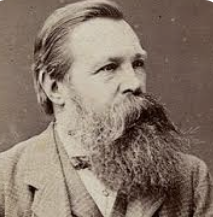
True, the law is sacred to the bourgeois, for it is his own composition, enacted with his consent, and for his benefit and protection. He knows that, even if an individual law should injure him, the whole fabric protects his interests; and more than all, the sanctity of the law, the sacredness of order as established by the active will of one part of society, and the passive acceptance of the other, is the strongest support of his social position. Because the English bourgeois finds himself reproduced in his law, as he does in his God, the policeman's truncheon which, in a certain measure, is his own club, has for him a wonderfully soothing power. But for the working-man quite otherwise! The working-man knows too well, has learned from too oft-repeated experience, that the law is a rod which the bourgeois has prepared for him; and when he is not compelled to do so, he never appeals to the law.
5 months 1 week ago
The original Golden Dawn was not always as serious as it should have been. Mathers was a clown, and Yeats was just a romantic trying to deceive himself. Most of them were interested in personal power, and it ended up by destroying them. The aim of our group is the scientific exploration of the hidden powers of the human mind.
▼
Source
source
p. 113
5 months 3 weeks ago
The Teutons believed that the only possible way to get rid of barbarism was to become Romans. The immigrants to what was formerly Roman soil became as Roman as they possibly could. But in their imagination the term "barbarous" soon acquired the secondary meaning of " common, plebeian, and loutish," and in this way "Roman," on the contrary, became synonymous with " distinguished."
▼
Source
source
Consequences of the Difference p. 81
7 months 3 weeks ago
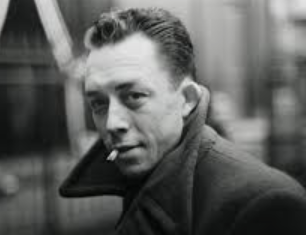
The papers were always talking about the debt owed to society. According to them, it had to be paid. But that doesn't speak to the imagination. What really counted was the possibility of escape, a leap to freedom, out of the implacable ritual, a wild run for it that would give whatever chance for hope there was. Of course, hope meant being cut down on some street corner, as you ran like mad, by a random bullet. But when I really thought it through, nothing was going to allow me such a luxury. Everything was against it; I would just be caught up in the machinery again.
6 months 3 weeks ago
Who does not see that we are likely to ascertain the distinctive significance of religious melancholy and happiness, or of religious trances, far better by comparing them as conscientiously as we can with other varieties of melancholy, happiness, and trance, than by refusing to consider their place in any more general series, and treating them as if they were outside of nature's order altogether?
▼
Source
source
Lecture I, "Religion and Neurology"
3 months 6 days ago
To ascend to the origin of things and speculate on the creation, is not the business of the natural philosopher. An humbler field is sufficient for him in the endeavor to discover, as far as our faculties will permit; what are these primary qualities impressed on matter, and to discover the spirit of the laws of nature

2 months 3 weeks ago
Whatever happens to you has been waiting to happen since the beginning of time. The twining strands of fate wove both of them together: your own existence and the things that happen to you.
▼
Source
source
V. 8, trans. Gregory Hays
5 months 1 week ago
In the root of the word "faith" itself... there is implicit the idea of confidence, of surrender to the will of another, to a person. Confidence is placed only in persons. We trust in Providence, which we perceive as something personal and conscious, not in Fate, which is something impersonal. And thus it is in the person who tells us the truth, in the person that gives us hope, that we believe, not directly or immediately in truth itself or in hope itself.
7 months 1 week ago
When you do anything from a clear judgment that it ought to be done, never shun the being seen to do it, even though the world should make a wrong supposition about it; for, if you don't act right, shun the action itself; but, if you do, why are you afraid of those who censure you wrongly?
▼
Source
source
(35).
4 months 3 weeks ago
Penitence follows hasty decisions.
▼
Source
source
Maxim 961

6 months 2 weeks ago
Good breeding in cattle depends on physical health, but in men on a well-formed character.
▼
Source
source
Freeman (1948), p. 151

6 months 3 weeks ago
Every really able man, in whatever direction he work,-a man of large affairs, an inventor, a statesman, an orator, a poet, a painter,-if you talk sincerely with him, considers his work, however much admired, as far short of what it should be.
▼
Source
source
Immortality

5 months 6 days ago
Where the frontier of science once was is now the centre.
▼
Source
source
As quoted in A Dictionary of Scientific Quotations (1991) edited by Alan Lindsay Mackay, p. 153
5 months 3 weeks ago
Humanity may endure the loss of everything: all its possessions may be torn away without infringing its true dignity; - all but the possibility of improvement.
▼
Source
source
"The Vocation of the Scholar" (1794), as translated by William Smith, in The Popular Works of Johann Gottlieb Fichte (1889), Vol. I, Lecture IV, p. 188.
5 months 2 weeks ago
We return to our analysis of qualities. Something preserves itself throughout this flux, something that passes into other things, but also stands against them as a being for itself. This something can exist only as the product of a process through which it integrates its otherness with its own proper being. Hegel says that its existence comes about through 'the negation of the negation.' The first negation is the otherness in which it turns, and the second is the incorporation of this other into its own self. Such a process presupposes that things possess a certain power over their movement, that they exist in a certain self-relation that enables them to 'mediate' their existential conditions.
▼
Source
source
P. 132-133
5 months 3 weeks ago
By asserting the objectivity of the physical world, naturalism identifies the existence and the conditions of existence of the physical world with existence and the conditions of existence in general. It forgets that the world of the physicist necessarily refers back, through its intrinsic meaning, through the subjective world which one tries to exclude from reality as being pure appearance, conditioned by the empirical nature of man, which is incapable of reaching directly to a world of things in themselves. But while the world of the physicist claims to go beyond naive experience, his world really exists only in relation to naive experience.
▼
Source
source
The Theory Of Intuition In Husserls Phenomenology 1963, 1995 p. 9
6 months 3 weeks ago
The principal source of the harm done by the State is the fact that power is its chief end.
▼
Source
source
Principles of Social Reconstruction (1917), Ch. II: The State
4 months 4 weeks ago
We will never know if an advertisement or opinion poll has had a real influence on individual or collective wills, but we will never know either what would have happened if there had been no opinion poll or advertisement.
3 months 2 weeks ago
Thus Mr. Sale informs me, the old Arab Tribes would gather in liveliest gaudeamus, and sing, and kindle bonfires, and wreathe crowns of honour, and solemnly thank the gods that, in their Tribe too, a Poet had shewn himself. As indeed they well might; for what usefuller, I say not nobler and heavenlier thing could the gods, doing their very kindest, send to any Tribe or Nation, in any time or circumstances?

CivilSimian.com created by AxiomaticPanic, CivilSimian, Kalokagathia