


4 months 3 weeks ago
You can never do a kindness too soon, for you never know how soon it will be too late.
▼
Source
source
Culture
5 months 2 weeks ago
The division between human and robot is perhaps not as significant as that between intelligence and nonintelligence.

3 months 3 weeks ago
Reflect how you are to govern a people who think they ought to be free, and think they are not. Your scheme yields no revenue; it yields nothing but discontent, disorder, disobedience; and such is the state of America, that after wading up to your eyes in blood, you could only end just where you begun; that is, to tax where no revenue is to be found, to - my voice fails me; my inclination indeed carries me no farther - all is confusion beyond it.
3 months 1 week ago
Instead of defining the word, let us briefly characterize or describe the phenomenon. Ressentiment is a self-poisoning of the mind which has quite definite causes and consequences. It is a lasting mental attitude, caused by the systematic repression of certain emotions and affects which, as such, are normal components of human nature. Their repression leads to the constant tendency to indulge in certain kinds of value delusions and corresponding value judgments. The emotions and affects primarily concerned are revenge, hatred, malice, envy, the impulse to detract, and spite.
5 months 2 weeks ago
No matter how outrageous a lie may be, it will be accepted if stated loudly enough and often enough.

4 months 3 weeks ago
Even the free importation of foreign corn could very little affect the interest of the farmers of Great Britain. Corn is a much more bulky commodity than butcher's-meat. A pound of wheat at a penny is as dear as a pound of butcher's-meat at fourpence. The small quantity of foreign corn imported even in times of the greatest scarcity, may satisfy our farmers that they can have nothing to fear from the freest importation.
▼
Source
source
Chapter II
3 months 2 days ago
I have remarked very clearly that I am often of one opinion when I am lying down and of another when I am standing up.
▼
Source
source
F 73

3 months 3 weeks ago
Not only does democracy make every man forget his ancestors, but also clouds their view of their descendants and isolates them from their contemporaries. Each man is for ever thrown back on himself alone, and there is danger that he may be shut up in the solitude of his own heart.
▼
Source
source
Book Two, Chapter II.
5 months 1 week ago
Thou hast made us for Thyself, and the heart never resteth till it findeth rest in Thee.
▼
Source
source
p. 515
2 weeks 5 days ago
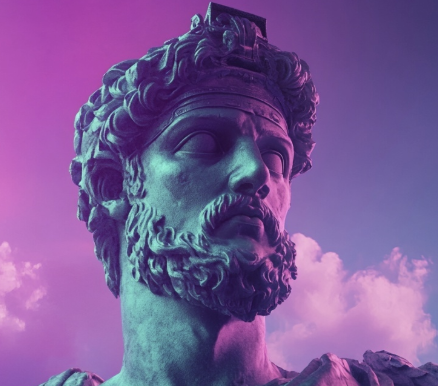
Whatsoever any man either doth or saith, thou must be good; not for any man's sake, but for thine own nature's sake; as if either gold, or the emerald, or purple, should ever be saying to themselves, Whatsoever any man either doth or saith, I must still be an emerald, and I must keep my colour.
▼
Source
source
VII, 12
3 months 2 weeks ago
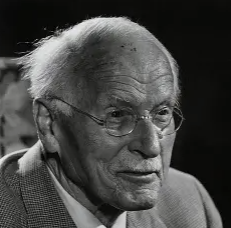
The whole nature of man presupposes woman, both physically and spiritually. His system is tuned into woman from the start, just as it is prepared for a quite definite world where there is water, light, air, salt, carbohydrates etc.
▼
Source
source
"Two Essays in Analytical Psychology" In CW 7: P. 188
2 months 3 weeks ago
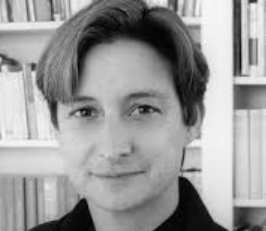
For consequentialists, of course, the imperative to imagine the consequences of living in a world in which everyone would act as you choose to act leads to the conclusion that some practices are utterly untenable, not because they are irrational, but because they inflict consequential damage that is unwanted. In both cases, I would suggest, a potential action is figured as hypothetically reciprocal: one's own act comes back in the imagined form of another's act; another might act on me as I would act on the other, and the consequences are unacceptable because of those damaging consequences.
▼
Source
source
p. 78
5 months 2 weeks ago
There's nothing like deduction. We've determined everything about our problem but the solution.
1 month 2 weeks ago
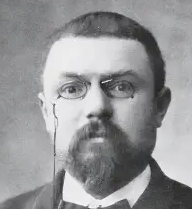
What is objective must be common to many minds and consequently transmissible from one to the other, and as this transmission can only come about by... discourse... we are even forced to conclude: no discourse no objectivity.
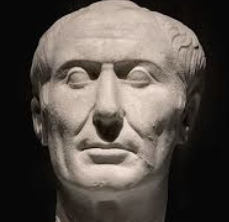
2 months 2 weeks ago
Every day should be passed as if it were to be our last.
▼
Source
source
Maxim 633
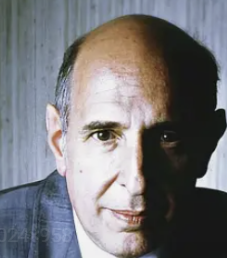
1 month 3 days ago
Bacon, Locke, Descartes, Hume, and all the others knew they were giving rights to vulgarity. But in so doing-in addition to caring for man's well-being-they were providing rights for themselves.
▼
Source
source
"Commerce and Culture," p. 289.

3 months 2 weeks ago
My mission is to see things as they are. Exactly the contrary of a mission.
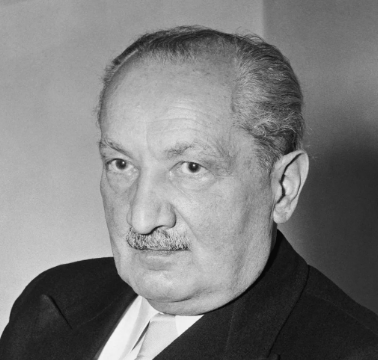
4 months 2 weeks ago
Being is only Being for Dasein.
▼
Source
source
Macquarrie & Robinson translation

3 months 1 week ago
May not the absolute and perfect eternal happiness be an eternal hope, which would die if it were realized? Is it possible to be happy without hope? And there is no place for hope once possession has been realized, for hope, desire, is killed by possession. May it not be, I say, that all souls grow without ceasing, some in a greater measure than others, but all having to pass some time through the same degree of growth, whatever that degree may be, and yet without ever arriving at the infinite, at God, to whom they continually approach? Is not eternal happiness an eternal hope, with its eternal nucleus of sorrow in order that happiness shall not be swallowed up in nothingness?

5 months ago
Malice sucks up the greatest part of its own venom, and poisons itself.
▼
Source
source
Of Repentance, Book III, Ch. 2

3 months 1 week ago
We should desire neither the immortality nor the death of any human being, whoever he may be, with whom we have to do.
▼
Source
source
p. 260

4 months 3 weeks ago
I say a murder is abstract. You pull the trigger and after that you do not understand anything that happens.
▼
Source
source
Act 5, sc. 2
5 months 1 week ago
God judged it better to bring good out of evil than to suffer no evil to exist.
▼
Source
source
Enchiridion (c. 420 ), Ch. 27
5 months 2 weeks ago
Often, writers on historical events tend to consider ... a loss of willingness to fight as a sign of "decadence," as though there were something despicable about not being a bully and not being willing to engage in mass murder. Perhaps we ought to feel instead that to cease to be warlike means to begin to be civilized and decent.

4 months 3 weeks ago
The man who comes back through the Door in the Wall will never be quite the same as the man who went out. He will be wiser but less cocksure, happier but less self-satisfied, humbler in acknowledging his ignorance yet better equipped to understand the relationship of words to things, of systematic reasoning to the unfathomable Mystery which it tries, forever vainly, to comprehend.
▼
Source
source
Page 191
3 months 3 weeks ago
We are at war with a system, which, by it's essence, is inimical to all other Governments, and which makes peace or war, as peace and war may best contribute to their subversion. It is with an armed doctrine that we are at war. It has, by it's essence, a faction of opinion, and of interest, and of enthusiasm, in every country. To us it is a Colossus which bestrides our channel. It has one foot on a foreign shore, the other upon the British soil. Thus advantaged, if it can at all exist, it must finally prevail.
▼
Source
source
p. 19
3 weeks ago
Even where Marx did not soften his main drive to a "revolutionary development," it was still aimed at capitalism alone (a relatively young and derivative cancer) and not equally at the age-old, lasting core of all enslavement, cruelty and exploitation: at militarism, feudalism and the supremacist world at large.
▼
Source
source
p. 38
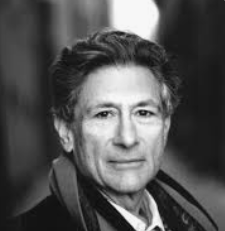
3 months 5 days ago
Every single empire in its official discourse has said that it is not like all the others, that its circumstances are special, that it has a mission to enlighten, civilize, bring order and democracy, and that it uses force only as a last resort. And, sadder still, there always is a chorus of willing intellectuals to say calming words about benign or altruistic empires, as if one shouldn't trust the evidence of one's eyes watching the destruction and the misery and death brought by the latest mission civilizatrice.
▼
Source
source
"Preface (2003)"
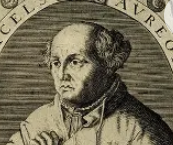
1 month 1 week ago
Belief and work, knowledge and action are one and the same thing.
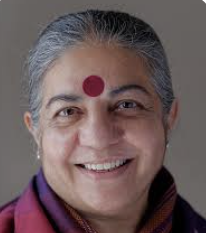
2 months 6 days ago
Instead of water belonging to millions of local communities, water too is to be controlled by five or six global water giants. These are recipes that use economic systems to appropriate for the few the base of survival of the majority.


4 months 3 weeks ago
It is high time that Communists should openly, in the face of the whole world, publish their views, their aims, their tendencies, and meet this nursery tale of the spectre of Communism with a Manifesto of the party itself.
▼
Source
source
Preamble, paragraph 3.

1 month 1 week ago
I cannot call this Shakspeare a "Sceptic," as some do; his indifference to the creeds and theological quarrels of his time misleading them. No: neither unpatriotic, though he says little about his Patriotism; nor sceptic, though he says little about his Faith. Such "indifference" was the fruit of his greatness withal: his whole heart was in his own grand sphere of worship (we may call it such); these other controversies, vitally important to other men, were not vital to him.

4 months 3 weeks ago
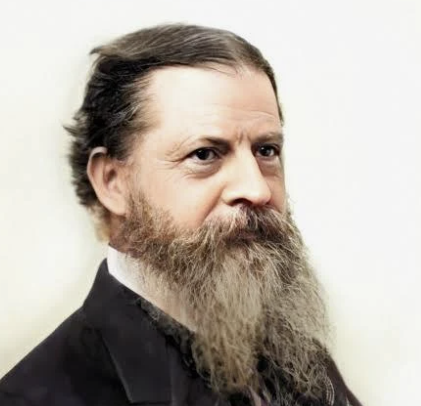
Pray go back and recollect one of the conclusions to which I sought to lead you in my very first lecture. You may remember how I there argued against the notion that the worth of a thing can be decided by its origin. Our spiritual judgment, I said, our opinion of the significance and value of a human event or condition, must be decided on empirical grounds exclusively. If the fruits for life of the state of conversion are good, we ought to idealize and venerate it, even though it be a piece of natural psychology; if not, we ought to make short work of it, no matter what supernatural being may have infused it.
▼
Source
source
Lecture IX, "Conversion, concluded"
3 months 2 weeks ago
It is the man of science, eager to have his every opinion regenerated, his every idea rationalized, by drinking at the fountain of fact, and devoting all the energies of his life to the cult of truth, not as he understands it, but as he does not yet understand it, that ought properly to be called a philosopher. To an earlier age knowledge was power - merely that and nothing more; to us it is life and the summum bonum. Emancipation from the bonds of self, of one's own prepossessions, importunately sought at the hands of that rational power before which all must ultimately bow, - this is the characteristic that distinguishes all the great figures of nineteenth-century science from those of former periods.
▼
Source
source
"The Century's Great Men in Science" in The 19th Century : A Review of Progress During the Past One Hundred Years in the Chief Departments of Human Activity (1901), published by G. P. Putnam's Sons.
4 months 1 week ago
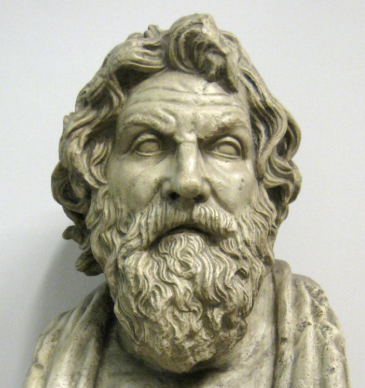
It is better to fall in with crows than with flatterers; for in the one case you are devoured when dead, in the other case while alive.
▼
Source
source
§ 4
3 months 2 weeks ago
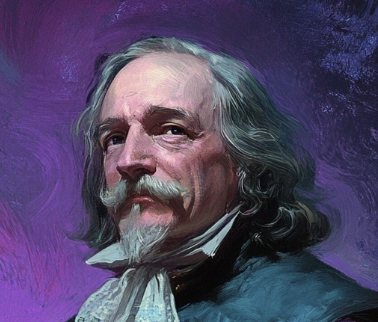
No man is bound by the words themselves, either to kill himselfe, or any other man.
▼
Source
source
The Second Part, Chapter 21, p. 112
3 months 1 week ago
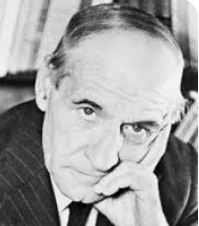
The surrealist thinks he has outstripped the whole of literary history when he has written (here a word that there is no need to write) where others have written "jasmines, swans and fauns." But what he has really done has been simply to bring to light another form of rhetoric which hitherto lay hidden in the latrines.
▼
Source
source
Chapter XI: The Self-Satisfied Age
3 months 5 days ago
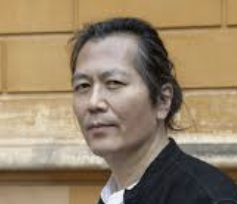
Power is never naked. Rather, it is eloquent.
4 months 3 weeks ago
To believe is to know you believe, and to know you believe is not to believe.
1 month 2 weeks ago
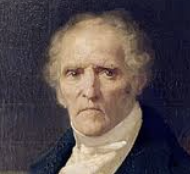
Those who have taken the planets to be inanimate bodies without function, limited to traveling geometric paths, resemble idiots who would believe that the brain is inanimate because it has no visible function, or that the stomach is idle because it does no visible work as do our limbs. Civilizees have always been reproached for believing nature to be limited to known effects. If the planets were not animate creatures endowed with functions, God would then appear to be an advocate of laziness. He would have created universes furnished with large inert bodies spending eternity in purposeless meandering as do the idlers in our society.
▼
Source
source
L'attraction passioneé

4 months 4 days ago
Wish not the thing, which thou mayest not obtain!
4 months 2 weeks ago
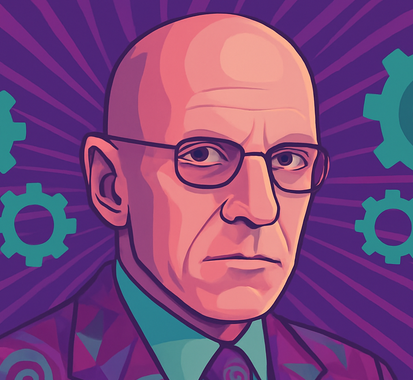
All those movements which took place in the fifteenth and sixteenth centuries and which had the Reformation as their main expression and result should be analyzed as a great crisis of the Western experience of subjectivity and a revolt against the kind of religious and moral power which gave form, during the Middle Ages, to this subjectivity. The need to take a direct part in spiritual life, in the work of salvation, in the truth which lies in the Book-all that was a struggle for a new subjectivity.
▼
Source
source
p. 782
3 months 1 week ago
The necessity for power is obvious, because life cannot be lived without order; but the allocation of power is arbitrary because all men are alike, or very nearly. Yet power must not seem to be arbitrarily allocated, because it will not then be recognized as power. Therefore prestige, which is illusion, is of the very essence of power.
▼
Source
source
p. 235
3 months 3 weeks ago
I would rather sleep in the southern corner of a little country churchyard, than in the tombs of the Capulets.
▼
Source
source
Letter to Matthew Smith
4 months 3 weeks ago
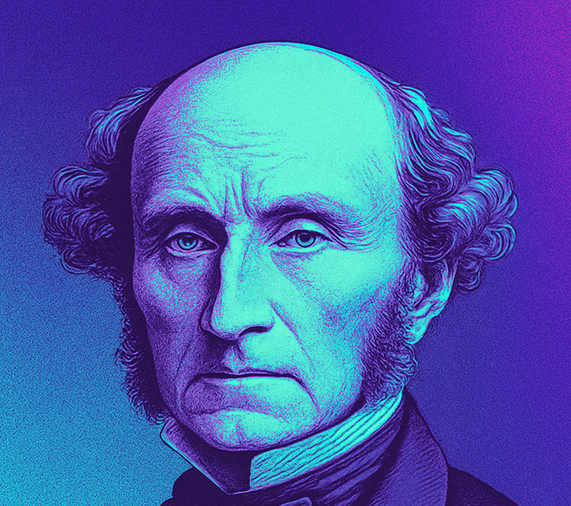
I shall, without further discussion of the other theories, attempt to contribute something towards the understanding and appreciation of the Utilitarian or Happiness theory, and towards such proof as it is susceptible of. It is evident that this cannot be proof in the ordinary and popular meaning of the term. Questions of ultimate ends are not amenable to direct proof. Whatever can be proved to be good, must be so by being shown to be a means to something admitted to be good without proof.
▼
Source
source
Ch. 1

4 months 3 weeks ago
The word of man is the most durable of all material.
▼
Source
source
Vol. 2, Ch. 25, sect. 298
3 months 1 week ago
That Marxism should triumph in Russia, where there is no industry, would be the greatest contradiction that Marxism could undergo. But there is no such contradiction, for there is no such triumph. Russia is Marxist more or less as the Germans of the Holy Roman Empire were Romans.
▼
Source
source
Chapter XIV: Who Rules The World?
3 months 2 days ago
We accumulate our opinions at an age when our understanding is at its weakest.
▼
Source
source
H 4
CivilSimian.com created by AxiomaticPanic, CivilSimian, Kalokagathia