

4 months 2 weeks ago
All men and women have passions, natural desires and noble ambitions, and also a conscience; they have sex, hunger, fear, anger, and are subject to sickness, pain, suffering and death. Culture consists in bringing about the expression of these passions and desires in harmony.
▼
Source
source
p. 20

8 months 1 week ago
There are men who astonish and delight, men who instruct and guide. Some men's words I remember so well that I must often use them to express my thought. Yes, because I perceive that we have heard the same truth, but they have heard it better.
▼
Source
source
Character
6 months 3 weeks ago
By committing a crime, a man places himself, of his own accord, outside the chain of eternal obligations which bind every human being to every other one. Punishment alone can weld him back again; fully so, if accompanied by consent on his part; otherwise only partially so. Just as the only way of showing respect for somebody suffering from hunger is to give him something to eat, so the only way of showing respect for somebody who has placed himself outside the law is to reinstate him inside the law by subjecting him to the punishment ordained by law.The need for punishment is not satisfied where, as is generally the case, the penal code is merely a method of exercising pressure through fear.
▼
Source
source
p. 103
6 months 1 week ago
When it became obvious what a dumb and cruel and spiritually and financially and militarily ruinous mistake our war in Vietnam was, every artist worth a damn in this country, every serious writer, painter, stand-up comedian, musician, actor and actress, you name it, came out against the thing. We formed what might be described as a laser beam of protest, with everybody aimed in the same direction, focused and intense. This weapon proved to have the power of a banana-cream pie three feet in diameter when dropped from a stepladder five-feet high.
▼
Source
source
Kurt Vonnegut vs. the !&#*!@ Interview with Joel Bleifuss, In These Times
6 months 6 days ago
It is sometimes expedient to forget who we are.
▼
Source
source
Maxim 233

4 months 5 days ago
External things are not the problem. It's your assessment of them. Which you can erase right now.
▼
Source
source
(Hays translation) VIII, 47
6 months 6 days ago
The judge is condemned when the guilty is absolved.
▼
Source
source
Maxim 407 Adopted by the original Edinburgh Review magazine as its motto.
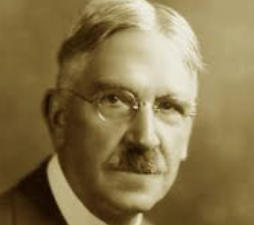
7 months ago
Interest only becomes one-sided and morbid only when it ceases to be frank, and becomes sly and furtive.
▼
Source
source
p. 197
4 months 5 days ago
Yet living and dying, honour and dishonour, pain and pleasure, riches and poverty, and so forth are equally the lot of good men and bad. Things like these neither elevate nor degrade; and therefore they are no more good than they are evil.
▼
Source
source
II, 11
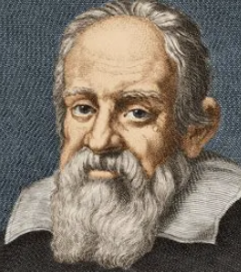
5 months 3 days ago
Indeed, I think we may concede to our Academician, without flattery, his claim that in the principle [principio, i. e., accelerated motion] laid down in this treatise he has established a new science dealing with a very old subject. Observing with what ease and clearness he deduces from a single principle the proofs of so many theorems, I wonder not a little how such a question escaped the attention of Archimedes, Apollonius, Euclid and so many other mathematicians and illustrious philosophers, especially since so many ponderous tomes have been devoted to the subject of motion.
▼
Source
source
(Galileo referred to himself as the/our Academician in his dialogue) Sagredo, Third Day P. 242

7 months 2 weeks ago
The severe Schools shall never laugh me out of the Philosophy of Hermes, that this visible world is but a picture of the invisible.
▼
Source
source
Section 12
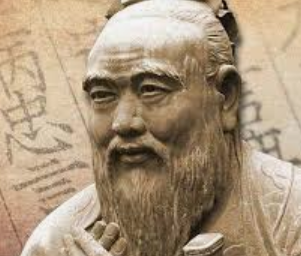
8 months 4 weeks ago
When a man at forty is the object of dislike, he will always continue what he is.
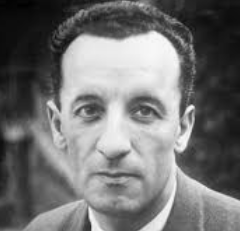
6 months 4 weeks ago
Lichtenberg ... held something of the following kind: one should neither affirm the existence of God nor deny it. ... It is not that he wished to leave certain perspectives open, nor to please everyone. It is rather that he was identifying himself, for his part, with a consciousness of self, of the world, and of others that was "strange" (the word is his) in a sense which is equally well destroyed by the rival explanations.
▼
Source
source
pp. 45-46
6 months 1 week ago
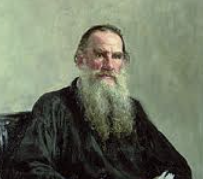
Not only does the action of Governments not deter men from crimes; on the contrary, it increases crime by always disturbing and lowering the moral standard of society. Nor can this be otherwise, since always and everywhere a Government, by its very nature, must put in the place of the highest, eternal, religious law (not written in books but in the hearts of men, and binding on every one) its own unjust, man-made laws, the object of which is neither justice nor the common good of all but various considerations of home and foreign expediency.
▼
Source
source
The Meaning of the Russian Revolution (1906), a work about the 1905 Russian Revolution.
4 months 2 weeks ago
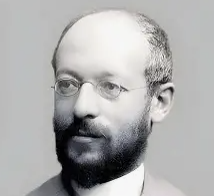
Money expresses all qualitative differences of things in terms of "how much?" Money, with all its colorlessness and indifference, becomes the common denominator of all values; irreparably it hollows out the core of things, their individuality, their specific value, and their incomparability. All things float with equal specific gravity in the constantly moving stream of money. All things lie on the same level and differ from one another only in the size of the area which they cover.

7 months 1 week ago
Evil perpetually tends to disappear.
▼
Source
source
Part I, Ch. 2 : The Evanescence of Evil, § 2
6 months 3 weeks ago
Any madness in us gains from being expressed, because in this way one gives a human form to what separates us from humanity.
▼
Source
source
p. 76
7 months 1 week ago
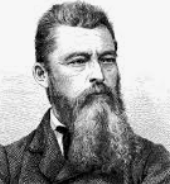
All presentation, all demonstration-and the presentation of thought is demonstration-has, according to its original determination-and this is all that matters to us-the cognitive activity of the other person as its ultimate aim.
▼
Source
source
Z. Hanfi, trans., in The Fiery Brook (1972), p. 67
7 months ago
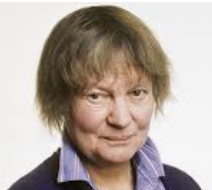
The role of philosophy might be said to be to extend and deepen the self-awareness of mankind.
▼
Source
source
Ch. 9, p. 137

8 months 2 weeks ago
We seek and offer ourselves to be gulled.
▼
Source
source
Book III, Ch. 11. Of Cripples
7 months 1 week ago
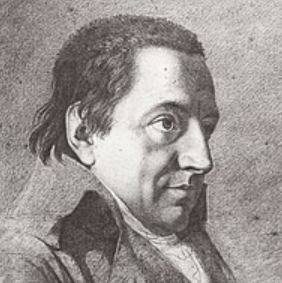
The representation of the self-sufficiency of the I can certainly co-exist with a representation of the self-sufficiency of the thing, though the self-sufficiency of the I itself cannot co-exist with that of the thing. Only one of these two can come first, only one can be the starting point; only one can be independent. The one that comes second, just because it comes second, necessarily becomes dependent upon the one that comes first, with which it is supposed to be connected. Which of these two should come first?
▼
Source
source
p. 17-18.
8 months 1 week ago
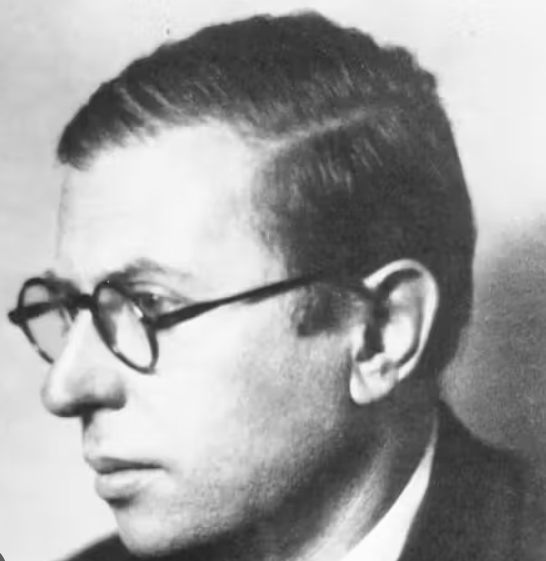
As for me, I am mean: that means that I need the suffering of others to exist. A flame. A flame in their hearts. When I am all alone, I am extinguished.
▼
Source
source
Inès, describing her path to Hell, Act 1, sc. 5
7 months 2 weeks ago
Do not ask who started it.
▼
Source
source
Finish it A Dictionary of Thoughts (1908) by Tryon Edwards, p. 234

5 months 4 days ago
The groups are not unified under any single authority but rather relate to each other in a network structure. Social forums, affinity groups, and other forms of democratic decision-making are the basis of the movements, and they manage to act together based on what they have in common. ... These globalization protest movements are obviously limited in many regards. First of all, although their vision and desire is global in scope, they have thus far only involved significant numbers in North America and Europe. Second, so long, as they remain merely protests movements, traveling from one summit meeting to the next, they will be incapable of becoming a foundational struggle and of articulating an alternative to social relations. These limitations may only be temporary obstacles, and the movements may discover ways to overcome them.
▼
Source
source
86-87
4 months 5 days ago
Death hangs over thee: whilst yet thou livest, whilst thou mayest, be good.
▼
Source
source
IV, 14 (trans. Meric Casaubon) Variant: Death hangs over thee. While thou livest, while it is in thy power, be good.
8 months 1 week ago
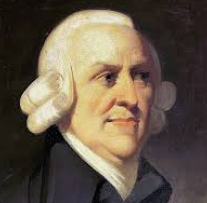
To give the monopoly of the home-market to the produce of domestic industry, in any particular art or manufacture, is in some measure to direct private people in what manner they ought to employ their capitals, and must, in almost all cases, be either a useless or a hurtful regulation.
▼
Source
source
Chapter II, p. 489.
8 months 1 week ago
A man who is free is like a mangy sheep in a herd. He will contaminate my entire kingdom and ruin my work.
▼
Source
source
King Aegistheus, Act 2

5 months ago
A mystic bond of brotherhood makes all men one.
▼
Source
source
Essays, Goethe's Works.
7 months ago
The revolution in scientific ideas just mentioned is primarily logical. It is due to recognition that the very method of physical science, with its primary standard units of mass, space, and time, is concerned with measurements of relations of change, not with individuals as such.

8 months 1 week ago
The most essential characteristic of scientific technique is that it proceeds from experiment, not from tradition. The experimental habit of mind is a difficult one for most people to maintain; indeed, the science of one generation has already become the tradition of the next...
▼
Source
source
The Scientific Outlook, 1931
6 months 5 days ago
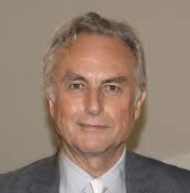
An atheist is just somebody who feels about Yahweh the way any decent Christian feels about Thor or Baal or the golden calf. As has been said before, we are all atheists about most of the gods that humanity has ever believed in. Some of us just go one god further.
▼
Source
source
Richard Dawkins on militant atheism,



8 months 1 week ago
Do not allow your dreams of a beautiful world to lure you away from the claims of men who suffer here and now.
▼
Source
source
p. 485
7 months 4 days ago
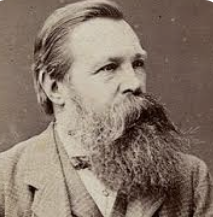
The anarchists put the thing upside down. They declare that the proletarian revolution must begin by doing away with the political organisation of the state. But after its victory the sole organisation which the proletariat finds already in existence is precisely the state. This state may require very considerable alterations before it can fulfil its new functions. But to destroy it at such a moment would be to destroy the only organism by means of which the victorious proletariat can assert its newly-conquered power, hold down its capitalist adversaries and carry out that economic revolution of society without which the whole victory must end in a new defeat and in a mass slaughter of the workers similar to those after the Paris Commune.
▼
Source
source
Letter to Philipp Van Patten
6 months 3 weeks ago
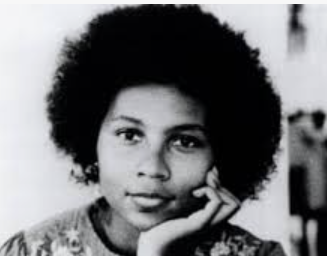
The process begins with the individual woman's acceptance that American women, without exception, are socialized to be racist, classist and sexist, in varying degrees, and that labeling ourselves feminists does not change the fact that we must consciously work to rid ourselves of the legacy of negative socialization.
8 months 1 week ago
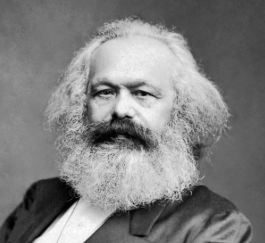
In capitalist society spare time is acquired for one class by converting the whole life-time of the masses into labour-time.
▼
Source
source
Vol. I, Ch. 17, Section IV, pg. 581.

7 months 1 day ago
The victor and the one who keeps My works to the end: I will give him authority over the nations and He will shepherd them with an iron scepter; He will shatter them like pottery just as I have received this from My Father.
6 months 2 weeks ago
Rationality requires a choice among all possible alternative behaviors. In actual behavior, only a very few of all these possible alternatives come to mind.
8 months 1 week ago
Keep the faculty of effort alive in you by a little gratuitous exercise every day. That is, be systematically ascetic or heroic in little unnecessary points, do every day or two something for no other reason than that you would rather not do it, so that when the hour of dire need draws nigh, it may find you not unnerved and untrained to stand the test. So with the man who has daily inured himself to habits of concentrated attention, energetic volition, and self-denial in unnecessary things. He will stand like a tower when everything rocks around him, and when his softer fellow-mortals are winnowed like chaff in the blast.
▼
Source
source
Ch. 4
6 months 3 weeks ago
When at the beginning of the so-called modern age, at the Renaissance, the pagan sense of religion came to life again, it took the concrete form in the knightly ideal with its codes of conduct of love and honor. But it was a paganism Christianized, baptized. "Woman - la donna - was the divinity enshrined within those savage breasts. Whosoever will investigate the memorials of primitive times will find this ideal of woman in its full force and purity; the Universe is woman.
7 months 2 weeks ago
Obstinacy in a bad cause, is but constancy in a good.
▼
Source
source
Section 25

8 months 1 week ago
Societies are composed of individuals and are good only insofar as they help individuals to realize their potentialities and to lead a happy and creative life.
▼
Source
source
Chapter 3 (p. 20)

8 months 3 weeks ago
So the Church too, like Mary, enjoys perpetual virginity and uncorrupted fecundity.
▼
Source
source
195:2
6 months 2 weeks ago
By incestuous symbiosis is meant the tendency to stay tied to the mother and to her equivalents - blood, family, tribe - to fly from the unbearable weight of responsibility, of freedom, of awareness, and to be protected and loved in a state of certainty dependence that the individual pays for with the ceasing of his own human development.

4 months 1 week ago
There is not a truth existing which I fear or would wish unknown to the whole world.
▼
Source
source
Letter to Henry Lee
8 months 3 weeks ago
"For I am holy." When I hear these words I recognize the voice of the Saviour. But shall I take away my own? Certainly when He speaks thus He speaks in inseparable union with His body. But can I say, "I am holy"? If I mean a holiness that I have not received, I should be proud and a liar; but if I mean a holiness that I have received - as it is written: "Be ye holy because I the Lord your God am holy" (Lev. 19:2) - then let the body of Christ say these words. And let this one man, who cries from the ends of the earth, say with his Head and united with his Head: "I am holy." … That is not foolish pride, but an expression of gratitude. If you were to say that you are holy of yourselves, that would be pride; but if, as one of Christ's faithful and as a member of Christ, you say that you are not holy, you are ungrateful.
▼
Source
source
p.428
8 months 1 week ago
Habit is thus the enormous fly-wheel of society, its most precious conservative agent. It alone is what keeps us all within the bounds of ordinance, and saves the children of fortune from the envious uprisings of the poor.
▼
Source
source
Ch. 4

7 months 5 days ago
I want to proclaim a truth that would forever exile me from among the living. I know only the conditions but not the words that would allow me to formulate it.

7 months 1 week ago
I'll know how to die with courage; that is easier than living.
▼
Source
source
Act II.
CivilSimian.com created by AxiomaticPanic, CivilSimian, Kalokagathia