He was in France in the 40's when he said this.


Remember that you ought to behave in life as you would at a banquet. As something is being passed around it comes to you; stretch out your hand, take a portion of it politely. It passes on; do not detain it. Or it has not come to you yet; do not project your desire to meet it, but wait until it comes in front of you. So act toward children, so toward a wife, so toward office, so toward wealth.

When we leave you and assemble together by ourselves, we talk freely about his sayings and doings, treating them with the respect which they deserve: in your presence deep silence is observed about him, and thus you lose that greatest of pleasures, the hearing the praises of your son, which I doubt not you would be willing to hand down to all future ages, had you the means of so doing, even at the cost of your own life.
Remember, then, that scientific thought is the guide of action; that the truth which it arrives at is not that which we can ideally contemplate without error, but that which we may act upon without fear; and you cannot fail to see that scientific thought is not an accompaniment or condition of human progress, but human progress itself. And for this reason the question what its characters are... is the question of all questions for the human race.

I feel that these old Northmen wore looking into Nature with open eye and soul: most earnest, honest; childlike, and yet manlike; with a great-hearted simplicity and depth and freshness, in a true, loving, admiring, unfearing way.

It occurred to him that what had appeared perfectly impossible before, namely that he had not spent his life as he should have done, might after all be true. It occurred to him that his scarcely perceptible attempts to struggle against what was considered good by the most highly placed people, those scarcely noticeable impulses which he had immediately suppressed, might have been the real thing, and all the rest false. And his professional duties and the whole arrangement of his life and of his family, and all his social and official interests, might all have been false. He tried to defend all those things to himself and suddenly felt the weakness of what he was defending.

To tax and to please, no more than to love and to be wise, is not given to men.
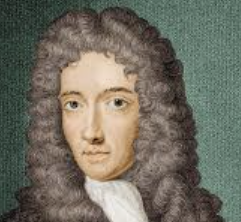
Not that I at all disallow the use of reasoning upon experiments, or the endeavouring to discern as early as we can the confederations, and differences, and tendencies of things: for such an absolute suspension of the exercise of reasoning were exceeding troublesome, if not impossible. And, as in that rule of arithmetic, which is commonly called regula falsi by proceeding upon a conjecturally-supposed number, as if it were that, which we inquire after, we are wont to come to the knowledge of the true number sought for; so in physiology it is sometimes conducive to the discovery of truth, to permit the understanding to make an hypothesis, in order to the explication of this or that difficulty, that by examining how far the phænomena are, or are not, capable of being solved by that hypothesis, the understanding may, even by its own errors, be instructed.

The most radical revolutionary will become a conservative the day after the revolution.
Laws, like houses, lean on one another.
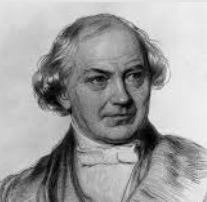
A whale is not a fish in natural history, but it is a fish in commerce and law. A plea that human laws which mention fish do not apply to whales, would be rejected at once by an intelligent judge.
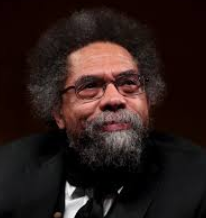
I remind young people everywhere I go, one of the worst things the older generation did was to tell them for twenty-five years "Be successful, be successful, be successful" as opposed to "Be great, be great, be great". There's a qualitative difference.

The world begins and ends with us. Only our consciousness exists, it is everything, and this everything vanishes with it. Dying, we leave nothing. Then why so much fuss around an event that is no such thing?
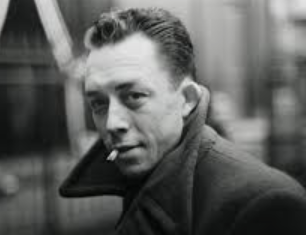
The absurd is the essential concept and the first truth.

Though I certainly deserve no ill treatment from mortals, yet if the insults and repulses I receive were attended with any advantage to them, I would content myself with lamenting in silence my own unmerited indignities and man's injustice.
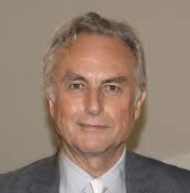
It's been suggested that if the super-naturalists really had the powers they claim, they'd win the lottery every week. I prefer to point out that they could also win a Nobel Prize for discovering fundamental physical forces hitherto unknown to science. Either way, why are they wasting their talents doing party turns on television?By all means let's be open-minded, but not so open-minded that our brains drop out.
Blessed are those eyes that have seen more water than any man! Blessed be that haughty mind that aimed at the greatest hope! May you be blessed who row the current your life longand now with dry unfreshened lips descend to Hadesto find the hidden deathless springs and slake your thirst! My son, it's death who keeps and pours the deathless waters.

Why do ye also transgress the commandment of God by your tradition? For God commanded, saying, Honour thy father and mother: and, He that curseth father or mother, let him die the death. But ye say, Whosoever shall say to his father or his mother, It is a gift, by whatsoever thou mightest be profited by me; And honour not his father or his mother, he shall be free. Thus have ye made the commandment of God of none effect by your tradition. Ye hypocrites, well did Esaias prophesy of you, saying, This people draweth nigh unto me with their mouth, and honoureth me with their lips; but their heart is far from me. But in vain they do worship me, teaching for doctrines the commandments of men.
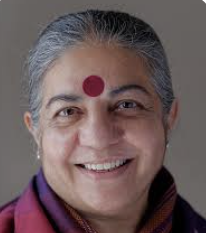
What could be a better indication of man's continued dependence on nature than the fact that today's so-called post-industrial societies satisfy most of their food needs through imports from so-called underdeveloped countries?

The world is full of conflicts; and, overshadowing all minor conflicts, the titanic struggle between Communism and anti-Communism. Almost everybody who is politically conscious has strong feelings about one or more of these issues; but we want you, if you can, to set aside such feelings and consider yourselves only as members of a biological species which has had a remarkable history, and whose disappearance none of us can desire. We shall try to say no single word which should appeal to one group rather than to another. All, equally, are in peril, and, if the peril is understood, there is hope that they may collectively avert it.
Government must be a transparent garment which tightly clings to the people's body.
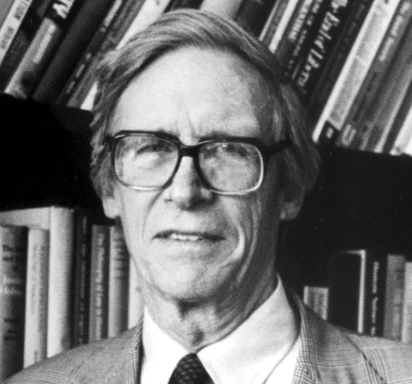
In justice as fairness society is interpreted as a cooperative venture for mutual advantage.

Ask the questions that have no answers. Invest in the millenium.
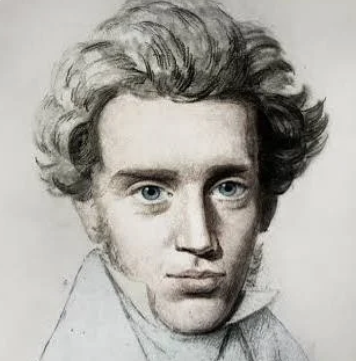
That a woman is presented as a teacher, as a prototype of piety, cannot amaze anyone who knows that piety or godliness is fundamentally womanliness. ... from a woman you learn concern for the one thing needful, from Mary, sister of Lazarus, who sat silent at Christ's feet with her heart's choice: the one thing needful.
Simplicity and nonviolence are the basis of an economy of wellbeing, and such an economy must be localised.
It is somewhat strange to me, that neither the Spagyrists themselves, nor yet their Adversaries, should have taken notice that Chymists have rather supposed than evinced, that the Analysis of bodies by fire, or even that at least some Analysis is the onely instrument of investigating what Ingredients mixt bodies are made up of, since in divers cases That may be discovered by Composition as well as by Resolution; as it may appear, that Vitriol consists of metalline parts (whether Martial, or Venereal, or both) associated by Coagulation with acid ones, one may, I say, discover this as well by making true Vitriol with Spirit (improperly called Oil) of Sulphur, or that of Salt, as by distilling or Resolving Vitriol by the fire.

A philosopher of imposing stature doesn't think in a vacuum. Even his most abstract ideas are, to some extent, conditioned by what is or is not known in the time when he lives.
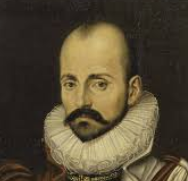
He who remembers the evils he has undergone, and those that have threatened him, and the slight causes that have changed him from one state to another, prepares himself in that way for future changes and for recognizing his condition. The life of Caesar has no more to show us than our own; an emperor's or an ordinary man's, it is still a life subject to all human accidents.
Why in any case, this glorification of man? How about lions and tigers? They destroy fewer animals or human lives than we do, and they are much more beautiful than we are. How about ants? They manage the Corporate State much better than any Fascist. Would not a world of nightingales and larks and deer be better than our human world of cruelty and injustice and war? The believers in Cosmic Purpose make much of our supposed intelligence, but their writings make one doubt it. If I were granted omnipotence, and millions of years to experiment in, I should not think Man much to boast of as the final result of all my efforts.
The true line is not between "hard" natural science and "soft" social sciences, but between precise science limited to highly abstract and simple phenomena in the laboratory and inexact science and technology dealing with complex problems in the real world.

You're better off not giving the small things more time than they deserve.

In the vaunted works of Art The master stroke is Nature's part.
With rebellion, awareness is born.

The distinction between true and false consciousness, real and immediate interest still is meaningful. But this distinction itself must be validated. Men must come to see it and to find their way from false to true consciousness, from their immediate to their real interest. They can do so only if they live in need of changing their way of life, of denying the positive, of refusing. It is precisely this need which the established society manages to repress to the degree to which it is capable of "delivering the goods" on an increasingly large scale, and using the scientific conquest of nature for the scientific conquest of man.

He was a man born into a world dominated by scientific materialism. His objection to this materialism was not merely intellectual, or even egotistical (the feeling 'If the world is wholly material, then I can't be very important'). It was the feeling that man is cut off from his inner powers by this superficial attitude.

By MANNERS, I mean not here Decency of behaviour; as how one man should salute another, or how a man should wash his mouth, or pick his teeth before company, and such other points of the Small Morals; But those qualities of mankind that concern their living together in Peace and Unity. To which end we are to consider that the Felicity of this life consisteth not in the repose of a mind satisfied. For there is no such Finis ultimus (utmost aim) nor Summum Bonum (greatest good) as is spoken of in the books of the old Moral Philosophers. Nor can a man any more live whose desires are at an end than he whose Senses and Imaginations are at a stand.

This right which you have, is not founded any more than his upon any quality or any merit in yourself which renders you worthy of it. Your soul and your body are, of themselves, indifferent to the state of boatman or that of duke; and there is no natural bond that attaches them to one condition rather than to another.
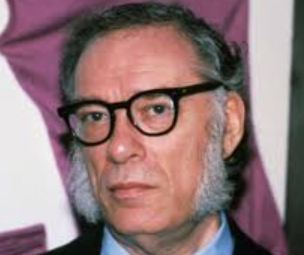
I was once being interviewed by Barbara Walters [...] In between two of the segments she asked me [...] "But what would you do if the doctor gave you only six months to live?" I said, "Type faster." This was widely quoted, but the "six months" was changed to "six minutes," which bothered me. It's "six months."
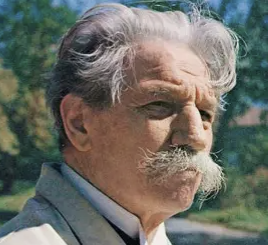
To the man who is truly ethical all life is sacred, including that which from the human point of view seems lower in the scale. He makes distinctions only as each case comes before him, and under the pressure of necessity, as, for example, when it falls to him to decide which of two lives he must sacrifice in order to preserve the other. But all through this series of decisions he is conscious of acting on subjective grounds and arbitrarily, and knows that he bears the responsibility for the life which is sacrificed.

It is impossible to feel equal respect for things that are in fact unequal unless the respect is given to something that is identical in all of them. Men are unequal in all their relations with the things of this world, without exception. The only thing that is identical in all men is the presence of a link with the reality outside the world. All human beings are absolutely identical in so far as they can be thought of as consisting of a centre, which is an unquenchable desire for good, surrounded by an accretion of psychical and bodily matter.
The great honor of Christianity, its incontestable merit, and the whole secret of its unprecedented and yet thoroughly legitimate triumph, lay in the fact that it appealed to that suffering and immense public to which the ancient world, a strict and cruel intellectual and political aristocracy, denied even the simplest rights of humanity. Otherwise it never could have spread.
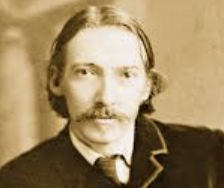
It is a sore thing to have laboured along and scaled the arduous hilltops, and when all is done, find humanity indifferent to your achievement. Hence physicists condemn the unphysical; financiers have only a superficial toleration for those who know little of stocks; literary persons despise the unlettered; and people of all pursuits combine to disparage those who have none. But though this is one difficulty of the subject, it is not the greatest. You could not be put in prison for speaking against industry, but you can be sent to Coventry for speaking like a fool. The greatest difficulty with most subjects is to do them well; therefore, please to remember this is an apology. It is certain that much may be judiciously argued in favour of diligence; only there is something to be said against it, and that is what, on the present occasion, I have to say.
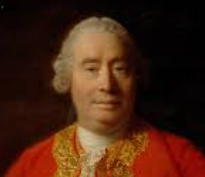
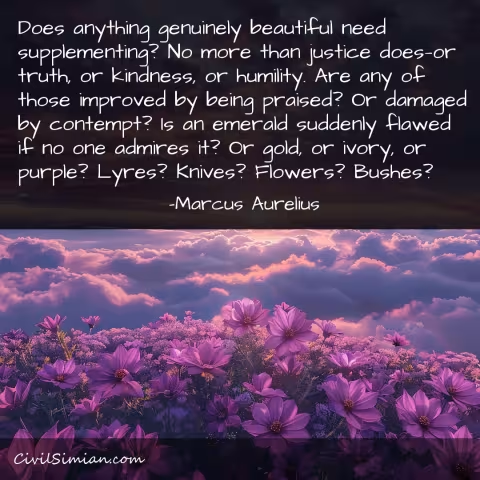
It is a great mortification to the vanity of man, that his utmost art and industry can never equal the meanest of nature's productions, either for beauty or value. Art is only the under-workman, and is employed to give a few strokes of embellishment to those pieces, which come from the hand of the master.
There can be no revolution without widespread and passionate destruction, a destruction salutary and fruitful precisely because out of it, and by means of it alone, new worlds are born and arise.

If I had been by nature extremely quick of apprehension, or had possessed a very accurate and retentive memory or were of a remarkably active and energetic character, the trial would not be conclusive; but in all these natural gifts I am rather below than above par; what I could do, could assuredly be done by any boy or girl of average capacity and healthy physical constitution: and if I have accomplished anything, I owe it, among other fortunate circumstances, to the fact that through the early training bestowed on me by my father, I started, I may fairly say, with an advantage of a quarter of a century over my contemporaries.
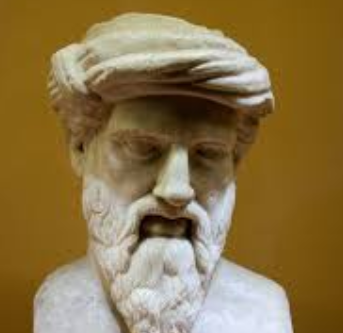
If thy fellows hurt thee in small things, suffer it! and be as bold with them!
Luther's merit in literary history is of the greatest: his dialect became the language of all writing. They are not well written, these Four-and-twenty Quartos of his; written hastily, with quite other than literary objects. But in no Books have I found a more robust, genuine, I will say noble faculty of a man than in these. A rugged honesty, homeliness, simplicity; a rugged sterling sense and strength. He dashes out illumination from him; his smiting idiomatic phrases seem to cleave into the very secret of the matter. Good humor too, nay tender affection, nobleness and depth: this man could have been a Poet too! He had to work an Epic Poem, not write one.
CivilSimian.com created by AxiomaticPanic, CivilSimian, Kalokagathia