


6 months 3 weeks ago
It's a bit embarrassing to have been concerned with the human problem all one's life and find at the end that one has no more to offer by way of advice than 'Try to be a little kinder.'
▼
Source
source
As quoted in Huston Smith, "Aldous Huxley--A Tribute," The Psychedelic Review, (1964) Vol I, No.3, (Aldous Huxley Memorial Issue), p. 264-5

5 months 3 weeks ago
I am displeased with everything. If they made me God, I would immediately resign.

5 months 1 week ago
Respectable scientists like de Broglie himself accept wave mechanics because it confers coherence and unity upon the experimental findings of contemporary science, and in spite of the astonishing changes it implies in connection with ideas of causality, time, and space, but it is because of these changes that it wins favor with the public. The great popular success of Einstein was the same thing. The public drinks in and swallows eagerly everything that tends to dispossess the intelligence in favor of some technique; it can hardly wait to abdicate from intelligence and reason and from everything that makes man responsible for his destiny.
▼
Source
source
"Wave Mechanics," p. 75

3 months 2 weeks ago
The spoken Word, the written Poem, is said to be an epitome of the man; how much more the done Work. Whatsoever of morality and of intelligence; what of patience, perseverance, faithfulness, of method, insight, ingenuity, energy; in a word, whatsoever of Strength the man had in him will lie written in the Work he does. To work: why, it is to try himself against Nature, and her everlasting unerring Laws; these will tell a true verdict as to the man.

6 months 3 days ago
The one infinite is perfect, in simplicity, of itself, absolutely, nor can aught be greater or better, This is the one Whole, God, universal Nature, occupying all space, of whom naught but infinity can give the perfect image or semblance.
▼
Source
source
II 12 as translated by Dorothea Waley Singer
7 months 3 weeks ago
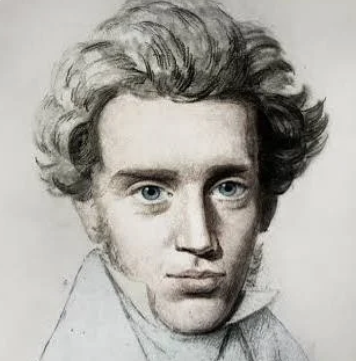
One sticks one's finger into the soil to tell by the smell in what land one is: I stick my finger in existence - it smells of nothing. Where am I? Who am I? How came I here? What is this thing called the world? What does this world mean? Who is it that has lured me into the world? Why was I not consulted, why not made acquainted with its manners and customs instead of throwing me into the ranks, as if I had been bought by a kidnapper, a dealer in souls? How did I obtain an interest in this big enterprise they call reality? Why should I have an interest in it? Is it not a voluntary concern? And if I am to be compelled to take part in it, where is the director? I should like to make a remark to him. Is there no director? Whither shall I turn with my complaint?
5 months 2 weeks ago
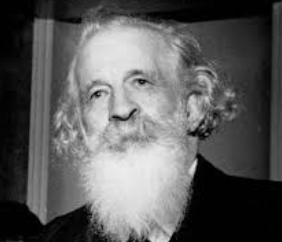
Man is an imagining being.
▼
Source
source
Ch. 2, sect. 10
5 months 3 weeks ago
Progress is the injustice each generation commits with regard to its predecessor.
3 months 3 weeks ago
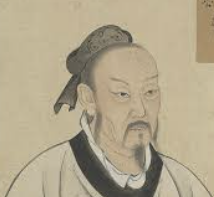
The learning of the gentleman enters through his ears, fastens to his heart, spreads through his four limbs, and manifests itself in his actions. ... The learning of the petty person enters through his ears and passes out his mouth. From mouth to ears is only four inches-how could it be enough to improve a whole body much larger than that?
▼
Source
source
Readings in Classical Chinese Philosophy (2001), p. 259
3 months 3 weeks ago
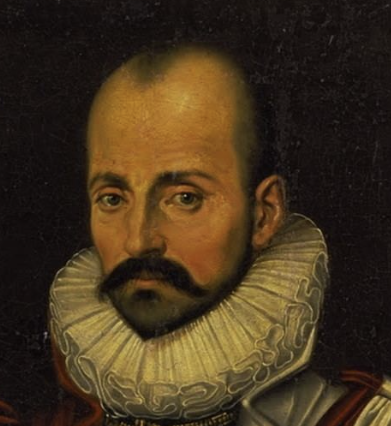
From all these indignities, such as the very beasts of the field would not endure, you can deliver yourselves if you try, not by taking action, but merely by willing to be free.
5 months 1 week ago
I believe that love is the main key to open the doors to the "growth" of man. Love and union with someone or something outside of oneself, union that allows one to put oneself into relationship with others, to feel one with others, without limiting the sense of integrity and independence. Love is a productive orientation for which it is essential that there be present at the same time: concern, responsibility, and respect for and knowledge of the object of the union. I believe that the experience of love is the most human and humanizing act that it is given to man to enjoy and that it, like reason, makes no sense if conceived in a partial way.
5 months 1 week ago
The Text is plural. Which is not simply to say that it has several meanings, but that it accomplishes the very plural of meaning: an irreducible (and not merely an acceptable) plural. The Text is not a co-existence of meanings but a passage, an overcrossing; thus it answers not to an interpretation, even a liberal one, but to an explosion, a dissemination.
▼
Source
source
Proposition 4

2 months 3 weeks ago
There are, it seems, two Muses: the Muse of Inspiration, who gives us inarticulate visions and desires, and the Muse of Realization, who returns again and again to say, "It is yet more difficult than you thought." This is the muse of form. The first muse is the one mainly listened to in a cheap-energy civilization, in which "economic health" depends on the assumption that everything desirable lies within easy reach of anyone. To hear the second muse one must move outside the cheap-energy enclosure. It is the willingness to hear the second muse that keeps us cheerful in our work. To hear only the first is to live in the bitterness of disappointment.

3 months 1 week ago
The point is, not how long you live, but how nobly you live. And often this living nobly means that you cannot live long.
3 months 1 week ago
It must be obvious... that there is a contradiction in wanting to be perfectly secure in a universe whose very nature is momentariness and fluidity.

6 months 3 weeks ago
If you say that this is absurd, that we cannot be in love with everyone at once, I merely point out to you that, as a matter of fact, certain persons do exist with an enormous capacity for friendship and for taking delight in other people's lives; and that such person know more of truth than if their hearts were not so big. The vice of ordinary Jack and Jill affection is not its intensity, but its exclusions and its jealousies. Leave those out, and you see that the ideal I am holding up before you, however impracticable to-day, yet contains nothing intrinsically absurd.
▼
Source
source
"What Makes a Life Significant?"
5 months 1 week ago
Give us back our suffering, we cry to Heaven in our hearts - suffering rather than indifferentism; for out of nothing comes nothing. But out of suffering may come the cure. Better have pain than paralysis! A hundred struggle and drown in the breakers. One discovers the new world. But rather, ten times rather, die in the surf, heralding the way to that new world, than stand idly on the shore!
4 months 2 weeks ago
Death is the dark backing that a mirror needs if we are to see anything.
▼
Source
source
Humboldt's Gift (1975), p. 265
4 months 4 weeks ago
Whatever is referred to must exist. Let us call this the axiom of existence.
▼
Source
source
P. 77.
2 months 3 weeks ago
I think we must be careful about too easily accepting, or being too easily grateful for, sacrifices made by others, especially if we have made none ourselves.

7 months 3 weeks ago
Therefore only an utterly senseless person can fail to know that our characters are the result of our conduct.
6 months 3 weeks ago
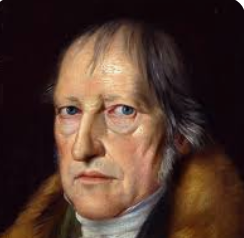
To be independent of public opinion is the first formal condition of achieving anything great or rational whether in life or in science. Great achievement is assured, however, of subsequent recognition and grateful acceptance by public opinion, which in due course will make it one of its own prejudices.
▼
Source
source
Sect. 318, as translated by T. M. Knox,, 1952
6 months 2 weeks ago
When the individual finds in her conscience beliefs that are relevant to public policy but incapable of the defense on the basis of beliefs common to her fellow citizens, she must sacrifice her conscience on the altar of public expediency.

6 months 3 weeks ago
As for my own business, even that kind of surveying which I could do with most satisfaction my employers do not want. They would prefer that I should do my work coarsely and not too well, ay, not well enough. When I observe that there are different ways of surveying, my employer commonly asks which will give him the most land, not which is most correct.
▼
Source
source
p. 486
4 months 3 weeks ago
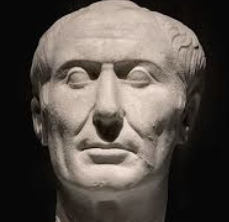
His own character is the arbiter of every one's fortune.
▼
Source
source
Maxim 283
5 months 3 weeks ago
We always love . . . despite; and that "despite" covers an infinity.

2 months 3 weeks ago
Religious beauty is superior to ideal beauty, since it is the ideal of the ideal.
▼
Source
source
p. 287
2 months 3 weeks ago
Crocodiles sweetly shut their lidded eyes, and yawned,for the blond meat had been quite good, and in slow rainsnew flesh would sprout once more and then be munched anew.
▼
Source
source
Book XI, line 652
5 months 1 week ago
The universities are schools of education, and schools of research. But the primary reason for their existence is not to be found either in the mere knowledge conveyed to the students or in the mere opportunities for research afforded to the members of the faculty. Both these functions could be performed at a cheaper rate, apart from these very expensive institutions. Books are cheap, and the system of apprenticeship is well understood. So far as the mere imparting of information is concerned, no university has had any justification for existence since the popularization of printing in the fifteenth century. Yet the chief impetus to the foundation of universities came after that date, and in more recent times has even increased. The justification for a university is that it preserves the connection between knowledge and the zest of life, by uniting the young and the old in the imaginative consideration of learning.

5 months 1 week ago
Popular escapist fiction enchants adult readers without challenging them to be educated for critical consciousness.
5 months 3 weeks ago
The criterion which we use to test the genuineness of apparent statements of fact is the criterion of verifiability. We say that a sentence is factually significant to any given person, if, and only if, he knows how to verify the proposition which it purports to express - that is, if he knows what observations would lead him, under certain conditions, to accept the proposition as being true, or reject it as being false.
▼
Source
source
p. 16.
7 months ago
Nothing appears more surprising to those, who consider human affairs with a philosophical eye, than the easiness with which the many are governed by the few; and the implicit submission, with which men resign their own sentiments and passions to those of their rulers. When we enquire by what means this wonder is effected, we shall find, that, as Force is always on the side of the governed, the governors have nothing to support them but opinion. It is therefore, on opinion only that government is founded; and this maxim extends to the most despotic and most military governments, as well as to the most free and most popular.
▼
Source
source
Part I, Essay 4: Of The First Principles of Government

4 months 3 weeks ago
The error arises from the learned jurists deceiving themselves and others, by asserting that government is not what it really is, one set of men banded together to oppress another set of men, but, as shown by science, is the representation of the citizens in their collective capacity.
▼
Source
source
Chapter VI, Attitude of Men of the Present Day to War Variant translation: Government is an association of men who do violence to the rest of us.
4 months 4 weeks ago
We are in a logic of simulation, which no longer has anything to do with a logic of facts and an order of reason. Simulation is characterized by a precession of the model, of all the models based on the merest fact-the models come first, their circulation, orbital like that of the bomb, constitutes the genuine magnetic field of the event. The facts no longer have a specific trajectory, they are born at the intersection of models, a single fact can be engendered by all the models at once.
▼
Source
source
"The Precession of Simulacra," pp. 16-17

5 months 1 week ago
It appears to me to be indisputable that he who I am to-day derives, by a continuous series of states of consciousness, from him who was in my body twenty years ago. Memory is the basis of individual personality, just as tradition is the basis of the collective personality of a people. We live in memory, and our spiritual life is at bottom simply the effort of our memory to persist, to transform itself into hope, the effort of our past to transform itself into our future.
5 months 3 weeks ago
Boredom is a larval anxiety; depression, a dreamy hatred.
3 months 4 days ago
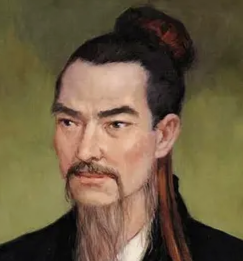
Universal love is really the way of the sage-kings. It is what gives peace to the rulers and sustenance to the people. The gentleman would do well to understand and practise universal love; then he would be gracious as a ruler, loyal as a minister, affectionate as a father, filial as a son, courteous as an elder brother, and respectful as a younger brother. So, if the gentleman desires to be a gracious ruler, a loyal minister, an affectionate father, a filial son, a courteous elder brother, and a respectful younger brother, universal love must be practised. It is the way of the sage-kings and the great blessing of the people.
▼
Source
source
Book 4; Universal Love III
5 months 1 week ago
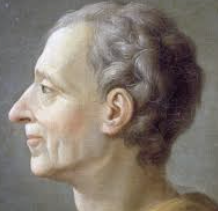
It is a paralogism to say, that the good of the individual should give way to that of the public; this can never take place, except when the government of the community, or, in other words, the liberty of the subject is concerned; this does not affect such cases as relate to private property, because the public good consists in everyone's having his property, which was given him by the civil laws, invariably preserved.
▼
Source
source
Book XXVI, Chapter 15.

7 months 4 days ago
Men are most apt to believe what they least understand.
▼
Source
source
Book III, Ch. 11. Of Cripples
5 months 3 weeks ago
One of the biggest paradoxes of our world: memories vanish when we want to remember, but fix themselves permanently in the mind when we want to forget.
3 months 1 week ago
The primary indication, to my thinking, of a well-ordered mind is a man's ability to remain in one place and linger in his own company.
7 months 3 weeks ago
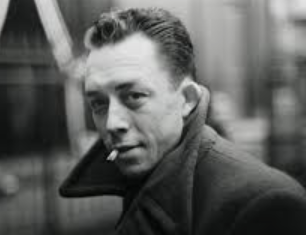
Existence is illusory and it is eternal.
3 months 4 days ago
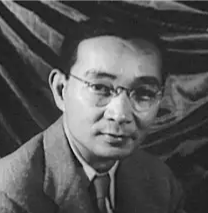
If compelled to indicate my religion on an immigration blank, I might be tempted to put down the word "Taoist," to the amazement of the customs officer who probably never heard of it.
▼
Source
source
The Wisdom of Laotse (1948), Introduction, p. 15
5 months 1 week ago
What are novels? What is the secret of the charm of every romance that ever was written? The first thing in a good novel is to place the persons together in circumstances which naturally call out the high feelings and thoughts of the character, which afford food for sympathy between them on these points - romantic events they are called. The second is that the heroine has generally no family ties (almost invariably no mother), or, if she has, these do not interfere with her entire independence. These two things constitute the main charm of reading novels.

6 months 3 weeks ago
The painter is turning his eyes towards us only in so far as we happen to occupy the same position as his subject. We, the spectators, are an additional factor. Though greeted by that gaze, we are also dismissed by it, replaced by that which was always there before we were: the model itself. But, inversely, the painter's gaze, addressed to the void confronting him outside the picture, accepts as many models as there are spectators; in this precise but neutral place, the observer and the observed take part in a ceaseless exchange.
▼
Source
source
Las Menias

6 months 3 weeks ago
John - I'm trying to find the Island in the West. Sensible - You refer, no doubt to some aesthetic experience.
▼
Source
source
Pilgrim's Regress 77
3 months 1 week ago
We must admit, however, that neither wild beasts nor any other creature except man is subject to anger: for, whilst anger is the foe of reason, it nevertheless does not arise in any place where reason cannot dwell. Wild beasts have impulses, fury, cruelty, combativeness: they have not anger any more than they have luxury: yet they indulge in some pleasures with less self-control than human beings.
3 months 1 week ago
Religion is always falling apart. Buddhism, the Religion of No-Religion.
CivilSimian.com created by AxiomaticPanic, CivilSimian, Kalokagathia