


8 months 2 weeks ago
I think so badly of philosophy that I don't like to talk about it. ... I do not want to say anything bad about my dear colleagues, but the profession of teacher of philosophy is a ridiculous one. We don't need a thousand of trained, and badly trained, philosophers - it is very silly. Actually most of them have nothing to say.
▼
Source
source
As quoted in "At 90, and Still Dynamic : Revisiting Sir Karl Popper and Attending His Birthday Party" by Eugene Yue-Ching Ho, in Intellectus 23
8 months 3 weeks ago
Nothing but the most exemplary morals can give dignity to a man of small fortune.
▼
Source
source
Chapter I, Part III, Article III, p. 874.
9 months 1 week ago
Do not blame Caesar, blame the people of Rome who have so enthusiastically acclaimed and adored him and rejoiced in their loss of freedom and danced in his path and gave him triumphal processions. Blame the people who hail him when he speaks in the Forum of the 'new, wonderful good society' which shall now be Rome, interpreted to mean 'more money, more ease, more security, more living fatly at the expense of the industrious.
▼
Source
source
This is also from the 1965 essay by Justice Millard Caldwell. It is not clear if this is based in any specific dialogue.
8 months 1 week ago
If the world should break and fall on him, it would strike him fearless.
▼
Source
source
Book III, ode iii, line 7

8 months 4 weeks ago
I know that a Christian should be humble, but against the Pope I am going to be proud and say to him: "You, Pope, I will not have you for my boss, for I am sure that my doctrine is divine."
▼
Source
source
Chapter 2, Verse 6

8 months 2 weeks ago
Only the great generalizations survive. The sharp words of the Declaration of Independence, lampooned then and since as 'glittering generalities,' have turned out blazing ubiquities that will burn forever and ever.
▼
Source
source
From a lecture on Books given in the Fraternity Course in Boston in 1864
8 months 2 weeks ago
When I say that this phase is necessary, the word phase is perhaps not the most rigorous one. It is not a question of a chronological phase, a given moment, or a page that one day simply will be turned, in order to go on to other things. The necessity of this phase is structural; it is the necessity of an interminable analysis: the hierarchy of dual oppositions always reestablishes itself. Unlike those authors whose death does not await their demise, the time for overturning is never a dead letter.
▼
Source
source
p. 41-42


7 months 3 weeks ago
Kings will be tyrants from policy, when subjects are rebels from principle.
▼
Source
source
Volume iii, p. 334

5 months 1 week ago
One comfort is, that Great Men, taken up in any way, are profitable company. We cannot look, however imperfectly, upon a great man, without gaining something by him. He is the living light-fountain, which it is good and pleasant to be near. The light which enlightens, which has enlightened the darkness of the world; and this not as a kindled lamp only, but rather as a natural luminary shining by the gift of Heaven; a flowing light-fountain, as I say, of native original insight, of manhood and heroic nobleness;-in whose radiance all souls feel that it is well with them.
7 months ago
What is the good of drawing conclusions from experience? I don't deny we sometimes draw the right conclusions, but don't we just as often draw the wrong ones?
▼
Source
source
F 123
5 months 2 weeks ago
Now what is science? ...it is before all a classification, a manner of bringing together facts which appearances separate, though they are bound together by some natural and hidden kinship. Science, in other words, is a system of relations. ...it is in relations alone that objectivity must be sought. ...it is relations alone which can be regarded as objective.External objects... are really objects and not fleeting and fugitive appearances, because they are not only groups of sensations, but groups cemented by a constant bond. It is this bond, and this bond alone, which is the object in itself, and this bond is a relation.

8 months 3 weeks ago
Beauty is the main positive form of the aesthetic assimilation of reality, in which aesthetic ideal finds its direct expression...
▼
Source
source
About Beauty
5 months 1 week ago
The way of learning is none other than finding the lost mind.
▼
Source
source
6A:11, as translated by Wing-tsit Chan in A Source Book in Chinese Philosophy (1963), p. 58
7 months 5 days ago
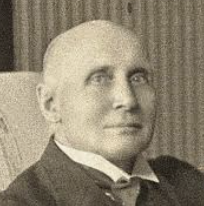
When you are criticising the philosophy of an epoch, do not chiefly direct your attention to those intellectual positions which its exponents feel it necessary explicitly to defend. There will be some fundamental assumptions which adherents of all the variant systems within the epoch unconsciously presuppose. Such assumptions appear so obvious that people do not know what they are assuming because no other way of putting things has ever occurred to them. With these assumptions a certain limited number of types of philosophic systems are possible, and this group of systems constitutes the philosophy of the epoch.
▼
Source
source
Ch. 3: "The Century of Genius", p. 69
5 months 1 week ago
He that works and does some Poem, not he that merely says one, is worthy of the name of Poet.
▼
Source
source
Introduction to Cromwell's Letters and Speeches (1845).
5 months 1 week ago
But leaving this, let us remark one thing which is very plain: That whatever be the uses and duties, real or supposed, of a Secretary in Parliament, his faculty to accomplish these is a point entirely unconnected with his ability to get elected into Parliament, and has no relation or proportion to it, and no concern with it whatever.

7 months 2 weeks ago
"I am like a broken puppet whose eyes have fallen inside." This remark of a mental patient weighs more heavily than a whole stack of works on introspection.
6 months 3 weeks ago
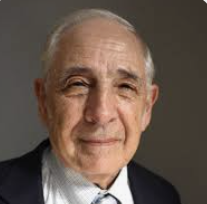
I will argue that in the literal sense the programmed computer understands what the car and the adding machine understand, namely, exactly nothing.


8 months 3 weeks ago
Even the death of Friends will inspire us as much as their lives. They will leave consolation to the mourners, as the rich leave money to defray the expenses of their funerals, and their memories will be incrusted over with sublime and pleasing thoughts, as monuments of other men are overgrown with moss; for our Friends have no place in the graveyard.
4 months 2 weeks ago
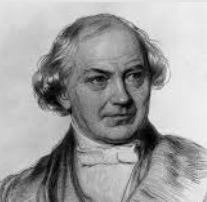
'The Law of Continuity' is this:-that a quantity cannot pass from one amount to another by any change of conditions, without passing through all intermediate magnitudes according to the intermediate conditions. It may often be employed to disprove distinctions which have no real foundation. 'The Method of Gradation' consists in taking a number of stages of a property in question, intermediate between two extreme cases which appear to be different. It is employed to determine whether the extreme cases are really distinct or not. 'The Method of Gradation', applied to decide the question, whether the existing phenomena arise from existing causes, leads to this result:-That the phenomena do appear to arise from existing causes, but that the action of existing causes have transgressed their recorded Limits of Intensity. 'The Method of Natural Classification' consists in classing cases, not according to any assumed definition, but according to the connexion of the facts themselves.

8 months 1 week ago
It is easy for us to criticize the prejudices of our grandfathers, from which our fathers freed themselves. It is more difficult to search for prejudices among the beliefs and values that we hold.
▼
Source
source
Ch. 3: Equality for Animals? (p. 49)
7 months 1 week ago
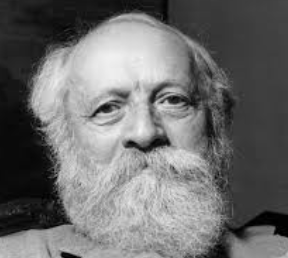
Before his death, Rabbi Zusya said, "In the coming world, they will not ask me: 'Why were you not Moses?' They will ask me: 'Why were you not Zusya?'"
▼
Source
source
Tales of the Hasidim (1947), 1991 Ebook edition, p.251, as quoted in Jewish Currents.
7 months 3 weeks ago
The science of government being, therefore, so practical in itself, and intended for such practical purposes, a matter which requires experience, and even more experience than any person can gain in his whole life, however sagacious and observing he may be, it is with infinite caution that any man ought to venture upon pulling down an edifice which has answered in any tolerable degree for ages the common purposes of society, or on building it up again without having models and patterns of approved utility before his eyes.

7 months 3 days ago
It was the normal working of the antisuccess mechanism. In our overcrowded modern world a hit record, a best-selling book, a successful film, can reach more people in a week than Shakespeare or Beethoven reached in a whole lifetime. And so fame has become the most romantic, the most desirable of all commodities, the dream for which a modern Faust might sell his soul to the Devil. Once attained, fame is never as easy to hold on to as some people believe. The people who achieve fame by some accident of fashion are usually forgotten within a week; the ones who remain on top have to work to stay there. But few people understand this. The result is that anyone who achieves sudden notoriety arouses envy and hostility. The greater the success, the greater the reaction.
▼
Source
source
p. 28
4 months 2 weeks ago
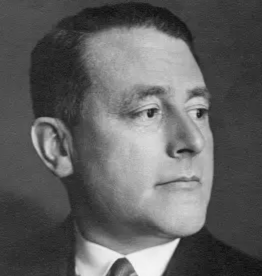
Value has its own logic. In the constitutional state that is most clearly recognizable in the enactment of its constitution.
8 months 4 weeks ago
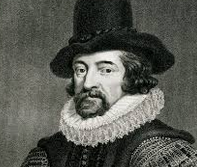
The greatest error of all the rest is the mistaking or misplacing of the last or farthest end of knowledge: for men have entered into a desire of learning and knowledge, sometimes upon a natural curiosity and inquisitive appetite; sometimes to entertain their minds with variety and delight; sometimes for ornament and reputation; and sometimes to enable them to victory of wit and contradiction; and most times for lucre and profession; and seldom sincerely to give a true account of their gift of reason, to the benefit and use of men: as if there were sought in knowledge a couch whereupon to rest a searching and restless spirit; or a tarrasse, for a wandering and variable mind to walk up and down with a fair prospect; or a tower of state, for a proud mind to raise itself upon; or a fort or commanding ground, for strife and contention; or a shop, for profit or sale; and not a rich storehouse, for the glory of the Creator and the relief of man's estate.
▼
Source
source
Book I, v, 11
8 months 4 weeks ago
But by far the greatest obstacle to the progress of science and to the undertaking of new tasks and provinces therein is found in this - that men despair and think things impossible.
▼
Source
source
Aphorism 92

7 months 6 days ago
The aim is to replace economic oligarchies by the State, which has a will-to-power of its own and is quite as little concerned with the public good; and a will-to-power, moreover, which is not economic but military and therefore much more dangerous to any good folk who have a taste for staying alive. And on the bourgeois side what on earth is the sense of objecting to State control in economic affairs if one accepts private monopolies which have all the economic and technical disadvantages of State monopolies and possibly some others as well?
▼
Source
source
p. 230
8 months 2 weeks ago
Yet a man may love a paradox, without losing either his wit or his honesty.
▼
Source
source
"Walter Savage Landor", from The Dial, xii, 1841
6 months 3 weeks ago
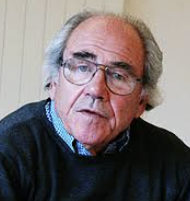
The world is not dialectical -- it is sworn to extremes, not to equilibrium, sworn to radical antagonism, not to reconciliation or synthesis. This is also the principle of evil.
▼
Source
source
Jean Baudrillard in: Eldon Taylor What Does That Mean?: Exploring Mind, Meaning, and Mysteries, Hay House, Inc, 15 January 2010, p. 171

6 months 2 weeks ago
There can be only one permanent revolution - a moral one; the regeneration of the inner man. How is this revolution to take place? Nobody knows how it will take place in humanity, but every man feels it clearly in himself. And yet in our world everybody thinks of changing humanity, and nobody thinks of changing himself.
▼
Source
source
"Three Methods Of Reform" in Pamphlets : Translated from the Russian (1900) as translated by Aylmer Maude, p. 29
8 months 3 weeks ago
You ask particularly after my health. I suppose that I have not many months to live; but, of course, I know nothing about it. I may add that I am enjoying existence as much as ever, and regret nothing.
▼
Source
source
Last letter, to Myron Benton, March 31, 1862
5 months ago
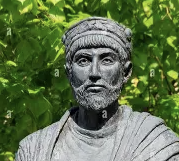
A very weighty argument is this - namely, that neither does the light which descends from thence, chiefly upon the world, mix itself with anything, nor admit of dirtiness or pollution, but remains entirely, and in all things that are, free from defilement, admixture, and suffering. Besides, we must pay attention to the other kinds of phenomena, both to the Intelligible, and yet more to the Sensible - whatever are connected with matter, or will manifest themselves in relation to our subject.
7 months 2 weeks ago
There is no one whose death I have not longed for, at one moment or another.
6 months 2 weeks ago
Sanity itself is a kind of convention.
▼
Source
source
The Hunter's Family

8 months 3 weeks ago
Freedom comes only to those who no longer ask of life that it shall yield them any of those personal goods that are subject to the mutations of time.
4 months 4 weeks ago
Love for distance and order, the ability to subordinate one's individualistic and passionate element to principles, the ability to take action and work above mere personhood, a feeling of dignity devoid of vanity are features of the true warrior spirit as essential as those which refer to actual combat.
▼
Source
source
pp. 114-115
5 months ago
No wild beasts are such enemies to mankind as are most of the Christians in their deadly hatred of one another.
▼
Source
source
Reported in Ammianus, Res gestae, bk. 22, ch. 5, sec. 4

7 months 3 weeks ago
The Indian knew how to live without wants, to suffer without complaint, and to die singing.
▼
Source
source
Chapter I.
7 months 2 weeks ago
There is but one Temple in the World; and that is the Body of Man. Nothing is holier than this high form. Bending before men is a reverence done to this Revelation in the Flesh. We touch Heaven, when we lay our hand on a human body. Variant translation: There is but one temple in the Universe and that is the Body of Man.
▼
Source
source
As inscribed on the Library of Congress, quoted in Handbook of the New Library of Congress (1897) by Herbert Small, p. 53
7 months 6 days ago
The respect inspired by the link between man and the reality alien to this world can make itself evident to that part of man which belongs to the reality of this world. The reality of this world is necessity. The part of man which is in this world is the part which is in bondage to necessity and subject to the misery of need. The one possibility of indirect expression of respect for the human being is offered by men's needs, the needs of the soul and of the body, in this world.


8 months 3 weeks ago
They show as little Reason as Conscience who put the matter by with saying - "Men, in some cases, are lawfully made Slaves, and why may not these?" So men, in some cases, are lawfully put to death, deprived of their goods, without their consent; may any man, therefore, be treated so, without any conviction of desert? Nor is this plea mended by adding-"They are set forth to us as slaves, and we buy them without farther inquiry, let the sellers see to it." Such men may as well join with a known band of robbers, buy their ill-got goods, and help on the trade; ignorance is no more pleadable in one case than the other; the sellers plainly own how they obtain them. But none can lawfully buy without evidence that they are not concurring with Men-Stealers; and as the true owner has a right to reclaim his goods that were stolen, and sold; so the slave, who is proper owner of his freedom, has a right to reclaim it, however often sold.
7 months 3 days ago
...I pray to God to make me free of God.

7 months 1 week ago
Blessed art thou, Simon Barjona: for flesh and blood hath not revealed it unto thee, but my Father which is in heaven. And I say also unto thee, That thou art Peter, and upon this rock I will build my church; and the gates of hell shall not prevail against it. And I will give unto thee the keys of the kingdom of heaven: and whatsoever thou shalt bind on earth shall be bound in heaven: and whatsoever thou shalt loose on earth shall be loosed in heaven.
▼
Source
source
16:17-19 (KJV)

9 months 2 weeks ago
Man is the only creature who refuses to be what he is.

5 months 5 days ago
1) Preserve Life
2) State of war (opportunism)
3) Relativism
4) Confusion
Civilization, goodness, justice, fairness all contained inside the first option. Under # 1 (Universal Humanism):
1) Survive.
2) Don't prevent another from surviving.
3) Help the less fortunate.
CivilSimian.com created by AxiomaticPanic, CivilSimian, Kalokagathia