


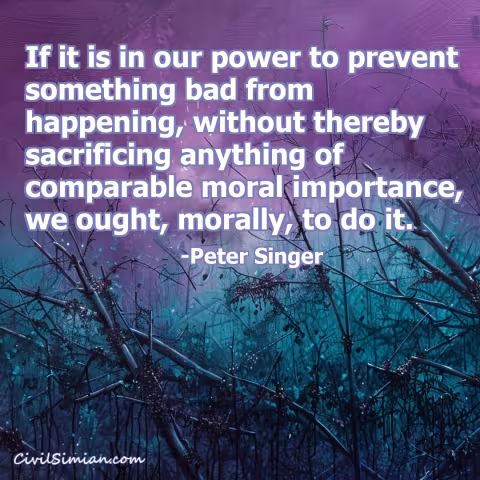
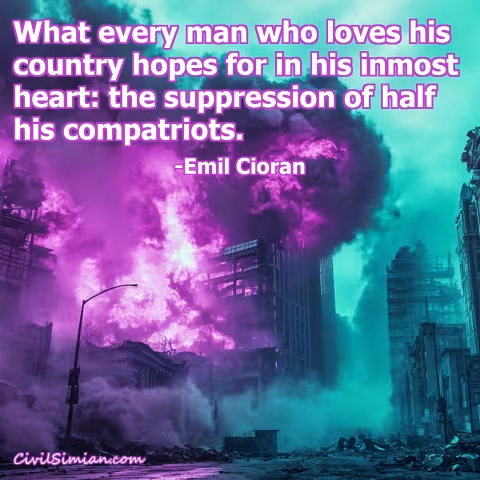

6 months 2 weeks ago
There is object proof that homosexuality is more interesting than heterosexuality. It's that one knows a considerable number of heterosexuals who would wish to become homosexuals, whereas one knows very few homosexuals who would really like to become heterosexuals.
▼
Source
source
As quoted in Who's Who in Contemporary Gay & Lesbian History: From World War II to the Present Day (2001) by Robert Aldrich and Gary Wotherspoon ISBN 041522974X
5 months 1 week ago
Power turns pure being into a having.

5 months 1 week ago
I will not say that the more or less poetical and unphilosophical doctrines that I am about to set forth are those which make me live; but I will venture to say that it is my longing to live and to live for ever that inspires these doctrines within me. And if by means of them I succeed in strengthening and sustaining this same longing in another, perhaps when it is all but dead, then I shall have performed a man's work, and above all, I shall have lived. In a word, be it with reason or without reason or against reason, I am resolved not to die. And if, when at last I die out, I die altogether, then I shall not have died out of myself - that is, I shall not have yielded myself to death, but my human destiny shall have killed me. Unless I come to lose my head, or rather my heart, I will not abdicate from life - life will be wrested from me.
3 months 2 weeks ago
Getting along with women, Knocking around with men, Having more credit than money, Thus one goes through the world.
▼
Source
source
Claudine von Villa Bella
7 months 1 week ago
Those of our pleasures which come most rarely give the greatest delight.
▼
Source
source
Fragment 33 (Oldfather translation)

2 months 3 weeks ago
Men seek retreats for themselves, houses in the country, sea-shores, and mountains; and thou too art wont to desire such things very much. But this is altogether a mark of the most common sort of men, for it is in thy power whenever thou shalt choose to retire into thyself. For nowhere either with more quiet or more freedom from trouble does a man retire than into his own soul. Variant translation: Nowhere can man find a quieter or more untroubled retreat than in his own soul.
▼
Source
source
IV, 3.

6 months 3 weeks ago
Marriage is for women the commonest mode of livelihood, and the total amount of undesired sex endured by women is probably greater in marriage than in prostitution.
6 months 3 weeks ago
I have often thought that the best way to define a man's character would be to seek out the particular mental or moral attitude in which, when it came upon him, he felt himself most deeply and intensely active and alive. At such moments there is a voice inside which speaks and says: "This is the real me!"
▼
Source
source
To his wife, Alice Gibbons James, 1878

5 months 3 weeks ago
The blindness of those who think it absurd to suppose that complex organic forms may have arisen by successive modifications out of simple ones becomes astonishing when we remember that complex organic forms are daily being thus produced. A tree differs from a seed immeasurably in every respect... Yet is the one changed in the course of a few years into the other: changed so gradually, that at no moment can it be said - Now the seed ceases to be, and the tree exists.
7 months 2 weeks ago
Temperance is that discreet regulation of the desires and passions, by which we are enabled to enjoy pleasures without suffering any consequent inconvenience. They who maintain such a constant self-command, as never to be enticed by the prospect of present indulgence, to do that which will be productive of evil, obtain the truest pleasure by declining pleasure.
2 months 3 weeks ago
I had been virtually a Unitarian (as I still am) but without knowing it. The experience of being among Unitarians who did know what they were, and attached much importance to it, was entirely novel to me, but I soon fell into their ways and found it easy to go forward on their road, the more so because the other roads became closed to me.
▼
Source
source
The Confession of an Octogenarian (1942), p. 99.
4 months 3 weeks ago
When reason rules, money is a blessing.
▼
Source
source
Maxim 50
5 months 3 weeks ago
What is Europe really but a sterile trunk which owes everything to oriental grafts?
▼
Source
source
Letter of 18 December 1806 to Windischmann, quoted by Rene Gerard, L'Orient et la pensée romantique allemande, Paris 1963,, p. 213. quoted in Poliakov, L. (1974).
5 months 1 week ago
Perhaps even more than constituted authority, it is social uniformity and sameness that harass the individual most. His very "uniqueness," "separateness" and "differentiation" make him an alien, not only in his native place, but even in his own home. Often more so than the foreign born who generally falls in with the established. In the true sense one's native land, with its back ground of tradition, early impressions, reminiscences and other things dear to one, is not enough to make sensitive human beings feel at home. A certain atmosphere of "belonging," the consciousness of being "at one" with the people and environment, is more essential to one's feeling of home. This holds good in relation to one's family, the smaller local circle, as well as the larger phase of the life and activities commonly called one's country. The individual whose vision encompasses the whole world often feels nowhere so hedged in and out of touch with his surroundings than in his native land.
7 months 2 weeks ago
Natural inclinations are present in things from God, who moves all things. So it is impossible for the natural inclinations of a species to be toward evil in itself. But there is in all perfect animals a natural inclination toward carnal union. Therefore it is impossible for carnal union to be evil in itself.
▼
Source
source
III, 126, 3
6 months 3 weeks ago
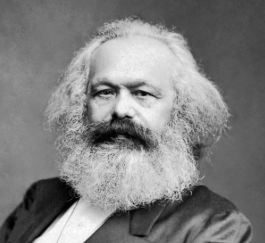
England has to fulfill a double mission in India: one destructive, the other regenerating - the annihilation of old Asiatic society, and the laying the material foundations of Western society in Asia... When a great social revolution shall have mastered the results of the bourgeois epoch... and subjected them to the common control of the most advanced peoples, then only will human progress cease to resemble that hideous, pagan idol, who would not drink the nectar but from the skulls of the slain.
▼
Source
source
"The Future Results of British Rule in India," New York Daily Tribune, 08 August 1853
3 months 1 week ago
The difficulty in our education up till now lies, for the most part, in the fact that knowledge did not refine itself into will, to application of itself, to pure practice. The realists felt the need and supplied it, though in a most miserable way, by cultivating idea-less and fettered "practical men." Most college students are living examples of this sad turn of events. Trained in the most excellent manner, they go on training; drilled they continue drilling.
▼
Source
source
p. 25
7 months 5 days ago
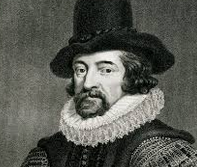
Lucid intervals and happy pauses.
▼
Source
source
History of King Henry VII, III
5 months 2 weeks ago
That life is worth living is the most necessary of assumptions and, were it not assumed, the most impossible of conclusions.
3 months 1 week ago
Justice is conscience, not a personal conscience but the conscience of the whole of humanity. Those who clearly recognize the voice of their own conscience usually recognize also the voice of justice.
▼
Source
source
Letter to three students (October 1967) as translated in Solzhenitsyn: A Documentary Record (1970) edited by Leopold Labedz, "The Struggle Intensifies"
2 months 3 weeks ago
Time is a sort of river of passing events, and strong is its current; no sooner is a thing brought to sight than it is swept by and another takes its place, and this too will be swept away.
▼
Source
source
IV, 43


3 months 2 weeks ago
In all cases, therefore, we will agree with the judicious Mrs. Glass: 'First catch your hare!' First get your man; all is got: he can learn to do all things, from making boots, to decreeing judgments, governing communities; and will do them like a man.

5 months 3 weeks ago
The notion of nothingness is not characteristic of laboring humanity: those who toil have neither time nor inclination to weigh their dust; they resign themselves to the difficulties or the doltishness of fate; they hope: hope is a slave's virtue.
6 months 3 weeks ago
The tendency has always been strong to believe that whatever received a name must be an entity or thing, having an independent existence of its own; and if no real entity answering to the name could be found, men did not for that reason suppose that none existed, but imagined that it was something peculiarly abstruse and mysterious, too high to be an object of sense. The meaning of all general, and especially of all abstract terms, became in this way enveloped in a mystical base...
▼
Source
source
Note to Analysis of the Phenomena of the Human Mind (1829) by James Mill, edited with additional notes by John Stuart Mill, 1869
7 months 3 weeks ago
In that daily effort in which intelligence and passion mingle and delight each other, the absurd man discovers a discipline that will make up the greatest of his strengths. The required diligence and doggedness and lucidity thus resemble the conqueror's attitude. To create is likewise to give a shape to one's fate. For all these characters, their work defines them at least as much as it is defined by them. The actor taught us this: There is no frontier between being and appearing.
6 months 1 week ago
Friends share all things.
▼
Source
source
As quoted in Lives and Opinions of Eminent Philosophers, "Pythagoras", Sect. 10
3 months 1 week ago
The criterion of truth is that it works even if nobody is prepared to acknowledge it.
▼
Source
source
Chapter 5: On Some Popular Errors Concerning the Scope and Method of Economics, § 9 : The Belief in the Omnipotence of Thought
2 months 3 weeks ago
No carelessness in your actions. No confusion in your words. No imprecision in your thoughts. (Hays translation) Be not careless in deeds, nor confused in words, nor rambling in thought.
▼
Source
source
VIII, 51
5 months 3 weeks ago
If we would regain our freedom, we must shake off the burden of sensation, no longer react to the world by our senses, break our bonds. For all sensation is a bond, pleasure as much as pain, joy as much as misery. The only free mind is the one that, pure of all intimacy with beings or objects, plies its own vacuity.
7 months 2 weeks ago
There is no body but eats and drinks. But they are few who can distinguish flavors.
7 months 3 weeks ago
Indeed, it may well be argued that one reason for the decline in science, art, and literature was the increasing absorption of the better minds into a new sort of intellectual pursuit, theology.
5 months 3 weeks ago
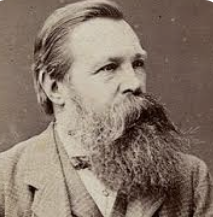
How is it possible that the poorer classes can remain healthy and have a reasonable expectation of life under such conditions? What can one expect but that they should suffer from continual outbreaks of epidemics and an excessively low expectation of life? The physical condition of the workers shows a progressive deterioration.
6 months 3 weeks ago
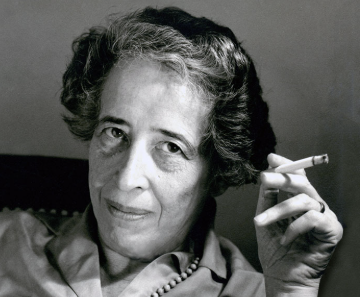
Kant was also quite aware that "the urgent need" of reason is both different from and "more than mere quest and desire for knowledge." Hence, the distinguishing of the two faculties, reason and intellect, coincides with a distinction between two altogether different mental activities, thinking and knowing.
▼
Source
source
p. 14

2 months 3 weeks ago
Our century of war, militarism, and political terror has produced great - and successful - advocates of true peace, among whom Mohandas Gandhi and Martin Luther King, Jr., are the paramount examples. The considerable success that they achieved testifies to the presence, in the midst of violence, of an authentic and powerful desire for peace and, more important, of the proven will to make the necessary sacrifices.

5 months 2 weeks ago
Domination has its own aesthetics, and democratic domination has its democratic aesthetics.
▼
Source
source
p. 65

4 months 3 weeks ago
In tetrad form, the artefact is seen to be not netural or passive, but an active logos or utterance of the human mind or body that transforms the user and his ground.
▼
Source
source
p. 99

6 months 3 weeks ago
I hear beyond the range of sound, I see beyond the range of sight,New earths and skies and seas around, And in my day the sun doth pale his light.
▼
Source
source
"Inspiration", in An American Anthology, 1900
5 months 3 weeks ago
However intimate we may be with the operations of the mind, we cannot think more than two or three minutes a day; - unless, by taste or by profession, we practice, for hours on end, brutalizing words in order to extract ideas from them. The intellectual represents the major disgrace, the culminating failure of Homo sapiens.

3 months 1 week ago
Therefore, my dear Lucilius, begin at once to live, and count each separate day as a separate life.

6 months 3 weeks ago
I have always - at least, ever since I can remember - had a kind of longing for death. Psyche

6 months 3 weeks ago
An entire mythology is stored within our language.
▼
Source
source
Ch. 7 : Remarks on Frazer's Golden Bough, p. 133

4 months 3 days ago
The evil of totalitarianism is not only that it fails to protect specific liberties but that it extinguishes the very possibility of freedom.
▼
Source
source
'Isaiah Berlin: The Value of Decency' (p.104)
6 months 3 weeks ago
When a man acts in ways that annoy us we wish to think him wicked, and we refuse to face the fact that his annoying behaviour is a result of antecedent causes which, if you follow them long enough, will take you beyond the moment of his birth and therefore to events for which he cannot be held responsible by any stretch of imagination.
▼
Source
source
"The Doctrine of Free Will"
6 months 3 weeks ago
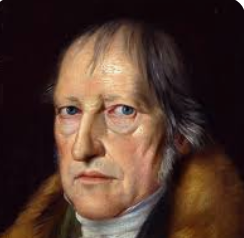
The good is the idea, or unity of the conception of the will with the particular will. Abstract right, well-being, the subjectivity of consciousness, and the contingency of external reality, are in their independent and separate existences superseded in this unity, although in their real essence they are contained in it and preserved. This unity is realized freedom, the absolute final cause of the world. Addition.-Every stage is properly the idea, but the earlier steps contain the idea only in more abstract form. The I, as person, is already the idea, although in its most abstract guise. The good is the idea more completely determined; it is the unity of the conception of will with the particular will. It is not something abstractly right, but has a real content, whose substance constitutes both right and well-being.
▼
Source
source
Georg Wilhelm Friedrich Hegel, Philosophy of Right translated by SW Dyde Queen's University Canada 1896 p. 123
3 months 2 weeks ago
In the lowest broad strata of the population, equally as in the highest and narrowest, are produced men of every kind of genius; man for man, your chance of genius is as good among the millions as among the units;-and class for class, what must it be! From all classes, not from certain hundreds now but from several millions, whatsoever man the gods had gifted with intellect and nobleness, and power to help his country, could be chosen: O Heavens, could,-if not by Tenpound Constituencies and the force of beer, then by a Reforming Premier with eyes in his head, who I think might do it quite infinitely better. Infinitely better. For ignobleness cannot, by the nature of it, choose the noble: no, there needs a seeing man who is himself noble, cognizant by internal experience of the symptoms of nobleness.
CivilSimian.com created by AxiomaticPanic, CivilSimian, Kalokagathia