

3 weeks 1 day ago
I recall an endless desert of infinite and flaming matter. I am burning! I pass through immeasurable, unorganized time, completely done, despairing, crying in the wilderness. And slowly the flame subsides, the womb of matter grows cool, the stone comes alive, breaks open, and a small green leaf uncurls into the air, trembling. It clutches the soil, steadies itself, raises its head and hands, grasps the air, the water, the light, and sucks at the Universe.
3 weeks 1 day ago
I hold the brimming wineglass and relive the toils of my grandfathers and great-grandfathers. The sweat of my labor runs down like a fountain from my tall, intoxicated brow. I am a sack filled with meat and bones, blood, sweat, and tears, desires and visions.

2 weeks 4 days ago
Adorn thyself with simplicity and with indifference towards the things which lie between virtue and vice. Love mankind. Follow God. The poet says that Law rules all. And it is enough to remember that law rules all.
▼
Source
source
VII, 31

4 months 3 weeks ago
The great majority of men and women, in ordinary times, pass through life without ever contemplating or criticising, as a whole, either their own conditions or those of the world at large. They find themselves born into a certain place in society, and they accept what each day brings forth, without any effort of thought beyond what the immediate present requires. Almost as instinctively as the beasts of the field, they seek the satisfaction of the needs of the moment, without much forethought, and without considering that by sufficient effort the whole conditions of their lives could be changed.
▼
Source
source
Introduction, p. 4
1 month 6 days ago
Never give way to melancholy; resist it steadily, for the habit will encroach.
▼
Source
source
Vol. I, ch. 10, p. 372

4 months 2 weeks ago
I do not overlook the fact that there are irrationalists who love mankind, and that not all forms of irrationalism engender criminality. But I hold that he who teaches that not reason but love should rule opens up the way for those who rule by hate. (Socrates, I believe, saw something of this when he suggested that mistrust or hatred of argument is related to mistrust or hatred of man).
▼
Source
source
Vol. 2, Ch. 24 "Oracular Philosophy and the Revolt against Reason"
4 months 1 week ago
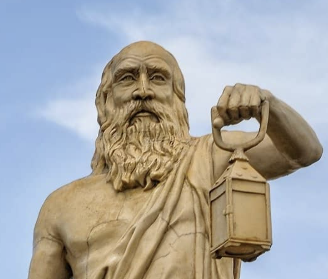
To the question what wine he found pleasant to drink, he replied, "That for which other people pay."
▼
Source
source
Diogenes Laërtius, vi. 54


1 month 1 week ago
Human progress having reached a high level through respect for the liberty and dignity of men, it has become desirable to re-affirm these evident truths: That differences of race, color, and creed are natural, and that diverse groups, institutions, and ideas are stimulating factors in the development of man; That to promote harmony in diversity is a responsible task of religion and statesmanship; That since no individual can express the whole truth, it is essential to treat with understanding and good will those whose views differ from our own; That by the testimony of history intolerance is the door to violence, brutality and dictatorship; and That the realization of human interdependence and solidarity is the best guard of civilization.
2 months 3 weeks ago
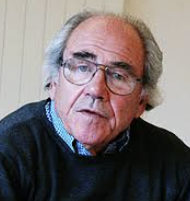
And so one can imagine that in amorous seduction the other is the locus of your secret - the other unknowingly holds that which you will never have the chance to know.
▼
Source
source
(p. 65)

4 months 3 weeks ago
What is there in 'Paradise Lost' to elevate and astonish like Herschel or Somerville?
▼
Source
source
Quoted in Robert D. Richardson, Jr., Emerson, the Mind On Fire (Univ. of Calif Press 1995), p. 124

3 months 3 weeks ago
All those who seek to destroy the liberties of a democratic nation ought to know that war is the surest and shortest means to accomplish it.
▼
Source
source
Book Three, Chapter XXII.

4 months 2 weeks ago
And when we speak of "abandonment" - a favorite word of Heidegger - we only mean to say that God does not exist and that it is necessary to draw the consequences of his absence to the end.
▼
Source
source
pp. 32-33
2 weeks 3 days ago
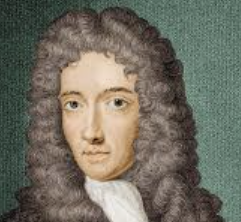
But though much may be said to Excuse the Chymists when they write Darkly, and Ænigmatically, about the Preparation of their Elixir, and Some few other grand Arcana, the divulging of which they may upon Grounds Plausible enough esteem unfit; yet when they pretend to teach the General Principles of Natural Philosophers, this Equivocall Way of Writing is not to be endur'd. For in such Speculative Enquiries, where the naked Knowledge of the Truth is the thing Principally aim'd at, what does he teach me worth thanks that does not, if he can, make his Notion intelligible to me, but by Mystical Termes, and Ambiguous Phrases darkens what he should clear up; and makes me add the Trouble of guessing at the sence of what he Equivocally expresses, to that of examining the Truth of what he seems to deliver.

1 month 2 weeks ago
A right exists in theory... All human beings have the same set of rights, but rights need to be enforced by the state. It needs to rely on the coercive power of the state... its army, its police force, to actually make those rights something real that citizens can enjoy, and the enforcement power is not universal. ...We wouldn't want to live in a world in which every liberal state wanted to enforce liberal rights in every other state in the world.
▼
Source
source
24:09

4 months 4 weeks ago
Do not fight against these harmful spells. For you do not know what God wants with them. You do not know the greater divine plan behind it all.
▼
Source
source
As attributed by Kai Lehmann, curator of the exhibition "Luther und die Hexen" ("Luther and the witches"). (2013) in "Interview with Dr. Kai Lehmann, curator of the exhibition "Luther und die Hexen" ("Luther and the witches")"

3 months 3 weeks ago
...out of the tomb of the murdered Monarchy in France, has arisen a vast, tremendous, unformed spectre, in a far more terrific guise than any which ever yet have overpowered the imagination and subdued the fortitude of man.
▼
Source
source
p. 7

3 months 4 days ago
The rather more dubious side of Nietzsche's 'evolutionism' is his glorification of the warrior -- particularly when, as an exemplification of the warrior-hero, he chooses an archetypal 'spoilt brat' like Cesare Borgia. Nietzsche's own physical weakness and consequent inability to escape the atmosphere of the study leads him to take a rather unrealistic view of the man of action.
▼
Source
source
p. 87
4 months 1 week ago
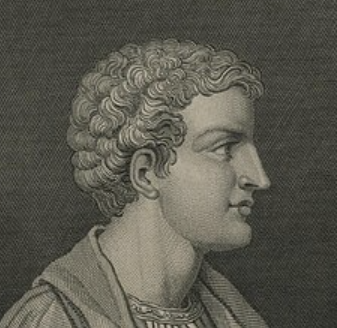
Once a word has been allowed to escape, it cannot be recalled.
▼
Source
source
Book I, epistle xviii, line 71

4 months 3 weeks ago
And why should man, added he, pretend to an exemption from the lot of all other animals? The whole earth, believe me, PHILO, is cursed and polluted. A perpetual war is kindled amongst all living creatures. Necessity, hunger, want, stimulate the strong and courageous: Fear, anxiety, terror, agitate the weak and infirm. The first entrance into life gives anguish to the new-born infant and to its wretched parent: Weakness, impotence, distress, attend each stage of that life: and it is at last finished in agony and horror.
▼
Source
source
Demea to Philo, Part X
2 weeks 4 days ago
Depart then satisfied, for he also who releases thee is satisfied.
▼
Source
source
XII, 36

3 months 2 weeks ago
If those who lead you say, 'See, the Kingdom is in the sky,' then the birds of the sky will precede you. If they say to you, 'It is in the sea,' then the fish will precede you. Rather, the Kingdom is inside of you, and it is outside of you. When you come to know yourselves, then you will become known, and you will realize that it is you who are the sons of the living Father. But if you will not know yourselves, you dwell in poverty and it is you who are that poverty. (3) And when he was demanded of the Pharisees, when the kingdom of God should come, he answered them and said, The kingdom of God cometh not with observation: Neither shall they say, Lo here! or, lo there! for, behold, the kingdom of God is within you.
▼
Source
source
(Luke 17:21)
3 months 1 week ago
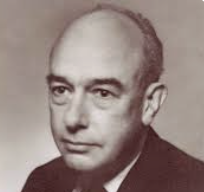
Modern empiricism has been conditioned in large part by two dogmas. One is a belief in some fundamental cleavage between truths which are analytic, or grounded in meanings independently of matters of fact, and truths which are synthetic, or grounded in fact. The other dogma is reductionism: the belief that each meaningful statement is equivalent to some logical construct upon terms which refer to immediate experience. Both dogmas, I shall argue, are ill-founded. One effect of abandoning them is, as we shall see, a blurring of the supposed boundary between speculative metaphysics and natural science. Another effect is a shift toward pragmatism.
▼
Source
source
"Two dogmas of Empiricism"

4 months 3 weeks ago
This species works intentionally on its own destruction (by war). This, however, does not keep the rational creatures of such a constantly advancing culture, even in the midst of war, from promising to mankind in coming centuries an unequivocal prospect of bliss which will never end.
▼
Source
source
Kant, Immanuel (1996), page 185
3 months 2 weeks ago
To understand oneself is the classic form of consolation; to elude oneself is the romantic.
▼
Source
source
p. 51
4 months 2 weeks ago
He is dead, and my hatred has died with him.
▼
Source
source
Electra, before the dead Aegistheus, Act 2
3 months 2 weeks ago
A word is a bud attempting to become a twig. How can one not dream while writing? It is the pen which dreams. The blank page gives the right to dream.
▼
Source
source
Introduction, sect. 6

3 months 1 week ago
Might is that which makes a thing of anybody who comes under its sway. When exercised to the full, it makes a thing of man in the most literal sense, for it makes him a corpse.
▼
Source
source
in The Simone Weil Reader, p. 153

3 months 1 week ago
I can assure you that no kingdom has ever had as many civil wars as the kingdom of Christ.
▼
Source
source
No. 29. (Rica writing to Ibben)

2 months 2 weeks ago
Great ages of innovation are the ages in which entire cultures are junked or scrapped.
▼
Source
source
(p. 309)

5 months ago
The human understanding is unquiet; it cannot stop or rest, and still presses onward, but in vain. Therefore it is that we cannot conceive of any end or limit to the world, but always as of necessity it occurs to us that there is something beyond... But he is no less an unskilled and shallow philosopher who seeks causes of that which is most general, than he who in things subordinate and subaltern omits to do so.
▼
Source
source
Aphorism 48
4 months 4 weeks ago
I approached the task of destroying images by first tearing them out of the heart through God's Word and making them worthless and despised. This indeed took place before Dr. Karlstadt ever dreamed of destroying images. For when they are no longer in the heart, they can do no harm when seen with the eyes. But Dr. Karlstadt, who pays no attention to matters of the heart, has reversed the order by removing them from sight and leaving them in the heart. For he does not preach faith, nor can he preach it; unfortunately, only now do I see that. Which of these two forms of destroying images is best, I will let each man judge for himself.
▼
Source
source
pp. 84-85
1 month 2 days ago
Our trouble is that we have ignored and thus feel insecure in the enormous spectrum of love which lies between rather formal friendship and genital sexuality, and thus are always afraid that once we overstep the bounds of formal friendship we must slide inevitably to the extreme of sexual promiscuity.
▼
Source
source
p. 91
1 month 2 days ago
Blow the dust off the clock. Your watches are behind the times. Throw open the heavy curtains which are so dear to you - you do not even suspect that the day has already dawned outside.
▼
Source
source
Letter to the Secretariat of the Soviet Writers' Union (12 November 1969) as translated in Solzhenitsyn: A Documentary Record (1970) edited by Leopold Labedz, "Expulsion"
3 weeks 1 day ago
I heard the bells from the future churches, the children playing and laughing in the schoolyards ... and here was an almond tree in bloom before me: I must reach out and cut a flowering branch. For, by believing passionately in something which still does not exist, we create it. The nonexistent is whatever we have not sufficiently desired, whatever we have not irrigated with our blood to such a degree that it becomes strong enough to stride across the somber threshold of nonexistence.
▼
Source
source
p. 434; in a few publications since 2008 part of this has been misattributed to Franz Kafka: "By believing passionately in something which still does not exist, we create it. The nonexistent is whatever we have not sufficiently desired."
4 months 3 weeks ago
Nothing can be preserved that is not good.
▼
Source
source
Books
1 week 4 days ago
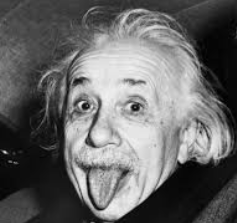
The meaning of relativity has been widely misunderstood. Philosophers play with the word, like a child with a doll. Relativity, as I see it, merely denotes that certain physical and mechanical facts, which have been regarded as positive and permanent, are relative with regard to certain other facts in the sphere of physics and mechanics. It does not mean that everything in life is relative and that we have the right to turn the whole world mischievously topsy-turvy.
2 months 1 week ago
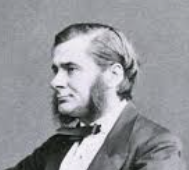
History warns us, however, that it is the customary fate of new truths to begin as heresies and to end as superstitions; and, as matters now stand, it is hardly rash to anticipate that, in another twenty years, the new generation, educated under the influences of the present day, will be in danger of accepting the main doctrines of the 'Origin of Species' with as little reflection, and it may be with as little justification, as so many of our contemporaries, twenty years ago, rejected them. Against any such a consummation let us all devoutly pray; for the scientific spirit is of more value than its products, and irrationally held truths may be more harmful than reasoned errors.
▼
Source
source
The Coming of Age of The Origin of Species (1880); Collected Essays, vol. 2


5 months 2 weeks ago
Happiness implied a choice, and within that choice a concerted will, a lucid desire.

4 months 2 weeks ago
The hatefulness of a hated person is "real"-in hatred you see men as they are; you are disillusioned; but the loveliness of a loved person is merely a subjective haze concealing a "real" core of sexual appetite or economic association. Wars and poverty are "really" horrible; peace and plenty are mere physical facts about which men happen to have certain sentiments.
▼
Source
source
Letter XXX
4 months 3 weeks ago
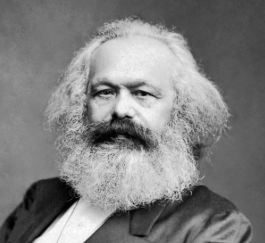
To discover the various use of things is the work of history.
▼
Source
source
Vol. I, Ch. 1, Section 1, pg. 42.

1 month 6 days ago
Would you know what makes men greedy for the future? It is because no one has yet found himself.
3 months 2 weeks ago
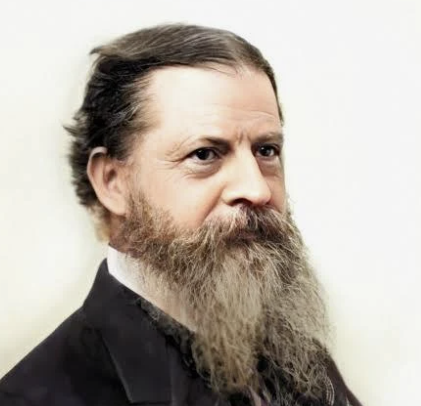
What distinct meaning can attach to saying that an idea in the past in any way affects an idea in the future, from which it is completely detached?

4 months 3 days ago
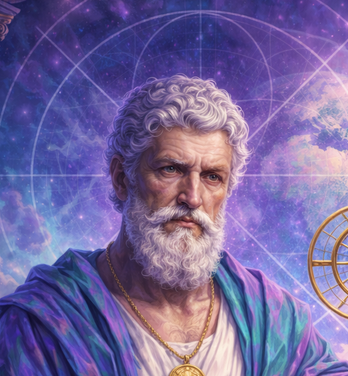
Water is the first principle of everything.
▼
Source
source
As quoted in Aristotle, Metaphysics, 983b
5 months 2 weeks ago
"What on earth prompted you to take a hand in this?""I don't know. My... my code of morals, perhaps.""Your code of morals. What code, if I may ask?" "Comprehension."

4 months 2 weeks ago
The world and life are one.
▼
Source
source
(5.621) Original German: Die Welt und das Leben sind Eins.

5 months 2 weeks ago
There is a cult of ignorance in the United States, and there always has been. The strain of anti-intellectualism has been a constant thread winding its way through our political and cultural life, nurtured by the false notion that democracy means that "my ignorance is just as good as your knowledge."
CivilSimian.com created by AxiomaticPanic, CivilSimian, Kalokagathia