


4 months 4 weeks ago
Henry of Essex's religion was the Inner Light or Moral Conscience of his own soul; such as is vouchsafed still to all souls of men;-which Inner Light shone here 'through such intellectual and other media' as there were; producing 'Phantasms,' Kircherean Visual-Spectra, according to circumstances! It is so with all men. The clearer my Inner Light may shine, through the less turbid media; the fewer Phantasms it may produce,-the gladder surely shall I be, and not the sorrier! Hast thou reflected, O serious reader, Advanced- Liberal or other, that the one end, essence, use of all religion past, present and to come, was this only: To keep that same Moral Conscience or Inner Light of ours alive and shining.

7 months 2 weeks ago
To keep our eyes open longer were but to set our Antipodes. The Huntsmen are up in America, and they are already past their first sleep in Persia. But who can be drowsy at that hour which freed us from everlasting sleep? or have slumbering thoughts at that time, when sleep itself must end, and as some conjecture all shall awake again?
▼
Source
source
Ch. 5
3 months 4 weeks ago
How can it be that mathematics, being, after all, a product of human thought which is independent of experience, is so admirably appropriate to the objects of reality? Is human reason, then, without experience, merely by taking thought, able to fathom the properties of real things?

6 months 3 weeks ago
The history of the American kings of capital and authority is the history of repeated crimes, injustice, oppression, outrage, and abuse, all aiming at the suppression of individual liberties and the exploitation of the people. A vast country, rich enough to supply all her children with all possible comforts, and insure well-being to all, is in the hands of a few, while the nameless millions are at the mercy of ruthless wealth gatherers, unscrupulous lawmakers, and corrupt politicians.The reign of these kings is holding mankind in slavery, perpetuating poverty and disease, maintaining crime and corruption; it is fettering the spirit of liberty, throttling the voice of justice, and degrading and oppressing humanity. It is engaged in continual war and slaughter, devastating the country and destroying the best and finest qualities of man; it nurtures superstition and ignorance, sows prejudice and strife, and turns the human family into a camp of Ishmaelites.

9 months 5 days ago
He realized now that to be afraid of this death he was staring at with animal terror meant to be afraid of life. Fear of dying justified a limitless attachment to what is alive in man. And all those who had not made the gestures necessary to live their lives, all those who feared and exalted impotence — they were afraid of death because of the sanction it gave to a life in which they had not been involved. They had not lived enough, never having lived at all.
4 months 4 weeks ago
And yet I will venture to believe that in no time, since the beginnings of Society, was the lot of those same dumb millions of toilers so entirely unbearable as it is even in the days now passing over us. It is not to die, or even to die of hunger, that makes a man wretched; many men have died; all men must die,-the last exit of us all is in a Fire-Chariot of Pain. But it is to live miserable we know not why; to work sore and yet gain nothing; to be heart-worn, weary, yet isolated, unrelated, girt in with a cold universal Laissez-faire: it is to die slowly all our life long, imprisoned in a deaf, dead, Infinite Injustice, as in the accursed iron belly of a Phalaris' Bull! This is and remains forever intolerable to all men whom God has made. Do we wonder at French Revolutions, Chartisms, Revolts of Three Days? The times, if we will consider them, are really unexampled.

6 months 2 weeks ago
Basic justice is based on everything we as humans share that is the same. It extends to nature also, but, if we can't keep it straight amongst ourselves, of course we'll never have the traction to extend it to the larger context we are a part of.
3 months 4 weeks ago
Only a life lived for others is a life worthwhile.
6 months 3 weeks ago
The bourgeoisie is defined as the social class which does not want to be named.
▼
Source
source
p. 138
8 months 4 weeks ago
When a country is well governed, poverty and a mean condition are things to be ashamed of. When a country is ill governed, riches and honor are things to be ashamed of.
6 months 5 days ago
Faith is the great cop-out, the great excuse to evade the need to think and evaluate evidence. Faith is belief in spite of, even perhaps because of, the lack of evidence.
▼
Source
source
From speech at the Edinburgh International Science Festival, 1992-04-15.

7 months 4 weeks ago
A sensible man takes pleasure in what he has instead of pining for what he has not.
8 months 4 weeks ago
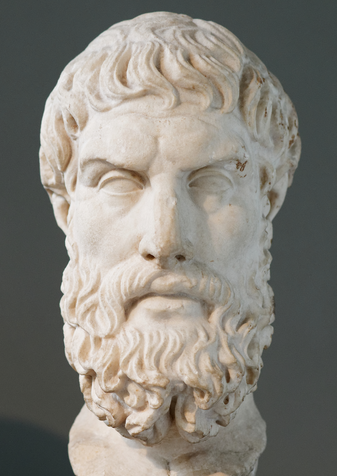
Against the diseases of the mind, philosophy provides sufficient antidotes. The instruments which it employs for this purpose are the virtues; the root of which, whence all the rest proceed, is prudence. This virtue comprehends the whole art of living discreetly, justly, and honorably, and is, in fact, the same thing with wisdom. It instructs men to free their understandings from the clouds of prejudice; to exercise temperance and fortitude in the government of themselves: and to practice justice towards others. Although pleasure, or happiness, which is the end of living, be superior to virtue, which is only the means, it is every one's interest to practice all the virtues; for in a happy life, pleasure can never be separated from virtue.

4 months 6 days ago
Either everything is illusion, nature as well as revelation, or experience alone can explain faith.

8 months 3 days ago
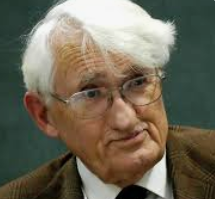
The bourgeois public sphere may be conceived above all as the sphere of private people come together as a public; they soon claimed the public sphere regulated from above against the public authorities themselves, to engage them in a debate over the general rules governing relations in the basically privatized but publicly relevant sphere of commodity exchange and social labor.
▼
Source
source
p. 27
7 months 5 days ago
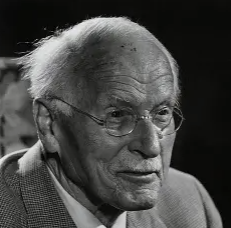
...the relatively unconscious man driven by his natural impulses because, imprisoned in his familiar world, he clings to the commonplace, the obvious, the probable, the collectively valid, using for his motto: 'Thinking is difficult. Therefore, let the herd pronounce judgement.'
▼
Source
source
Frequently misquoted as "Thinking is difficult, that's why most people judge" and close variants. Flying Saucers: A Modern Myth of Things Seen in the Sky. (1959), C.G. Jung, R.F.C. Hull (translator) (Princeton Press, 1979, ISBN 9780691018225

8 months 4 days ago
You could attach prices to thoughts. Some cost a lot, some a little. And how does one pay for thoughts? The answer, I think, is: with courage.
▼
Source
source
p. 52e
5 months 5 days ago
The self-evident truth which makes men invincible is that inalienably they are inviolate persons.
▼
Source
source
Ch. XVII: "On This Rock", §2, p. 375

7 months 4 days ago
Since the only things we remember are humiliations and defeats, what is the use of all the rest?
8 months 1 week ago
Moral Teleology supplies the deficiency in physical Teleology, and first establishes a Theology; because the latter, if it did not borrow from the former without being observed, but were to proceed consistently, could only found a Demonology, which is incapable of any definite concept.
▼
Source
source
Immanuel Kant, Kant's Critique of Judgment (1892) Tr. J.H. Bernard

8 months 1 week ago
Then I dreamed that one day there was nothing but milk for them and the jailer said as he put down the pipkin:'Our relations with the cow are not delicate-as you can easily see if you imagine eating any of her other secretions.' ... John said, 'Thank heavens! Now at last I know that you are talking nonsense. You are trying to pretend that unlike things are like. You are trying to make us think that milk is the same sort of thing as sweat or dung.' 'And pray, what difference is there except by custom?''Are you a liar or only a fool, that you see no difference between that which Nature casts out as refuse and that which she stores up as food?'
▼
Source
source
Pilgrim's Regress 49

6 months 6 days ago
The mask, like the side-show freak, is mainly participatory rather than pictorial in its sensory appeal.
▼
Source
source
(p. 352)

6 months 3 weeks ago
And here, facing this supreme religious sacrifice, we reach the summit of the tragedy, the very heart of it - the sacrifice of our own individual consciousness upon the alter of the perfected Human Consciousness, of the Divine Consciousness. But is there really a tragedy? ...if we could succeed in understanding and feeling that we were going to enrich Christ, should we hesitate for a moment in surrendering ourselves to Him? Would the stream that flows into the sea, and feels in the freshness of its waters the bitterness of the salt of the ocean, wish to flow back to its source? would it wish to return to the cloud which drew it life from the sea? is it not joy to feel itself absorbed?
4 months 2 weeks ago
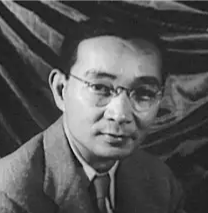
To me personally, the only function of philosophy is to teach us to take life more lightly and gayly than the average businessman does, for no businessman who does not retire at fifty, if he can, is in my eyes a philosopher.
▼
Source
source
Ch. I : The Awakening, p. 13

7 months 1 day ago
O faithless and perverse generation, how long shall I be with you? how long shall I suffer you? bring him hither to me.
▼
Source
source
17:17 (KJV)

8 months 1 week ago
Scientific theories are distinguished from myths... in being criticizable, and... open to modifications... They can be neither verified nor probabilified.
7 months 4 days ago
Philosophers write for professors; thinkers for writers.
6 months 2 weeks ago
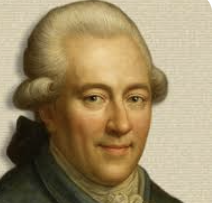
If countries were named after the words you first hear when you go there, England would have to be called Damn It.
▼
Source
source
F 33

4 months 1 week ago
The system of banking we have both equally and ever reprobated. I contemplate it as a blot left in all our constitutions, which, if not covered, will end in their destruction, which is already hit by the gamblers in corruption, and is sweeping away in its progress the fortunes and morals of our citizens.

8 months 1 week ago
The unity is brought about by force.
▼
Source
source
Notebook I, The Chapter on Money, p. 70.
8 months 1 week ago
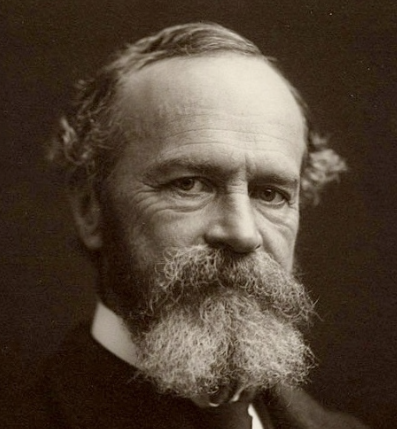
When all is said and done, we are in the end absolutely dependent on the universe; and into sacrifices and surrenders of some sort, deliberately looked at and accepted, we are drawn and pressed as into our only permanent positions of repose. Now in those states of mind which fall short of religion, the surrender is submitted to as an imposition of necessity, and the sacrifice is undergone at the very best without complaint. In the religious life, on the contrary, surrender and sacrifice are positively espoused: even unnecessary givings-up are added in order that the happiness may increase. Religion thus makes easy and felicitous what in any case is necessary; and if it be the only agency that can accomplish this result, its vital importance as a human faculty stands vindicated beyond dispute. It becomes an essential organ of our life, performing a function which no other portion of our nature can so successfully fulfill.
▼
Source
source
Lecture II, "Circumscription of the Topic"
7 months 6 days ago
The great honor of Christianity, its incontestable merit, and the whole secret of its unprecedented and yet thoroughly legitimate triumph, lay in the fact that it appealed to that suffering and immense public to which the ancient world, a strict and cruel intellectual and political aristocracy, denied even the simplest rights of humanity. Otherwise it never could have spread.
▼
Source
source
Dover edition, p. 75
8 months 1 week ago
Consumption is also immediately production, just as in nature the consumption of the elements and chemical substances is the production of the plant.
▼
Source
source
Introduction, p. 10.

7 months ago
All metaphysical theories are inconclusively vulnerable to positivist attack.
▼
Source
source
Ch. 9, p. 127

6 months 4 weeks ago
The characteristic of the hour is that the commonplace mind, knowing itself to be commonplace, has the assurance to proclaim the rights of the commonplace and to impose them wherever it will. As they say in the United States: "to be different is to be indecent." The mass crushes beneath it everything that is different, everything that is excellent, individual, qualified and select. Anybody who is not like everybody, who does not think like everybody, runs the risk of being eliminated. And it is clear, of course, that this "everybody" is not "everybody." "Everybody" was normally the complex unity of the mass and the divergent, specialised minorities. Nowadays, "everybody" is the mass alone.
▼
Source
source
Chap.I: The Coming Of The Masses
6 months 6 days ago
Since Sputnik and the satellites, the planet is enclosed in a manmade environment that ends "Nature" and turns the globe into a repertory theater to be programmed.
▼
Source
source
Shakespeare at the Globe mentioning "All the world's a stage, and all the men and women merely players" (As You Like It, Act II, Scene 7)
7 months 4 weeks ago
Beware an act of avarice; it is bad and incurable disease.
▼
Source
source
Maxim no. 19.
7 months 4 weeks ago
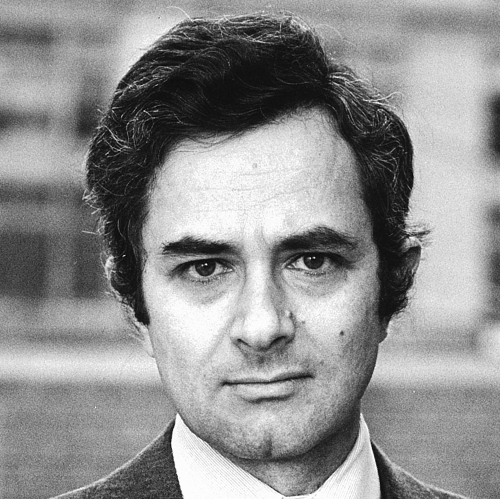
A person may be greedy, envious, cowardly, cold, ungenerous, unkind, vain, or conceited, but behave perfectly by a monumental effort of will.
▼
Source
source
"Moral Luck" (1976), p. 32.
7 months 1 day ago
To the mind of the ancients, who knew something of such matters, liberty and prosperity seemed hardly compatible, yet modern liberalism wants them together.
▼
Source
source
"The Irony of Liberalism"

7 months 4 weeks ago
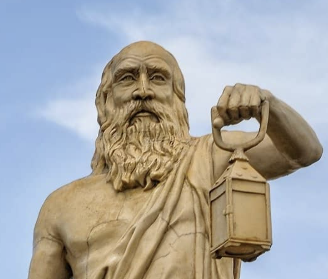
To one who asked what was the proper time for lunch, he said, "If a rich man, when you will; if a poor man, when you can."
▼
Source
source
Diogenes Laërtius, vi. 40
8 months 1 week ago
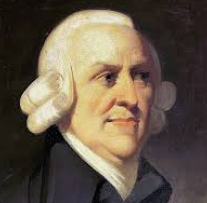
Poor David Hume is dying very fast, but with great cheerfulness and good humour and with more real resignation to the necessary course of things then any whining Christian ever dyed with pretended resignation to the will of God.
▼
Source
source
Letter to Alexander Wedderburn 14 August 1776. The Correspondence of Adam Smith edited by E.C. Mossner and Ian Simpson Ross, 2nd edition, Oxford University Press 1986. The Future Hope in Adam Smith's System, Paul Oslington
5 months 2 days ago
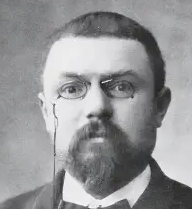
The principal aim of mathematical education is to develop certain faculties of the mind, and among these intuition is not the least precious. It is through it that the mathematical world remains in touch with the real world, and even if pure mathematics could do without it, we should still have to have recourse to it to fill up the gulf that separates the symbol from reality.
▼
Source
source
Part II. Ch. 2 : Mathematical Definitions and Education, p. 128
CivilSimian.com created by AxiomaticPanic, CivilSimian, Kalokagathia