

4 months 2 weeks ago
Every nation gets the government it deserves.
▼
Source
source
Original text:Toute nation a le gouvernement qu'elle mérite. Letter 76, on the topic of Russia's new constitutional laws (27 August 1811); published in Lettres et Opuscules.
4 months 2 weeks ago
How absurd it must seem for an immortal soul to be destined for Heaven or Hell, and yet be sitting in a kitchen, as a maid, or to see oneself objectified as a mechanic! how falsely the usual sunrise waked us, the clock dial, the city street the job! How wrongfully people find themselves in these systems - our time isn't there, our space isn't there, our space isn't even here... the whole social story of waking, and certainly the day of the mechanic, is false.
▼
Source
source
Traces (1930), p. 27

7 months 3 weeks ago
They that endeavour to abolish vice destroy also virtue, for contraries, though they destroy one another, are yet the life of one another.
▼
Source
source
Section 4

5 months 5 days ago
Mercy often means giving death, not life.
▼
Source
source
line 329
9 months 2 weeks ago
Only it takes time to be happy. A lot of time. Happiness, too, is a long patience.

9 months 5 days ago
Again and again our foe, religion, has given birth to deeds sinful and unholy.
▼
Source
source
Book I, lines 82-83 (tr. C. Bailey)
9 months 2 weeks ago
There is less trouble and trauma involved in writing a new piece than in trying to salvage an unsatisfactory old one.
6 months 6 days ago
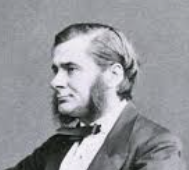
The saying that a little knowledge is a dangerous thing is, to my mind, a very dangerous adage. If knowledge is real and genuine, I do not believe that it is other than a very valuable possession, however infinitesimal its quantity may be. Indeed, if a little knowledge is dangerous, where is the man who has so much as to be out of danger?
▼
Source
source
"On Elementary Instruction in Physiology"

8 months 2 weeks ago
And suddenly I had an inkling of what it must feel like to be mad.
8 months 1 week ago
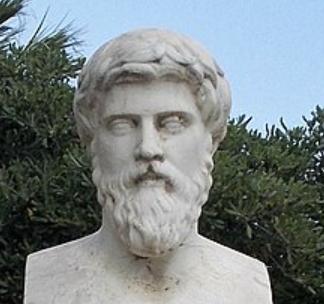
Antagoras the poet was boiling a conger, and Antigonus, coming behind him as he was stirring his skillet, said, "Do you think, Antagoras, that Homer boiled congers when he wrote the deeds of Agamemnon?" Antagoras replied, "Do you think, O king, that Agamemnon, when he did such exploits, was a peeping in his army to see who boiled congers?"
▼
Source
source
46 Antigonus I

7 months 2 weeks ago
"What is truth?" is a fundamental question. But what is it compared to "How to endure life?" And even this one pales beside the next: "How to endure oneself?" - That is the crucial question in which no one is in a position to give us an answer.
9 months 2 weeks ago
Junz found revulsion growing strong within him. A planet full of people meant nothing against the dictates of economic necessity!
9 months 1 week ago
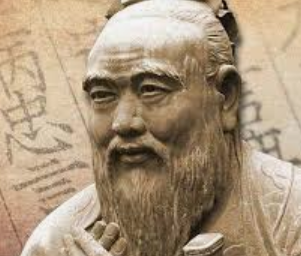
To give one's self earnestly to the duties due to men, and, while respecting spiritual beings, to keep aloof from them, may be called wisdom.
8 months 3 weeks ago
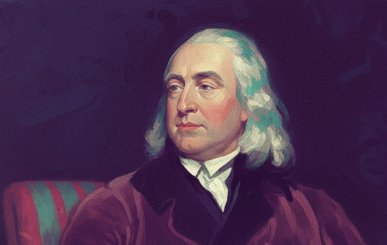
The principle of utility judges any action to be right by the tendency it appears to have to augment or diminish the happiness of the party whose interests are in question... if that party be the community the happiness of the community, if a particular individual, the happiness of that individual.
▼
Source
source
Introduction, 1789 edition
7 months 3 weeks ago
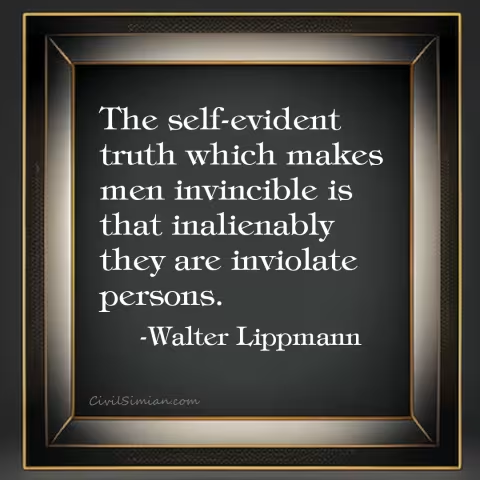
Language forms a kind of wealth, which all can make use of at once without causing any diminution of the store, and which thus admits a complete community of enjoyment; for all, freely participating in the general treasure, unconsciously aid in its preservation.
▼
Source
source
Volume II, p. 213


4 months 2 weeks ago
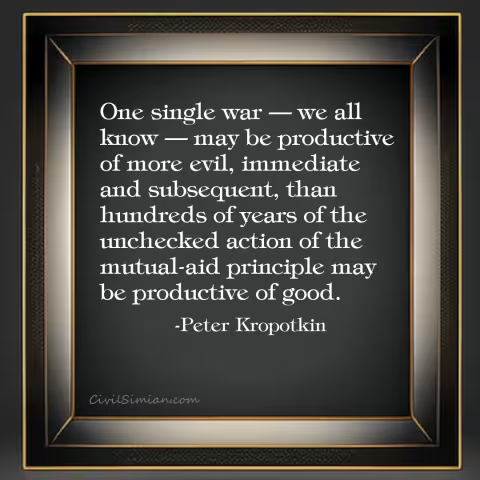
He who lives in harmony with himself lives in harmony with the universe.
▼
Source
source
Attributed in The Life You Were Born to Live : Finding Your Life Purpose (1995) by Dan Millman, Pt. 2, Ch. 2 : Cooperation and Balance

8 months 2 weeks ago
But genius looks forward: the eyes of men are set in his forehead, not in his hindhead: man hopes: genius creates.
▼
Source
source
par. 18

7 months 3 weeks ago
Above all, avoid falsehood, every kind of falsehood, especially falseness to yourself. Watch over your own deceitfulness and look into it every hour, every minute.
▼
Source
source
Book II, ch. 4 (trans. Constance Garnett) The Elder Zossima, speaking to Mrs. Khoklakov
7 months 2 weeks ago
Only what we have not accomplished and what we could not accomplish matters to us, so that what remains of a whole life is only what it will not have been.

6 months 2 weeks ago
The unique innovation of the phonetic alphabet released the Greeks from the universal acoustic spill of tribal societies.
▼
Source
source
(p. 70)

6 months 3 weeks ago
When the world presents as a force field of violence, the task of nonviolence is to find ways of living and acting in that world such that violence is checked or ameliorated, or its direction turned, precisely at moments when it seems to saturate that world and offer no way out.
▼
Source
source
p. 10

8 months 2 weeks ago
The circle of day and night is the law of the classical world: the most restricted but most demanding of the necessities of the world, the most inevitable but the simplest of the legislations of nature.This was a law that excluded all dialectics and all reconciliation, consequently laying the foundations for the smooth unity of knowledge as well as the uncompromising division of tragic existence. It reigns on a world without darkness, which knows neither effusiveness nor the gentle charms of lyricism. All is waking or dreams, truth or error, the light of being or the nothingness of shadow.
▼
Source
source
Part Two: 2. The Transcendence of Delirium
7 months 2 weeks ago
The origin of things, considered not as leading to anything, but in itself, contains the idea of First, the end of things that of Second, the process mediating between them that of Third. A philosophy which emphasises the idea of the One, is generally a dualistic philosophy in which the conception of Second receives exaggerated attention: for this One (though of course involving the idea of First) is always the other of a manifold which is not one. The idea of the Many, because variety is arbitrariness and arbitrariness is repudiation of any Secondness, has for its principal component the conception of First. In psychology Feeling is First, Sense of reaction Second, General conception Third, or mediation. In biology, the idea of arbitrary sporting is First, heredity is Second, the process whereby the accidental characters become fixed is Third. Chance is First, Law is Second, the tendency to take habits is Third. Mind is First, Matter is Second, Evolution is Third.

8 months 3 weeks ago
There is no more mistaken path to happiness than worldliness, revelry, high life.
▼
Source
source
Our Relation to Others, § 24
8 months 4 weeks ago
Books must follow sciences, and not sciences books.
▼
Source
source
Proposition touching Amendment of Laws

5 months 1 week ago
There have been other Priests perhaps equally notable, in calmer times, for doing faithfully the office of a Leader of Worship; bringing down, by faithful heroism in that kind, a light from Heaven into the daily life of their people; leading them forward, as under God's guidance, in the way wherein they were to go. But when this same way was a rough one, of battle, confusion and danger, the spiritual Captain, who led through that, becomes, especially to us who live under the fruit of his leading, more notable than any other.

7 months 6 days ago
The miser deprives himself of his treasure because of his desire for it.
▼
Source
source
p. 260
8 months 3 weeks ago
Nature has willed that man should, by himself, produce everything that goes beyond the mechanical ordering of his animal existence, and that he should partake of no other happiness or perfection than that which he himself, independently of instinct, has created by his own reason.
▼
Source
source
Third Thesis

8 months 3 weeks ago
As the variable capital always stays in the hands of the capitalist in some form or other, it cannot be claimed in any way that it converts itself into revenue for anyone.
▼
Source
source
Vol. II, Ch. XX, p. 452.
5 months 4 weeks ago
Philosophy in its very act is a process of translation!
▼
Source
source
Chapter 4, Philosophy As Writing: The Case Of Hegel, p. 81

4 months 2 weeks ago
We are alive within mystery, by miracle. "Life," wrote Erwin Chargaff, "is the continual intervention of the inexplicable." We have more than we can know. We know more than we can say. The constructions of language (which is to say the constructions of thought) are formed within experience, not the other way around. Finally we live beyond words, as also we live beyond computation and beyond theory. There is no reason whatever to assume that the languages of science are less limited than other languages.

6 months 2 weeks ago
Science may fall back on its stupid excuse that science works for science, and that when it has been developed by the scientists it will become accessible to the people also; but art, if it be art, should be accessible to all, and particularly to those for whom it is produced. And the position of our art strikingly arraigns the producers of art for not wishing, not knowing how, and being unable, to serve the people.

7 months 1 week ago
He who bases or thinks he bases his conduct - his inward or his outward conduct, his feeling or his action - upon a dogma or a principle which he deems incontrovertible, runs the risk of becoming a fanatic, and moreover, the moment that this dogma is weakened or shattered, the morality based upon it gives way. If the earth that he thought firm begins to rock, he himself trembles at the earthquake, for we do not all come up to the standard of the ideal Stoic who remains undaunted among the ruins of a world shattered into atoms. Happily the stuff that is underneath a man's ideas will save him. For if a man should tell you that he does not defraud or cuckold his best friend only because he is afraid of hell, you may depend upon it that neither would he do so even if he were to cease to believe in hell, but that he would invent some other excuse instead. And this is all to the honor of the human race.
5 months 5 days ago
It is always right that a man should be able to render a reason for the faith that is within him.
▼
Source
source
Vol. I, ch. 3, p. 91
5 months 1 week ago
Nothing is great but truth, and the smallest truth is great. The other day I had a thought, which I put like this: Even a harmful truth is useful, for it can be harmful only for the moment and will lead to other truths, which must always become useful, very much so. Conversely, even a useful error is harmful, for it can be useful only for the moment, enticing us into other errors, which become more and more harmful.
▼
Source
source
Letter to Charlotte von Stein (1787) in Goethe's World View: Presented in His Reflections and Maxims (1963), Edited with an Introduction by Frederick Ungar, Translated by Heinz Norden, pp. 72-73, Frederick Ungar Publishing Company, New York.

8 months 2 weeks ago
"It is necessary to be given the prop that all elementary props are given." This is not necessary because it is even impossible. There is no such prop! That all elementary props are given is SHOWN by there being none having an elementary sense which is not given.
▼
Source
source
Notes of 1919, as quoted in Ludwig Wittgenstein : The Duty of Genius (1990) by Ray Monk

8 months 3 weeks ago
Reason is a harmonising, controlling force rather than a creative one.
▼
Source
source
Ch. 1: Mysticism and Logic
7 months 2 weeks ago
Government must be a transparent garment which tightly clings to the people's body.
▼
Source
source
Act I.

8 months 2 weeks ago
I construct my memories with my present. I am lost, abandoned in the present. I try in vain to rejoin the past: I cannot escape.
4 months 2 weeks ago
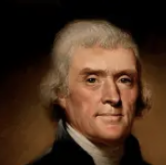
We have the wolf by the ears, and we can neither hold him nor safely let him go. Justice is in one scale, self-preservation in the other.
▼
Source
source
On slavery, in a letter to John Holmes
7 months 1 week ago
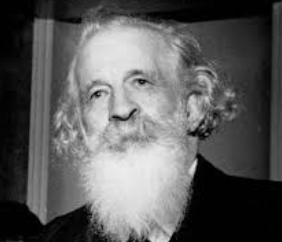
To live life well is to express life poorly; if one expresses life too well, one is living it no longer.
▼
Source
source
A Retrospective Glance at the Lifework of a Master of Books
7 months 2 weeks ago
Glory - once achieved, what is it worth?
5 months 5 days ago
One crime has to be concealed by another.
7 months 3 weeks ago
Yes, I dreamed a dream, my dream of the third of November. They tease me now, telling me it was only a dream. But does it matter whether it was a dream or reality, if the dream made known to me the truth? If once one has recognized the truth and seen it, you know that it is the truth and that there is no other and there cannot be, whether you are asleep or awake. Let it be a dream, so be it, but that real life of which you make so much I had meant to extinguish by suicide, and my dream, my dream - oh, it revealed to me a different life, renewed, grand and full of power!
8 months 2 weeks ago
Is it surprising that prisons resemble factories, schools, barracks, hospitals, which all resemble prisons?
▼
Source
source
Discipline and Punish (1977) as translated by Alan Sheridan, p. 228
5 months 1 day ago
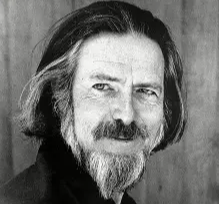
We say in popular speech that we come into this world, but we do nothing of the kind. We come out of it. In the same way as the fruit comes out of the tree, the egg from the chicken, and the baby from the womb, we are symptomatic of the universe. Just as in the retina there are myriads of little nerve endings, we are the nerve endings of the universe.
▼
Source
source
p. 25
CivilSimian.com created by AxiomaticPanic, CivilSimian, Kalokagathia