


7 months 3 weeks ago
Great feelings take with them their own universe, splendid or abject. They light up with their passion an exclusive world in which they recognize their climate. There is a universe of jealousy, of ambition, of selfishness or generosity. A universe in other words a metaphysic and an attitude of mind.
6 months 3 weeks ago
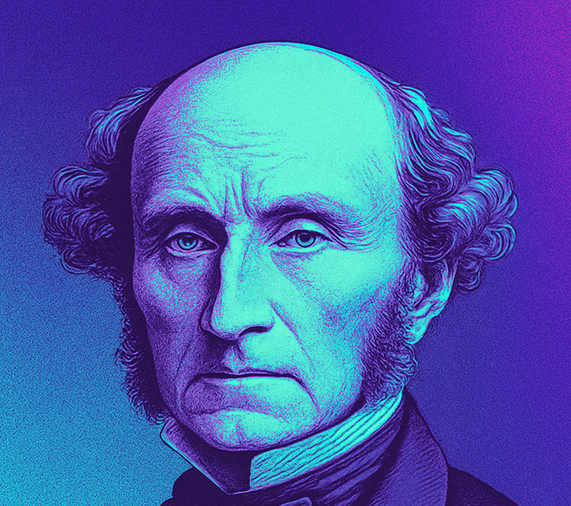
Granted that any practice causes more pain to animals than it gives pleasure to man; is that practice moral or immoral? And if, exactly in proportion as human beings raise their heads out of the slough of selfishness, they do not with one voice answer 'immoral,' let the morality of the principle of utility be for ever condemned.
▼
Source
source
Dr. Whewell on Moral Philosophy (1852), in Dissertations and Discussions: Political, Philosophical, and Historical, vol. 2, London: John W. Parker and son, 1859, p. 485

6 months 3 weeks ago
The present hour is always wealthiest when it is poorer than the future ones, as that is the pleasantest site which affords the pleasantest prospect.
▼
Source
source
Pearls of Thought (1881) p. 210

2 months 3 weeks ago
Marcus Aurelius wrote the following about Severus (a person who is not clearly identifiable according to the footnote): Through him I became acquainted with the conception of a community based on equality and freedom of speech for all, and of a monarchy concerned primarily to uphold the liberty of the subject.
▼
Source
source
I. 14, trans. Maxwell Staniforth

6 months 3 weeks ago
Preference of vice to virtue, a manifest wrong judgment.
▼
Source
source
Book II, Ch. 21, sec. 70
7 months 2 weeks ago
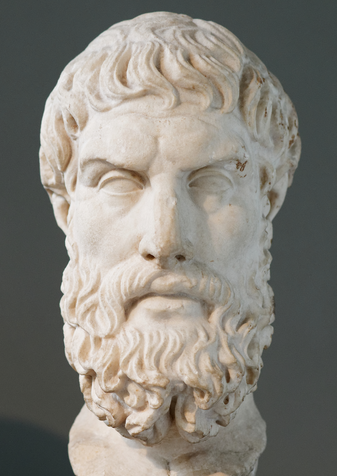
Self-sufficiency is the greatest of all wealth.
3 months 6 days ago
I am now even more persuaded of the urgent need to study why Socrates was accused. The dislike of philosophy is perennial, and the seeds of the condemnation of Socrates are present at all times, not in the bosoms of pleasure-seekers, who don't give a damn, but in those of high-minded and idealistic persons who do not want to submit their aspirations to examination.
▼
Source
source
Western Civ, p. 19.

5 months 3 weeks ago
You have theories enough concerning the Rights of Men. It may not be amiss to add a small degree of attention to their Nature and disposition.
▼
Source
source
Letter to Charles-Jean-François Depont (November 1789), quoted in Alfred Cobban and Robert A. Smith (eds.), The Correspondence of Edmund Burke, Volume VI: July 1789-December 1791 (1967), p. 46
3 months 1 week ago
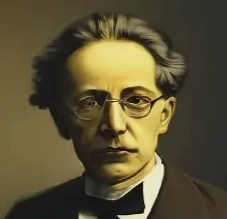
The will is not fundamentally right, as the practical ones would like very much to assure us; one may not pass over the desire for knowledge in order to stand immediately in the will, but knowledge perfects itself to will when it desensualizes itself and creates itself as a spirit "which builds its own body."
▼
Source
source
p. 21

6 months 3 weeks ago
Marriage is for women the commonest mode of livelihood, and the total amount of undesired sex endured by women is probably greater in marriage than in prostitution.


5 months 3 weeks ago
In order to touch the heart and gain the confidence, the assent, the adhesion, and the co-operation of the illiterate legions of the proletariat - and the vast majority of proletarians unfortunately still belong in this category - it is necessary to begin to speak to those workers not of the general sufferings of the international proletariat as a whole but of their particular, daily, altogether private misfortunes. It is necessary to speak to them of their own trade and the conditions of their work in the specific locality where they live; of the harsh conditions and long hours of their daily work, of the small pay, the meanness of their employer, the high cost of living, and how impossible it is for them properly to support and bring up a family.
▼
Source
source
Founding of the Workers' International
3 months 3 days ago
Be radical, have principles, be absolute, be that which the bourgeoisie calls an extremist: give yourself without counting or calculating, don't accept what they call 'the reality of life' and act in such a way that you won't be accepted by that kind of 'life', never abandon the principle of struggle.
6 months ago
The best doctor is the one you run for and can't find.
▼
Source
source
As quoted in Selected Thoughts from the French: XV Century - XX Century, with English Translations (1913) by James Raymond Solly, p. 67
2 months 3 weeks ago
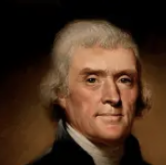
Every difference of opinion is not a difference of principle. We have called by different names brethren of the same principle. We are all Republicans, we are all Federalists.

6 months 3 weeks ago
The sentiment of reality can indeed attach itself so strongly to our object of belief that our whole life is polarized through and through, so to speak, by its sense of the existence of the thing believed in, and yet that thing, for the purpose of definite description, can hardly be said to be present to our mind at all.
▼
Source
source
Lecture III, "The Reality of the Unseen"
6 months 3 weeks ago
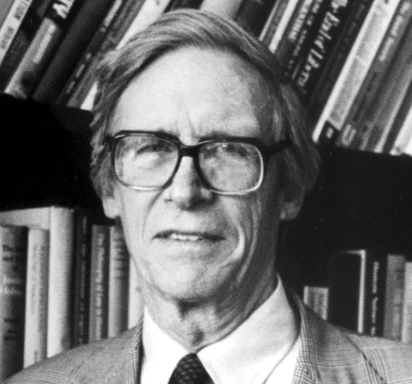
First of all, no one knows his place in society, his class position or social status; nor does he know his fortune in the distribution of natural assets and abilities, his intelligence and strength, and the like. Nor, again, does anyone know his conception of the good, the particulars of his rational plan of life, or even the special features of psychology such as his aversion to risk or liability to optimism or pessimism. More than this, I assume that the parties do not know the particular circumstances of their own society. That is, they do not know its particular economic or political situation, or the level of civilization and culture it has been able to achieve. The persons in the original position have no information as to which generation they belong.
▼
Source
source
p. 117
5 months 3 weeks ago
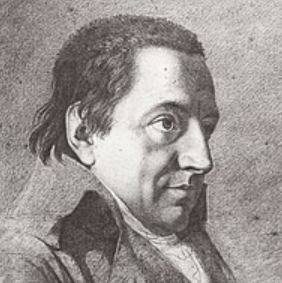
There is but One Principle that proceeds from God; and thus, in consequence of the unity of the Power, it is possible for each Individual to schematise his World of Sense in accordance with the law of that original harmony; - and every Individual, under the condition of being found on the way towards the recognition of the Imperative, must so schematise it. I might say: - Every Individual can and must, under the given condition, construct the True World of Sense, - for this indeed has beyond the universal and formal laws above deduced, no other Truth and Reality than this universal harmony.

7 months 3 weeks ago
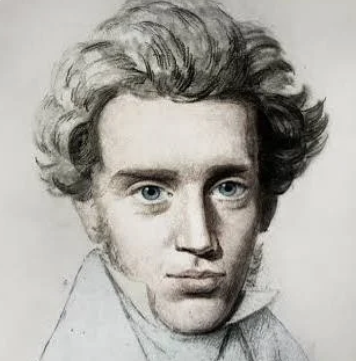
Where is the boundary for the single individual in his concrete existence between what is lack of will and what is lack of ability; what is indolence and earthly selfishness and what is the limitation of finitude? For an existing person, when is the period of preparation over, when this question will not arise again in all its initial, troubled severity; when is the time in existence that is indeed a preparation? Let all the dialecticians convene-they will not be able to decide this for a particular individual in concreto.

4 months 3 weeks ago
My method is vertical rather than horizontal so the scenery does not change but the texture does.
▼
Source
source
Letter to The Listener October 1971, Letters of Marshall McLuhan (1987), p. 318

3 months 1 week ago
As our acts and our thoughts are, so will our lives be.

6 months 3 weeks ago
The best effect of fine persons is felt after we have left their presence.
▼
Source
source
1839
6 months 3 weeks ago
The frontiers are not east or west, north or south, but wherever a man fronts a fact, though that fact be his neighbor, there is an unsettled wilderness between him and Canada, between him and the setting sun, or, farther still, between him and it.

5 months 1 week ago
When I read the catechism of the Council of Trent, it seems as though I had nothing in common with the religion there set forth.

3 months 2 weeks ago
Everywhere the human soul stands between a hemisphere of light and another of darkness on the confines of two everlasting hostile empires, - Necessity and Free Will.
▼
Source
source
Essays, Goethe's Works.
7 months 4 days ago
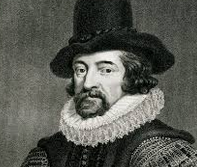
There is another ground of hope that must not be omitted. Let men but think over their infinite expenditure of understanding, time, and means on matters and pursuits of far less use and value; whereof, if but a small part were directed to sound and solid studies, there is no difficulty that might not be overcome.
▼
Source
source
Aphorism 111
6 months 3 weeks ago
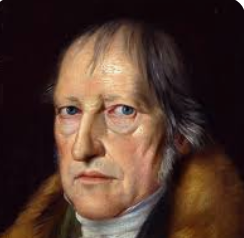
The science of religion is one science within philosophy; indeed it is the final one. In that respect it presupposes the other philosophical disciplines and is therefore a result.

5 months 2 weeks ago
Blessed art thou, Simon Barjona: for flesh and blood hath not revealed it unto thee, but my Father which is in heaven. And I say also unto thee, That thou art Peter, and upon this rock I will build my church; and the gates of hell shall not prevail against it. And I will give unto thee the keys of the kingdom of heaven: and whatsoever thou shalt bind on earth shall be bound in heaven: and whatsoever thou shalt loose on earth shall be loosed in heaven.
▼
Source
source
16:17-19 (KJV)
4 months 1 week ago
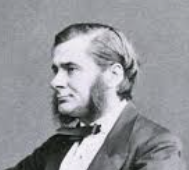
So far from the posterior lobe, the posterior cornu, and the hippocampus minor, being structures peculiar to and characteristic of man, as they have been over and over again asserted to be, even after the publication of the clearest demonstration of the reverse, it is precisely these structures which are the most marked cerebral characters common to man with the apes. They are among the most distinctly Simian peculiarities which the human organism exhibits.
▼
Source
source
Ch.2, p. 119

6 months 3 weeks ago
What's sauce for the gander is sauce for the goose.
▼
Source
source
Introduction, p. 37.
6 months 3 weeks ago
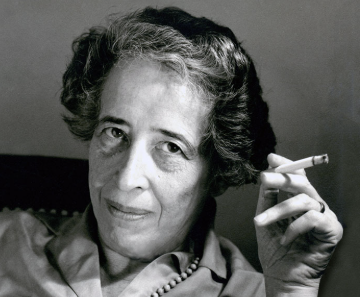
Since it is always the same person whose mind thinks, wills, and judges, the autonomous nature of these activities has created great difficulties. Reason's inability to move the will, plus the fact that thinking can only "understand" what is past what neither remove it nor "rejuvenate it" ... have led to the various doctrines asserting the mind's impotence and the force of the irrational, in brief to Hume's famous dictum that "Reason is and ought only to be the slave of the passions," that is, to a rather simple-minded reversal of the Platonic notion of reason's uncontested rulership in the household of the soul. What is so remarkable in all these theories and doctrines is their implicit monism, the claim that behind the obvious multiplicity of the world's appearances and, even more pertinently to our context, behind the obvious plurality of man's faculties and abilities, there must exist a oneness - the old hen pan, "the all is one" - either a single source or a single ruler.
7 months 1 week ago
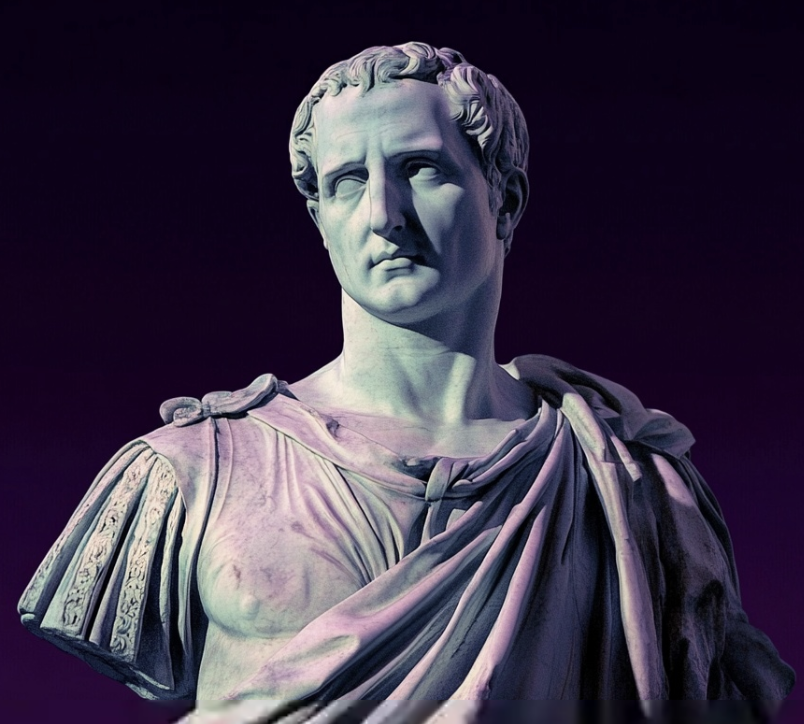
Do not blame Caesar, blame the people of Rome who have so enthusiastically acclaimed and adored him and rejoiced in their loss of freedom and danced in his path and gave him triumphal processions. Blame the people who hail him when he speaks in the Forum of the 'new, wonderful good society' which shall now be Rome, interpreted to mean 'more money, more ease, more security, more living fatly at the expense of the industrious.
▼
Source
source
This is also from the 1965 essay by Justice Millard Caldwell. It is not clear if this is based in any specific dialogue.
4 months 3 weeks ago
It really comes down to parsimony, economy of explanation. It is possible that your car engine is driven by psychokinetic energy, but if it looks like a petrol engine, smells like a petrol engine and performs exactly as well as a petrol engine, the sensible working hypothesis is that it is a petrol engine.
2 months 3 weeks ago
Either all things proceed from one intelligent source and come together as in one body, and the part ought not to find fault with what is done for the benefit of the whole; or there are only atoms, and nothing else than a mixture and dispersion. Why, then, art thou disturbed? Say to this ruling faculty, Art thou dead, art thou corrupted, art thou playing the hypocrite, art thou become a beast, dost thou herd and feed with the rest?
▼
Source
source
IX, 39

5 months 3 weeks ago
What are you waiting for in order to give up?
4 months 3 weeks ago
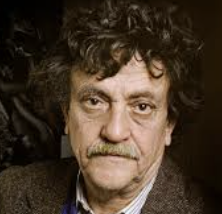
Well, I've worried some about, you know, why write books ... why are we teaching people to write books when presidents and senators do not read them, and generals do not read them. And it's been the university experience that taught me that there is a very good reason, that you catch people before they become generals and presidents and so forth and you poison their minds with ... humanity, and however you want to poison their minds, it's presumably to encourage them to make a better world.
▼
Source
source
"A Talk with Kurt Vonnegut. Jr." by Robert Scholes in The Vonnegut Statement (1973) edited by Jerome Klinkowitz and John Somer October 1966), later published in Conversations With Kurt Vonnegut (1988), p. 123
6 months 3 weeks ago
If you would convince a man that he does wrong, do right. But do not care to convince him. Men will believe what they see.
▼
Source
source
Let them see. Pearls of Thought (1881) p. 222

6 months 3 weeks ago
The Ideal Man of the eighteenth century was the Rationalist; of the seventeenth, the Christian Stoic; of the Renaissance, the Free Individual; of the Middle Ages, the Contemplative Saint. And what is our Ideal Man? On what grand and luminous mythological figure does contemporary humanity attempt to model itself? The question is embarrassing. Nobody knows. And, in spite of all the laudable efforts of the Institute for Intellectual Co-operation to fabricate an acceptable Ideal Man for the use of Ministers of Education, nobody, I suspect, will know until such time as a major poet appears upon the scene with the unmistakable revelation. Meanwhile, one must be content to go on piping up for reason and realism and a certain decency.
▼
Source
source
p. 5
4 months 1 week ago
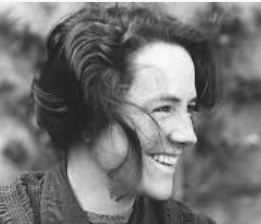
I find I am shedding hypocrisy in human relationships. What a rest that will be! The most exhausting thing in life, I have discovered, is being insincere. That is why so much of social life is exhausting; one is wearing a mask. I have shed my mask.
▼
Source
source
Ch. 2; part of this statement has often been paraphrased: "The most exhausting thing in life is being insincere."
5 months 1 week ago
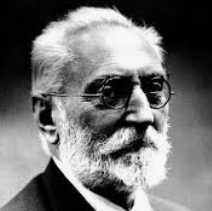
It is sad not to be loved, but it is much sadder not to be able to love.
▼
Source
source
To a Young Writer
2 months 3 weeks ago
In the North they are cool, sober, laborious, persevering, independent, jealous of their own liberties, and just to those of others, interested, chicaning, superstitious and hypocritical in their religion. In the South they are fiery, voluptuary, indolent, unsteady, independent, zealous for their own liberties, but trampling on those of others, generous, candid, without attachment or pretensions to any religion but that of the heart.
▼
Source
source
Letter to François-Jean de Chastellux (September 2, 1785). archives.gov Also quoted in Thomas Jefferson, Writings, ed. Merrill D. Peterson (1984), p. 827

4 months 3 weeks ago
Understand that all the evils from which you suffer, you yourselves cause by yielding to the suggestions by which emperors, kings, members of parliament, governors, officers, capitalists, priests, authors, artists, and all who need this fraud of patriotism in order to live upon your labour, deceive you!
▼
Source
source
Patriotism and Government

6 months 3 weeks ago
Mr. Neo-Angular - I am doing my duty. My ethics are based on dogma, not on feeling. Vertue - I know that a rule is to be obeyed because it is a rule and not because it appeals to my feelings at the moment.
▼
Source
source
Pilgrim's Regress 90
2 months 3 weeks ago
Freedom of the press, subject only to liability for personal injuries. This formidable censor of the public functionaries, by arraigning them at the tribunal of public opinion, produces reform peaceably, which must otherwise be done by revolution. It is also the best instrument for enlightening the mind of man, and improving him as a rational, moral, and social being.
5 months 3 weeks ago
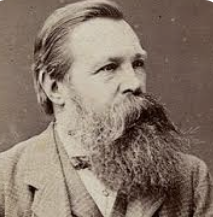
Big industry, freed from the pressure of private property, will undergo such an expansion that what we now see will seem as petty in comparison as manufacture seems when put beside the big industry of our own day. This development of industry will make available to society a sufficient mass of products to satisfy the needs of everyone. The same will be true of agriculture, which also suffers from the pressure of private property and is held back by the division of privately owned land into small parcels. Here, existing improvements and scientific procedures will be put into practice, with a resulting leap forward which will assure to society all the products it needs. In this way, such an abundance of goods will be able to satisfy the needs of all its members.
2 months 3 weeks ago
You want praise from people who kick themselves every fifteen minutes, the approval of people who despise themselves. (Is it a sign of self-respect to regret nearly everything you do?)
▼
Source
source
(Hays translation) VIII, 53
CivilSimian.com created by AxiomaticPanic, CivilSimian, Kalokagathia