


4 months 1 week ago
That you may know that they whom anger possesses are not sane, look at their appearance; for as there are distinct symptoms which mark madmen, such as a bold and menacing air, a gloomy brow, a stern face

3 months 3 weeks ago
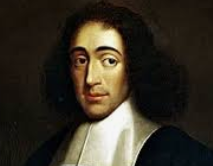
Descartes, a genius made to blaze new paths and to go astray in them, supposed with some other philosophers that God is the only efficient cause of motion, and that every instant He communicates motion to all bodies. But this opinion is but an hypothesis which he tried to adjust to the light of faith; and in so doing he was no longer attempting to speak as a philosopher or to philosophers. Above all he was not addressing those who can be convinced only by the force of evidence.
▼
Source
source
Ch. V Concerning the Moving Force of Matter
7 months 4 weeks ago
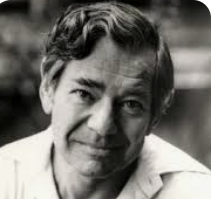
This endeavour to do a thing or leave it undone, solely in order to please men, we call ambition, especially when we so eagerly endeavour to please the vulgar, that we do or omit certain things to our own or another's hurt : in other cases it is generally called kindliness.
▼
Source
source
Part III, Prop. XXIX
4 months 3 weeks ago
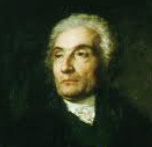
Of course, not everything old is beautiful, any more than everything black, or everything white, or everything young. But the notion that old means ugly is every bit as harmful as the prejudice that black is ugly. In one way it is even more pernicious. The notion that only what is new and young is beautiful poisons our relationship to the past and to our own future. It keeps us from understanding our roots and the greatest works of our culture and other cultures. It also makes us dread what lies ahead of us and leads many to shirk reality.
▼
Source
source
Time is an Artist (1978) Epilogue : Old is Beautiful
3 months 3 weeks ago
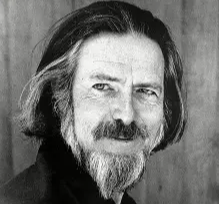
As long as the aristocracy is healthy, the name of the sovereign sacred to it, and it loves the monarchy passionately, the State is unshakeable, whatever be the qualities of the king. But once it loses its greatness, its pride, its energy, its faith, the spirit withdraws, the monarchy is dead, and its cadaver is left to the worms.
▼
Source
source
p. 127

6 months 3 weeks ago
The Africans had that claim on our humanity which could not be resisted, whatever might have been advanced by an hon. gentleman in defence of the property of the planters.
▼
Source
source
Speech in the House of Commons (12 May 1789), quoted in The Parliamentary History of England, From the Earliest Period to the Year 1803, Vol. XXVIII (1816), column 98

6 months 1 week ago
Moreover, nothing is so rare as to see misfortune fairly portrayed; the tendency is either to treat the unfortunate person as though catastrophe were his natural vocation, or to ignore the effects of misfortune on the soul, to assume, that is, that the soul can suffer and remain unmarked by it, can fail, in fact, to be recast in misfortune's image.
▼
Source
source
p. 193
4 months 5 days ago
Over the years it has become my firm opinion that sexual activity (even if only through masturbation) is "requisite and necessary, as well for the body as for the soul"; for men and women alike. It stimulates your glands, exercises your pelvis, thrills your nerves, brings mind and body together as one, and culminates in an ecstasy in which there is neither past nor future nor separation between self and other. We need that as we need vitamins, proteins, water, and air.
▼
Source
source
p. 122
6 months 2 weeks ago
I am a dreamer of words, of written words. I think I am reading; a word stops me. I leave the page. The syllables of the word begin to move around. Stressed accents begin to invert. The word abandons its meaning like an overload which is too heavy and prevents dreaming. Then words take on other meanings as if they had the right to be young. And the words wander away, looking in the nooks and crannies of vocabulary for new company, bad company.
▼
Source
source
Introduction, sect. 6
8 months 3 days ago
The natural philosophy of Democritus and some others, who did not suppose a mind or reason in the frame of things, but attributed the form thereof able to maintain itself to infinite essays or proofs of nature, which they term fortune, seemeth to me... in particularities of physical causes more real and better inquired than that of Aristotle and Plato; whereof both intermingled final causes, the one as a part of theology, and the other as a part of logic, which were the favourite studies respectively of both those persons. Not because those final causes are not true, and worthy to be inquired, being kept within their own province; but because their excursions into the limits of physical causes hath bred a vastness and solitude in that tract.
▼
Source
source
Book VII, 7
6 months 2 weeks ago
There is philosophy, which is about conceptual analysis - about the meaning of what we say - and there is all of this ... all of life.
▼
Source
source
Emphasizing his views on philosophy as something abstract and separate from normal life to Isaiah Berlin, in the early 1930s, as quoted in A.J. Ayer: A Life (1999) by Ben Rogers, p. 2.
5 months 6 days ago
A life which does not go into action is a failure.
▼
Source
source
Vol. 10
5 months 3 weeks ago
Either be silent or say something better than silence.
▼
Source
source
Maxim 960
7 months 2 weeks ago
The resolute one who moved by the principles of Thy FaithExtends the prosperity of order to his neighbors And works the land the evil now hold desolate, Earns through Righteousness, the Blessed Recompense Thy Good Mind has promised in Thy Kingdom of Heaven.
▼
Source
source
Spenta Mainyu Gatha; Yasna 50, 3.
7 months 3 weeks ago
Young man! Deny yourself satisfaction (of amusement, of debauchery, of love, etc.), not with the Stoical intention of complete abstinence, but with the refined Epicurean intention of having in view an ever-growing pleasure. This stinginess with the cash of your vital urge makes you definitely richer through the postponement of pleasure, even if you should, for the most part, renounce the indulgence of it until the end of your life. The awareness of having pleasure under your control is, like everything idealistic, more fruitful and more abundant than everything that satisfies the sense through indulgence because it is thereby simultaneously consumed and consequently lost from the aggregate of totality.
▼
Source
source
Kant, Immanuel (1996), page 54.

8 months 2 days ago
You must not murder. (Exodus 20:13) Q. What does this mean? A. We should fear and love God so that we may not hurt or harm our neighbor in his body, but help and befriend him in every bodily need [in every need and danger of life and body].
3 months 3 weeks ago
A free people claim their rights, as derived from the laws of nature, and not as the gift of their chief magistrate.
6 months 3 weeks ago
Now we were standing close to the summit's rim, gazing out into the endless East.

7 months 3 weeks ago
Generosity is nothing else than a craze to possess. All which I abandon, all which I give, I enjoy in a higher manner through the fact that I give it away.... To give is to enjoy possessively the object which one gives.
▼
Source
source
Part 2
6 months 3 weeks ago
To theology, ... only what it holds sacred is true, whereas to philosophy, only what holds true is sacred.
▼
Source
source
Lecture II, R. Manheim, trans. (1967), p. 11
8 months 2 weeks ago
One recognizes one's course by discovering the paths that stray from it.

3 months 3 weeks ago
Many the lumps of frankincense on the same altar; one falls there early and another late, but it makes no difference.
▼
Source
source
IV, 15
6 months 1 week ago
Whoever is versed in the jargon does not have to say what he thinks, does not even have to think it properly. The jargon takes over this task.
▼
Source
source
p. 9

8 months 1 week ago
The inclination to seek the truth is safer than the presumption which regards unknown things as known.
▼
Source
source
(Cambridge: 2002), Book 9, Chapter 1, p. 24
6 months 1 week ago
When we subordinate rest to work, we ignore the divine.
6 months 2 weeks ago
In deduction the mind is under the dominion of a habit or association by virtue of which a general idea suggests in each case a corresponding reaction. This is the way the hind legs of a frog separated from the rest of the body, reason, when you pinch them. It is the lowest form of psychical manifestation.


7 months 3 weeks ago
Let sanguine healthy-mindedness do its best with its strange power of living in the moment and ignoring and forgetting, still the evil background is really there to be thought of, and the skull will grin in at the banquet.
▼
Source
source
Lectures IV and V, "The Religion of Healthy-Mindedness"

4 months 2 weeks ago
Innumerable are the illusions and legerdemain-tricks of Custom: but of all these, perhaps the cleverest is her knack of persuading us that the Miraculous, by simple repetition, ceases to be Miraculous.
▼
Source
source
Bk. III, ch. 8.
6 months 3 weeks ago
The recognition of the light of reality within the darkness of abstraction is a contradiction - both the affirmation and the negation of the real at one and the same time. The new philosophy, which thinks the concrete not in an abstract but a concrete way, which acknowledges the real in its reality - that is, in a way corresponding to the being of the real as true, which elevates it into the principle and object of philosophy - is consequently the truth of the Hegelian philosophy, indeed of modern philosophy as a whole.
▼
Source
source
Part III, Section 31

7 months 3 weeks ago
What a monument of human smallness is this idea of the philosopher king. What a contrast between it and the simplicity of humaneness of Socrates, who warned the statesmen against the danger of being dazzled by his own power, excellence, and wisdom, and who tried to teach him what matters most - that we are all frail human beings. What a decline from this world of irony and reason and truthfulness down to Plato's kingdom of the sage whose magical powers raise him high above ordinary men; although not quite high enough to forgo the use of lies, or to neglect the sorry trade of every shaman - the selling of spells, of breeding spells, in exchange for power over his fellow-men.
▼
Source
source
Vol. 1, Ch 8 "The Philosopher King"
8 months 3 weeks ago
We face eternity now. We have no universe left, no outside phenomena, no emotions, no passions. Nothing but ourselves and thought. We face an eternity of introspection, when all through history we have never known what to do with ourselves on a rainy Sunday.
7 months 3 weeks ago
Ha! to forget. How childish! I feel you in my bones. Your silence screams in my ears. You may nail your mouth shut, you may cut out your tongue, can you keep yourself from existing? Will you stop your thoughts.
▼
Source
source
Inès reiterating to Garcin that they cannot ignore one another, Act 1, sc. 5
8 months 1 week ago
Shut out the evil love of the world, that you may be filled with the love of God. You are a vessel that was already full: you must pour away what you have, that you may take in what you have not.
▼
Source
source
Second Homily, as translated by John Burnaby (1955), p. 274
6 months 2 weeks ago
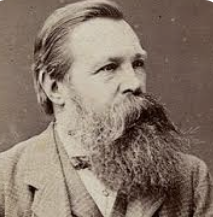
What will be the attitude of communism to existing nationalities? The nationalities of the peoples associating themselves in accordance with the principle of community will be compelled to mingle with each other as a result of this association and thereby to dissolve themselves, just as the various estate and class distinctions must disappear through the abolition of their basis, private property.

6 months 4 weeks ago
Muhammad brought down from heaven and put into the Koran not religious doctrines only, but political maxims, criminal and civil laws, and scientific theories. The Gospels, on the other hand, deal only with the general relations between man and God and between man and man. Beyond that, they teach nothing and do not oblige people to believe anything. That alone, among a thousand reasons, is enough to show that Islam will not be able to hold its power long in ages of enlightenment and democracy, while Christianity is destined to reign in such ages, as in all others.
▼
Source
source
Book One, Chapter V.


4 months 1 week ago
Thus they are deceived by the likeness of blows, and are appeased by the pretended tears of those who deprecate their wrath, and thus an unreal grief is healed by an unreal revenge.
6 months 3 weeks ago
Where popular authority is absolute and unrestrained, the people have an infinitely greater, because a far better founded, confidence in their own power. They are themselves, in a great measure, their own instruments. They are nearer to their objects. Besides, they are less under responsibility to one of the greatest controlling powers on the earth, the sense of fame and estimation. The share of infamy that is likely to fall to the lot of each individual in public acts is small indeed; the operation of opinion being in the inverse ratio to the number of those who abuse power. Their own approbation of their own acts has to them the appearance of a public judgment in their favor. A perfect democracy is, therefore, the most shameless thing in the world. As it is the most shameless, it is also the most fearless. No man apprehends in his person that he can be made subject to punishment.
6 months 2 weeks ago
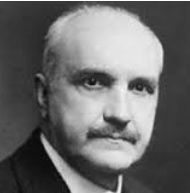
No system would have ever been framed if people had been simply interested in knowing what is true, whatever it may be. What produces systems is the interest in maintaining against all comers that some favourite or inherited idea of ours is sufficient and right.

7 months 2 weeks ago
The world is the totality of facts, not things.
▼
Source
source
(1.1) Original German: Die Welt ist die Gesamtheit der Tatsachen, nicht der Dinge
8 months 3 weeks ago
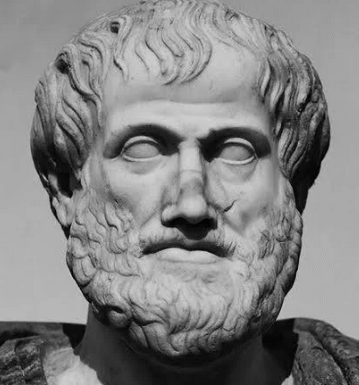
According to one mode... nature is thus denominated, viz. the first subject matter to every thing which contains in itself the principle of motion and mutation. But after another mode it is denominated form, which subsists according to definition: for as art is called that which subsists according to art, and that which is artificial; so likewise nature is both called that which is according to nature, and that which is natural. ...that which is composed from these is not nature, but consists from nature; as, for instance, man. And this is nature in a greater degree than matter: for every thing is then said to be, when it is form in energy... entelecheia, rather than when it is incapacity.

7 months 3 weeks ago
The really important facts were that spatial relationships had ceased to matter very much and that my mind was perceiving the world in terms of other than spatial categories. At ordinary times the eye concerns itself with such problems as where? - how far? - how situated in relation to what? In the mescaline experience the implied questions to which the eye responds are of another order. Place and distance cease to be of much interest. The mind does its perceiving in terms of intensity of existence, profundity of significance, relationships within a pattern."

7 months 3 weeks ago
Only the skilled can judge the skilfulness, but that is not the same as judging the value of the result.
▼
Source
source
A Preface to Paradise Lost (1942), Chapter 2: "Is Criticism Possible?"
3 months 3 weeks ago
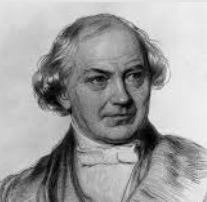
The 'Logic of Induction' consists in stating the Facts and the Inference in such a manner, that the evidence of the Inference is manifest; just as the Logic of Deduction consists in stating the Premises and the Conclusion in such a manner that the Evidence of the Conclusion is manifest.
8 months 3 weeks ago
The most exciting phrase to hear in science, the one that heralds new discoveries, is not 'Eureka!', but 'That's funny ...'
6 months 3 weeks ago
The secret of Hegel's dialectic lies ultimately in this alone, that it negates theology through philosophy in order then to negate philosophy through theology. Both the beginning and the end are constituted by theology; philosophy stands in the middle as the negation of the first positedness, but the negation of the negation is again theology. At first everything is overthrown, but then everything is reinstated in its old place, as in Descartes. The Hegelian philosophy is the last grand attempt to restore a lost and defunct Christianity through philosophy, and, of course, as is characteristic of the modern era, by identifying the negation of Christianity with Christianity itself.
▼
Source
source
Part II, Section 21
8 months 3 days ago
I could not be true and constant to the argument I handle, if I were not willing to go beyond others; but yet not more willing than to have others go beyond me again: which may the better appear by this, that I have propounded my opinions naked and unarmed, not seeking to preoccupate the liberty of men's judgments by confutations.
▼
Source
source
Book II
CivilSimian.com created by AxiomaticPanic, CivilSimian, Kalokagathia