Sometimes it's true....


The human understanding is of its own nature prone to suppose the existence of more order and regularity in the world than it finds. And though there be many things in nature which are singular and unmatched, yet it devises for them parallels and conjugates and relatives which do not exist. Hence the fiction that all celestial bodies move in perfect circles, spirals and dragons being (except in name) utterly rejected.
Nothing could be more natural than the developement of the passions, nor more striking than the views of the human heart. What delicate struggles! and uncommonly pretty turns of thought!

The film concludes with ... the most nauseatingly luscious, the most penetratingly vulgar mammy song that it has ever been my lot to hear. My flesh crept as the loud speaker poured out those sodden words, the greasy, sagging melody. I felt ashamed of myself for listening to such things, for even being a member of the species to which such things are addressed.
Remorse sleeps during a prosperous period but wakes up in adversity.

Furthermore, how will you endure the Romanists' terrible idolatries? It was not enough that they venerated the saints and praised God in them, but they actually made them into gods. They put that noble child, the mother Mary, right into the place of Christ. They fashioned Christ into a judge and thus devised a tyrant for anguished consciences, so that all comfort and confidence was transferred from Christ to Mary, and then everyone turned from Christ to his particular saint. Can anyone deny this? Is it not true?
When we leave you and assemble together by ourselves, we talk freely about his sayings and doings, treating them with the respect which they deserve: in your presence deep silence is observed about him, and thus you lose that greatest of pleasures, the hearing the praises of your son, which I doubt not you would be willing to hand down to all future ages, had you the means of so doing, even at the cost of your own life.
No one is so modest as not to believe himself a competent amateur sleuth.

An army and navy represents the people's toys.

I make no doubt... that these rules are simple, artless, and natural.
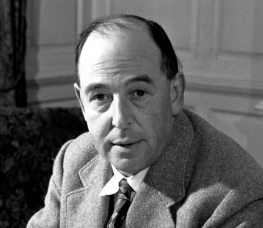
He sees as well as you do that courage is not simply one of the virtues, but the form of every virtue at the testing point, which means, at the point of highest reality. A chastity or honesty, or mercy, which yields to danger will be chaste or honest or merciful only on conditions.
We sometimes imagine, under the influence of Spenglerian philosophy or some other kind of "historical morphology," that we live in a similar age [to the Romans], the last witnesses of a condemned civilization. But condemned by whom? Not by God, but by some supposed "historical laws." For although we do not know any historical laws, we are in fact able of inventing them quite freely, and such laws, once invented, can then be realized in the form of self-fulfilling prophecies.
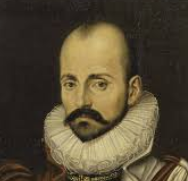
For my own part, I may desire in general to be other than I am; I may condemn and dislike my whole form, and beg of Almighty God for an entire reformation, and that He will please to pardon my natural infirmity: but I ought not to call this repentance, methinks, no more than the being dissatisfied that I am not an angel or Cato. My actions are regular, and conformable to what I am and to my condition; I can do no better; and repentance does not properly touch things that are not in our power; sorrow does.. I imagine an infinite number of natures more elevated and regular than mine; and yet I do not for all that improve my faculties, no more than my arm or will grow more strong and vigorous for conceiving those of another to be so.

If the red slayer think he slays, Or if the slain think he is slain, They know not well the subtle ways I keep, and pass, and turn again. Brahma, st. 1 Composed in July 1856 this poem is derived from a major passage of the Bhagavad Gita, one of the most popular of Hindu scriptures, and portions of it were likely a paraphrase of an existing translation. Though titled "Brahma" its expressions are actually more indicative of the Hindu concept "Brahman"
He is a dreamer of ancient times, or rather, of the myths of what ancient times used to be. Such men are harmless in themselves, but their queer lack of realism makes them fools for others.
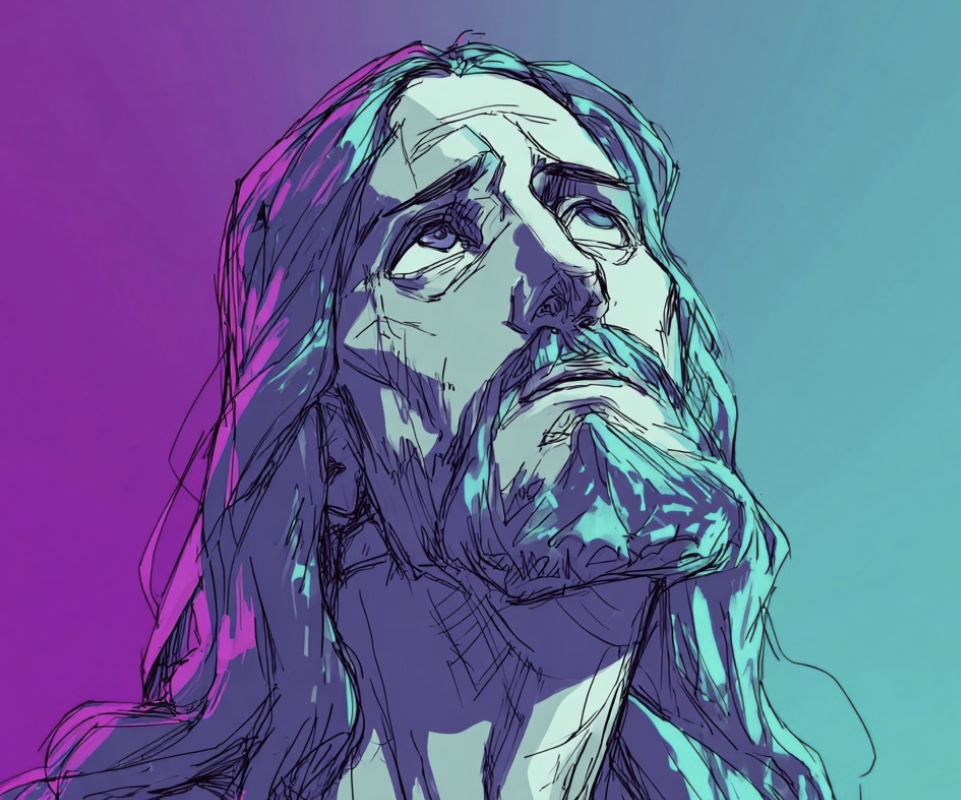
Behold, a sower went forth to sow; And when he sowed, some seeds fell by the way side, and the fowls came and devoured them up: Some fell upon stony places, where they had not much earth: and forthwith they sprung up, because they had no deepness of earth: And when the sun was up, they were scorched; and because they had no root, they withered away. And some fell among thorns; and the thorns sprung up, and choked them: But other fell into good ground, and brought forth fruit, some an hundredfold, some sixtyfold, some thirtyfold. Who hath ears to hear, let him hear.
That man, I declare, is happy whom nothing makes less strong than he is; he keeps to the heights, leaning upon none but himself; for one who sustains himself by any prop may fall.

Skepticism is the sadism of embittered souls.
World War III is a guerrilla information war with no division between military and civilian participation.
I focus on popular culture because I focus on those areas where black humanity is most powerfully expressed, where black people have been able to articulate their sense of the world in a profound manner. And I see this primarily in popular culture. Why not in highbrow culture? Because the access has been so difficult. Why not in more academic forms? Because academic exclusion has been the rule for so long for large numbers of black people that black culture, for me, becomes a search for where black people have left their imprint and fundamentally made a difference in terms of how certain art forms are understood. This is currently in popular culture. And it has been primarily in music, religion, visual arts and fashion.

Philosophy may in no way interfere with the actual use of language; it can in the end only describe it.
Hypnotized by their rear-view mirrors, philosophers and scientists alike tried to focus the figure of man in the old ground of nineteenth-century industrial mechanism and congestion. They failed to bridge from the old figure to the new. It is man who has become both figure and ground via the electrotechnical extension of his awareness. With the extension of his nervous system as a total information environment, man bridges art and nature.
Death induces the sensual person to say: Let us eat and drink, because tomorrow we shall die – but this is sensuality's cowardly lust for life, that contemptible order of things where one lives in order to eat and drink instead of eating and drinking in order to live.
The moral decline we are compelled to witness and the suffering it engenders are so oppressive that one cannot ignore them even for a moment. No matter how deeply one immerses oneself in work, a haunting feeling of inescapable tragedy persists. Still, there are moments when one feels free from one's own identification with human limitations and inadequacies. At such moments, one imagines that one stands on some spot of a small planet, gazing in amazement at the cold yet profoundly moving beauty of the eternal, the unfathomable: life and death flow into one, and there is neither evolution nor destiny; only being.
It is characteristic of theistic "tolerance" that no one really cares what the people believe in, just so they believe or pretend to believe.

Exercise is the technique by which one imposes on the body tasks that are both repetitive and different, but always graduated. By bending behavior towards a terminal state, exercise makes possible a perpetual characterization of the individual...It thus assures, in the form of continuity and constraint, a growth, an observation, a qualification.

There are two distinct classes of men in the nation, those who pay taxes, and those who receive and live upon the taxes.

Underlying even the so-called problem of knowledge there is simply this human feeling, just as underlying the inquiry into the "why," the cause, there is simply the search for the "wherefore," the end. All the rest is either to deceive oneself or to wish to deceive others; and to wish to deceive others in order to deceive oneself.
To me it seems clear that the descriptions of human life we find in the novels of Tolstoy or George Eliot are not mere entertainment; they teach us to perceive what goes on in social and individual life. And such descriptions require the many subtle distinctions that ordinary language has made available to us. The question of the relevance or irrelevance of "how we speak" is not just a question for philosophers, although it is that too. It is a question for philosophers because once ordinary language is laughed out of the room, philosophical theories are no longer held responsible at all to the ways we actually speak and actually live; but it is a question for more than just philosophers because, at bottom, contempt for ordinary language is contempt for all the humanities.
Once conform, once do what others do because they do it, and a kind of lethargy steals over all the finer senses of the soul.
Truth is sought not because it is truth but because it is good.
As I take up my pen I feel myself so full, so equal to my subject, and see my book so clearly before me in embryo, I would almost like to try to say it all in a single word.
Much can be inferred about a man from his mistress: in her one beholds his weaknesses and his dreams.

Philosophy stands in the same relation to the study of the actual world as masturbation to sexual love.
Of corruption, the principal and direct use is, to engage the representatives of the people to betray their trust, and sell themselves and the people to the universal corrupter-the monarch, in his capacity of corrupter-general.
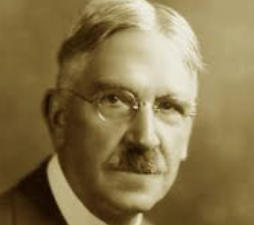
Naturalism is a word of many meetings in philosophy as well as in art. like most isms - classicism and romanticism, idealism and realism in art - it's has become an emotional term, a war cry of partisans.
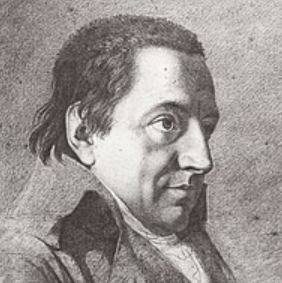
The will is the living principle of the rational soul, is indeed itself reason, when purely and simply apprehended. That reason is itself active, means, that the pure will, as such, rules and is effectual. The infinite reason alone lies immediately and entirely in the purely spiritual order. The finite being lives necessarily at the same time in a sensuous order; that is to say, in one which presents to him other objects than those of pure reason; a material object, to be advanced by instruments and powers, standing indeed under the immediate command of the will, but whose efficacy is conditional also on its own natural laws.
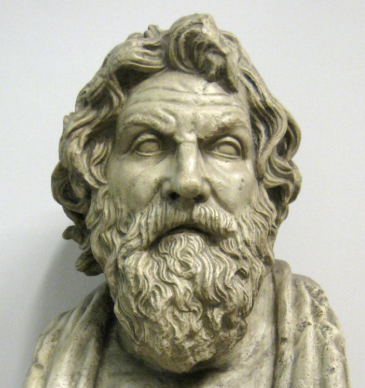
Ill repute is a good thing and much the same as pain.
The artist may be well advised to keep his work to himself till it is completed, because no one can readily help him or advise him with it...but the scientist is wiser not to withhold a single finding or a single conjecture from publicity.

Philosophy is not politics, and we do our best, within our all-too-human limitations, to seek the truth, not to score points against opponents. There is little satisfaction in gaining an easy triumph over a weak opponent while ignoring better arguments against your views.

If there is anything unique about the human animal it is that it has the ability to grow knowledge at an accelerating rate while being chronically incapable of learning from experience. Science and technology are cumulative, whereas ethics and politics deal with recurring dilemmas. Whatever they are called, torture and slavery are universal evils; but these evils cannot be consigned to the past like redundant theories in science. They return under different names: torture as enhanced interrogation techniques, slavery as human trafficking. Any reduction in universal evils is an advance in civilization. But, unlike scientific knowledge, the restraints of civilized life cannot be stored on a computer disc. They are habits of behaviour, which once broken are hard to mend. Civilization is natural for humans, but so is barbarism.
Knowing that religion does not furnish grosser bigots than law, I expect little from old judges.
Wherever the want of clothing forced them to it, the human race made clothes for thousands of years, without a single man becoming a tailor.
Any artist should be grateful for a naïve grace which puts him beyond the need to reason elaborately.
This method of mental training is, therefore, the immediate preparation for the moral; it completely destroys the root of immorality by never allowing sensuous enjoyment to become the motive. Formerly, that was the first motive to be stimulated and developed, because it was believed that otherwise the pupil could not be influenced or controlled at all.
Who else is the enemy of Nature but he who mistakes himself for more intelligent than Nature, though it is the highest school for all of us?
You can't get a cup of tea large enough or a book long enough to suit me.
CivilSimian.com created by AxiomaticPanic, CivilSimian, Kalokagathia