


5 months 1 week ago
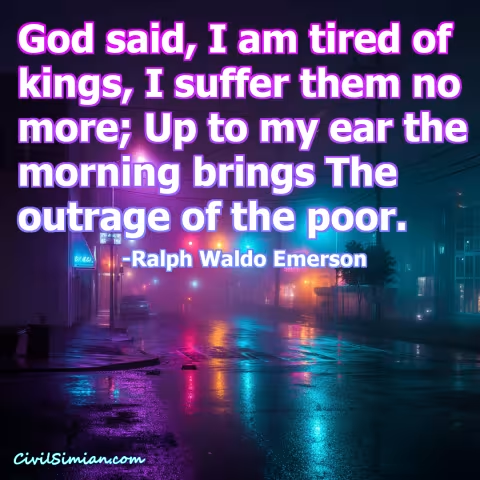
Steiner goes further than this -- and this is his own central contribution to modern thought. He states that once we have made a habit of remembering Mozart and the stars, we shall find ourselves developing powers of 'spiritual vision.' We shall never again feel ourselves to be helpless victims of the external world.
▼
Source
source
p. 169
3 months 2 weeks ago
I do not know what postmodern is and how it differs from the premodern, nor do I feel that I ought to know.
▼
Source
source
"Modernity on Endless Trial"

7 months 1 week ago
Logic has borrowed, perhaps, the rules of geometry, without comprehending their force... it does not thence follow that they have entered into the spirit of geometry, and I should be greatly averse... to placing them on a level with that science that teaches the true method of directing reason.
3 months 6 days ago
Now, you see, if you understand what I'm saying, with your intelligence, and then take the next step and say "But I understood it now, but I didn't feel it." Then, next I raise the question: Why do you want to feel it? You say: "I want something more", because that's again that spiritual greed. And you could only say that because you didn't understand it.
▼
Source
source
Intellectual Yoga

3 months 1 week ago
Or, if you enjoy living with Greeks also, spend your time with Socrates and with Zeno: the former will show you how to die if it be necessary; the latter how to die before it is necessary. Live with Chrysippus, with Posidonius: they will make you acquainted with things earthly and things heavenly; they will bid you work hard over something more than neat turns of language and phrases mouthed forth for the entertainment of listeners; they will bid you be stout of heart and rise superior to threats. The only harbour safe from the seething storms of this life is scorn of the future, a firm stand, a readiness to receive Fortune's missiles full in the breast, neither skulking nor turning the back.
4 months 3 weeks ago
I have only one real message in this lecture, and that is: consciousness is a biological phenomenon, like photosynthesis, digestion, mitosis-you know all the biological phenomena-and once you accept that, most, if not all about the hard problems of consciousness simply evaporate.

5 months 1 week ago
The needs of the soul can for the most part be listed in pairs of opposites which balance and complete one another. The human soul has need of equality and of hierarchy. Equality is the public recognition, effectively expressed in institutions and manners, of the principle that an equal degree of attention is due to the needs of all human beings. Hierarchy is the scale of responsibilities. Since attention is inclined to direct itself upwards and remain fixed, special provisions are necessary to ensure the effective compatibility of equality and hierarchy.

6 months 3 weeks ago
God offers to every mind its choice between truth and repose.
▼
Source
source
Intellect

4 months 3 weeks ago
The user of the electric light -- or a hammer, or a language, or a book -- is the content. As such, there is a total metamorphosis of the user by the interface. It is the metamorphosis that I consider the message.
▼
Source
source
Letter to Edward T. Hall, 1971, Letters of Marshall McLuhan, p. 397

5 months 3 weeks ago
So it is that after each night, facing a new day, the impossible necessity of dealing with it fills us with dread; exiled in light as if the world had just started, inventing the sun, we flee from tears-just one of which would be enough to wash us out of time.
4 months 3 weeks ago
My main theme is the extension of the nervous system in the electric age, and thus, the complete break with five thousand years of mechanical technology. This I state over and over again. I do not say whether it is a good or bad thing. To do so would be meaningless and arrogant.
▼
Source
source
Letter to Robert Fulford, 1964. Letters of Marshall McLuhan (1987), p. 300
6 months 3 weeks ago
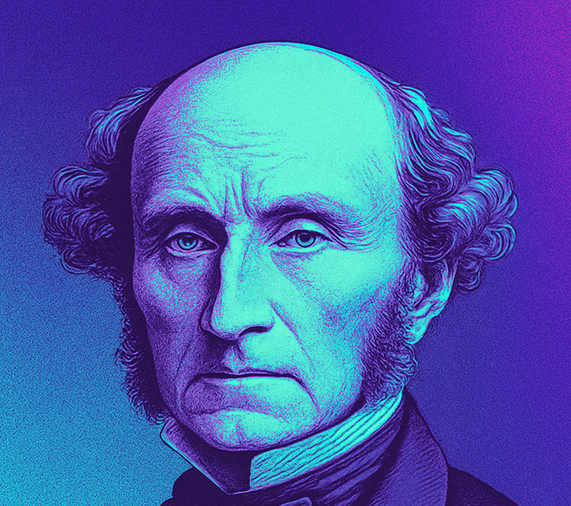
For passionate emotions of all sorts, and for everything which has been said or written in exaltation of them, he professed the greatest contempt. He regarded them as a form of madness. "The intense" was with him a bye-word of scornful disapprobation. He regarded as an aberration of the moral standard of modern times, compared with that of the ancients, the great stress laid upon feeling.
▼
Source
source
(p. 49)
3 months 3 weeks ago
The self-evident truth which makes men invincible is that inalienably they are inviolate persons.
▼
Source
source
Ch. XVII: "On This Rock", §2, p. 375
4 months 2 weeks ago
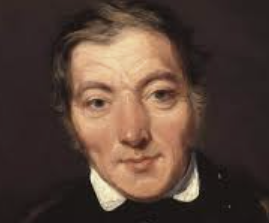
It is therefore, the interest of all, that every one, from birth, should be well educated, physically and mentally, that society may be improved in its character, - that everyone should be beneficially employed, physically and mentally, that the greatest amount of wealth may be created, and knowledge attained, - that everyone should be placed in the midst of those external circumstances that will produce the greatest number of pleasurable sensations, through the longest life, that man may be made truly intelligent, moral and happy, and be thus prepared to enter upon the coming Millennium.
▼
Source
source
A Development of the Principles & Plans on which to establish self-supporting Home Colonies
4 months 1 week ago
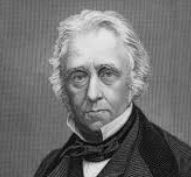
Hence it may be concluded that the happiest state of society is that in which supreme power resides in the whole body of a well-informed people. This is an imaginary, perhaps an unattainable, state of things. Yet, in some measure, we may approximate to it; and he alone deserves the name of a great statesman, whose principle it is to extend the power of the people in proportion to the extent of their knowledge, and to give them every facility for obtaining such a degree of knowledge as may render it safe to trust them with absolute power. In the mean time, it is dangerous to praise or condemn constitutions in the abstract; since, from the despotism of St. Petersburg to the democracy of Washington, there is scarcely a form of government which might not, at least in some hypothetical case, be the best possible.
▼
Source
source
pp. 161-162
4 months 1 week ago
The extinction of race consciousness as between Muslims is one of the outstanding achievements of Islam, and in the contemporary world there is, as it happens, a crying need for the propagation of this Islamic virtue.
▼
Source
source
Ch. 10: Islam, the West, and the Future

6 months 2 weeks ago
I'm very proud that some people think that I'm a danger for the intellectual health of students. When people start thinking of health in intellectual activities, I think there is something wrong. In their opinion I am a dangerous man, since I am a crypto-Marxist, an irrationalist, a nihilist.
▼
Source
source
Truth, Power, Self : An Interview with Michel Foucault

2 months 3 weeks ago
Blest is that nation whose silent course of happiness furnishes nothing for history to say.
▼
Source
source
Letter to Count Diodati

6 months 2 weeks ago
I am a utilitarian. I am also a vegetarian. I am a vegetarian because I am a utilitarian.
▼
Source
source
Utilitarianism and Vegetarianism, Philosophy & Public Affairs, 9(4): 325 (1980).
5 months 2 weeks ago
When Socrates and his two great disciples composed a system of rational ethics they were hardly proposing practical legislation for mankind...They were merely writing an eloquent epitaph for their country.
3 months 2 weeks ago
Civilization exists by geological consent, subject to change without notice.
▼
Source
source
What is Civilization? Ladies' Home Journal, LXIII
5 months 2 weeks ago
The hypostasis of the particular methods of procedure employed by natural science ... results in the view that all theoretical differences which rest on historically conditioned antagonisms of interest are to be settles by a "crucial experiment" rather than by struggle and counter-struggle. The harmonious relation of individuals to one another becomes a fact, therefore, that has even more general character than a law of nature.
▼
Source
source
p. 148.

5 months 1 day ago
Pure justice emerges from symmetry applied human life, and human beings as ends in themselves.
7 months 3 weeks ago
But voice is a certain sound of that which is animated; for nothing inanimate emits a voice; but they are said to emit a voice from similitude, as a pipe, and a lyre, and such other inanimate things, have extension, modulation, and dialect; for thus it appears, because voice, also, has these.
5 months 1 week ago
A further turn is to be found in some "unmasking" accounts of natural science, which aim to show that its pretensions to deliver the truth are unfounded, because of social forces that control its activities. Unlike the case of history, these do not use truths of the same kind; they do not apply science to the criticism of science. They apply the social sciences, and typically depend on the remarkable assumption that the sociology of knowledge is in a better position to deliver truth about science than science is to deliver truth about the world.
▼
Source
source
p. 2
2 months 3 weeks ago
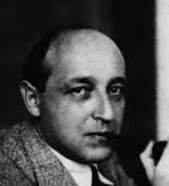
Relativism is a product of the modern historical-sociological procedure which is based on the recognition that all historical thinking is bound up with the concrete position in life of the thinker [Standortsgebundenheit des Denkers]. But relativism combines this historical-sociological insight with an older theory of knowledge which was as yet unaware of the interplay between conditions of existence and modes of thought, and which modelled its knowledge after static prototypes such as might be exemplified by the proposition 2 x 2 = 4. This older type of thought, which regarded such examples as the model of all thought, was necessarily led to the rejection of all those forms of knowledge which were dependent upon the subjective standpoint and the social situation of the knower, and which were, hence, merely "relative".

4 months 2 weeks ago
The picture of modern philosophy as centered in epistemology and driven by the desire to ground our representations is so tenacious that some philosophers are prepared to bite the bullet and declare the effort simply wasted. Rorty, for example, finds it easier to reject modern philosophy altogether than to reject the standard accounts of its history. His narrative is more polemical than most, but it's a polemical version of the story told in most philosophy departments in the second half of the twentieth century. The story is one of tortuously decreasing interest. Philosophy, like some people, was prepared to accept boredom in exchange for certainty as it grew to middle age.
7 months 2 days ago
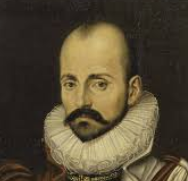
We are, I know not how, double in ourselves, which is the cause that what we believe we do not believe, and cannot disengage ourselves from what we condemn.
▼
Source
source
Ch. 16. Of Glory, tr. Cotton, rev. W. Carew Hazlitt, 1877
7 months 3 weeks ago
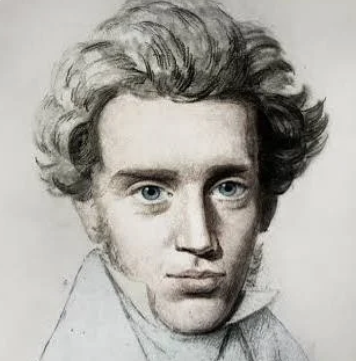
Now just as the historical gives occasion for the contemporary to become a disciple, but only it must be noted through receiving the condition from the God himself, since otherwise we speak Socratically, so the testimony of contemporaries gives occasion for each successor to become a disciple, but only it must be noted through receiving the condition from the God himself.
6 months 6 days ago
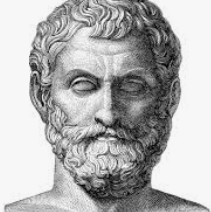
Avoid doing what you would blame others for doing.
▼
Source
source
As quoted in Diogenes Laërtius, The Lives and Opinions of Eminent Philosophers, I, 36 Cf. Golden Rule
5 months 1 week ago
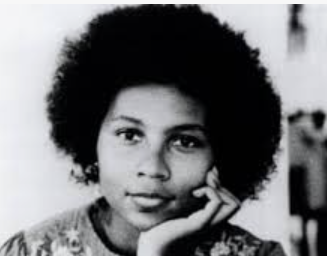
Marcus Garvey, Elijah Muhammad, Malcolm X, Martin Luther King, Stokely Carmichael, Amiri Baraka and other black male leaders have righteously supported patriarchy. They have all argued that it is absolutely necessary for black men to relegate black women to a subordinate position both in the political sphere and in home life.
6 months 3 weeks ago
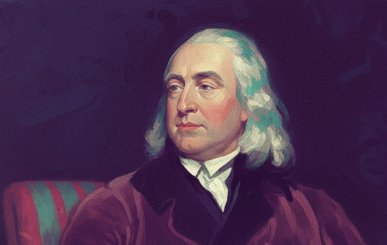
Prose is when all the lines except the last go on to the end. Poetry is when some of them fall short of it.
▼
Source
source
As quoted in Life of John Stuart Mill (1954) by M. St.J. Packe, Bk. I, Ch. II
7 months 2 days ago
Fame and tranquility can never be bedfellows.
▼
Source
source
Book I, Ch. 39
7 months 3 weeks ago
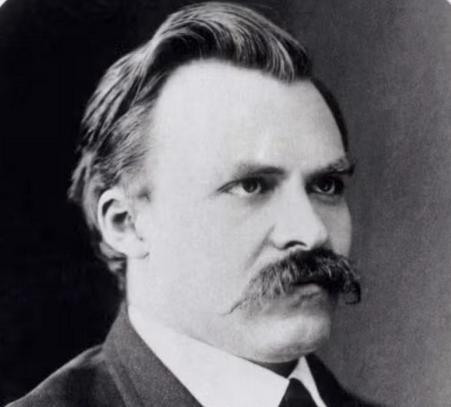
Without art we would be nothing but foreground and live entirely in the spell of that perspective which makes what is closest at hand and most vulgar appear as if it were vast, and reality itself.
3 months 3 days ago
Human history is not the product of the wise direction of human reason, but is shaped by the forces of emotion-our dreams, our pride, our greed, our fears, and our desire for revenge.
▼
Source
source
Confucius Saw Nancy and Essays about Nothing (1936), p. 95

4 months 3 weeks ago
Natural selection is like artificial selection, but without the human chooser. Instead of a human deciding which offspring shall die in which shall reproduce, nature 'decides'. The quotation marks are vital because nature doesn't consciously decide. This might seem too obvious to emphasize, but you'd be surprised by the number of people who think natural selection implies some kind of personal choice. They couldn't be more wrong. It just is the case that some offspring are more likely to die while others have what it takes to survive and reproduce. Therefore, as the generations go by, the average, typical creature in the population becomes ever better at the arts of surviving and reproducing. Ever better, I should specify, when, when measured against some absolute standard.
▼
Source
source
Chapter 1, "Facing Mount Rushmore" (p. 34)

3 months 4 weeks ago
Is not the minimal state, the framework for utopia, an inspiring vision? The minimal state treats us as inviolate individuals, who may not be used in certain ways by others as means or tools or instruments or resources; it treats us as persons having individual right with the dignity this constitutes. Treating us with respect by respecting our rights, it allows us, individually or with whom we please, to choose our life and to realize our ends and our conception of ourselves, insofar as we can, aided by the voluntary cooperation of other individuals possessing the same dignity. How dare any state or group of individuals do more. Or less.
▼
Source
source
Ch. 10 : A Framework for Utopia; Utopia and the Minimal State, p. 333

2 months 3 weeks ago
Hasten to examine thy own ruling faculty and that of the universe and that of thy neighbor: thy own, that thy may make it just; and that of the universe, that thou mayst remember of what thou art a part; and that of thy neighbor, that thy mayst know whether he has acted ignorantly or with knowledge, and that thou mayst also consider that his ruling faculty is akin to thine.
▼
Source
source
IX, 22
4 months 3 weeks ago
Art is anything you can get away with.
5 months 4 days ago
It is we who are the measure of what is strange and miraculous: if we sought a universal measure the strange and miraculous would not occur and all things would be equal.
▼
Source
source
A 26
4 months 3 weeks ago
Natural selection is an extremely simple process, in the sense that very little machinery needs to be set up in order for it to work. Of course the effects and consequences of natural selection are complex in the extreme. But in order to set natural selection going on a real planet, all that is required is the existence of inherited information.
▼
Source
source
Chapter 2, "Silken Fetters" (p. 68)
7 months 3 weeks ago
To succeed, planning alone is insufficient. One must improvise as well.
2 months 3 weeks ago
That which comes after ever conforms to that which has gone before.
▼
Source
source
IV, 45
5 months 3 weeks ago
The rights and duties of man thus simplified, it seems almost impertinent to attempt to illustrate truths that appear so incontrovertible: yet such deeply rooted prejudices have clouded reason, and such spurious qualities have assumed the name of virtues, that it is necessary to pursue the course of reason as it has been perplexed and involved in error, by various adventitious circumstances, comparing the simple axiom with casual deviations.Men, in general, seem to employ their reason to justify prejudices, which they have imbibed, they cannot trace how, rather than to root them out. The mind must be strong that resolutely forms its own principles; for a kind of intellectual cowardice prevails which makes many men shrink from the task, or only do it by halves. Yet the imperfect conclusions thus drawn, are frequently very plausible, because they are built on partial experience, on just, though narrow, views.
▼
Source
source
Ch. 1
7 months 3 weeks ago
It's gravity is the cause; and that which is heavy abides in the middle, and the earth is in the middle: in like manner also, the infinite will abide in itself, through some other cause... and will itself support itself. ..The places of the whole and the part are of the same species; as of the whole earth and a clod, the place is downward; and of the whole of fire, and a spark, the place is upward. So that if the place of the infinite is in itself, there will be the same place also of a part of the infinite.

3 months 2 weeks ago
Any American ally will welcome Biden as president, will be happy that he was elected, but will be a little... distrustful because the Republicans could make a come-back in 2022. They could win the presidency again in 2024. ...There's is still a good third of the American public that remain very strong Trump voters. They're very angry and... are not going to go away... Therefore the ability of the United States to resume its role as the chief defender of the liberal order... is going to be contested, both domestically and... by American friends. If this leads to more self-reliance on their part, that may not be the worst thing in the world, but it is going to mean a very different kind of world order than the one I grew up arguing with Owen Harries about.
▼
Source
source
30:41:00
CivilSimian.com created by AxiomaticPanic, CivilSimian, Kalokagathia