




6 months 3 weeks ago
The doctrine that there is as much science in a subject as... mathematics in it, or as much... measurement or 'precision' in it, rests upon... misunderstanding.

5 months 3 weeks ago
Sooner or later, each desire must encounter its lassitude: its truth . . .

2 months 3 weeks ago
I agree with you that there is a natural aristocracy among men. The grounds of this are virtue and talents... The natural aristocracy I consider as the most precious gift of nature, for the instruction, the trusts, and government of society... Every one, by his property, or by his satisfactory situation, is interested in the support of law and order. And such men may safely and advantageously reserve to themselves a wholesome control over their public affairs, and a degree of freedom, which, in the hands of the canaille [the masses] of the cities of Europe, would be instantly perverted to the demolition and destruction of everything public and private.
▼
Source
source
Letter to John Adams
7 months 1 week ago
Materials are indifferent, but the use which we make of them is not a matter of indifference.
▼
Source
source
Book II, ch. 5, 1
7 months 1 week ago
If you would be a good reader, read; if a writer, write.
▼
Source
source
Book II, ch. 18, 1.
7 months 3 weeks ago
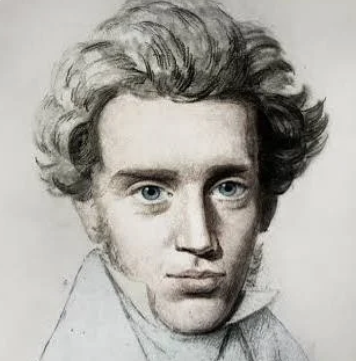
I can understand myself in believing, although in addition I can in a relative misunderstanding comprehend the human aspect of this life: but comprehend faith or comprehend Christ, I cannot.
3 months 6 days ago
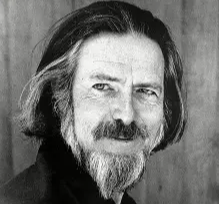
Whenever the therapist stands with society, he will interpret his work as adjusting the individual and coaxing his 'unconscious drives' into social respectability. But such 'official psychotherapy' lacks integrity and becomes the obedient tool of armies, bureaucracies, churches, corporations, and all agencies that require individual brainwashing. On the other hand, the therapist who is really interested in helping the individual is forced into social criticism. This does not mean that he has to engage directly in political revolution; it means that he has to help the individual in liberating himself from various forms of social conditioning, which includes liberation from hating this conditioning - hatred being a form of bondage to its object.
▼
Source
source
p. 8

5 months 1 week ago
The cravings of love and sex are met with absolute ignorance by the majority of parents, who consider it as something indecent and improper, something disgraceful, almost criminal, to be suppressed and fought like some terrible disease. The love and tender feelings in the young plant are turned into vulgarity and coarseness through the stupidity of those surrounding it, so that everything fine and beautiful is either crushed altogether or hidden in the innermost depths, as a great sin, that dares not face the light.
2 months 3 weeks ago
Once more I realized to what an extent earthly happiness is made to the measure of man. It is not a rare bird which we must pursue at one moment in heaven, at the next in our minds. Happiness is a domestic bird found in our own courtyards.
▼
Source
source
"Italy", Ch. 18, p. 182
6 months 2 weeks ago
What odds does it make to the man who lives within Nature's bounds, whether he ploughs a hundred acres or a thousand?
▼
Source
source
Book I, satire i, line 48
6 months 3 weeks ago
In a really equal democracy, every or any section would be represented, not disproportionately, but proportionately. ... Unless they are, there is not equal government, but a government of inequality and privilege: one part of the people rule over the rest: there is a part whose fair and equal share of influence in the representation is withheld from them, contrary to all just government, but, above all, contrary to the principle of democracy, which professes equality as its very root and foundation.
▼
Source
source
Ch. VII: Of True and False Democracy; Representation of All, and Representation of the Majority only (p. 248)

2 months 3 weeks ago
Do what nature now requires. Set thyself in motion, if it is in thy power, and do not look about thee to see if any one will observe it; nor yet expect Plato's Republic: but be content if the smallest thing goes on well, and consider such an event to be no small matter. Forward, as occasion offers. Never look round to see whether any shall note it.... Be satisfied with success in even the smallest matter, and think that even such a result is no trifle.
▼
Source
source
IX, 29
5 months 2 days ago
What we have is a device for producing sentences in response to sentences. But none of these sentences is at all connected to the real world. If one coupled two of these machines and let them play the Imitation Game with each other, then they would go on 'fooling' each other forever, even if the rest of the world disappeared! There is no more reason to regard the machine's talk of apples as referring to real world apples than there is to regard the ant's 'drawing' as referring to Winston Churchill.
▼
Source
source
Chap. 1 : Brains in a vat
7 months 3 weeks ago
In all the flat, lethargic, dull moments, when the sensate dominates a person, to him Christianity is a madness because it is incommensurate with any finite wherefore. But then what good is it? Answer: Be quiet, it is the absolute. And that is how it must be presented, consequently as, that is, it must appear as madness to the sensate person. And therefore it is true, so true, and also in another sense so true when the sensible person in the situation of contemporaneity (see II A) censoriously says of Christ, “He is literally nothing”-quite so, for he is the absolute. Christianity is an absolute. Christianity came into the world as the absolute, not, humanly speaking, for comfort; on the contrary, it continually speaks about how the Christian must suffer or about how a person in order to become and remain a Christian must endure sufferings that he consequently can avoid simply by refraining from becoming a Christian.
5 months 1 week ago
By abstaining from all definite content, whether as formal logic and theory of science or as the legend of Being beyond all beings, philosophy declared its bankruptcy regarding concrete social goals.
▼
Source
source
p. 6
6 months 2 weeks ago
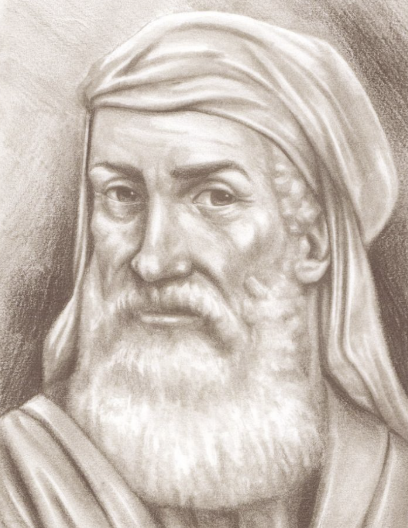
Fortunate is he who has acquired a wealth of divine understanding, but wretched the one whose interest lies in shadowy conjectures about divinities.
▼
Source
source
fr. 132
5 months 2 weeks ago
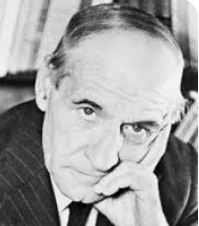
Diogenes, in his mud-covered sandals, tramps over the carpets of Aristippus. The cynic pullulated at every corner, and in the highest places. This cynic did nothing but saboter the civilisation of the time. He was the nihilist of Hellenism. He created nothing, he made nothing. His role was to undo - or rather to attempt to undo, for he did not succeed in his purpose. The cynic, a parasite of civilisation, lives by denying it, for the very reason that he is convinced that it will not fail. What would become of the cynic among a savage people where everyone, naturally and quite seriously, fulfils what the cynic farcically considers to be his personal role?
▼
Source
source
Chapter XI: The Self-Satisfied Age

7 months 1 week ago
Shut out the evil love of the world, that you may be filled with the love of God. You are a vessel that was already full: you must pour away what you have, that you may take in what you have not.
▼
Source
source
Second Homily, as translated by John Burnaby (1955), p. 274
5 months 2 weeks ago
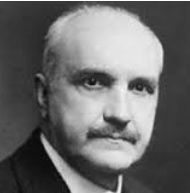
To understand oneself is the classic form of consolation; to elude oneself is the romantic.
▼
Source
source
p. 51

3 months 2 weeks ago
It is truly a lordly spectacle how this great soul takes in all kinds of men and objects, a Falstaff, an Othello, a Juliet, a Coriolanus; sets them all forth to us in their round completeness; loving, just, the equal brother of all. Novum Organum, and all the intellect you will find in Bacon, is of a quite secondary order; earthy, material, poor in comparison with this. Among modern men, one finds, in strictness, almost nothing of the same rank. Goethe alone, since the days of Shakspeare, reminds me of it. Of him too you say that he saw the object; you may say what he himself says of Shakspeare: 'His characters are like watches with dial-plates of transparent crystal; they show you the hour like others, and the inward mechanism also is all visible.'.

6 months 3 weeks ago
Though thou loved her as thyself, As a self of purer clay, Tho' her parting dims the day, Stealing grace from all alive, Heartily know, When half-gods go, The gods arrive.
▼
Source
source
Give All to Love, st. 4

6 months ago
A man may be in as just possession of Truth as of a City, and yet be forced to surrender.
▼
Source
source
Section 6
5 months 3 weeks ago
Life is too full of death for death to be able to add anything to it.
6 months 3 weeks ago
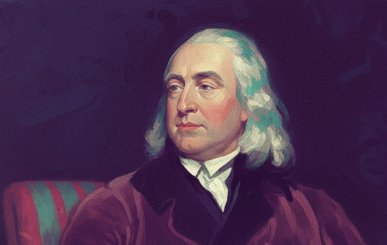
Nature has placed mankind under the governance of two sovereign masters, pain and pleasure. It is for them alone to point out what we ought to do, as well as to determine what we shall do. On the one hand the standard of right and wrong, on the other the chain of causes and effects, are fastened to their throne. They govern us in all we do, in all we say, in all we think: every effort we can make to throw off our subjection, will serve but to demonstrate and confirm it. In words a man may pretend to abjure their empire: but in reality he will remain subject to it all the while. The principle of utility recognizes this subjection, and assumes it for the foundation of that system, the object of which is to rear the fabric of felicity by the hands of reason and of law. Systems which attempt to question it, deal in sounds instead of sense, in caprice instead of reason, in darkness instead of light.
▼
Source
source
Ch. 1: Of the Principle of Utility

5 months 1 week ago
Power is more 'spacious' than violence. And violence becomes power if it 'gives itself more time.' Looked at from this perspective, power rests on an excess of space and time.
5 months 3 weeks ago
To revolt is a natural tendency of life. Even a worm turns against the foot that crushes it. In general, the vitality and relative dignity of an animal can be measured by the intensity of its instinct to revolt.
▼
Source
source
"On the International Workingmen's Association and Karl Marx"

6 months 3 weeks ago
And if he be too forward to venture upon his own strength and skill, and perplexity and trouble of a misadventure now and then, that reaches not his innocence, his health, or reputation, may not be an ill way to teach him more caution.
▼
Source
source
Sec. 94
5 months 3 weeks ago
At the edge of life you feel that you are no longer master of the life within you, that subjectivity is an illusion, and that uncontrollable forces are seething inside you, evolving with no relation to a personal center or a definite, individual rhythm.
▼
Source
source
essay 2 - On not wanting to live
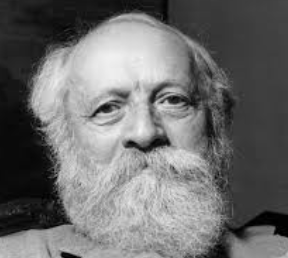
5 months 2 weeks ago
So long as you "have" yourself, have yourself as an object, your experience of man is only as of a thing among things.
▼
Source
source
p. 148
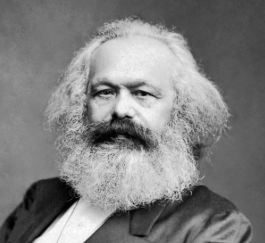
6 months 3 weeks ago
A house may be large or small; as long as the neighboring houses are likewise small, it satisfies all social requirement for a residence. But let there arise next to the little house a palace, and the little house shrinks to a hut. The little house now makes it clear that its inmate has no social position at all to maintain, or but a very insignificant one; and however high it may shoot up in the course of civilization, if the neighboring palace rises in equal or even in greater measure, the occupant of the relatively little house will always find himself more uncomfortable, more dissatisfied, more cramped within his four walls.
▼
Source
source
Wage Labour and Capital (December 1847), in Marx Engels Selected Works, Volume I, p. 163.
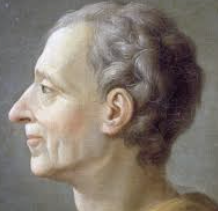
5 months 1 week ago
Useless laws weaken the necessary laws.
▼
Source
source
Book XXIX: Of the Manner of Composing Laws, Chapter 16: Things to be Observed in the Composing of Laws

6 months 3 weeks ago
Separate an individual from society, and give him an island or a continent to possess, and he cannot acquire personal property. He cannot be rich. So inseparably are the means connected with the end, in all cases, that where the former do not exist the latter cannot be obtained. All accumulation, therefore, of personal property, beyond what a man's own hands produce, is derived to him by living in society; and he owes on every principle of justice, of gratitude, and of civilization, a part of that accumulation back again to society from whence the whole came.
▼
Source
source
Means by Which the Fund Is to Be Created

6 months 3 weeks ago
I feel like that intellectual but plain-looking lady who was warmly complimented on her beauty. In accepting his Nobel Prize, in December 1950; Russell denied that he had contributed anything in particular to literature.
▼
Source
source
Quoted in LIFE, Editorials: "A great mind is still annoying and adorning our age", 26 May 1952
6 months 3 weeks ago
A general State education is a mere contrivance for molding people to be exactly like one another; and as the mold in which it casts them is that which pleases the dominant power in the government, whether this be a monarch, an aristocracy, or a majority of the existing generation; in proportion as it is efficient and successful, it establishes a despotism over the mind, leading by a natural tendency to one over the body.
▼
Source
source
Ch. V: Applications
2 months 3 weeks ago
When angry, count ten before you speak; if very angry, an hundred.
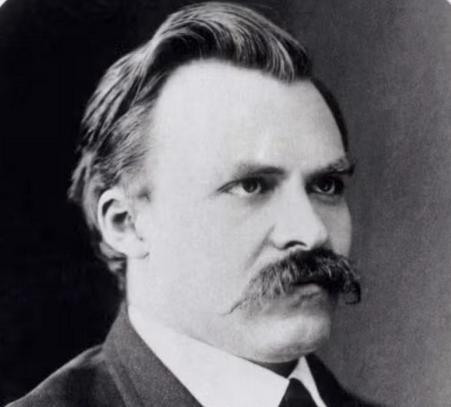
7 months 3 weeks ago
Arrogance on the part of the meritorious is even more offensive to us than the arrogance of those without merit: for merit itself is offensive.
3 months 2 weeks ago
Cannot we understand how these men worshipped Canopus; became what we call Sabeans, worshipping the stars? Such is to me the secret of all forms of Paganism. Worship is transcendent wonder; wonder for which there is now no limit or measure; that is worship.
6 months 1 week ago
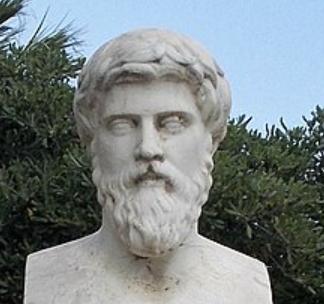
When Eudæmonidas heard a philosopher arguing that only a wise man can be a good general, "This is a wonderful speech," said he; "but he that saith it never heard the sound of trumpets."
▼
Source
source
62 Eudæmonidas

5 months 1 week ago
The real sin - perhaps it is a sin against the Holy Ghost for which there is no remission - is the sin of heresy, the sin of thinking for oneself. The saying has been heard before now, here in Spain, that to be a liberal - that is, a heretic - is worse than being an assassin, a thief, or an adulterer. The gravest sin is not to obey the Church, whose infallibility protects us from reason.

6 months 2 weeks ago
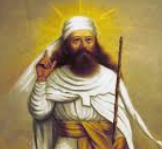
For a thinking man is where Wisdom is at home.
▼
Source
source
Ahunuvaiti Gatha; Yasna 30, 9.

3 months 2 weeks ago
Scientific revolutions are inaugurated by a growing sense... that an existing paradigm has ceased to function adequately in the exploration of an aspect of nature to which that paradigm itself had previously led the way. p. 91
▼
Source
source
2012 ed.
2 months 3 weeks ago
"I do not know whether behind appearances there lives and moves a secret essence superior to me. Nor do I ask; I do not care. I create phenomena in swarms, and paint with a full palette a gigantic and gaudy curtain before the abyss. Do not say, "Draw the curtain that I may see the painting." The curtain is the painting.
2 months 3 weeks ago
I am endeavouring in a general way to explain the laws of double refraction on this hypothesis, but have not yet arrived at any results sufficiently decisive to be communicated.
3 months 2 weeks ago
I warmly second the advice of the wisest of men-"Don't be ambitious; don't be at all too desirous to success; be loyal and modest." Cut down the proud towering thoughts that you get into you, or see they be pure as well as high. There is a nobler ambition than the gaining of all California would be, or the getting of all the suffrages that are on the planet just now.

6 months 3 weeks ago
People who originally have no means but are ultimately able to earn a great deal, through whatever talents they may possess, almost always come to think that these are permanent capital and that what they gain through them is interest. Accordingly, they do not put aside part of their earnings to form a permanent capital, but spend their money as fast as they earn it. But they are then often reduced to poverty because their earnings decrease or come to an end after their talent, which was of a transitory nature, is exhausted, as happens, for example, in the case of almost all the fine arts; or because it could be brought to bear only under a particular set of circumstances that has ceased to exist.
▼
Source
source
E. Payne, trans. (1974) Vol. 1, p. 348
CivilSimian.com created by AxiomaticPanic, CivilSimian, Kalokagathia