




5 months 1 week ago
Let us go on committing suicide by working among our people, and let them dream life just as the lake dreams the sky.
5 months 3 weeks ago
By striving to do the impossible, man has always achieved what is possible. Those who have cautiously done no more than they believed possible have never taken a single step forward.
▼
Source
source
As quoted in The Explorers (1996) by Paolo Novaresio ISBN 1-55670-495-X
4 months 3 weeks ago
In cloning, the Father and the Mother have disappeared, not in the service of an aleatory liberty of the subject, but in the service of a matrix called code.
▼
Source
source
"Clone Story," p. 96

2 months 3 weeks ago
The whole history of these books is so defective and doubtful that it seems vain to attempt minute enquiry into it: and such tricks have been played with their text, and with the texts of other books relating to them, that we have a right, from that cause, to entertain much doubt what parts of them are genuine. In the New Testament there is internal evidence that parts of it have proceeded from an extraordinary man; and that other parts are of the fabric of very inferior minds. It is as easy to separate those parts, as to pick out diamonds from dunghills
▼
Source
source
Letter to John Adams, on Christian scriptures

7 months 2 days ago
There is no man so good, who, were he to submit all his thoughts and actions to the laws, would not deserve hanging ten times in his life.
▼
Source
source
Book III, Ch. 9. Of Vanity

5 months 1 week ago
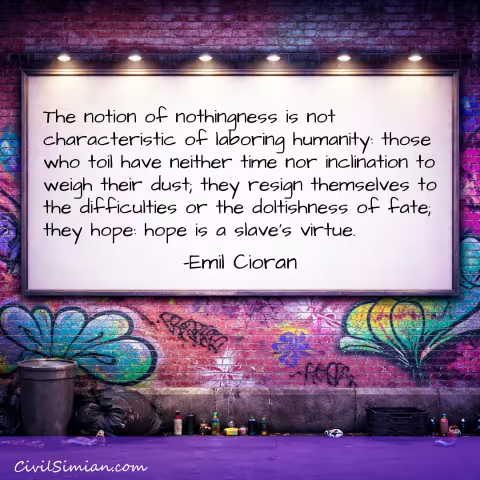
To-day is the parent of to-morrow. The present casts its shadow far into the future. That is the law of life, individual and social. Revolution that divests itself of ethical values thereby lays the foundation of injustice, deceit, and oppression for the future society. The means used to prepare the future become its cornerstone.
7 months 2 days ago
A true prayer and religious reconciling of ourselves to Almighty God cannot enter into an impure soul, subject at the very time to the dominion of Satan. He who calls God to his assistance whilst in a course of vice, does as if a cut-purse should call a magistrate to help him, or like those who introduce the name of God to the attestation of a lie.
▼
Source
source
Ch. 56, tr. Cotton, rev. W. Carew Hazlitt, 1877
6 months 1 week ago
There are two sentences inscribed upon the Delphic oracle, hugely accommodated to the usages of man's life: "Know thyself," and "Nothing too much;" and upon these all other precepts depend.
4 months 3 weeks ago
Do not take part in the council, unless you are called.
▼
Source
source
Maxim 310

6 months 3 weeks ago
Our cause is never more in danger than when a human, no longer desiring, but still intending to do our Enemy's will, looks round upon a universe from which every trace of Him seems to have vanished, and asks why he has been forsaken, and still obeys.
▼
Source
source
Letter VIII
5 months 2 weeks ago
The rise of new science in the seventeenth century laid hold upon general culture in the next century. The enlightenment... testified to the widespread belief that at last light had dawned, that dissipation of ignorance, superstition, and bigotry was at hand, and the triumph of reason was assured -- for reason was counterpart in man of the laws of nature which science was disclosing. The reign of law in the natural world was to be followed by the reign of law in human affairs.

6 months 3 weeks ago
Those services which the community will most readily pay for it is most disagreeable to render. You are paid for being something less than a man.
▼
Source
source
p. 486
5 months 2 weeks ago
To win a truly great life for the people of Israel, a great peace is necessary, not a fictitious peace, the dwarfish peace that is no more than a feeble intermission, but a true peace with the neighboring peoples, which alone can render possible a common development of this portion of the earth as the vanguard of the awakening Near East.
▼
Source
source
"Our Reply" (September 1945), as published in A Land of Two Peoples : Martin Buber on Jews and Arabs (1983) edited by Paul Mendes-Flohr, p. 178

2 months 3 weeks ago
Any institution is only a political structure. In physics and in morals, the laws are the same; you cannot build a large structure on a narrow foundation, nor a durable structure on a moving or transient base. In the political order, therefore, if one wants to build on a large scale and for the centuries, one must rely on an opinion, on a large and profound belief. For if this opinion does not dominate a majority of minds and if it is not deeply rooted, it will furnish only a narrow and transient base.
3 months 4 days ago
Of all things nothing exists that is not by its substance the offspring of ocean. But why will you have me tell this to the vulgar? Although better to have been shrouded in silence, it nevertheless has been spoken; at all events I declare it, although all men will not readily receive the same.

5 months 3 weeks ago
My mission is to see things as they are. Exactly the contrary of a mission.
7 months 2 days ago
It was truly very good reason that we should be beholden to God only, and to the favour of his grace, for the truth of so noble a belief, since from his sole bounty we receive the fruit of immortality, which consists in the enjoyment of eternal beatitude.... The more we give and confess to owe and render to God, we do it with the greater Christianity.
▼
Source
source
Ch. 12

7 months 1 week ago
O pitiable minds of men, O blind intelligences! In what gloom of life, in how great perils is passed all your poor span of time! not to see that all nature barks for is this, that pain be removed away out of the body, and that the mind, kept away from care and fear, enjoy a feeling of delight!
▼
Source
source
Book II, lines 14-19 (tr. Rouse)

2 months 3 weeks ago
How many, once lauded in song, are given over to the forgotten; and how many who sung their praises are clean gone long ago!
▼
Source
source
VII, 6

7 months 3 weeks ago
God is not needed to create guilt or to punish. Our fellow men suffice, aided by ourselves.

7 months 2 days ago
I know that a Christian should be humble, but against the Pope I am going to be proud and say to him: "You, Pope, I will not have you for my boss, for I am sure that my doctrine is divine."
▼
Source
source
Chapter 2, Verse 6

5 months 3 weeks ago
The science of government being, therefore, so practical in itself, and intended for such practical purposes, a matter which requires experience, and even more experience than any person can gain in his whole life, however sagacious and observing he may be, it is with infinite caution that any man ought to venture upon pulling down an edifice which has answered in any tolerable degree for ages the common purposes of society, or on building it up again without having models and patterns of approved utility before his eyes.

2 months 3 weeks ago
We have now but to prove a third attribute: I mean the faculty of feeling which the philosophers of all centuries have found in this same substance. ...The Cartesians have made, in vain, to rob matter of this faculty. But in order to avoid insurmountable difficulties, they have flung themselves into a labyrinth from which they have thought to escape by this absurd system "that animals are pure machines."An opinion so absurd has never gained admittance among philosophers... Experience gives us no less proof of the faculty of feeling in animals than of feeling in men.
▼
Source
source
Ch. VI Concerning the Sensitive Faculty of Matter
2 months 3 weeks ago
It is hardly in human nature that a man should quite accurately gauge the limits of his own insight; but it is the duty of those who profit by his work to consider carefully where he may have been carried beyond it. If we must needs embalm his possible errors along with his solid achievements, and use his authority as an excuse for believing what he cannot have known, we make of his goodness an occasion to sin.
5 months 3 weeks ago
Poetry can be criticized only through poetry. A critique which itself is not a work of art, either in content as representation of the necessary impression in the process of creation, or through its beautiful form and in its liberal tone in the spirit of the old Roman satire, has no right of citizenship in the realm of art.
▼
Source
source
"Selected Aphorisms from the Lyceum (1797)", Dialogue on Poetry and Literary Aphorisms, Ernst Behler and Roman Struc, trans. (Pennsylvania University Press:1968) #117

6 months 4 weeks ago
Theologian: But what is to love? Philosopher: To be delighted by the happiness of another.
▼
Source
source
Confessio philosophi, 1673
6 months 3 weeks ago
I can't imagine a man really enjoying a book and reading it only once.
▼
Source
source
Letter to Arthur Greeves (February 1932) - in They Stand Together: The Letters of C. S. Lewis to Arthur Greeves (1914-1963) (1979), p. 439

5 months 6 days ago
Society triumphs over many. They wish to regenerate the world with their institutions, with their moral philosophy, with their love. Then they sink to living from breakfast till dinner, from dinner till tea, with a little worsted work, and to looking forward to nothing but bed. When shall we see a life full of steady enthusiasm, walking straight to its aim, flying home, as that bird is now, against the wind - with the calmness and the confidence of one who knows the laws of God and can apply them?
5 months 3 weeks ago
For you who no longer possess it, freedom is everything, for us who do, it is merely an illusion.

6 months 3 weeks ago
People who live in society have learned how to see themselves in mirrors as they appear to their friends. I have no friends. Is that why my flesh is so naked?
▼
Source
source
Diary entry of Friday (2 February)
5 months 6 days ago
It is thought pretty to say that "Women have no passion." If passion is excitement in the daily social intercourse with men, women think about marriage much more than men do; it is the only event of their lives. It ought to be a sacred event, but surely not the only event of a woman's life, as it is now. Many women spend their lives in asking men to marry them, in a refined way. Yet it is true that women are seldom in love. How can they be?

3 months 1 week ago
Or, if you enjoy living with Greeks also, spend your time with Socrates and with Zeno: the former will show you how to die if it be necessary; the latter how to die before it is necessary. Live with Chrysippus, with Posidonius: they will make you acquainted with things earthly and things heavenly; they will bid you work hard over something more than neat turns of language and phrases mouthed forth for the entertainment of listeners; they will bid you be stout of heart and rise superior to threats. The only harbour safe from the seething storms of this life is scorn of the future, a firm stand, a readiness to receive Fortune's missiles full in the breast, neither skulking nor turning the back.

6 months 3 weeks ago
The past alone is truly real: the present is but a painful, struggling birth into the immutable being of what is no longer. Only the dead exist fully. The lives of the living are fragmentary, doubtful, and subject to change; but the lives of the dead are complete, free from the sway of Time, the all but omnipotent lord of the world. Their failures and successes, their hopes and fears, their joys and pains, have become eternal-our efforts cannot now abate one jot of them. Sorrows long buried in the grave, tragedies of which only a fading memory remains, loves immortalized by Death's hallowing touch these have a power, a magic, an untroubled calm, to which no present can attain. ...On the banks of the river of Time, the sad procession of human generations is marching slowly to the grave; in the quiet country of the Past, the march is ended, the tired wanderers rest, and the weeping is hushed.
▼
Source
source
On History, 1904
2 months 3 weeks ago
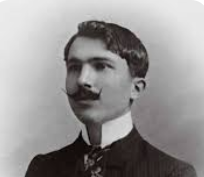
You have your brush, you have your colours, you paint paradise, then, in you go.
▼
Source
source
As quoted in Journal of Modern Literature Vol. 2, No. 2, Nikos Kazantzakis
7 months 2 weeks ago
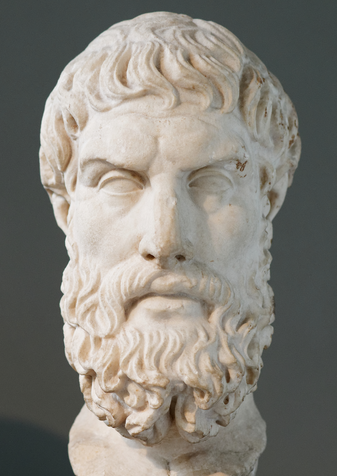
Fortitude, the virtue which enables us to endure pain, and to banish fear, is of great use in producing tranquility. Philosophy instructs us to pay homage to the gods, not through hope or fear, but from veneration of their superior nature. It moreover enables us to conquer the fear of death, by teaching us that it is no proper object of terror; since, whilst we are, death is not, and when death arrives, we are not: so that it neither concerns the living nor the dead.

7 months 3 weeks ago
Consider the most famous pure dystopian tale of modern times, 1984, by George Orwell (1903-1950), published in 1948 (the same year in which Walden Two was published). I consider it an abominably poor book. It made a big hit (in my opinion) only because it rode the tidal wave of cold war sentiment in the United States.
3 months 1 week ago
You will die, not because you are ill, but because you are alive; even when you have been cured, thesame end awaits you; when you have recovered, it will be not death, but ill health, that you have escaped.
6 months 3 weeks ago
Looking for God-or Heaven-by exploring space is like reading or seeing all Shakespeare's plays in the hope that you will find Shakespeare as one of the characters or Stratford as one of the places. Shakespeare is in one sense present at every moment in every play.
▼
Source
source
"The Seeing Eye", in Christian Reflections (1967), p. 167
5 months 3 weeks ago
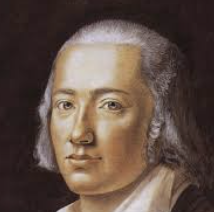
He who has thought most deeply loves what is most alive.

4 months 1 day ago
Against the many Russian thinkers influenced by Hegel who believed that history was governed by universal laws to which one could only submit, Turgenev upheld the freedom of different societies to pursue different paths of development and of individuals to pursue, even in opposition to powerful historical forces, their own goals and values. Here Turgenev endorsed the celebrated dictum of Alexander Herzen, with whom he disagreed on other matters: that history has no libretto. Human history is a realm of contingency and unpredictability, in which each generation faces conflicts that have no ideal solution.
▼
Source
source
'Isaiah Berlin: The Value of Decency' (p.105)
2 months 3 weeks ago
As surgeons keep their instruments and knives always at hand for cases requiring immediate treatment, so shouldst thou have thy thoughts ready to understand things divine and human, remembering in thy every act, even the smallest, how close is the bond that unites the two.
▼
Source
source
III, 13
5 months 3 weeks ago
All that is Life in me urges me to give up God.
5 months 2 days ago
If reason is both transcendent and immanent, then philosophy, as culture-bound reflection and argument about eternal questions, is both in time and eternity. We don't have an Archimedean point; we always speak the language of a time and place; but the rightness and wrongness of what we say is not just for a time and a place.
▼
Source
source
Why reason can't be naturalized

5 months 3 weeks ago
Even there, in the mines, underground, I may find a human heart in another convict and murderer by my side, and I may make friends with him, for even there one may live and love and suffer. One may thaw and revive a frozen heart in that convict, one may wait upon him for years, and at last bring up from the dark depths a lofty soul, a feeling, suffering creature; one may bring forth an angel, create a hero! There are so many of them, hundreds of them, and we are to blame for them.
CivilSimian.com created by AxiomaticPanic, CivilSimian, Kalokagathia