


6 months 2 weeks ago
We inherit the warlike type; and for most of the capacities of heroism that the human race is full of we have to thank this cruel history. Dead men tell no tales, and if there were any tribes of other type than this they have left no survivors. Our ancestors have bred pugnacity into our bone and marrow, and thousands of years of peace won't breed it out of us. The popular imagination fairly fattens on the thought of wars. Let public opinion once reach a certain fighting pitch, and no ruler can withstand it. In the Boer war both governments began with bluff, but they couldn't stay there; the military tension was too much for them.

6 months 3 weeks ago
For we have in Latin only a few small streams and muddy puddles, while they have pure springs and rivers flowing in gold. I see that it is utter madness even to touch with the little finger that branch of theology that deals chiefly with the divine mysteries, unless one is also provided with the equipment of Greek.
▼
Source
source
As quoted in Martin Luther: The Man Who Rediscovered God and Changed the World (2017) by By Eric Metaxas, p. 85

5 months 2 weeks ago
The desire to die was my one and only concern; to it I have sacrificed everything, even death.
5 months 2 weeks ago
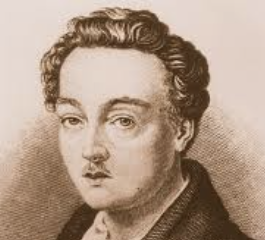
The stars are scattered all over the sky like shimmering tears, there must be great pain in the eye from which they trickled.
▼
Source
source
Act IV.

6 months 2 weeks ago
Among human beings, the subjection of women is much more complete at a certain level of civilization than it is among savages. And the subjection is always reinforced by morality.
▼
Source
source
Ch. 15: Power and moral codes

6 months 2 weeks ago
Ever from one who comes to-morrow Men wait their good and truth to borrow.
▼
Source
source
Merlin's Song, II
7 months 2 weeks ago
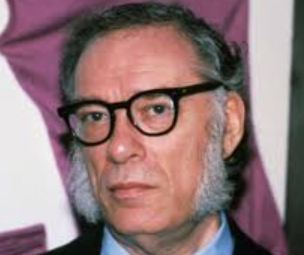
It built itself up endlessly, like a chess game, and the telemetrists began to use a computer to program the computer that designed the program for the computer that programmed the robot-controlling computer.
6 months 2 weeks ago
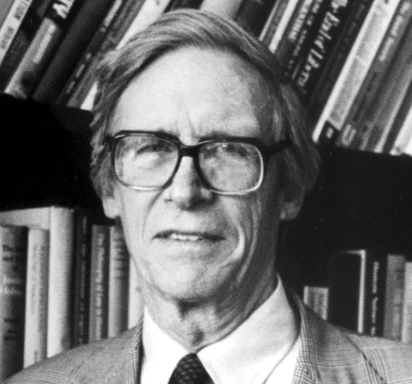
First of all, no one knows his place in society, his class position or social status; nor does he know his fortune in the distribution of natural assets and abilities, his intelligence and strength, and the like. Nor, again, does anyone know his conception of the good, the particulars of his rational plan of life, or even the special features of psychology such as his aversion to risk or liability to optimism or pessimism. More than this, I assume that the parties do not know the particular circumstances of their own society. That is, they do not know its particular economic or political situation, or the level of civilization and culture it has been able to achieve. The persons in the original position have no information as to which generation they belong.
▼
Source
source
p. 117
5 months 2 weeks ago
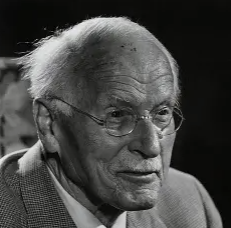
The bigger the crowd, the more negligible the individual.
▼
Source
source
p 14
7 months 2 weeks ago
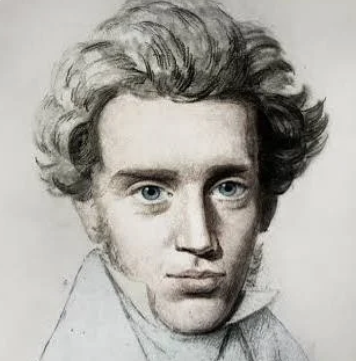
The greatest danger, that of losing one's own self, may pass off as quietly as if it were nothing; every other loss, that of an arm, a leg, five dollars, a wife etc., is sure to be noticed.
2 months 2 weeks ago
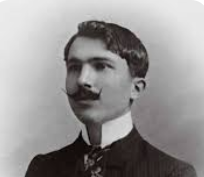
Do you believe in dreams, Uncle Simeon? I do; I believe in nothing else. One night I dreamed that invisible enemies had me tied to a dead cypress. Long red arrows were sticking into me from my head to my feet, and the blood was flowing. On my head they had placed a crown of thorns, and intertwined with the thorns were fiery letters which said: "Saint Blasphemer." I am Saint Blasphemer, Rabbi Simeon. So you'd better not ask me anything else, or I'll start my blasphemies.
▼
Source
source
Ch. 10
4 months 2 weeks ago
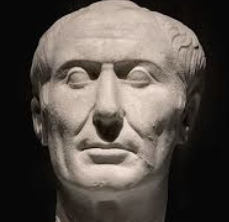
Confession of our faults is the next thing to innocence.
▼
Source
source
Maxim 1060

3 months 3 weeks ago
Human knowledge increases, while human irrationality stays the same. Scientific inquiry may be an embodiment of reason, but what such inquiry demonstrates is that humans are not rational animals. The fact that humanists refuse to accept the demonstration only confirms its truth.
▼
Source
source
An Old Chaos: Humanism and Flying Saucers (p. 81)
6 months 2 weeks ago
If everything must have a cause, then God must have a cause. If there can be anything without a cause, it may just as well be the world as God, so that there cannot be any validity in that argument. It is exactly of the same nature as the Hindu's view, that the world rested upon an elephant and the elephant rested upon a tortoise; and when they said, "How about the tortoise?" the Indian said, "Suppose we change the subject." The argument is really no better than that.
▼
Source
source
"The First-cause Argument"
5 months 1 week ago
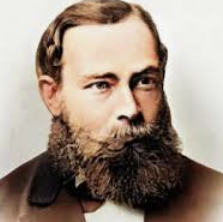
The historical approach, with its aim of detecting how things began and arriving from these origins at a knowledge of their nature, is certainly perfectly legitimate; but it also has its limitations. If everything were in continual flux, and nothing maintained itself fixed for all time, there would no longer be any possibility of getting to know about the world, and everything would be plunged into confusion.
▼
Source
source
Translation J. L. Austin (Oxford, 1950) as quoted by Stephen Toulmin, Human Understanding: The Collective Use and Evolution of Concepts (1972) Vol. 1, p. 55.
5 months 2 weeks ago
It has been a long time since philosophers have read men's souls. It is not their task, we are told. Perhaps. But we must not be surprised if they no longer matter much to us.
6 months 3 weeks ago
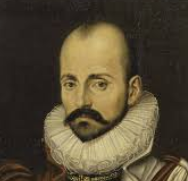
I have gathered a posy of other men's flowers, and nothing but the thread that binds them is mine own.
▼
Source
source
Ch. 12: Of Physiognomy
6 months 1 week ago
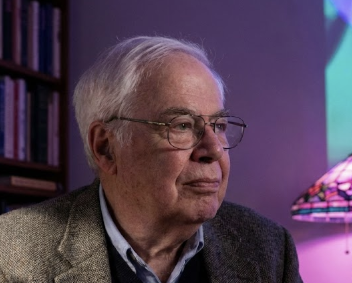
From Richard McKeon and Robert Brumsbaugh I learned to view the history of philosophy as a series, not of alternative solutions to the same problems, but of quite different sets of problems. From Rudolph Carnap and Carl Hempel I learned how pseudo-problems could be revealed as such by restarting them in the formal mode of speech. From Charles Hartshorne and Paul Weiss I learned how they could be so revealed by being translated into Whiteheadian or Hegelian terms.
▼
Source
source
Preface

6 months 2 weeks ago
...the reality of society involves the socialization of certain unrealities.
▼
Source
source
p. 455
6 months 2 weeks ago
Wherever one finds oneself inclined to bitterness, it is a sign of emotional failure: a larger heart, and a greater self-restraint, would put a calm autumnal sadness in the place of the instinctive outcry of pain.
▼
Source
source
The Collected Papers of Bertrand Russell: Contemplation and Action, 1902-1914, ed. Richard A. Rempel, Andrew Brink and Margaret Moran (Routledge, 1993
2 months 4 weeks ago
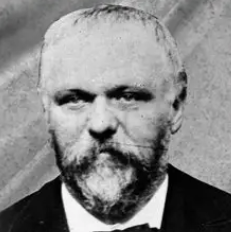
As the State formerly played a most important part in the revolutions that abolished the old economic systems, so it must again be the State that should abolish capitalism.
▼
Source
source
p. 170
6 months 2 weeks ago
Properly speaking, a man has as many social selves as there are individuals who recognise him.
▼
Source
source
Ch.10
5 months 2 weeks ago
When we know what words are worth, the amazing thing is that we try to say anything at all, and that we manage to do so. This requires, it is true, a supernatural nerve.
2 months 4 weeks ago
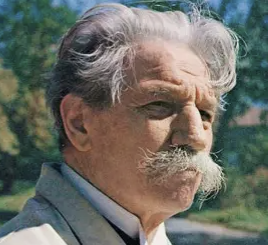
There slowly grew up in me an unshakable conviction that we have no right to inflict suffering and death on another living creature unless there is some unavoidable necessity for it, and that we ought all of us to feel what a horrible thing it is to cause suffering and death out of mere thoughtlessness. And this conviction has influenced me only more and more strongly with time. I have grown more and more certain that at the bottom of our heart we all think this, and that we fail to acknowledge it because we are afraid of being laughed at by other people as sentimentalists, though partly also because we allow our best feelings to get blunted. But I vowed that I would never let my feelings get blunted, and that I would never be afraid of the reproach of sentimentalism.
▼
Source
source
p. 275

2 months 2 weeks ago
What is not good for the swarm is not good for the bee.
▼
Source
source
VI, 54
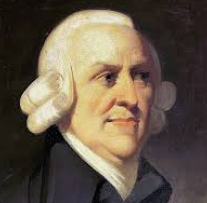
6 months 3 weeks ago
Nobody ever saw a dog make a fair and deliberate exchange of one bone for another with another dog.
▼
Source
source
Chapter II, p. 14.
6 months 2 weeks ago
Many people think they are thinking when they are merely rearranging their prejudices.
▼
Source
source
To his young son from the Yosemite Valley on


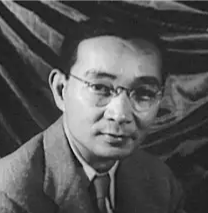
2 months 3 weeks ago
The Chinese believe that when there are too many policemen, there can be no individual liberty, when there are too many lawyers, there can be no justice, and when there are too many soldiers, there can be no peace.
▼
Source
source
Between Tears And Laughter (1943), p. 71.

6 months 2 weeks ago
Under a government which imprisons any unjustly, the true place for a just man is also a prison... the only house in a slave State in which a free man can abide with honor.

5 months 1 week ago
I will destroy this house, and no one will be able to build it....
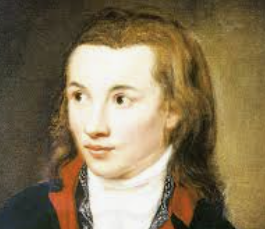
5 months 2 weeks ago
Where children are, there is a golden age.
▼
Source
source
Fragment No. 97

5 months 2 weeks ago
Nothing less will content me, than whole America.
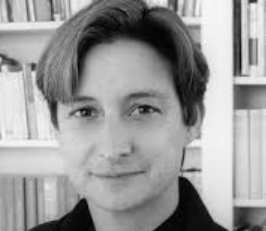
4 months 2 weeks ago
Nonviolence does not make sense without a commitment to equality. The reason why nonviolence requires a commitment to equality can best be understood by considering that in this world some lives are more clearly valued than others, and that this inequality implies that certain lives will be more tenaciously defended than others. If one opposes the violence done to human lives-or, indeed, to other living beings-this presumes that it is because those lives are valuable. Our opposition affirms those lives as valuable. If they were to be lost as a result of violence, that loss would be registered as a loss only because those lives were affirmed as having a living value, and that, in turn, means we regard those lives as worthy of grief.
▼
Source
source
p. 28
5 months 1 week ago
The would-be climber must be able to make himself liked ... please his superiors - avoid showing independence except in those matters wherein independence is expected of him by his chiefs... the winners in the race have qualities which disincline them to allow others to be their true selves. Hence the winners snub all those who aim at adequate self-expression, speaking of them as pretentious, eccentric, biased, unpractical, and measuring their achievements by insincere standards.

6 months 2 weeks ago
The second doctrine of the Perennial Philosophy - that it is possible to know the Divine Ground by a direct intuition higher than discursive reasoning - is to be found in all the great religions of the world. A philosopher who is content merely to know about the ultimate Reality - theoretically and by hearsay - is compared by Buddha to a herdsman of other men's cows. Mohammed uses an even homelier barnyard metaphor. For him the philosopher who has not realized his metaphysics is just an ass bearing a load of books. Christian, Hindu, Taoist teachers wrote no less emphatically about the absurd pretensions of mere learning and analytic reasoning.
2 months 4 weeks ago
Now I'm sure that most of you know the old story about the astronaut, who went far out into space, and was asked on his return whether he'd been to heaven and seen God. And he said: "Yes". And so they said to him: "Well, what about God?" And he said: "She's Black".
▼
Source
source
The Nature of God
2 months 2 weeks ago
In the case of all things which have a certain constitution, whatever harm may happen to any of them, that which is affected becomes consequently worse; but in like case, a man becomes both better... and more worthy of praise, by making the right use of these accidents.
▼
Source
source
X, 33
5 months 2 weeks ago
The nature of the Absolute State consists herein, -that all individual powers be directed towards the Life of the Race,-in place of which Race, the State puts the aggregate of its own Citizens. It therefore becomes necessary, first, that all Individuals, without exception, should be taken into equal consideration by the State; and second, that every Individual, with all his individual powers, without exception or reserve, should be taken into equal consideration. In a State so constituted, where all, as Individuals, are dedicated to the Race, it follows at the same time, that all without exception, with all the Rights which belong to them as component parts of the Race, are dedicated to all the other individual members of the State.
▼
Source
source
p. 150-151
6 months 3 weeks ago
Every rich man is avaricious, in my opinion.
▼
Source
source
Ch. 14

4 months 2 weeks ago
And see, a kind, refined lady will devour the carcasses of these animals with full assurance that she is doing right, at the same time asserting two contradictory propositions: First, that she is, as her doctor assures her, so delicate that she cannot be sustained by vegetable food alone, and that for her feeble organism flesh is indispensable; and, secondly, that she is so sensitive that she is unable, not only herself to inflict suffering on animals, but even to bear the sight of suffering. Whereas the poor lady is weak precisely because she has been taught to live upon food unnatural to man; and she cannot avoid causing suffering to animals - for she eats them.
▼
Source
source
Ch. IX
6 months 3 weeks ago
Judges of elegance and taste consider themselves as benefactors to the human race, whilst they are really only the interrupters of their pleasure ... There is no taste which deserves the epithet good, unless it be the taste for such employments which, to the pleasure actually produced by them, conjoin some contingent or future utility: there is no taste which deserves to be characterized as bad, unless it be a taste for some occupation which has mischievous tendency.
▼
Source
source
Théorie des peines et des récompenses (1811); translation by Richard Smith, The Rationale of Reward, J. & H. L. Hunt, London, 1825, Bk. 3, Ch. 1

5 months 3 weeks ago
Around us knowledge has been extinguished, and recruitment of men of religion and men of law has ceased; that is to say, we have made Muslim society much more miserable, more disordered, more ignorant, and more barbarous than it had been before knowing us.
▼
Source
source
Travail sur l'Algerie, Travels in Algeria p. 185

3 months 3 days ago
Why then do you occupy me with the words rather than with the works of wisdom? Make me braver, make me calmer, make me the equal of Fortune, make me her superior.
6 months 2 weeks ago
Tell him to live by yes and no - yes to everything good, no to everything bad.
▼
Source
source
As quoted in The Thought and Character of William James (1935) by Ralph Barton Perry, Vol. II, ch. 91

4 months 3 weeks ago
What makes our poetry so contemptible nowadays is its paucity of ideas. If you want to be read, invent. Who the Devil wouldn't like to read something new?
▼
Source
source
D 62

6 months 2 weeks ago
As a beast of toil an ox is fixed capital. If he is eaten, he no longer functions as an instrument of labour, nor as fixed capital either.
▼
Source
source
Vol. II, Ch. VIII, p. 163.
4 months 1 day ago
If you look at the graph of the growth of G.M.O.s, the growth of application of glyphosate and autism, it's literally a one-to-one correspondence. And you could make that graph for kidney failure, you could make that graph for diabetes, you could make that graph even for Alzheimer's.
▼
Source
source
On the correlation of autism, kidney failure, diabetes and Alzheimer's with GMOs and glyphosate, as quoted in "Seeds of Doubt" by Michael Specter, The New Yorker

7 months 6 days ago
The reason, however, why the philosopher may be likened to the poet is this: both are concerned with the marvellous.
▼
Source
source
Commentary on the Metaphysics (c. 1270-1272), 1, 3; quoted in Josef Pieper, Leisure, the Basis of Culture (New York, 1952), p. 88
7 months 2 weeks ago
One sticks one's finger into the soil to tell by the smell in what land one is: I stick my finger in existence - it smells of nothing. Where am I? Who am I? How came I here? What is this thing called the world? What does this world mean? Who is it that has lured me into the world? Why was I not consulted, why not made acquainted with its manners and customs instead of throwing me into the ranks, as if I had been bought by a kidnapper, a dealer in souls? How did I obtain an interest in this big enterprise they call reality? Why should I have an interest in it? Is it not a voluntary concern? And if I am to be compelled to take part in it, where is the director? I should like to make a remark to him. Is there no director? Whither shall I turn with my complaint?
CivilSimian.com created by AxiomaticPanic, CivilSimian, Kalokagathia