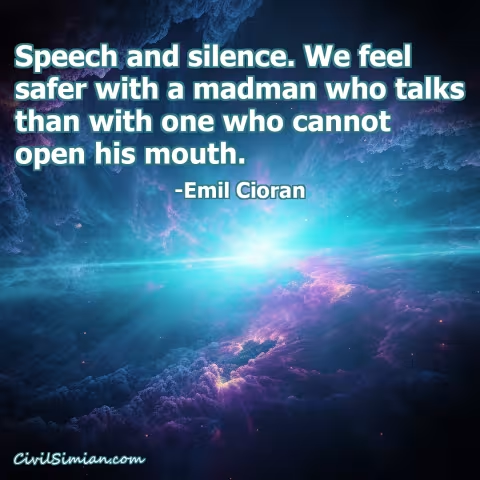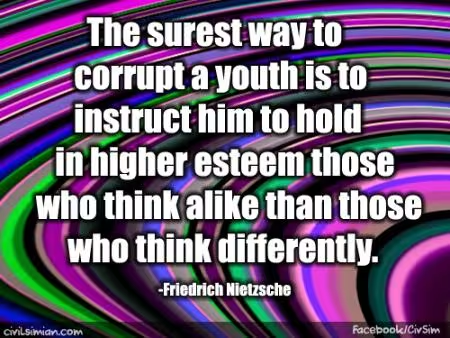
Think differently, but know when it's your duty to think the same...


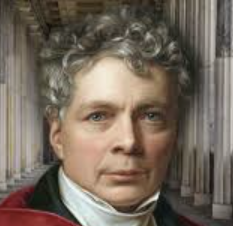
Yes! We believe in a higher principle than your virtue and the kind of morality you speak of so paltrily and without much conviction. We believe that there is no imperative or reward for virtue for the soul because it simply acts according to the necessity of its inherent nature. The moral imperative expresses itself in an ought and presupposes the concept of an evil next to that of good.
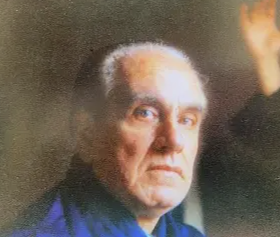
I truly cannot say what the person who still has hope for man should think of the imminence of quasi-apocalyptic destruction. It would certainly force many to face the existential problem in all its nakedness, and subject them to extreme trials; but is this a worse evil than that of mankind's safe, secure, satisfied, and total consignment to the kind of happiness that befits Nietzsche's "last man": a comfortable consumer civilization of socialized human animals, aided by all the discoveries of science and industry and reproducing demographically in a squirming, catastrophic crescendo?

These considerations did not make us overlook the folly of premature attempts to dispense with the inducements of private interest in social affairs, while no substitute for them has been or can be provided: but we regarded all existing institutions and social arrangements as being (in a phrase I once heard from Austin) "merely provisional," and we welcomed with the greatest pleasure and interest all socialistic experiments by select individuals (such as the Co-operative Societies), which, whether they succeeded or failed, could not but operate as a most useful education of those who took part in them, by cultivating their capacity of acting upon motives pointing directly to the general good, or making them aware of the defects which render them and others incapable of doing so.
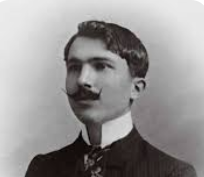
You are not a miserable and momentary body; behind your fleeting mask of clay, a thousand-year-old face lies in ambush. Your passions and your thoughts are older than your heart or brain.
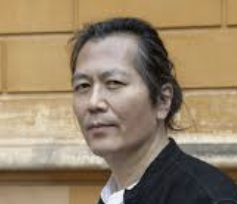
The freedom of the 'everyday mind' consists rather in not kneeling down in awe. Its mental attitude is better expressed as sitting unmoveable like an object.

All that is under heaven, says the sage, runs one law and one fortune.
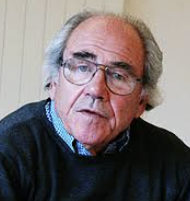
Boredom is like a pitiless zooming in on the epidermis of time. Every instant is dilated and magnified like the pores of the face.

The value of money is in proportion to the quantity of the necessaries of life which it will purchase.
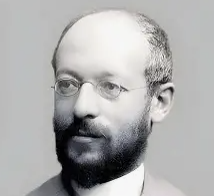
The most profound reason... why the metropolis conduces to the urge for the most individual personal existence... appears to me to be the following: the development of modern culture is characterized by the preponderance of what one may call the "objective spirit" over the "subjective spirit."

We are all attached to the throne of the Supreme Being by a supple chain that restrains us without enslaving us. Nothing is more admirable in the universal order of things than the action of free beings under the divine hand. Freely slaves, they act voluntarily and necessarily at the same time; they really do what they will, but without being able to disturb the general plans. Each of these beings occupies the centre of a sphere of activity whose diameter varies according to the will of the Eternal Geometer, who can extend, restrict, check, or direct the will without altering its nature.
Notwithstanding their attacks on the basic conception of rationalism, on synthetic a priori judgments, that is, material propositions that cannot be contradicted by any experience, the empiricist posits the forms of being as constant.
Take any aspect of the Western inheritance of which our ancestors were proud, and you will find university courses devoted to deconstructing it. Take any positive feature of our political and cultural inheritance, and you will find concerted efforts in both the media and the academy to place it in quotation marks, and make it look like an imposture or a deceit.
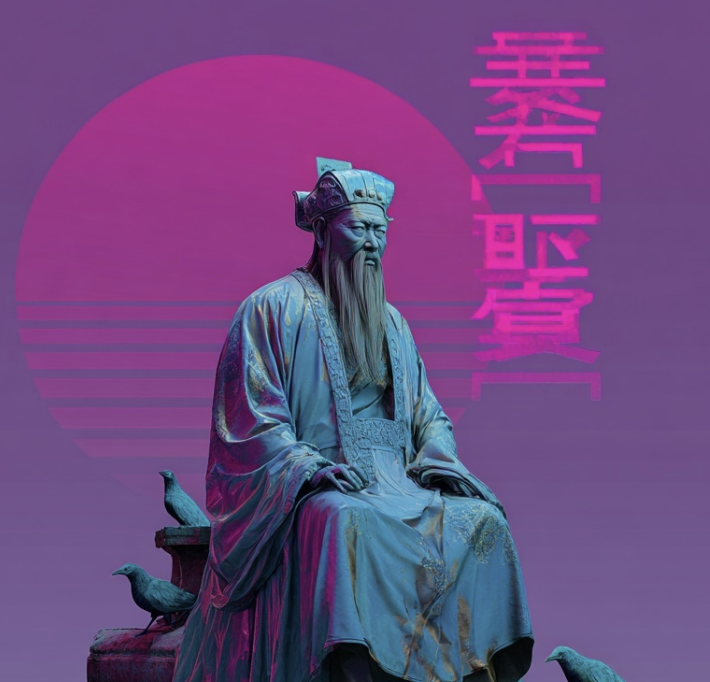
If you would govern a state of a thousand chariots (a small-to-middle-size state), you must pay strict attention to business, be true to your word, be economical in expenditure and love the people. You should use them according to the seasons.
Our tools are extensions of our purposes, and so we find it natural to make metaphorical attributions of intentionality to them; but I take it no philosophical ice is cut by such examples.
Dying people often become childish.
With clarity and quiet, I look upon the world and say: All that I see, hear, taste, smell, and touch are the creations of my mind. The sun comes up and the sun goes down in my skull. Out of one of my temples the sun rises, and into the other the sun sets. The stars shine in my brain; ideas, men, animals browse in my temporal head; songs and weeping fill the twisted shells of my ears and storm the air for a moment.

I know only one Church: it is the society of men.
Those who used to sacrifice animals did not take them for beasts. And even the Middle Ages, which condemned and punished them in due form, was in this way much closer to them than we are, we who are filled with horror at this practice. They held them to be guilty: which was a way of honoring them. We take them for nothing, and it is on this basis that we are "human" with them. We no longer sacrifice them, we no longer punish them, and we are proud of it, but it is simply that we have domesticated them, worse: that we have made of them a racially inferior world, no longer even worthy of our justice, but only of our affection and social charity, no longer worthy of punishment and of death, but only of experimentation and extermination like meat from the butchery.
The pathfinders of modern thought did not derive what is good from the law. ... Their role in history was not that of adapting their words and actions to the text of old documents or generally accepted doctrines: they themselves created the documents and brought about the acceptance of their doctrines.
History has proved us, and all who thought like us, wrong. It has made it clear that the state of economic development on the Continent at that time was not, by a long way, ripe for the removal of capitalist production.

Intolerance is the besetting sin of moral fervour.

It is amusing to hear the modern Christian telling you how mild and rationalistic Christianity really is and ignoring the fact that all its mildness and rationalism is due to the teaching of men who in their own day were persecuted by all orthodox Christians.

If I were to be totally sincere, I would say that I do not know why I live and why I do not stop living. The answer probably lies in the irrational character of life which maintains itself without reason.
In forming a Terminology, words may be invented when necessary, but they cannot be conveniently borrowed from casual or arbitrary circumstances.

Society triumphs over many. They wish to regenerate the world with their institutions, with their moral philosophy, with their love. Then they sink to living from breakfast till dinner, from dinner till tea, with a little worsted work, and to looking forward to nothing but bed. When shall we see a life full of steady enthusiasm, walking straight to its aim, flying home, as that bird is now, against the wind - with the calmness and the confidence of one who knows the laws of God and can apply them?

Attention consists of suspending our thought, leaving it detached, empty, and ready to be penetrated by the object; it means holding in our minds, within reach of this thought, but on a lower level and not in contact with it, the diverse knowledge we have acquired which we are forced to make use of.
It seems to us that the past is our property. Well, on the contrary - we are its property, because we are not able to make changes in it, while it fills the whole of our existence.
We have here a question of difficulty, analogous to the question of nominalism and realism.
Whatever people do in the market economy, is the execution of their own plans. In this sense every human action means planning. What those calling themselves planners advocate is not the substitution of planned action for letting things go. It is the substitution of the planner's own plan for the plans of his fellow-men. The planner is a potential dictator who wants to deprive all other people of the power to plan and act according to their own plans. He aims at one thing only: the exclusive absolute pre-eminence of his own plan.
It is remarkable that among all the preachers there are so few moral teachers. The prophets are employed in excusing the ways of men.
Human history is not the product of the wise direction of human reason, but is shaped by the forces of emotion-our dreams, our pride, our greed, our fears, and our desire for revenge.

Exercise is the technique by which one imposes on the body tasks that are both repetitive and different, but always graduated. By bending behavior towards a terminal state, exercise makes possible a perpetual characterization of the individual...It thus assures, in the form of continuity and constraint, a growth, an observation, a qualification.
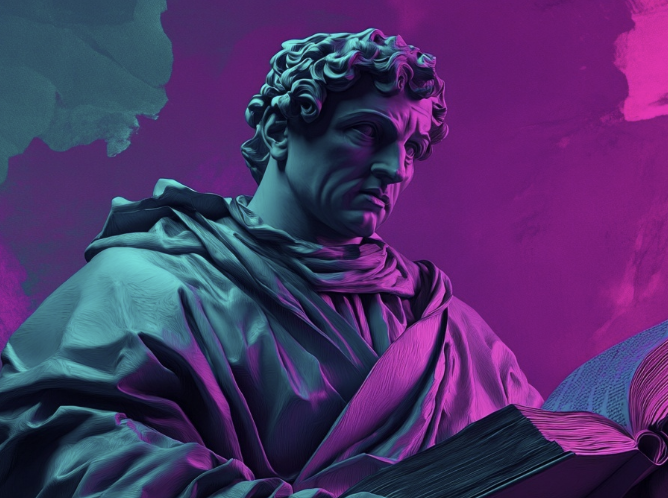
Since the law is good, the will, which is hostile to it, cannot be good.

Your favour of July 31, was duly received, and was read with peculiar pleasure. The sentiments breathed through the whole do honor to both the head and heart of the writer. Mine on the subject of slavery of negroes have long since been in possession of the public, and time has only served to give them stronger root. The love of justice and the love of country plead equally the cause of these people, and it is a moral reproach to us that they should have pleaded it so long in vain, and should have produced not a single effort, nay I fear not much serious willingness to relieve them & ourselves from our present condition of moral & political reprobation.

"The real saint", Baudelaire pretends to think, "is he who flogs and kills people for their own good." His argument will be heard. A race of real saints is beginning to spread over the earth for the purposes of confirming these curious conclusions about rebellion.
I had always hoped that the younger generation receiving their early impressions after the flame of liberty had been kindled in every breast, & had become as it were the vital spirit of every American, that the generous temperament of youth, analogous to the motion of their blood, and above the suggestions of avarice, would have sympathized with oppression wherever found, and proved their love of liberty beyond their own share of it.
This, evidently was not a minor civilization, produced by inferior people. It ranks with the highest civilizations of history, and some, like Keyserling, would place it at the head and summit of all. The British conquest of India was the invasion and destruction of a high civilization by a trading company utterly without scruple or principle, careless of art, greedy of gain, overrunning with fire and sword a country temporarily disordered and helpless, bribing and murdering, annexing and stealing, and beginning that career of illegal and "legal" plunder which has now gone on ruthlessly for one hundred and seventy-three years, and goes on at this moment while in our secure comfort we write and read. Those who have seen the unspeakable poverty and physiological weakness of the Hindus today will hardly believe that it was the wealth of eighteenth century India which attracted the commercial pirates of England and France.

Maybe somewhere in some other galaxy there is a super-intelligence so colossal that from our point of view it would be a god. But it cannot have been the sort of God that we need to explain the origin of the universe, because it cannot have been there that early.
Every word is an Ark of the Covenant around which we dance and shudder, divining God to be its dreadful inhabitant. You shall never be able to establish in words that you live in ecstasy. But struggle unceasingly to establish it in words. Battle with myths, with comparisons, with allegories, with rare and common words, with exclamations and rhymes, to embody it in flesh, to transfix it! God, the Great Ecstatic, works in the same way. He speaks and struggles to speak in every way He can, with seas and with fires, with colors, with wings, with horns, with claws, with constellations and butterflies, that he may establish His ecstasy. Like every other living thing, I also am in the center of the Cosmic whirlpool.
The characteristic feature of militarism is not the fact that a nation has a powerful army or navy. It is the paramount role assigned to the army within the political structure. Even in peacetime the army is supreme; it is the predominant factor in political life. The subjects must obey the government as soldiers must obey their superiors. Within a militarist community there is no freedom; there are only obedience and discipline.
To recognize that some of the things our culture believes are not true imposes on us the duty of finding out which are true and which are not.
When even the dictators of today appeal to reason, they mean that they possess the most tanks. They were rational enough to build them; others should be rational enough to yield to them.

In Germany, the judicial system has been the whore of the German princes for centuries.
Those distinct substances, which concretes generally either afford, or are made up of, may, without very much inconvenience, be called the elements or principles of them.
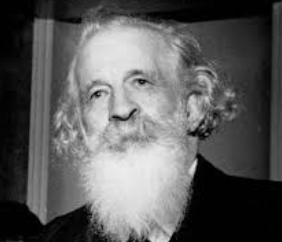
Reverie is not a mind vacuum. It is rather the gift of an hour which knows the plenitude of the soul.
I like well your idea of issuing treasury notes bearing interest, because I am persuaded they would soon be withdrawn from circulation and locked up in vaults & private hoards. It would put it in the power of every man to lend his 100. or 1000 d. tho' not able to go forward on the great scale, and be the most advantageous way of obtaining a loan. The other idea of creating a National bank, I do not concur in, because it seems now decided that Congress has not that power, (altho' I sincerely wish they had it exclusively) and because I think there is already a vast redundancy, rather than a scarcity of paper medium.
CivilSimian.com created by AxiomaticPanic, CivilSimian, Kalokagathia