


7 months 1 week ago
It is not by change of place that we can come nearer to Him who is in every place, but by the cultivation of pure desires and virtuous habits.
▼
Source
source
p. 433

6 months 3 weeks ago
Gratitude looks to the past and love to the present; fear, avarice, lust, and ambition look ahead.
▼
Source
source
Letter XVI
6 months 3 weeks ago
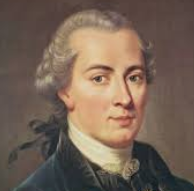
Beneficence is a duty. He who often practices this, and sees his beneficent purpose succeed, comes at last really to love him whom he has benefited. When, therefore, it is said, "Thou shalt love thy neighbor as thyself," this does not mean, "Thou shalt first of all love, and by means of love (in the next place) do him good"; but: "Do good to thy neighbour, and this beneficence will produce in thee the love of men (as a settled habit of inclination to beneficence)."
▼
Source
source
Metaphysical Elements of Ethics (1780). Translated by Thomas Kingsmill Abbott, translation available at Philosophy.eserver.org. From section "Preliminary Notions of the Susceptibility of the Mind for Notions of Duty Generally", Part C ("Of love to men")

6 months 3 weeks ago
Capital grows in one place to a huge mass in a single hand, because it has in another place been lost by many. This is centralisation proper, as distinct from accumulation and concentration.
▼
Source
source
Vol. I, Ch. 25, Section 2, pg. 686.


6 months 3 weeks ago
This I think is sufficiently evident, that children generally hate to be idle. All the care then is, that their busy humour should be constantly employ'd in something of use to them; which, if you will attain, you must make what you would have them do a recreation to them, and not a business.
▼
Source
source
Sec. 129
6 months 3 weeks ago
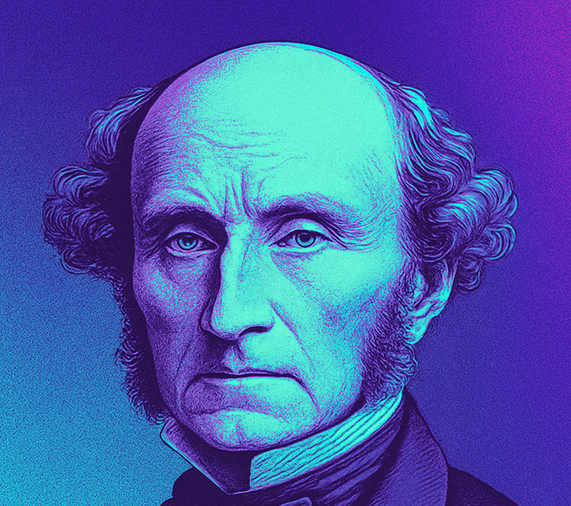
A general State education is a mere contrivance for molding people to be exactly like one another; and as the mold in which it casts them is that which pleases the dominant power in the government, whether this be a monarch, an aristocracy, or a majority of the existing generation; in proportion as it is efficient and successful, it establishes a despotism over the mind, leading by a natural tendency to one over the body.
▼
Source
source
Ch. V: Applications

5 months 4 weeks ago
There is not a Musselman alive who would not imagine that he was performing an action pleasing to God and his Holy Prophet by exterminating every Christian on earth, while the Christians are scarcely more tolerant on their side.

2 months 3 weeks ago
Waste no more time arguing what a good man should be. Be one.
▼
Source
source
X, 16
6 months 3 weeks ago
Inuring children gently to suffer some degrees of pain without shrinking, is a way to gain firmness to their minds, and lay a foundation for courage and resolution in the future part of their lives.
▼
Source
source
Sec. 115
5 months 4 weeks ago
It has been said that love robs those who have it of their wit, and gives it to those who have none.
▼
Source
source
Paradoxe sur le Comédien

7 months 2 days ago
He who does not give himself leisure to be thirsty cannot take pleasure in drinking.
▼
Source
source
Ch. 42

6 months 3 weeks ago
In science men have discovered an activity of the very highest value in which they are no longer, as in art, dependent for progress upon the appearance of continually greater genius, for in science the successors stand upon the shoulders of their predecessors; where one man of supreme genius has invented a method, a thousand lesser men can apply it.
▼
Source
source
Ch. 2: The Place of Science in a Liberal Education
2 months 3 weeks ago
Let this always be plain to thee, that this piece of land is like any other; and that all things here are the same with all things on the top of a mountain, or on the sea-shore, or wherever thou chooses to be. For thou wilt find just what Plato says, Dwelling within the walls of the city as in a shepherd's fold on a mountain.
▼
Source
source
X, 23
4 months 3 weeks ago
Preserving seeks to secure the life that already is; safeguarding secures and reproduces the conditions of becoming, of living, of futurity, where the content of that life, that living, can be neither prescribed nor predicted, and where self-determination emerges as a potential.
▼
Source
source
p. 94
5 months 4 days ago
He who knows himself properly can very soon learn to know all other men. It is all reflection.
▼
Source
source
G 8
7 months 2 days ago
He that I am reading seems always to have the most force.
▼
Source
source
Book II, Ch. 12. Apology for Raimond Sebond
6 months 3 weeks ago
Truth, Goodness, Beauty - those celestial thrins, Continually are born; e'en now the Universe, With thousand throats, and eke with greener smiles, Its joy confesses at their recent birth.
▼
Source
source
June 14, 1838


5 months 1 week ago
I have tried to show how religion, the backbone of civilisation, hardens into a Church that is unacceptable to Outsiders, and the Outsiders - the men who strive to become visionaries - become the Rebels. In our case, the scientific progress that has brought us closer than ever before to conquering the problems of civilisation, has also robbed us of spiritual drive; and the Outsider is doubly a rebel: a rebel against the Established Church , a rebel against the unestablished church of materialism. Yet for all this, he is the real spiritual heir of the prophets, of Jesus and St. Peter, of St. Augustine and Peter Waldo. The purest religion of any age lies in the hands of its spiritual rebels. The twentieth century is no exception.
▼
Source
source
p. 320
5 months 2 days ago
The physicist who states a law of nature with the aid of a mathematical formula is abstracting a real feature of a real material world, even if he has to speak of numbers, vectors, tensors, state-functions, or whatever to make the abstraction.
▼
Source
source
"What is Mathematical Truth?"
2 months 2 weeks ago
By a clock we understand anything characterized by a phenomenon passing periodically through identical phases so that we must assume, by the principle of sufficient reason, that all that happens in a given period is identical with all that happens in an arbitrary period.

4 months 3 weeks ago
Every technology contrived and "outered" by man has the power to numb human awareness during the period of its first interiorization.
▼
Source
source
(p. 174)
4 months 3 weeks ago
World War I a railway war of centralization and encirclement. World War II a radio war of decentralization concluded by the Bomb. World War III a TV guerrilla war with no divisions between civil and military fronts.
▼
Source
source
(p. 152)

5 months 4 weeks ago
Around us knowledge has been extinguished, and recruitment of men of religion and men of law has ceased; that is to say, we have made Muslim society much more miserable, more disordered, more ignorant, and more barbarous than it had been before knowing us.
▼
Source
source
Travail sur l'Algerie, Travels in Algeria p. 185

2 months 3 weeks ago
The most alarming sign of the state of our society now is that our leaders have the courage to sacrifice the lives of young people in war, but have not the courage to tell us that we must be less greedy and less wasteful.
▼
Source
source
Peaceableness Toward Enemies
5 months 4 days ago
In order for music to free itself, it will have to pass over to the other side - there where territories tremble, where the structures collapse, where the ethoses get mixed up, where a powerful song of the earth is unleashed, the great ritornelles that transmutes all the airs it carries away and makes return.
▼
Source
source
from Essays Critical and Clinical, p. 104.
6 months 3 weeks ago
The guidelines for achieving wisdom consist of three leading maxims: 1) Think for yourself; 2) (in communication with other people) Put yourself in the place of the other person; 3) Always think by remaining faithful to your own self.
▼
Source
source
Kant, Immanuel (1996), page 95
4 months 3 weeks ago
The "message" of any medium or technology is the change of scale or pace or pattern that it introduces into human affairs.
▼
Source
source
(p. 8)
5 months 4 weeks ago
History, it is easily perceived, is a picture-gallery containing a host of copies and very few originals.
▼
Source
source
p. 88
5 months 4 weeks ago
The pursuit of wealth generally diverts men of great talents and strong passions from the pursuit of power; and it frequently happens that a man does not undertake to direct the fortunes of the state until he has shown himself incompetent to conduct his own.
▼
Source
source
Chapter XIII.

5 months 6 days ago
The same polarity of the male and female principle exists in nature; not only, as is obvious in animals and plants, but in the polarity of the two fundamental functions, that of receiving and penetrating. It is the polarity of earth and rain, of the river and the ocean, of night and day, of darkness and light, of matter and spirit.
▼
Source
source
Ch. 2
5 months 2 weeks ago
By freedom he meant a condition in which men were not prevented from choosing both the object and the manner of their worship. For him only a society in which this condition was realised could be called fully human. Its realisation was an ideal which Mill regarded as more precious than life itself.
6 months 6 days ago
Let thy mind rule thy tongue!
6 months 3 weeks ago
The method of the science not being practiced much nowadays, except what logic prescribes to all sciences generally, that fitted for the peculiar nature of metaphysics being simply ignored, it is no wonder that those who everlastingly turn the Sisyphean stone of this inquiry do not seem so far to have made much progress. Though here I neither can nor will expatiate upon so important and extensive a subject, I shall briefly shadow forth what constitutes no despicable part of this method, namely, the infection between sensuous and intellectual cognition, not only as creeping in on those incautious in the application of principles, but even producing spurious principles under the appearance of axioms.

7 months 3 weeks ago
What will be left of the power of example if it is proved that capital punishment has another power, and a very real one, which degrades men to the point of shame, madness, and murder?
6 months 2 weeks ago
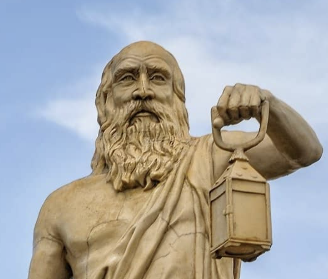
He was going into a theatre, meeting face to face those who were coming out, and being asked why, "This," he said, "is what I practise doing all my life."
▼
Source
source
Diogenes Laërtius, vi. 64
6 months 4 weeks ago
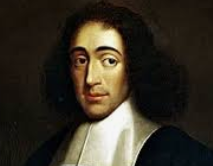
By Natura naturans we must understand what is in itself and is conceived through itself, or such attributes of substance as express an eternal and infinite essence, that is ... God, insofar as he is considered as a free cause. But by Natura naturata I understand whatever follows from the necessity of God's nature, or from God's attributes, that is, all the modes of God's attributes insofar as they are considered as things which are in God, and can neither be nor be conceived without God.
▼
Source
source
Part I, Prop. XXIX, Scholium, trans: Edwin Curley, London: Penguin, 1996
5 months 3 weeks ago
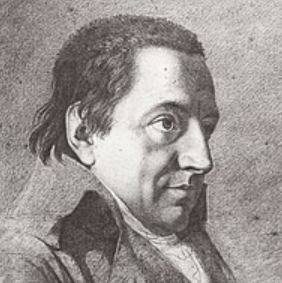
As Being and Life are one and the same, so are Death and Nothingness one and the same. But there is no real Death and no real Nothing ness, as we have already said. There is, however, an Apparent Life, and this is the mixture of life and death, of being and nothingness.
▼
Source
source
P. 4
4 months 1 week ago
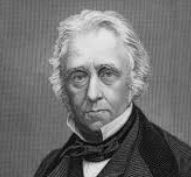
What an incalculable debt do we owe to that little speck of land, Greece.-The principles of taste, the finest models of composition, the doctrines and the glorious examples to which we owe political freedom, the arts, the sciences, architecture, sculpture, every thing that is great and splendid in literature and politics, must be considered as ultimately derived from that little peninsula.
▼
Source
source
Letter to Zachary Macaulay (8 September 1821), quoted in The Letters of Thomas Babington Macaulay, Volume I: 1807-February 1831, ed. Thomas Pinney (1974), p. 163

3 months 2 weeks ago
Experience suggests that if men cannot struggle on behalf of a just cause because that just cause was victorious in an earlier generation, then they will struggle against the just cause. They will struggle for the sake of struggle. They will struggle, in other words, out of a certain boredom: for they cannot imagine living in a world without struggle. And if the greater part of the world in which they live is characterized by peaceful and prosperous liberal democracy, then they will struggle against that peace and prosperity, and against democracy.
▼
Source
source
p. 330
7 months 3 days ago
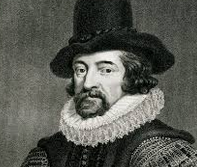
The beginning is from God: for the business which is in hand, having the character of good so strongly impressed upon it, appears manifestly to proceed from God, who is the author of good, and the Father of Lights. Now in divine operations even the smallest beginnings lead of a certainty to their end. And as it was said of spiritual things, "The kingdom of God cometh not with observation," so is it in all the greater works of Divine Providence; everything glides on smoothly and noiselessly, and the work is fairly going on "before men are aware that it has begun. Nor should the prophecy of Daniel be forgotten, touching the last ages of the world: -"Many shall go to and fro, and knowledge shall be increased;" clearly intimating that the thorough passage of the world (which now by so many distant voyages seems to be accomplished, or in course of accomplishment), and the advancement of the sciences, are destined by fate, that is, by Divine Providence, to meet in the same age.
▼
Source
source
Aphorism 93

5 months 6 days ago
You must go to Mahometanism, to Buddhism, to the East, to the Sufis & Fakirs, to Pantheism, for the right growth of mysticism.
▼
Source
source
Letter (2 March 1853), quoted in Suggestions for Thought : Selections and Commentaries (1994), edited by Michael D. Calabria and Janet A. MacRae, p. xiii
3 months 2 weeks ago
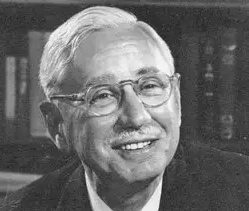
Rooted in freedom, bonded in the fellowship of danger, sharing everywhere a common human blood, we declare again that all men are brothers, and that mutual tolerance is the price of liberty.

3 months 2 weeks ago
Get, by six hundred and fifty-eight votes, or by no vote at all, by the silent intimation of your own eyesight and understanding given you direct out of Heaven, and more sacred to you than anything earthly, and than all things earthly,-a correct image of the fact in question, as God and Nature have made it: that is the one thing needful; with that it shall be well with you in whatsoever you have to do with said fact. Get, by the sublimest constitutional methods, belauded by all the world, an incorrect image of the fact: so shall it be other than well with you; so shall you have laud from able editors and vociferous masses of mistaken human creatures; and from the Nature's Fact, continuing quite silently the same as it was, contradiction, and that only. What else?
6 months 3 weeks ago
A metaphysics of morals is therefore indispensably necessary, not merely because of a motive to speculation - for investigating the source of the practical basic principles that lie a priori in our reason - but also because morals themselves remain subject to all sorts of corruption as long as we are without that clue and supreme norm by which to appraise them correctly...
4 months 2 weeks ago
Even sticking to the higher plane of love, is it so very obvious that you can't love more than one person? We seem to manage it with parental love (parents are reproached if they don't at least pretend to love all their children equally), love of books, of food, of wine (love of Chateau Margaux does not preclude love of a fine Hock, and we don't feel unfaithful to the red when we dally with the white), love of composers, poets, holiday beaches, friends . . . why is erotic love the one exception that everybody instantly acknowledges without even thinking about it?
▼
Source
source
Banishing the Green-Eyed Monster, November 2007.
CivilSimian.com created by AxiomaticPanic, CivilSimian, Kalokagathia