



4 months 4 weeks ago
We are, I know not how, double in ourselves, which is the cause that what we believe we do not believe, and cannot disengage ourselves from what we condemn.
▼
Source
source
Ch. 16. Of Glory, tr. Cotton, rev. W. Carew Hazlitt, 1877

3 months 4 days ago
The natural impulse of the primitive man to strike back, to avenge a wrong, is out of date. Instead, the civilized man, stripped of courage and daring, has delegated to an organized machinery the duty of avenging his wrongs, in the foolish belief that the State is justified in doing what he no longer has the manhood or consistency to do.
4 months 1 week ago
Ill repute is a good thing and much the same as pain.
▼
Source
source
§ 5
3 months 4 days ago
As of old, the most enlightened, even, hope for a miracle from the twentieth-century deity, - suffrage. Life, happiness, joy, freedom, independence, - all that, and more, is to spring from suffrage. In her blind devotion woman does not see what people of intellect perceived fifty years ago: that suffrage is an evil, that it has only helped to enslave people, that it has but closed their eyes that they may not see how craftily they were made to submit.

1 month 1 week ago
I warmly second the advice of the wisest of men-"Don't be ambitious; don't be at all too desirous to success; be loyal and modest." Cut down the proud towering thoughts that you get into you, or see they be pure as well as high. There is a nobler ambition than the gaining of all California would be, or the getting of all the suffrages that are on the planet just now.
4 months 3 weeks ago
Wherever Law ends, Tyranny begins.
▼
Source
source
Second Treatise of Government, Sec. 202

3 months 2 weeks ago
How good would it be if one could die by throwing oneself into an infinite void.
3 months 2 weeks ago
Whether or not there exists a solution to problems troubles only a minority; that the emotions have no outcome, lead to nothing, vanish into themselves - that is the great unconscious drama, the affective insolubility everyone suffers without even thinking about it.
3 months 2 weeks ago
The benefit of the governed is made to lie on one side and the benefit of the governors on the other.
▼
Source
source
Book III, Chapter 9
2 months 2 weeks ago
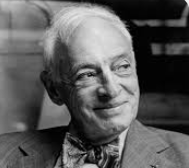
There's something that remains barbarous in educated people, and lately I've more and more had the feeling that we are nonwondering primitives. And why is it that we no longer marvel at these technological miracles? They've become the external facts of every life. We've all been to the university, we've had introductory courses in everything, and therefore we have persuaded ourselves that if we had the time to apply ourselves to these scientific marvels, we would understand them. But of course that's an illusion. It couldn't happen. Even among people who have had careers in science. They know no more about how it all works than we do. So we are in the position of savage men who, however, have been educated into believing that they are capable of understanding everything. Not that we actually do understand, but that we have the capacity.
▼
Source
source
"A Half Life" (1990), pp. 302-303
3 weeks ago
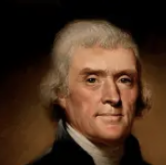
Men by their constitutions are naturally divided into two parties: 1. Those who fear and distrust the people, and wish to draw all powers from them into the hands of the higher classes. 2. Those who identify themselves with the people, have confidence in them, cherish and consider them as the most honest and safe, although not the most wise depositary of the public interests. In every country these two parties exist, and in every one where they are free to think, speak, and write, they will declare themselves. Call them, therefore, liberals and serviles, Jacobins and Ultras, whigs and tories, republicans and federalists, aristocrats and democrats, or by whatever name you please, they are the same parties still and pursue the same object. The last appellation of aristocrats and democrats is the true one expressing the essence of all.
▼
Source
source
Letter to Henry Lee

3 months 3 weeks ago
The world that I regard is my selfe, it is the Microcosme of mine owne frame, that I cast mine eye on; for the other, I use it but like my Globe, and turne it round sometimes for my recreation. Men that look upon my outside, perusing onely my condition, and fortunes, do erre in my altitude; for I am above Atlas his shoulders.
▼
Source
source
Section 12
1 month 3 weeks ago
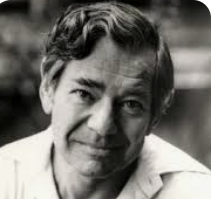
Of faith and morals, one cannot speak honestly for long without hurting feelings. Therefore, most people speak dishonestly of the most important subjects. Many recent philosophers prefer not to speak of them at all. But in some situations honesty is incompatible with silence.
3 months 2 weeks ago
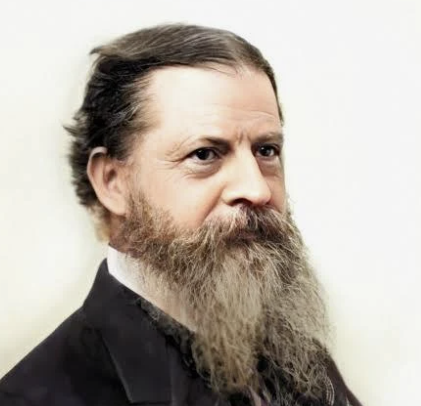
I call a sign which stands for something merely because it resembles it, an icon. Icons are so completely substituted for their objects as hardly to be distinguished from them. Such are the diagrams of geometry. A diagram, indeed, so far as it has a general signification, is not a pure icon; but in the middle part of our reasonings we forget that abstractness in great measure, and the diagram is for us the very thing. So in contemplating a painting, there is a moment when we lose the consciousness that it is not the thing, the distinction of the real and the copy disappears, and it is for the moment a pure dream, - not any particular existence, and yet not general. At that moment we are contemplating an icon.

4 months 2 weeks ago
Science may be described as the art of systematic over-simplification - the art of discerning what we may with advantage omit.
▼
Source
source
The Open Universe : An Argument for Indeterminism (1992), p. 44
5 months 5 days ago
Materials are indifferent, but the use which we make of them is not a matter of indifference.
▼
Source
source
Book II, ch. 5, 1

3 months 4 weeks ago
Anything we take in the Universe, because it has in itself that which is All in All, includes in its own way, the entire soul of the world, which is entirely in any part of it.

4 months 2 weeks ago
I can't imagine a man really enjoying a book and reading it only once.
▼
Source
source
Letter to Arthur Greeves (February 1932) - in They Stand Together: The Letters of C. S. Lewis to Arthur Greeves (1914-1963) (1979), p. 439

3 months 3 weeks ago
If you are penitent, you love. And if you love you are of God. All things are atoned for, all things are saved by love. If I, a sinner even as you are, am tender with you and have pity on you, how much more will God have pity upon you. Love is such a priceless treasure that you can redeem the whole world by it, and cleanse not only your own sins but the sins of others.
▼
Source
source
Book II, Chapter 3 (trans. Constance Garnett) The Elder Zossima, speaking to a devout widow afraid of death
2 months 2 weeks ago
No one should be judge in his own cause.
▼
Source
source
Maxim 545

4 months 3 weeks ago
If the whole of natural theology, as some people seem to maintain, resolves itself into one simple, though somewhat ambiguous, at least undefined proposition, that the cause or causes of order in the universe probably bear some remote analogy to human intelligence: If this proposition be not capable of extension, variation, or more particular explication: If it affords no inference that affects human life, or can be the source of any action or forbearance: And if the analogy, imperfect as it is, can be carried no farther than to the human intelligence, and cannot be transferred, with any appearance of probability, to the other qualities of the mind; if this really be the case, what can the most inquisitive, contemplative, and religious man do more than give a plain, philosophical assent to the proposition, as often as it occurs, and believe that the arguments on which it is established exceed the objections which lie against it?
▼
Source
source
Philo to Cleanthes, Part XII

1 month 6 days ago
For sometimes it is an act of bravery even to live.
▼
Source
source
Seneca, Ad Lucilium epistulae morales, transl. Richard M. Gummere, 1920 ed., Epistle LXXVIII, pp. 181-182
3 months 1 week ago
Strictly speaking, the mass, as a psychological fact, can be defined without waiting for individuals to appear in mass formation. In the presence of one individual we can decide whether he is "mass" or not. The mass is all that which sets no value on itself - good or ill - based on specific grounds, but which feels itself "just like everybody," and nevertheless is not concerned about it; is, in fact, quite happy to feel itself as one with everybody else.
▼
Source
source
Chap.I: The Coming Of The Masses

4 months 1 week ago
Sweet exists by convention, bitter by convention, colour by convention; atoms and Void [alone] exist in reality.
▼
Source
source
(trans. Freeman 1948), p. 92.

4 months 3 weeks ago
Lead, follow, or get out of the way.
▼
Source
source
George S. Patton: "Lead me, follow me, or get out of my way", as quoted in Pocket Patriot: Quotes from American Heroes (2005) edited by Kelly Nickell, p. 157

1 month 4 weeks ago
Darwinist thinkers such as Richard Dawkins and Daniel Dennett are militant opponents of Christianity. Yet their atheism and humanism are versions of Christian concepts. As a defender of Darwinism, Dawkins is committed to the view that humans are like other animal species in being 'gene machines' ruled by the laws of natural selection. He asserts nevertheless that humans, uniquely, can defy these natural laws: 'We, alone on earth, can rebel against the tyranny of the selfish replicators.' In affirming human uniqueness in this way, Dawkins relies on a Christian world-view.
▼
Source
source
Post-Apocalypse: After Secularism (pp. 265-6)

3 weeks ago
People who live at the lower ends of watersheds cannot be isolationists - or not for long. Pretty soon they will notice that water flows, and that will set them to thinking about the people upstream who either do or do not send down their silt and pollutants and garbage. Thinking about the people upstream out to cause further thinking about the people downstream. Such pondering on the facts of gravity and the fluidity of water shows us that the golden rule speaks to a condition of absolute interdependency and obligation. People who live on rivers - or, in fact, anywhere in a watershed - might rephrase the rule in this way: Do unto those downstream as you would have those upstream do unto you.

3 months 4 days ago
Upper middle-class upbringing has rooted out any element of what might appear to be self-assertion or egoism; good manners is to be like everyone else. So the male of the species becomes accustomed to suppress any stirring of impatience or originality. Shaw once said you can't learn to skate without making a fool of yourself; the British middle-class attitude seems to be that, in that case, you hadn't better skate at all. The result seems to be considerably more oppressive than being brought up in a Jewish ghetto or a west side slum.
▼
Source
source
p. 112, An integrity born of hope: Notes on Christopher Isherwood
3 months 1 week ago
The process of aging can only be fruitful and satisfactory if the important transitions are accompanied by free resignation, by the renunciation of the values proper to the preceding stage of life. Those spiritual and intellectual values which remain untouched by the process of aging, together with the values of the next stage of life, must compensate for what has been lost. Only if this happens can we cheerfully relive the values of our past in memory, without envy for the young to whom they are still accessible. If we cannot compensate, we avoid and flee the "tormenting" recollection of youth, thus blocking our possibilities of understanding younger people. At the same time we tend to negate the specific values of earlier stages. No wonder that youth always has a hard fight to sustain against the ressentiment of the older generation.
▼
Source
source
L. Coser, trans. (1973), pp. 62-63
4 months 3 weeks ago
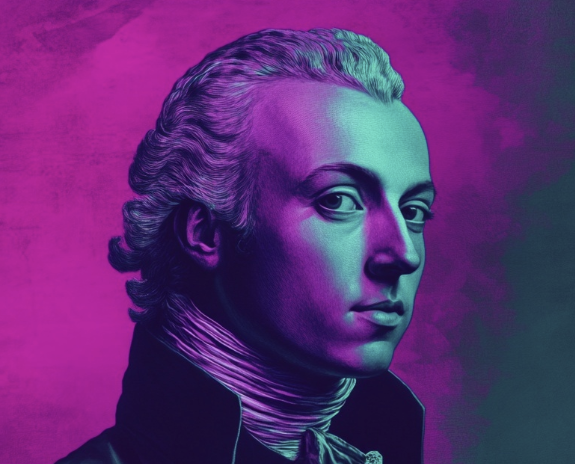
It is absurd ... to hope that maybe another Newton may some day arise, to make intelligible to us even the genesis of but a blade of grass
▼
Source
source
("Dialectic of Teleological Judgment" §75)

4 months 3 weeks ago
An irrational fear should never be simply let alone, but should be gradually overcome by familiarity with its fainter forms.
▼
Source
source
On Education, Especially in Early Childhood (1926), Ch. 4: Fear
3 months 2 weeks ago
Always to have lived with the nostalgia to coincide with something, but not really knowing with what - it is easy to shift from unbelief to belief, or conversely. But what is there to convert to, and what is there to abjure, in a state of chronic lucidity?
2 months 3 weeks ago
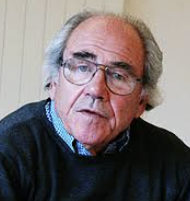
When the real is no longer what it was, nostalgia assumes its full meaning. "The Precession of Simulacra,"
▼
Source
source
p. 6
3 months 2 weeks ago
What anxiety when one is not sure of one's doubts or wonders: are these actually doubts?
3 months 1 week ago
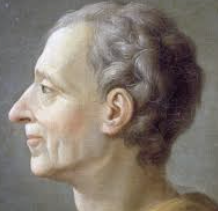
The Spirit of the Laws became the nobleman's Bible all over Europe.
▼
Source
source
Catherine Behrens, The Ancien Régime (1967), p. 78

3 months 3 weeks ago
Surely if a single cell may, when subjected to certain influences, become a man in the space of twenty years; there is nothing absurd in the hypothesis that under certain other influences, a cell may, in the course of millions of years, give origin to the human race.

1 month 2 weeks ago
To conceive the good, in fact, is not sufficient; it must be made to succeed among men. To accomplish this less pure paths must be followed.
▼
Source
source
Ch. 5.
4 months 3 weeks ago
It is a matter of perfect indifference where a thing originated; the only question is: "Is it true in and for itself?" Many think that by pronouncing a doctrine to be Neo-Platonic, they have ipso facto banished it from Christianity. Whether a Christian doctrine stands exactly thus or thus in the Bible, the point to which the exegetical scholars of modern times devote all their attention is not the only question. The Letter kills, the Spirit makes alive: this they say themselves, yet pervert the sentiment by taking the Understanding for the Spirit.
▼
Source
source
Pt. III, sec. 3, ch. 2 Lectures on the History of History Vol 1 p. 344 John Sibree translation (1857), 1914
3 months 3 weeks ago
Time: That which man is always trying to kill, but which ends in killing him.
▼
Source
source
Definitions, as quoted in The Dictionary of Essential Quotations (1983) by Kevin Goldstein-Jackson, p. 154
3 months 1 week ago
England is the paradise of individuality, eccentricity, heresy, anomalies, hobbies, and humors.
▼
Source
source
"The British Character"
1 month 1 week ago
Never till now, in the history of an Earth which to this hour nowhere refuses to grow corn if you will plough it, to yield shirts if you will spin and weave in it, did the mere manual two-handed worker (however it might fare with other workers) cry in vain for such "wages" as he means by "fair wages," namely food and warmth!
4 months 3 weeks ago
The same good sense, that directs men in the ordinary occurrences of life, is not hearkened to in religious matters, which are supposed to be placed altogether above the cognizance of human reason.

4 months 3 weeks ago
The problem of establishing a perfect civic constitution is dependent upon the problem of a lawful external relation among states and cannot be solved without a solution of the latter problem.
▼
Source
source
Seventh Thesis
1 month 1 week ago
The habits of study acquired at Universities are of the highest importance in after-life. At the season when you are in young years the whole mind is, as it were, fluid, and is capable of forming itself into any shape that the owner of the mind pleases to order it to form itself into. The mind is in a fluid state, but it hardens up gradually to the consistency of rock or iron, and you cannot alter the habits of an old man, but as he has begun he will proceed and go on to the last.

5 months ago
I have no patience with those who say that sexual excitement is shameful and that venereal stimuli have their origin not in nature, but in sin. Nothing is so far from the truth. As if marriage, whose function cannot be fulfilled without these incitements, did not rise above blame. In other living creatures, where do these incitements come from? From nature or from sin? From nature, of course. It must borne in mind that in the apetites of the body there is very little difference between man and other living creatures. Finally, we defile by our imagination what of its own nature is fair and holy. If we were willing to evaluate things not according to the opinion of the crowd, but according to nature itself, how is it less repulsive to eat, chew, digest, evacuate, and sleep after the fashion of dumb animals, than to enjoy lawful and permitted carnal relations?
▼
Source
source
In Praise of Marriage (1519), in Erasmus on Women (1996) Erika Rummel
5 months 1 week ago
In a quarrel for earth, turn not to earth.
▼
Source
source
First Homily, as translated by John Burnaby (1955), p. 267
3 months 2 weeks ago
Labor is a commodity, like any other, and its price is therefore determined by exactly the same laws that apply to other commodities. In a regime of big industry or of free competition - as we shall see, the two come to the same thing - the price of a commodity is, on the average, always equal to its cost of production. Hence, the price of labor is also equal to the cost of production of labor. But, the costs of production of labor consist of precisely the quantity of means of subsistence necessary to enable the worker to continue working, and to prevent the working class from dying out. The worker will therefore get no more for his labor than is necessary for this purpose; the price of labor, or the wage, will, in other words, be the lowest, the minimum, required for the maintenance of life.
4 months 4 weeks ago
He who remembers the evils he has undergone, and those that have threatened him, and the slight causes that have changed him from one state to another, prepares himself in that way for future changes and for recognizing his condition. The life of Caesar has no more to show us than our own; an emperor's or an ordinary man's, it is still a life subject to all human accidents.
▼
Source
source
Ch. 13
CivilSimian.com created by AxiomaticPanic, CivilSimian, Kalokagathia