


6 months 2 weeks ago
There is object proof that homosexuality is more interesting than heterosexuality. It's that one knows a considerable number of heterosexuals who would wish to become homosexuals, whereas one knows very few homosexuals who would really like to become heterosexuals.
▼
Source
source
As quoted in Who's Who in Contemporary Gay & Lesbian History: From World War II to the Present Day (2001) by Robert Aldrich and Gary Wotherspoon ISBN 041522974X

6 months 3 weeks ago
I am particularly grateful to Nozick for his unfailing help and encouragement during the last stages.
▼
Source
source
Preface, pg. xii

5 months 1 week ago
We have seen that language is something precious because it allows us to express ourselves; but it is fatal when one allows oneself to be completely led astray by it, because then it prevents one from expressing oneself. Language is the source of the prejudices and haste which Descartes thought of as the sources of error.
▼
Source
source
p. 76

5 months 3 weeks ago
Better to be despised for too anxious apprehensions, than ruined by too confident a security.
5 months 4 weeks ago
The most dangerous madmen are those created by religion, and ... people whose aim is to disrupt society always know how to make good use of them on occasion.
2 months 3 weeks ago
That there is a common cause, an that it is either what we call material progress or something closely connected with material progress, becomes more than an inference when it is noted that the phenomena we class together and speak of as industrial depression are but intensifications of phenomena which always accompany material progress, and which show themselves more clearly and strongly as material progress goes on. Where the conditions to which material progress everywhere tends are the most fully realized-that is to say, where population is densest, wealth greatest, and the machinery of production and exchange most highly developed - we find the deepest poverty, the sharpest struggle for existence, and the most of enforced idleness.
▼
Source
source
Introductory : The Problem

5 months 2 weeks ago
For I came to cause division, with a man against his father, and a daughter against her mother, and a daughter-in-law against her mother-in-law. 36 Indeed, a man's enemies will be those of his own household.
▼
Source
source
10:35,36, New World Translation
3 months 5 days ago
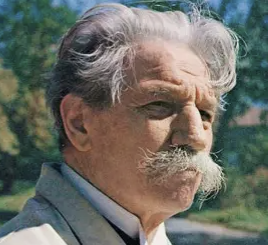
When in the spring the withered gray of the pastures gives place to green, this is due to the millions of young shoots which sprout up freshly from the old roots. In like manner the revival of thought which is essential for our time can only come through a transformation of the opinions and ideals of the many brought about by individual and universal reflection about the meaning of life and of the world.
▼
Source
source
p. 10
2 months 3 weeks ago
Only now, as we feel the onslaught behind us, do we begin dimly to apprehend why the animals fought, begot, and died; and behind them the plants; and behind these the huge reserve of inorganic forces. We are moved by pity, gratitude, and esteem for our old comrades-in-arms. They toiled, loved, and died to open a road for our coming. We also toil with the same delight, agony, and exaltation for the sake of Someone Else who with every courageous deed of ours proceeds one step farther. All our struggle once more will have a purpose much greater than we, wherein our toils, our miseries, and our crimes will have become useful and holy.

7 months 2 days ago
Our stubbornness is right, because we want to preserve the liberty which we have in Christ. Only by preserving our liberty shall we be able to retain the truth of the Gospel inviolate.
▼
Source
source
Chapter 2

5 months 1 week ago
The individual begins that long effort as an Outsider; he may finish it as a saint.
▼
Source
source
Chapter Nine, Breaking the Circuit, final sentence

2 months 3 weeks ago
That which had grown from the earth, to the earth, But that which has sprung from heavenly seed, Back to the heavenly realms returns. This is either a dissolution of the mutual involution of the atoms, or a similar dispersion of the unsentient elements.
▼
Source
source
VII, 50
7 months 3 weeks ago
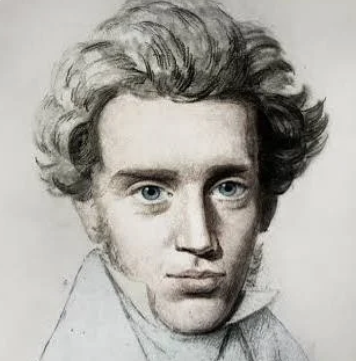
One could construe the life of man as a great discourse in which the various people represent different parts of speech (the same might apply to states). How many people are just adjectives, interjections, conjunctions, adverbs? How few are substantives, active verbs, how many are copulas? Human relations are like the irregular verbs in a number of languages where nearly all verbs are irregular.
11 months ago
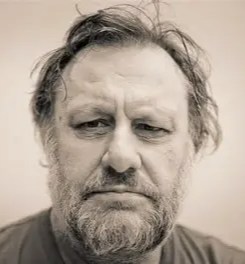
This is probably the fundamental dimension of 'ideology': ideology is not simply a 'false consciousness', an illusory representation of reality, it is rather this reality itself which is already to be conceived as 'ideological' - 'ideological' is a social reality whose very existence implies the non-knowledge of its participants as to its essence -that is, the social effectivity, the very reproduction of which implies that the individuals 'do not know what they are doing'. 'Ideological is not the false consciousness of a (social) being but this being itself in so far as it is supported by "false consciousness"'. Thus we have finally reached the dimension of the symptom, because one of its possible definitions would also be 'a formation whose very consistency implies a certain non-knowledge on the part of the subject': the subject can 'enjoy his symptom' only in so far as its logic escapes him - the measure of the success of its interpretation is precisely its dissolution.

3 months 2 weeks ago
After World War II, liberal rights were not something that were only deserved by white Europeans. ...There was a recognition that the black and brown peoples being held in colonial bondage could not consistently be held in that bondage, because liberalism was a universal doctrine. ...That's the other respect in which we can defend liberalism, a moral one.
▼
Source
source
10:30
3 months 2 weeks ago
The second failing of liberalism comes directly out of the fact that it attempts to lower the horizons of politics. Liberal societies do not want to tell you how to live. They do not want to define "the good life" because that is the source of conflict, but as a result liberal societies tend not to satisfy these very deep human cravings for community, because... there's something wrong with the basic liberal premise that we all start... as self-interested individuals. We're not self-interested individuals.
▼
Source
source
15:22

5 months 1 week ago
We cannot think first and act afterwards. From the moment of birth we are immersed in action, and can only fitfully guide it by taking thought.
▼
Source
source
Ch. 12: "Religion and Science", p. 261

5 months 2 weeks ago
Sadness makes you God's prisoner.
5 months 2 weeks ago
Everything exists; nothing exists. Either formula affords a like serenity. The man of anxiety, to his misfortune, remains between them, trembling and perplexed, forever at the mercy of a nuance, incapable of gaining a foothold in the security of being or in the absence of being.
5 months 2 weeks ago
There is no problem in all mathematics that cannot be solved by direct counting. But with the present implements of mathematics many operations can be performed in a few minutes which without mathematical methods would take a lifetime.
▼
Source
source
p. 197; On mathematics and counting.

5 months 2 weeks ago
The concept of freedom, as the Philosophy of Right has shown, follows the pattern of free ownership. As a result, the history of the world that Hegel looks out upon exalts and enshrines the history of the middle-class, which based itself on this pattern. There is a stark truth in Hegel's strangely certain announcement that history has reached its end. But it announces the funeral of a class, not of history.
▼
Source
source
P. 227

6 months 3 weeks ago
A great myth is relevant as long as the predicament of humanity lasts; as long as humanity lasts. It will always work, on those who can receive it, the same catharsis.
▼
Source
source
"Haggard Rides Again", in Time and Tide, Vol. XLI, 9/3/1960
5 months 2 days ago
A single observation that is inconsistent with some generalization points to the falsehood of the generalization, and thereby 'points to itself'.
▼
Source
source
Chapter 4, Evidence, p. 34.
5 months 2 weeks ago
The world of immediate experience-the world in which we find ourselves living-must be comprehended, transformed, even subverted in order to become that which it really is.
▼
Source
source
p. 123

5 months 2 weeks ago
For such Truth as opposeth no man's profit nor pleasure is to all men welcome.
▼
Source
source
Review and Conclusion, p. 396, (Last text line)
7 months 3 weeks ago
Inspect every piece of pseudoscience and you will find a security blanket, a thumb to suck, a skirt to hold. What does the scientist have to offer in exchange? Uncertainty! Insecurity!
5 months 3 weeks ago
Revolution is like the daughters of Pelias: it cuts humanity to pieces in order to rejuvenate it.
▼
Source
source
Act II.
3 months 1 week ago
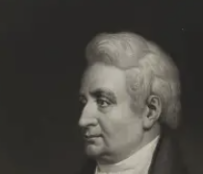
Every rock in the ocean where a cormorant can perch is occupied by our troops - has a governor, deputy-governor, storekeeper, and deputy-storekeeper - and will soon have an archdeacon and a bishop. Military colleges, with thirty-four professors, educating seventeen ensigns per annum, being half an ensign for each professor, with every species of nonsense, athletic, sartorial, and plumigerous.
▼
Source
source
Catholics, published in The Edinburgh Review (1827). See The Works of the Rev. Sydney Smith. 2. 1859. p. 123.
5 months 2 weeks ago
Who does not believe in Fate proves that he has not lived.
6 months 3 weeks ago
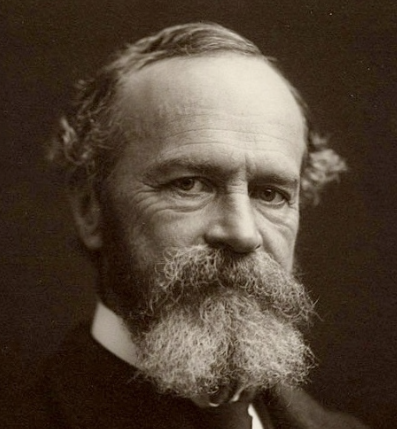
Genius, in truth, means little more than the faculty of perceiving in an unhabitual way.
▼
Source
source
Ch. 19
2 months 3 weeks ago
Never regard something as doing you good if it makes you betray a trust or lose your sense of shame or makes you show hatred, suspicion, ill-will or hypocrisy or a desire for things best done behind closed doors.
▼
Source
source
III. 7, trans. Gregory Hays
6 months 2 weeks ago
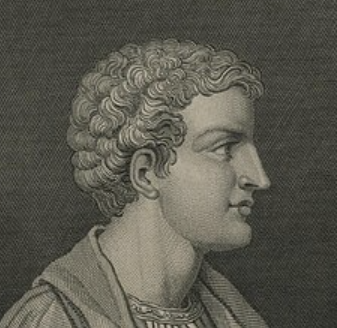
Then take, good sir, your pleasure while you may; With life so short 'twere wrong to lose a day.
▼
Source
source
Book II, satire viii, line 96 (trans. Conington)
4 months 2 weeks ago
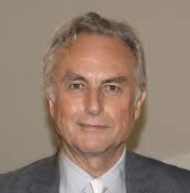
The total amount of suffering per year in the natural world is beyond all decent contemplation. During the minute it takes me to compose this sentence, thousands of animals are being eaten alive; others are running for their lives, whimpering with fear; others are being slowly devoured from within by rasping parasites; thousands of all kinds are dying of starvation, thirst and disease. [...] In a universe of blind physical forces and genetic replication, some people are going to get hurt, other people are going to get lucky, and you won't find any rhyme or reason in it, nor any justice. The universe we observe has precisely the properties we should expect if there is, at bottom, no design, no purpose, no evil and no good, nothing but blind, pitiless indifference. DNA neither knows nor cares. DNA just is. And we dance to its music.
▼
Source
source
pp. 131-132
5 months 3 weeks ago
The nature of the Absolute State consists herein, -that all individual powers be directed towards the Life of the Race,-in place of which Race, the State puts the aggregate of its own Citizens. It therefore becomes necessary, first, that all Individuals, without exception, should be taken into equal consideration by the State; and second, that every Individual, with all his individual powers, without exception or reserve, should be taken into equal consideration. In a State so constituted, where all, as Individuals, are dedicated to the Race, it follows at the same time, that all without exception, with all the Rights which belong to them as component parts of the Race, are dedicated to all the other individual members of the State.
▼
Source
source
p. 150-151

4 months 3 weeks ago
To recognize this clearly is enough to drive a man out of his senses or to make him shoot himself. And this is just what does happen, and especially often among military men. A man need only come to himself for an instant to be impelled inevitably to such an end.
▼
Source
source
Chapter V, Contradiction Between our Life and our Christian Conscience

3 months 2 weeks ago
Books-there is a good kind of a book and a bad kind of a book. I am not to assume that you are all ill acquainted with this; but I may remind you that it is a very important consideration at present. It casts aside altogether the idea that people have that if they are reading any book-that if an ignorant man is reading any book, he is doing rather better than nothing at all.

6 months 3 weeks ago
Children must be under authority, and are themselves aware that they must be, although they like to play a game of rebellion at times. The case of children is unique in the fact that those who have authority over them are sometimes fond of them. Where this is the case, the children do not resent the authority in general, even when they resist it on particular occasions. Education authorities, as opposed to teachers, have not this merit, and do in fact sacrifice the children to what they consider the good of the State by teaching them "patriotism," i.e., a willingness to kill and be killed for trivial reasons.
▼
Source
source
Ch. 13: Freedom in Society

2 months 3 weeks ago
Whatever the virtue may be, from whatever source it may come, it is worthy of esteem... Mind, beauty, wealth, nobility, although the children of chance, all have their own value, as skill, learning and virtue have theirs.
5 months 4 weeks ago
When shall we see poets born? After a time of disasters and great misfortunes, when harrowed nations begin to breathe again. And then, shaken by the terror of such spectacles, imaginations will paint things entirely strange to those who have not witnessed them.

6 months 3 weeks ago
We will walk on our own feet; we will work with our own hands; we will speak our own minds...A nation of men will for the first time exist, because each believes himself inspired by the Divine Soul which also inspires all men.
▼
Source
source
par. 43

6 months 3 weeks ago
Long discourses, and philosophical readings, at best, amaze and confound, but do not instruct children. When I say, therefore, that they must be treated as rational creatures, I mean that you must make them sensible, by the mildness of your carriage, and in the composure even in the correction of them, that what you do is reasonable in you, and useful and necessary for them; and that it is not out of caprichio, passion or fancy, that you command or forbid them any thing.
▼
Source
source
Sec. 81
6 months 2 weeks ago
We're at such a low point in the American empire. Its spiritual decay and its immoral decadence are so profound that we have to begin on the foundational level of a spiritual awakening and a moral reckoning. Organized greed. Institutionalized hatred. Routinized indifference to the lives of poor and working people of all colors. We've got to get beyond an analysis of the predatory capitalist processes that have saturated every nook and cranny of the culture. We've got to get beyond the ways in which the political system has been colonized by corporate wealth and by monied elite. We've got to get beyond that sense of impotence of the citizenry. These are all the signs of an empire in decline. The only thing that we have to add is military overreach, and we see that as well. Speaking to Chris Hedges about his decision to run for president in 2024.
▼
Source
source
Chris Hedges: Dr. Cornel West Announces He Is Running for President. Scheerpost. June 5, 2023

3 months 1 week ago
I am endeavouring to live every day as if it were a complete life.
5 months 4 days ago
Astronomy is perhaps the science whose discoveries owe least to chance, in which human understanding appears in its whole magnitude, and through which man can best learn how small he is.
▼
Source
source
C 23
6 months 3 weeks ago
The end of the human race will be that it will eventually die of civilization.
▼
Source
source
Civilization
7 months 1 week ago
Remember that you ought to behave in life as you would at a banquet. As something is being passed around it comes to you; stretch out your hand, take a portion of it politely. It passes on; do not detain it. Or it has not come to you yet; do not project your desire to meet it, but wait until it comes in front of you. So act toward children, so toward a wife, so toward office, so toward wealth.
▼
Source
source
(15).
5 months 3 weeks ago
To theology, ... only what it holds sacred is true, whereas to philosophy, only what holds true is sacred.
▼
Source
source
Lecture II, R. Manheim, trans. (1967), p. 11
5 months 3 weeks ago
The secret of Hegel's dialectic lies ultimately in this alone, that it negates theology through philosophy in order then to negate philosophy through theology. Both the beginning and the end are constituted by theology; philosophy stands in the middle as the negation of the first positedness, but the negation of the negation is again theology. At first everything is overthrown, but then everything is reinstated in its old place, as in Descartes. The Hegelian philosophy is the last grand attempt to restore a lost and defunct Christianity through philosophy, and, of course, as is characteristic of the modern era, by identifying the negation of Christianity with Christianity itself.
▼
Source
source
Part II, Section 21
CivilSimian.com created by AxiomaticPanic, CivilSimian, Kalokagathia