


8 months 2 weeks ago
My sympathies are, of course, with the Government side, especially the Anarchists; for Anarchism seems to me more likely to lead to desirable social change than highly centralized, dictatorial Communism.
▼
Source
source
Authors Take Sides on the Spanish War (1937) edited by Nancy Cunard and publisehd by the Left Review

8 months 4 weeks ago
Lying and guile need only to be revealed and recognized to be undone. When once lying is recognized as such, it needs no second stroke; it falls of itself and vanishes in shame.
▼
Source
source
p. 60

7 months 1 week ago
It is a paralogism to say, that the good of the individual should give way to that of the public; this can never take place, except when the government of the community, or, in other words, the liberty of the subject is concerned; this does not affect such cases as relate to private property, because the public good consists in everyone's having his property, which was given him by the civil laws, invariably preserved.
▼
Source
source
Book XXVI, Chapter 15.


8 months 3 weeks ago
In public, as well as in private expences, great wealth may, perhaps, frequently be admitted as an apology for great folly.
▼
Source
source
Chapter V, p. 563.

6 months 2 weeks ago
Everything is worth what its purchaser will pay for it.
▼
Source
source
Maxim 847

5 months 4 weeks ago
Much more seriously, in those traditional eco-systems that we chose to retain, millions of non-human animals will continue periodically to starve, die horribly of thirst and disease, or even get eaten alive. This is commonly viewed as "natural" and hence basically OK. It would indeed be comforting to think that in some sense this ongoing animal holocaust doesn't matter too much. We often find it convenient to act as though the capacity to suffer were somehow inseparably bound up with linguistic ability or ratiocinative prowess. Yet there is absolutely no evidence that this is the case, and a great deal that it isn't.
▼
Source
source
1.9 The Taste of Depravity

7 months 2 weeks ago
With a higher moral nature will come a restriction on the multiplication of the inferior.
▼
Source
source
The Principles of Biology, Vol. II (1867), Part VI: Laws of Multiplication, ch. 8: Human Population in the Future

8 months 2 weeks ago
He begins to think for himself and meets Nineteenth-century Rationalism Which can explain away religion by any number of methods.
▼
Source
source
Pilgrim's Regress 19-20

5 months 1 week ago
A great man shows his greatness by the way he treats little men.
7 months 1 week ago
The difference between the artificial and the artful in the artistic lies on the surface in the former there is a split between what is overly done and what is intended. The appearance is one of cordiality; the intent is that of gaining favor. Whenever this split between what is done and its purpose exists, there is insincerity, a trick, a simulation of an act that intrinsically has another effect. When the natural and the cultivated blend into one, acts of social intercourse are works of art. The animating impulsion of genial friendship and the deed performed completely coincide without intrusion of ulterior motive. Awkwardness may prevent adequacy of expression.

8 months 3 weeks ago
There are two things which make it impossible to believe that this world is the successful work of an all-wise, all-good, and, at the same time, all-powerful Being; firstly, the misery which abounds in it everywhere; and secondly, the obvious imperfection of its highest product, man, who is a burlesque of what he should be.
▼
Source
source
"On the Sufferings of the World"

8 months 2 weeks ago
Philosophers should consider the fact that the greatest happiness principle can easily be made an excuse for a benevolent dictatorship. We should replace it by a more modest and more realistic principle - the principle that the fight against avoidable misery should be a recognized aim of public policy, while the increase of happiness should be left, in the main, to private initiative.
▼
Source
source
As quoted in 1,001 Pearls of Wisdom (2006) by David Ross
9 months 3 weeks ago
To stand on one leg and prove God's existence is a very different thing from going on one's knees and thanking Him.

7 months 2 weeks ago
I love talking to simple people, with common folk, if you like, and I still do it and still chat now as before with anyone, regardless of intellectual level. On the contrary, I like uneducated people much better and that is obviously my Rumanian heritage.

8 months 3 weeks ago
Patriots always talk of dying for their country, and never of killing for their country.
▼
Source
source
Has Man a Future? (1962), p. 78

7 months 3 days ago
The outsider, Haller says, is a self-divided man; being self-divided, his chief desire is to be unified. He is selfish as a man with a lifelong raging toothache.
▼
Source
source
Chapter Three, The Romantic Outsider
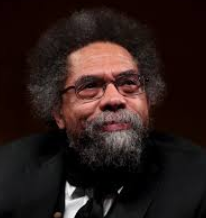
8 months 2 weeks ago
The Enlightenment worldview held by Du Bois is ultimately inadequate, and, in many ways, antiquated, for our time. The tragic plight and absurd predicament of Africans here and abroad requires a more profound interpretation of the human condition - one that goes beyond the false dichotomies of expert knowledge vs. mass ignorance, individual autonomy vs. dogmatic authority, and self-mastery vs. intolerant tradition.
▼
Source
source
The Future of the Race (1997) by Henry Louis Gates, Jr. and Cornel West, p. 64
8 months 4 weeks ago
... a penny saved is better than a penny earned.
▼
Source
source
The Duty of a Husband and Wife (17 March 1539), No. 4408. LW 54:337
8 months 3 weeks ago
This actual world of what is knowable, in which we are and which is in us, remains both the material and the limit of our consideration.
▼
Source
source
Vol I, Ch. 4, The World As Will: Second Aspect, § 53, as translated by Eric F. J. Payne, 1958

9 months 3 days ago
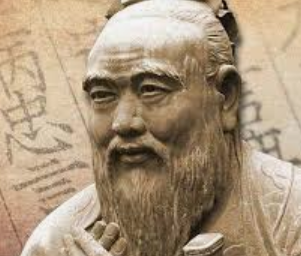
Several particular maxims... are as powerful, although false, in carrying away belief, as those the most true.
9 months 1 week ago
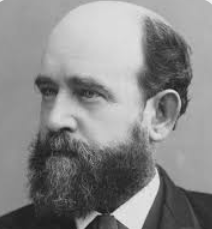
Among the appliances to transform the people, sound and appearances are but trivial influences.

4 months 2 weeks ago
How can a man be said to have a country where he has no right to a square inch of soil...
▼
Source
source
Ch. 2 : Political Dangers

7 months 2 weeks ago
One of the most marked features about the law of mind is that it makes time to have a definite direction of flow from past to future. ...This makes one of the great contrasts between the law of mind and the law of physical force, where there is no more distinction between the two opposite directions in time than between moving northward and moving southward.

8 months 3 weeks ago
Human nature is not a machine to be built after a model, and set to do exactly the work prescribed for it, but a tree, which requires to grow and develop itself on all sides, according to the tendency of the inward forces which make it a living thing.
▼
Source
source
Ch. III: Of Individuality, As One of the Elements of Well-Being

4 months 3 weeks ago
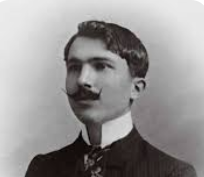
High up where the poor sat, the people quaked with fear:they saw the soul stretched on the ground, a votive beastbeaten by the conflicting powers of light and dark,and their minds shook, nor knew now what great god to choose,for comfort's road dropped to the right, the rough ascentrose to the left, and both roads seemed to lead to God,while at the crossroads stood the human heart, and swayed.
▼
Source
source
Book VI, line 242

4 months 2 weeks ago
And first the Doctrine that all their Theory is grounded on, seems to me Inevident and undemonstrated, not to say precarious.
5 months 1 week ago
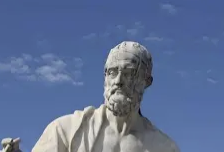
For what gives my work its peculiar quality, and what is most remarkable in the present age, is this. Fortune has guided almost all the affairs of the world in one direction and has forced them to incline towards one and the same end; a historian should likewise bring before his readers under one synoptical view the operations by which she has accomplished her general purpose.
5 months 6 days ago
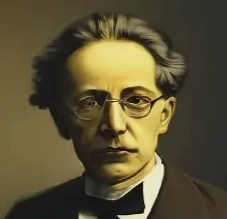
I have no need to take up each thing that wants to throw its cause on us and show that it is occupied only with itself, not with us, only with its good, not with ours. Look at the rest for yourselves. Do truth, freedom, humanity, justice, desire anything else than that you grow enthusiastic and serve them?
▼
Source
source
Cambridge 1995, p. 6
8 months 2 weeks ago
A man, an adult, is precisely what [Aeneas] is: Achilles had been little more than a passionate boy.
▼
Source
source
A Preface to Paradise Lost (1942), Chapter 6: "Virgil and the Subject of Secondary Epic"
6 months 4 weeks ago
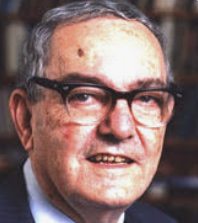
The function of knowledge in the decision-making process is to determine which consequences follow upon which of the alternative strategies. It is the task of knowledge to select from the whole class of possible consequences a more limited subclass, or even (ideally) a single set of consequences correlated with each strategy.
▼
Source
source
p. 78.

8 months 1 week ago
Men in their prayers beg the gods for health, not knowing that this is a thing they have in their own power. Through their incontinence undermining it, they themselves become, because of their passions, the betrayers of their own health.

7 months 3 weeks ago
There are three principal means of acquiring knowledge available to us: observation of nature, reflection, and experimentation. Observation collects facts; reflection combines them; experimentation verifies the result of that combination. Our observation of nature must be diligent, our reflection profound, and our experiments exact. We rarely see these three means combined; and for this reason, creative geniuses are not common.
▼
Source
source
No. 15



6 months 2 weeks ago
Applied knowledge in the Renaissance had to take the form of translation of the auditory into visual terms, of the plastic into retinal form.
▼
Source
source
(p. 180)

8 months 4 weeks ago
I could not be true and constant to the argument I handle, if I were not willing to go beyond others; but yet not more willing than to have others go beyond me again: which may the better appear by this, that I have propounded my opinions naked and unarmed, not seeking to preoccupate the liberty of men's judgments by confutations.
▼
Source
source
Book II

7 months 1 week ago
Behold, we go up to Jerusalem; and the Son of man shall be betrayed unto the chief priests and unto the scribes, and they shall condemn him to death, And shall deliver him to the Gentiles to mock, and to scourge, and to crucify him: and the third day he shall rise again.
▼
Source
source
20:18-19 (KJV)
7 months 2 weeks ago
Boredom is a larval anxiety; depression, a dreamy hatred.
9 months 3 weeks ago
I have needed God every day to defend myself against the abundance of thoughts.


8 months 2 weeks ago
Wherever you are it is your own friends who make your world.
▼
Source
source
As quoted in The Thought and Character of William James (1935) by Ralph Barton Perry, Vol. II, ch. 91

7 months 1 week ago
There is no tyranny in the world more hateful than that of ideas. Ideas bring ideophobia, and the consequence is that people begin to persecute their neighbors in the name of ideas. I loathe and detest all labels, and the only label that I could now tolerate would be that of ideoclast or idea breaker.
▼
Source
source
Recalled by Walter Starkie from a conversation he had with Unamuno, as related in the Epilogue of Unamuno.
7 months 2 weeks ago
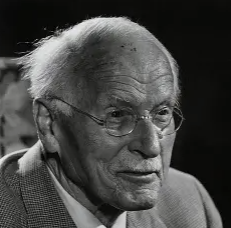
The healthy man does not torture others-generally it is the tortured who turn into torturers.
▼
Source
source
In Du, May 1941
7 months 1 week ago
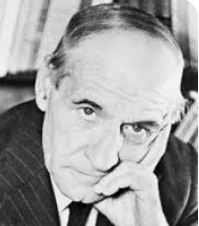
As one advances in life, one realises more and more that the majority of men - and of women - are incapable of any other effort than that strictly imposed on them as a reaction to external compulsion. And for that reason, the few individuals we have come across who are capable of a spontaneous and joyous effort stand out isolated, monumentalised, so to speak, in our experience. These are the select men, the nobles, the only ones who are active and not merely reactive, for whom life is a perpetual striving, an incessant course of training. Training = askesis. These are the ascetics.
▼
Source
source
Chap. VII: Noble Life And Common Life, Or Effort And Inertia

7 months 6 days ago
To desire friendship is a great fault. Friendship should be a gratuitous joy like those afforded by art or life. We must refuse it so that we may be worthy to receive it; it is of the order of grace.
▼
Source
source
p. 274
8 months 2 days ago
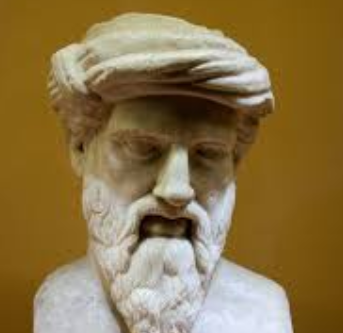
Educate the children and it won't be necessary to punish the men.
▼
Source
source
As quoted in Geary's Guide to the World's Great Aphorists (2007) by James Geary
CivilSimian.com created by AxiomaticPanic, CivilSimian, Kalokagathia