He's likely talking about "God"...meh....



When a book and a head collide and a hollow sound is heard, must it always have come from the book?

Under no pretext should arms and ammunition be surrendered; any attempt to disarm the workers must be frustrated, by force if necessary.
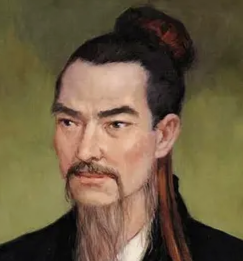
When feudal lords love one another there will be no more war; when heads of houses love one another there will be no more mutual usurpation; when individuals love one another there will be no more mutual injury. When ruler and ruled love each other they will be gracious and loyal; when father and son love each other they will be affectionate and filial; when older and younger brothers love each other they will be harmonious. When all the people in the world love one another, then the strong will not overpower the weak, the many will not oppress the few, the wealthy will not mock the poor, the honoured will not disdain the humble, and the cunning will not deceive the simple. And it is all due to mutual love that calamities, strife, complaints, and hatred are prevented from arising. Therefore the benevolent exalt it.

Therefore, on hearing His words let no one say either: "These are not Christ's words," or "These are not my words." On the contrary, if he knows that he is in the body of Christ, let him say: "These are both Christ's words and my words." Say nothing without Him, and He will say nothing without thee. We must not consider ourselves as strangers to Christ, or look upon ourselves as other than Himself.

How can a rational being be ennobled by anything that is not obtained by its own exertions?
There can never be a man so lost as one who is lost in the vast and intricate corrdiors of his own lonely mind, where none may reach and none may save. There never was a man so helpless as one who cannot remember.

It was an important moment. The old partners of the spectacle of punishment, the body and the blood, gave way. A new character came of the scene, masked. It was the end of a certain kind of tragedy; comedy began, with shadow play, faceless voices, impalpable entities. The apparatus of punitive justice must now bite into this bodiless reality.
It is requisite to choose the most excellent life; for custom will make it pleasant. Wealth is an infirm anchor, glory is still more infirm; and in a similar manner, the body, dominion, and honour. For all these are imbecile and powerless. What then are powerful anchors. Prudence, magnanimity, fortitude. These no tempest can shake. This is the Law of God, that virtue is the only thing that is strong; and that every thing else is a trifle.

Children should not be suffer'd to lose the consideration of human nature in the shufflings of outward conditions. The more they have, the better humor'd they should be taught to be, and the more compassionate and gentle to those of their brethren who are placed lower, and have scantier portions. If they are suffer'd from their cradles to treat men ill and rudely, because, by their father's title, they think they have a little power over them, at best it is ill-bred; and if care be not taken, will by degrees nurse up their natural pride into an habitual contempt of those beneath them. And where will that probably end but in oppression and cruelty?
Since we're all going to die, it's obvious that when and how don't matter.
A created thing is never invented and it is never true: it is always and ever itself.

The name of a man is a numbing blow from which he never recovers.

Our plans miscarry because they have no aim. When a man does not know what harbour he is making for, no wind is the right wind.
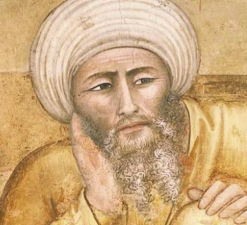
Come the Day of Judgment, some believe that the body will be different from our present body. This is only transient, that will be eternal. For this also there are religious arguments.

Since the war began, miles of paper and oceans of ink have been used to prove the barbarity, the cruelty, the oppression of Prussian militarism. Conservatives and radicals alike are giving their support to the Allies for no other reason than to help crush that militarism, in the presence of which, they say, there can be no peace or progress in Europe. But though America grows fat on the manufacture of munitions and war loans to the Allies to help crush Prussians the same cry is now being raised in America which, if carried into national action, would build up an American militarism far more terrible than German or Prussian militarism could ever be, and that because nowhere in the world has capitalism become so brazen in its greed and nowhere is the state so ready to kneel at the feet of capital.

Several times I asked myself, "Can it be that I have overlooked something, that there is something which I have failed to understand? Is it not possible that this state of despair is common to everyone?" And I searched for an answer to my questions in every area of knowledge acquired by man. For a long time I carried on my painstaking search; I did not search casually, out of mere curiosity, but painfully, persistently, day and night, like a dying man seeking salvation. I found nothing.
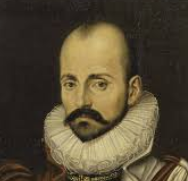
All passions that suffer themselves to be relished and digested are but moderate.
On bourgeois ground ... change is impossible anyway even if it were desired. In fact, bourgeois interest would like to draw every other interest opposed to it into its own failure; so, in order to drain the new life, it makes its own agony apparently fundamental, apparently ontological. The futility of bourgeois existence is extended to be that of the human situation in general, of existence per se.

The modern proletarian class doesn't carry out its struggle according to a plan set out in some book or theory; the modern workers' struggle is a part of history, a part of social progress, and in the middle of history, in the middle of progress, in the middle of the fight, we learn how we must fight... That's exactly what is laudable about it, that's exactly why this colossal piece of culture, within the modern workers' movement, is epoch-defining: that the great masses of the working people first forge from their own consciousness, from their own belief, and even from their own understanding the weapons of their own liberation.

What one has to say to begin with is that, as humans, we are limited in intelligence and we really have no reliable foresight. So none of us will come up with answers to the whole great problem. What we can do is judge our behavior, our history, and our present situation by a better standard than "efficiency" or "profit," or those measures that we're still using to determine economic decisions.
The function of knowledge in the decision-making process is to determine which consequences follow upon which of the alternative strategies. It is the task of knowledge to select from the whole class of possible consequences a more limited subclass, or even (ideally) a single set of consequences correlated with each strategy.

It makes no sense to say that death is the goal of life, but what else is there to say?

Adorn thyself with simplicity and with indifference towards the things which lie between virtue and vice. Love mankind. Follow God. The poet says that Law rules all. And it is enough to remember that law rules all.
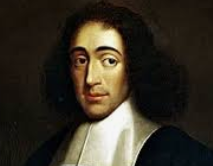
All happiness or unhappiness solely depends upon the quality of the object to which we are attached by love.
It may be, then, that form serves us best when it works as an obstruction to baffle us and deflect our intended course. It may be that when we no longer know what to do we have come to our real work and that when we no longer know which way to go we have begun our real journey. The mind that is not baffled is not employed. The impeded stream is the one that sings.
My idea of heaven is, eating pâté de foie gras to the sound of trumpets.
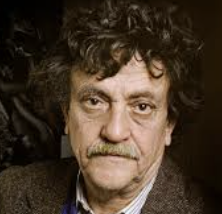
I was taught that the human brain was the crowning glory of evolution so far, but I think it's a very poor scheme for survival.
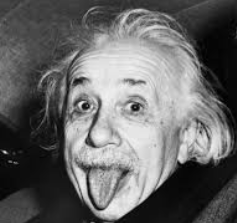
Science is international but its success is based on institutions, which are owned by nations. If therefore, we wish to promote culture we have to combine and to organize institutions with our own power and means.

Our claim is that a common political project is possible. This possibility of course will have to be verified and realized in practice. ... We are capable of democracy. The challange is to organize it politically.
Speaking generally, he holds dominion, to whom are entrusted by common consent affairs of state - such as the laying down, interpretation, and abrogation of laws, the fortification of cities, deciding on war and peace, &c. But if this charge belong to a council, composed of the general multitude, then the dominion is called a democracy; if the council be composed of certain chosen persons, then it is an aristocracy ; and, if, lastly, the care of affairs of state, and, consequently, the dominion rest with one man, then it has the name of monarchy.
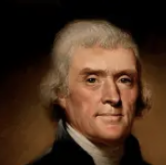
The Bank of the United States... is one of the most deadly hostility existing, against the principles and form of our Constitution... An institution like this, penetrating by its branches every part of the Union, acting by command and in phalanx, may, in a critical moment, upset the government. I deem no government safe which is under the vassalage of any self-constituted authorities, or any other authority than that of the nation, or its regular functionaries. What an obstruction could not this bank of the United States, with all its branch banks, be in time of war! It might dictate to us the peace we should accept, or withdraw its aids. Ought we then to give further growth to an institution so powerful, so hostile?
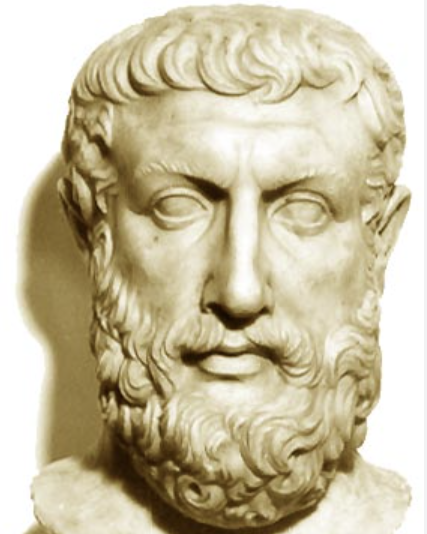
The only roads of enquiry there are to think of: one, that it is and that it is not possible for it not to be, this is the path of persuasion (for truth is its companion); the other, that it is not and that it must not be - this I say to you is a path wholly unknowable.
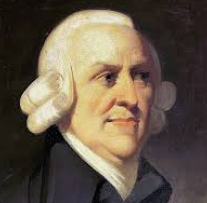
It seldom happens, however, that a great proprietor is a great improver.
I truly cannot say what the person who still has hope for man should think of the imminence of quasi-apocalyptic destruction. It would certainly force many to face the existential problem in all its nakedness, and subject them to extreme trials; but is this a worse evil than that of mankind's safe, secure, satisfied, and total consignment to the kind of happiness that befits Nietzsche's "last man": a comfortable consumer civilization of socialized human animals, aided by all the discoveries of science and industry and reproducing demographically in a squirming, catastrophic crescendo?

I have known only one person in my life who claimed to have seen a ghost. It was a woman; and the interesting thing is that she disbelieved in the immortality of the soul before seeing the ghost and still disbelieves after having seen it. She thinks it was a hallucination. In other words, seeing is not believing. This is the first thing to get clear in talking about miracles.
Nothing surpasses the pleasures of idleness: even if the end of the world were to come, I would not leave my bed at an ungodly hour.
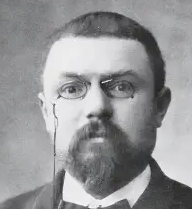
Astronomers... define duration in the following way: time... so defined that Newton's law and that of vis viva [or of the conservation of energy] may be verified. Newton's law is an experimental truth... only approximate... We still have only a definition by approximation.
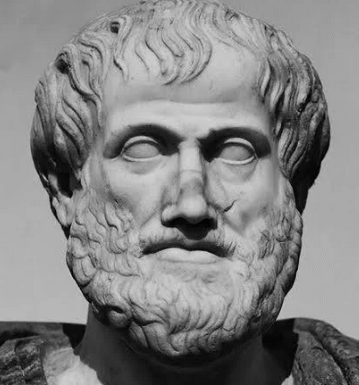
And surely to know what this good is, is of great importance for the conduct of life, for in that case we shall be like archers shooting at a definite mark, and shall be more likely to do what is right. But, if this is the case, we must try to comprehend, in outline at least, what it is and to which of the sciences it belongs.

If women get tired and die of bearing, there is no harm in that; let them die as long as they bear; they are made for that.
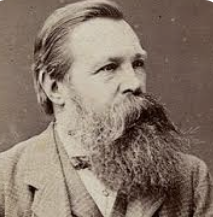
The first act by virtue of which the State really constitutes itself the representative of the whole of society-the taking possession of the means of production in the name of society-this is, at the same time, its last independent act as a State. State interference in social relations becomes, in one domain after another, superfluous, and then dies out of itself; the government of persons is replaced by the administration of things, and by the conduct of processes of production. The State is not "abolished." It dies out.
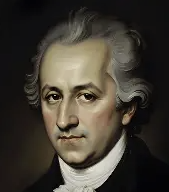
I am more and more convinced that poetry is the universal possession of mankind, revealing itself everywhere and at all times in hundreds and hundreds of men. ... I therefore like to look about me in foreign nations, and advise everyone to do the same. National literature is now a rather unmeaning term; the epoch of world literature is at hand, and everyone must strive to hasten its approach.

Good is a good doctor, but Bad is sometimes a better.

Were the happiness of the next world as closely apprehended as the felicities of this, it were a martyrdom to live.
If we allow them any influence in our conscience, they become the cloak of evil, heresies and blasphemies.
Those who have a spark of self-respect left, prefer open defiance, prefer crime to the emaciated, degraded position of poverty.

In my opinion, all things in nature occur mathematically.
Nature has had regard in everything no less to the end than to the beginning and the continuance, just like a man who throws up a ball. What good is it then for the ball to be thrown up, or harm for it to come down... what good is it to the bubble while it holds together, or what harm when it is burst?
CivilSimian.com created by AxiomaticPanic, CivilSimian, Kalokagathia