


3 months 2 weeks ago
To execute laws is a royal office; to execute orders is not to be a king. However, a political executive magistracy, though merely such, is a great trust.
▼
Source
source
Volume iii, p. 497
3 months 2 weeks ago
Nothing made a happy slave, but a degraded man. In proportion as the mind grew callous to its degradation, and all sense of manly pride was lost, the slave felt comfort. In fact, he was no longer a man. If he were to define a man, he would say with Shakspeare,"Man is a being, holding large discourse,Looking before and after."A slave was incapable of either looking before or after.
▼
Source
source
Speech in the House of Commons (12 May 1789), quoted in The Parliamentary History of England, From the Earliest Period to the Year 1803, Vol. XXVIII (1816), column 71
3 months 2 weeks ago
The present state of France was ten times worse than a tyranny. The new constitution was said to be an experiment but the assertion was not true. It had already been tried, and had been found to be only productive of evils. They would go on from tyranny to tyranny, from oppression to oppression, till at last the whole system would terminate in the destruction of that miserable and deluded people... He sincerely hoped that no member of that House would ever barter the constitution of this country, the eternal jewel of their souls, for a wild and visionary system, which could only lead to confusion and disorder.
▼
Source
source
Speech in the House of Commons (6 May 1791), quoted in The Parliamentary History of England, From the Earliest Period to the Year 1803, Vol. XXIX (1817), column 397
5 months 1 week ago
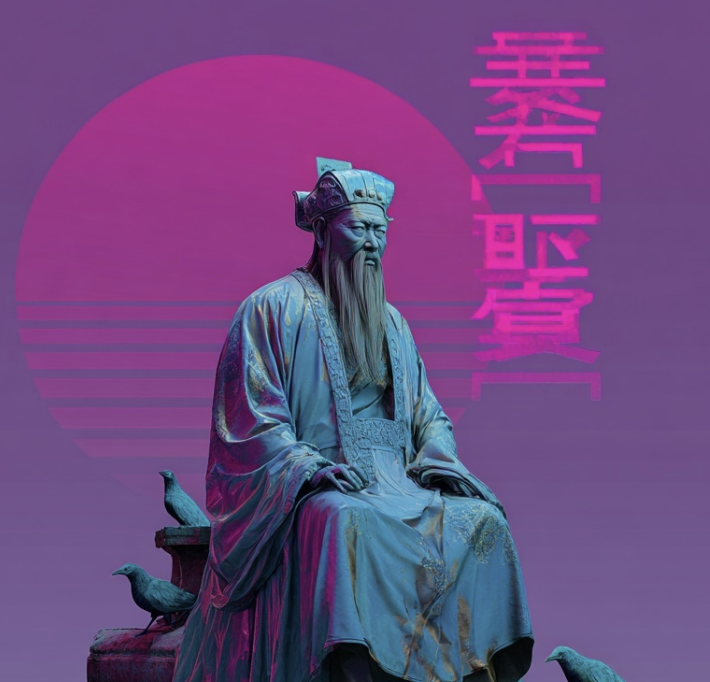
To be fond of learning is to be near to knowledge. To practice with vigor is to be near to magnanimity. To possess the feeling of shame is to be near to energy.

4 months 2 weeks ago
It is, of course, clear that a country with a large foreign population must endeavour, through its schools, to assimilate the children of immigrants. It is, however, unfortunate that a large part of this process should be effected by means of a somewhat blatant nationalism.
▼
Source
source
Ch. 10: Modern Homogeneity
1 month ago
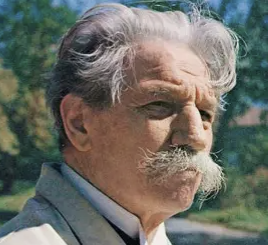
Any religion or philosophy which is not based on a respect for life is not a true religion or philosophy.
▼
Source
source
Letter to a Japanese Animal Welfare Society (1961); also in The Words of Albert Schweitzer (1984) edited by Norman Cousins, p. 37

4 months 2 weeks ago
Put in a nut-shell, my thesis amounts to this. The repeated attempts made by Rudolf Carnap to show that the demarcation between science and metaphysics coincides with that between sense and nonsense have failed. The reason is that the positivistic concept of 'meaning' or 'sense' (or of verifiability, or of inductive confirmability, etc.) is inappropriate for achieving this demarcation - simply because metaphysics need not be meaningless even though it is not science. In all its variations demarcation by meaninglessness has tended to be at the same time too narrow and too wide: as against all intentions and all claims, it has tended to exclude scientific theories as meaningless, while failing to exclude even that part of metaphysics which is known as 'rational theology'.
▼
Source
source
Ch 11. "The Demarcation between Science and Metaphysics." (Summary, p. 253)
5 months 1 week ago
To no one but the Son of Heaven does it belong to order ceremonies, to fix the measures, and to determine the written characters.

5 months 2 weeks ago
I do not have much liking for the too famous existential philosophy, and, to tell the truth, I think its conclusions false.

4 months 2 weeks ago
Political Economy regards the proletarian ... like a horse, he must receive enough to enable him to work. It does not consider him, during the time when he is not working, as a human being. It leaves this to criminal law, doctors, religion, statistical tables, politics, and the beadle. ... (1) What is the meaning, in the development of mankind, of this reduction of the greater part of mankind to abstract labor? (2) What mistakes are made by the piecemeal reformers, who either want to raise wages and thereby improve the situation of the working class, or - like Proudhon - see equality of wages as the goal of social revolution?.
▼
Source
source
First Manuscript - Wages of Labour, p. 6.

3 months 3 weeks ago
There is surely a piece of Divinity within us, something that was before the Elements, and owes no homage unto the Sun.
▼
Source
source
Section 11
4 months 2 weeks ago
The world at present is obsessed by the conflict of rival ideologies, and one of the apparent causes of conflict is the desire for the victory of our own ideology and the defeat of the other. I do not think that the fundamental motive here has much to do with ideologies. I think the ideologies are merely a way of grouping people, and that the passions involved are merely those which always arise between rival groups. Ideologies, in fact, are one of the methods by which herds are created, and the psychology is much the same however the herd may have been generated.

4 months 2 weeks ago
Man exists for his own sake and not to add a laborer to the state.
▼
Source
source
November 15, 1839

4 months 2 weeks ago
A thing is important if anyone think it important.
▼
Source
source
Ch. 28, Note 35

3 months 2 weeks ago
To detach yourself elegantly from the world; to give contour and grace to sadness; a solitude in style; a walk that gives cadence to memories; stepping towards the intangible; with the breath in the trembling margins of things; the past reborn in the overflow of fragrances; the smell, through which we conquer time; the contour of the invisible things; the forms of the immaterial; to deepen yourself in the intangible; to touch the world airborne by smell; aerial dialogue and gliding dissolution; to bathe in your own reflecting fragmentation...

3 months 2 weeks ago
It's easier for a Russian to become an atheist than for anyone else in the world.
▼
Source
source
Part 4, Chapter 7
3 months 2 weeks ago
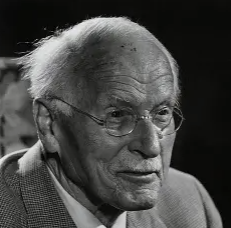
Our studies of sexual life, originating in Vienna and in England, are matched or surpassed by Hindu teachings on this subject... Psychoanalysis itself and the lines of thought to which it gives rise-surely a distinctly Western development-are only a beginner's attempt compared to what is an immemorial art in the East.
▼
Source
source
quoted in Georg Feuerstein, Subhash Kak, and David Frawley. - In search of the cradle of civilization _ new light on ancient India-Quest Books
4 months 2 weeks ago
A ruddy drop of manly blood The surging sea outweighs, The world uncertain comes and goes; The lover rooted stays.
▼
Source
source
Friendship

2 months 3 weeks ago
Pascal is called the founder of modern probability theory. He earns this title not only for the familiar correspondence with Fermat on games of chance, but also for his conception of decision theory, and because he was an instrument in the demolition of probabilism, a doctrine which would have precluded rational probability theory.
▼
Source
source
Chapter 3, Opinion, p. 23.
2 months 2 days ago
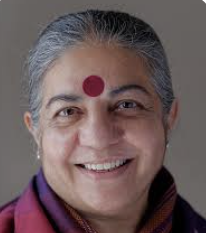
corporate globalization is really about an aggressive privatization of the water, biodiversity, and food systems of the Earth, when these communities declare sovereignty and act on that sovereignty, they have developed a powerful response to globalization. Living democracy then is the democracy that is custodian of the living wealth on which people depend.
2 weeks 5 days ago
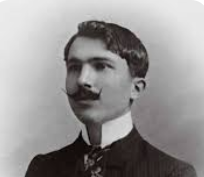
Which of the two eternal roads shall I choose? Suddenly I know that my whole life hangs on this decision - the life of the entire Universe. Of the two, I choose the ascending path. Why? For no intelligible reason, without any certainty; I know how ineffectual the mind and all the small certainties of man can be in this moment of crisis. I choose the ascending path because my heart drives me toward it. "Upward! Upward! Upward!" my heart shouts, and I follow it trustingly.
4 months 3 weeks ago
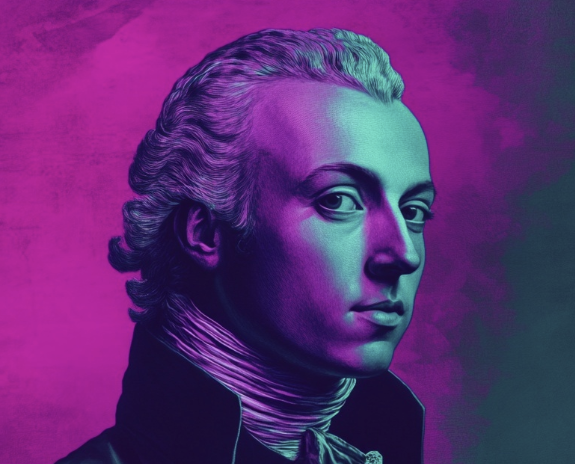
The force of the word World, as commonly used, of itself falls in with us. For no one will attribute accidents to the World as parts, but as determinations, states; hence the so-called world of the ego, unrestrained by the single substance and its accidents, is not very appositely called a World, unless, perhaps, an imaginary one.

9 months 1 week ago
A common goal...
Issue:
Because of subgrouping, physical separation, different types of genetics and other cultural factors, as well as limited isolation people subjectively deviate from their universal human necessity. They become aware of it when they are exposed to difference regularly.
Solution:
With controlled information delivery, as well as a clear ideological goal like universality, we can clear away the noise of chaos to understand deterministic goals directly.
3 months 3 days ago
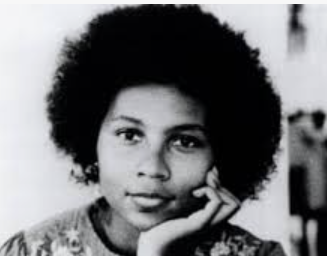
But many of us seek community solely to escape the fear of being alone. Knowing how to be solitary is central to the art of loving. When we can be alone, we can be with others without using them as a means of escape.
▼
Source
source
All About Love: New Visions, 1999
3 months 3 weeks ago
In the deep discovery of the Subterranean world, a shallow part would satisfy some enquirers.
▼
Source
source
Chapter I
1 month ago
Indian thought has greatly attracted me since in my youth I first became acquainted with it through reading the works of Arthur Schopenhauer. From the very beginning I was convinced that all thought is really concerned with the great problem of how man can attain to spiritual union with infinite Being. My attention was drawn to Indian thought because it is busied with this problem and because by its nature it is mysticism. What I liked about it also was that Indian ethics are concerned with the behaviour of man to all living beings and not merely with his attitude to his fellow-man and to human society.
▼
Source
source
Preface, p. vi

4 months 2 weeks ago
Nothing contributes more to nourish elevation of sentiments in a people, than the large and free character of their habitations.
▼
Source
source
(p. 55)
1 month 1 week ago
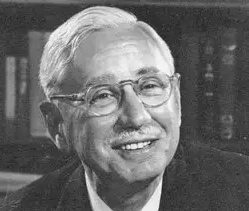
I know how unfashionable it is now to acknowledge in life or history any genius loftier than ourselves. Our democratic dogma has leveled not only all voters but all leaders; we delight to show that living geniuses are only mediocrities, and that dead ones are myths. ... Since it is contrary to good manners to exalt ourselves, we achieve the same result by slyly indicating how inferior are the great men of the earth. In some of us, perhaps, it is a noble and merciless asceticism, which would root out of our hearts the last vestige of worship and adoration, lest the old gods should return and terrify us again. For my part, I cling to this final religion, and discover in it a content and stimulus more lasting than came from the devotional ecstasies of youth.
▼
Source
source
The Greatest Minds and Ideas of All Time (2002) edited by John Little, Ch. 1 : The Shameless Worship of Heroes

4 months 2 weeks ago
When I lay these questions before God I get no answer. But a rather special sort of 'No answer.' It is not the locked door. It is more like a silent, certainly not uncompassionate, gaze. As though He shook His head not in refusal but waiving the question. Like, 'Peace, child; you don't understand.'
4 months 2 weeks ago
Under no pretext should arms and ammunition be surrendered; any attempt to disarm the workers must be frustrated, by force if necessary.
▼
Source
source
Address of the Central Committee to the Communist League in London, March 1850
4 months 2 weeks ago
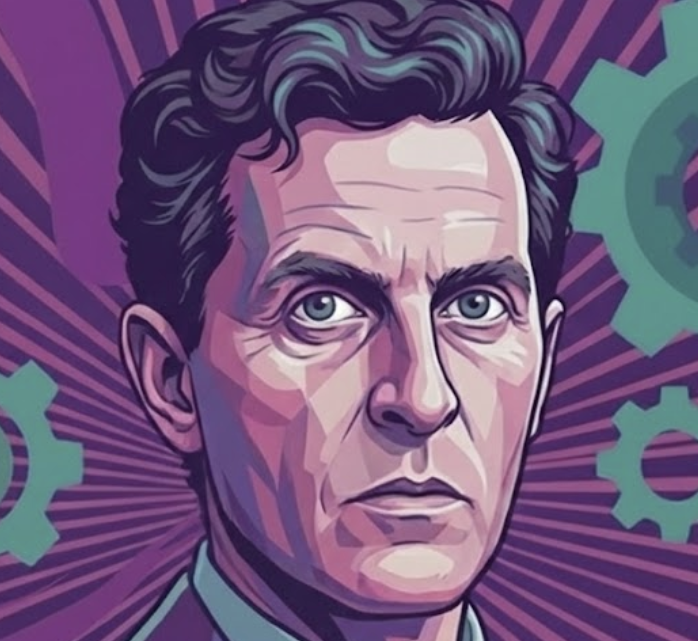
The real discovery is the one which enables me to stop doing philosophy when I want to. The one that gives philosophy peace, so that it is no longer tormented by questions which bring itself into question.
▼
Source
source
§ 133
2 months 1 week ago
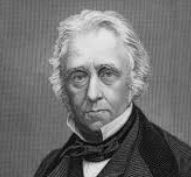
As free constitutions are the strongest supports of governments, social order is the best safeguard of freedom. Liberty has no enemies so pernicious as those misguided friends whose ardour in her cause leads them to outrage the moral sense of mankind, and to arm against her the interests and feelings which are her natural allies. Even the prejudices of nations should be respected.
▼
Source
source
'Essay on the Life and Character of King William III' (1822), written for the Greaves Historical Prize at Cambridge, quoted in The Times Literary Supplement (1 May 1969), p. 469
3 months 2 weeks ago
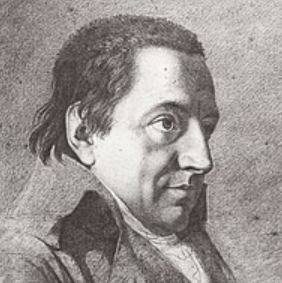
I take as my example the three notorious words, Humanity, Popularity, and Liberality. When these words are used in speaking to a German who has learnt no language but his own they are to him nothing but a meaningless noise, which has no relationship of sound to remind him of anything he knows already and so takes him completely out of his circle of observation and beyond any observation possible to him. ... Further, if in speaking to the German, instead of the words Popularity [Popularitdt] and Liberality [Liberalitat], I should use the expressions, " striving for favour with the great mob," and " not having the mind of a slave," which is how they must be literally translated, he would, to begin with, not even obtain a clear and vivid sense-image such as was certainly obtained by a Roman of old.
▼
Source
source
The Chief Difference Between The Germans And The Other Peoples Of Teutonic Descent p. 64

5 months 3 days ago
Never trust her at any time, when the calm sea shows her false alluring smile.
▼
Source
source
Book II, lines 557-559 (tr. Rouse)

4 months 2 weeks ago
I'm afraid of losing my obscurity. Genuineness only thrives in the dark. Like celery.
▼
Source
source
Those Barren Leaves, 1925

4 months 1 week ago
In a shared fish, there are no bones.
▼
Source
source
Freeman (1948), p. 157
5 months 1 week ago
If a man has no humaneness what can his propriety be like? If a man has no humaneness what can his happiness be like?
3 months 1 week ago
To covet truth is a very distinguished passion.
▼
Source
source
p. 48
1 month 3 weeks ago
There is no social entity with a good that undergoes some sacrifice for its own good. There are only individual people, different individual people, with their own individual lives. Using one of these people for the benefit of others, uses him and benefits the others. Nothing more.
▼
Source
source
Ch. 3 : Moral Constraints and the State; Why Side Constraints?, p. 32
3 months 2 weeks ago
We must live, you used to say, as if we were never going to die. - Didn't you know that's how everyone lives, including those obsessed with Death?
2 weeks 5 days ago
The equal rights of man, and the happiness of every individual, are now acknowledged to be the only legitimate objects of government. Modern times have the signal advantage, too, of having discovered the only device by which these rights can be secured, to wit: government by the people, acting not in person, but by representatives chosen by themselves, that is to say; by every man of ripe years and sane mind, who either contributes by his purse or person to the support of his country.
5 months 3 days ago
For human beings, the measure of every action is the impression of the senses.
▼
Source
source
Book I, ch. 28, 10
3 months 3 days ago
Modern science has imposed on humanity the necessity for wandering. Its progressive thought and its progressive technology make the transition through time, from generation to generation, a true migration into uncharted seas of adventure.
▼
Source
source
Ch. 13: "Requisites for Social Progress", p. 291

3 months 1 week ago
Ask, and it will be given to you; seek, and you will find; knock, and it will be opened to you. For everyone who asks receives, and he who seeks finds, and to him who knocks it will be opened.
▼
Source
source
Matthew 7:7-8 (NKJV) (Also Luke 11:9-13)

4 months 2 weeks ago
Where there is a lull of truth, an institution springs up. But the truth blows right on over it, nevertheless, and at length blows it down.
▼
Source
source
p. 494

3 months 3 weeks ago
Perchance you who pronounce my sentence are in greater fear than I who receive it.
▼
Source
source
His famous response to his judges upon his conviction as a heretic, prior to his transfer to the civil authorities for execution. (16 February 1600); as quoted by Gaspar Schopp of Breslau in a letter to Conrad Rittershausen
2 months 2 weeks ago
Maybe somewhere in some other galaxy there is a super-intelligence so colossal that from our point of view it would be a god. But it cannot have been the sort of God that we need to explain the origin of the universe, because it cannot have been there that early.
CivilSimian.com created by AxiomaticPanic, CivilSimian, Kalokagathia