Maybe...logic forms are mind independent would be better modern framing....



We tend to believe the premises because we can see that their consequences are true, instead of believing the consequences because we know the premises to be true. But the inferring of premises from consequences is the essence of induction; thus the method in investigating the principles of mathematics is really an inductive method, and is substantially the same as the method of discovering general laws in any other science.
The subject must distinguish itself through opposition from the rational being, which it has assumed outside of itself. The subject has posited itself as one, which contains in itself the last ground of something that is in it, (for this is the condition of Egohood, or of Rationality generally;) but it has also posited a being outside of itself, as the last ground of this something in it. It is to have the power of distinguishing itself from this other being; and this is, under our presupposition, possible only, if the subject can distinguish in that given something how far the ground of this something lies in itself and how far it lies outside of itself.

Cash Payment the sole nexus; and there are so many things which cash will not pay! Cash is a great miracle; yet it has not all power in Heaven, nor even on Earth. 'Supply and demand' we will honour also; and yet how many 'demands' are there, entirely indispensable, which have to go elsewhere than to the shops, and produce quite other than cash, before they can get their supply? On the whole, what astonishing payments does cash make in this world!
It is the property of every Hero, in every time, in every place and situation, that he come back to reality; that he stand upon things, and not shows of things. According as he loves, and venerates, articulately or with deep speechless thought, the awful realities of things, so will the hollow shows of things, however regular, decorous, accredited by Koreishes or Conclaves, be intolerable and detestable to him.

The printing press was at first mistaken for an engine of immortality by everybody except Shakespeare.
Men can be provincial in time, as well as in place.

By committing a crime, a man places himself, of his own accord, outside the chain of eternal obligations which bind every human being to every other one. Punishment alone can weld him back again; fully so, if accompanied by consent on his part; otherwise only partially so. Just as the only way of showing respect for somebody suffering from hunger is to give him something to eat, so the only way of showing respect for somebody who has placed himself outside the law is to reinstate him inside the law by subjecting him to the punishment ordained by law.The need for punishment is not satisfied where, as is generally the case, the penal code is merely a method of exercising pressure through fear.
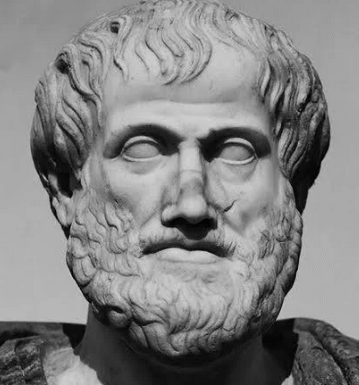
It is not necessary to ask whether soul and body are one, just as it is not necessary to ask whether the wax and its shape are one, nor generally whether the matter of each thing and that of which it is the matter are one. For even if one and being are spoken of in several ways, what is properly so spoken of is the actuality.
In the empire of signs, the soul, psychology, is erased. There is no soul to infect the holy seriousness of ritual play.

Jupiter: I committed the first crime by creating men as mortals. After that, what more could you do, you the murderers?
Aegisteus: Come on; they already had death in them: at most you simply hastened things a little.

The sublime is excited in me by the great stoical doctrine, Obey thyself.

To act is to anchor in the imminent future.
The world is but a perpetual see-saw.
The more devils we have within us, the more chance we have to form angels.

Is anything more certain than that in all those vast times and spaces, if I were allowed to search them, I should nowhere find her face, her voice, her touch? She died. She is dead. Is the word so difficult to learn?

The irony of scientific progress is that in solving human problems it creates problems that are not humanly soluble. Science has given humans a kind of power over the natural world achieved by no other animal. It has not given humans the ability to remodel the planet according to their wishes. The Earth is not a clock that can be wound up and stopped at will. A living system, the planet will surely rebalance itself. It will do so, however, without any regard for humans.
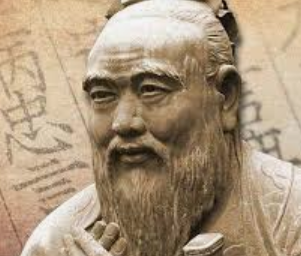
To throw oneself into strange teachings is quite dangerous.

The crisis facing men is not the crisis of masculinity, it is the crisis of patriarchal masculinity. Until we make this distinction clear, men will continue to fear that any critique of patriarchy represents a threat.
Attention spans get very weak at the speed of light, and that goes along with a very weak identity.
"Where do you get those superior airs of yours?" "I've managed to survive, you see, all those nights when I wondered: am I going to kill myself at dawn?"
It is Christ Himself, not the Bible, who is the true Word of God. The Bible, read in the right spirit and with the guidance of good teachers, will bring us to Him.
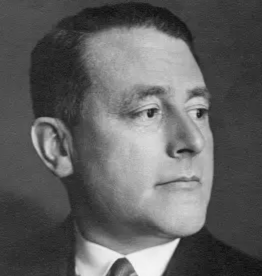
The state as the decisive political entity possesses an enormous power: the possibility of waging war and thereby publicly disposing of the lives of men. The jus belli contains such a disposition. It implies a double possibility: the right to demand from its own members the readiness to die and unhesitatingly to kill enemies.

The policy of American government is to leave its citizens free, neither restraining them nor aiding them in their pursuits.

Modern transcendental idealism, Emersonianism, for instance, also seems to let God evaporate into abstract Ideality. Not a deity in concreto, not a superhuman person, but the immanent divinity in things, the essentially spiritual structure of the universe, is the object of the transcendentalist cult. In that address of the graduating class at Divinity College in 1838 which made Emerson famous, the frank expression of this worship of mere abstract laws was what made the scandal of the performance.
Fear not, then, thou child infirm, There's no god dare wrong a worm.
Dialectical thought understands the critical tension between "is" and "ought" first as an ontological condition, pertaining to the structure of Being itself. However, the recognition of this state of Being - its theory - intends from the beginning a concrete practice. Seen in the light of a truth which appears in them falsified or denied, the given facts themselves appear false and negative.
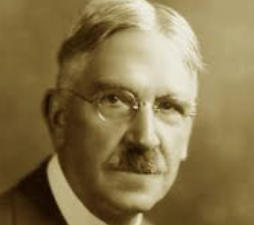
The intellect is at home in that which is fixed only because it is done and over with, for intellect is itself just as much a deposit of past life as is the matter to which it is congenial. Intuition alone articulates in the forward thrust of life and alone lays hold of reality.
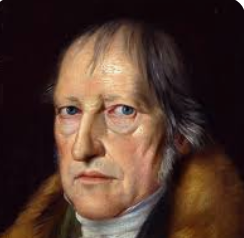
Life has a value only when it has something valuable as its object.
Labour not after riches first, and think thou afterwards wilt enjoy them. He who neglecteth the present moment, throweth away all that he hath. As the arrow passeth through the heart, while the warrior knew not that it was coming; so shall his life be taken away before he knoweth that he hath it.
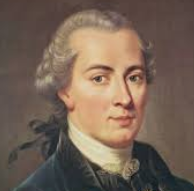
Nature does nothing in vain, and in the use of means to her goals she is not prodigal. Her giving to man reason and the freedom of the will which depends upon it is clear indication of her purpose. Man accordingly was not to be guided by instinct, not nurtured and instructed with ready-made knowledge; rather, he should bring forth everything out of his own resources.
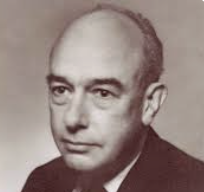
Implication is thus the very texture of our web of belief, and logic is the theory that traces it.
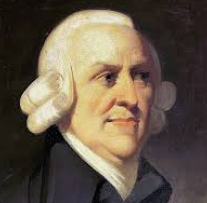
Every man is, no doubt, by nature, first and principally recommended to his own care; and as he is fitter to take care of himself than of any other person, it is fit and right that it should be so.
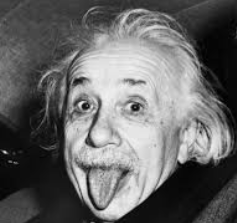
...to the question whether or not the motion of the Earth in space can be made perceptible in terrestrial experiments. We have already remarked... that all attempts of this nature led to a negative result. Before the theory of relativity was put forward, it was difficult to become reconciled to this negative result.
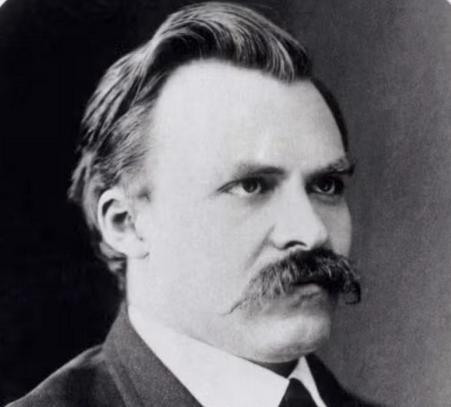
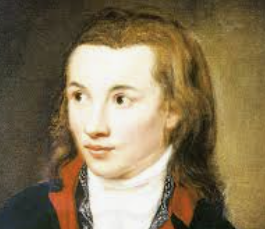
There are ideal series of events which run parallel with the real ones. They rarely coincide. Men and circumstances generally modify the ideal train of events, so that it seems imperfect, and its consequences are equally imperfect. Thus with the Reformation; instead of Protestantism came Lutheranism.
The majority of mankind and people who lack refinement conceive it to be pleasure, and hence they approve a life of sensual enjoyment.
Whenever the people are well informed, they can be trusted with their own government; that whenever things get so far wrong as to attract their notice, they may be relied on to set them to rights.

It is crazy to want what is impossible. And impossible for the wicked not to do so.
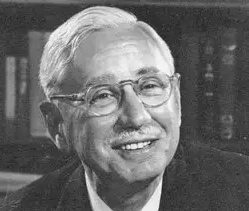
British rule in India is the most sordid and criminal exploitation of one nation by another in all recorded history. I propose to show that England has year by year been bleeding India to the point of death, and that self-government of India by the Hindus could not within any reasonable probability, have worse results than the present form of alien domination.

When the woman showed her love for the children that were not her own, and wept over them, I saw in her the living God, and understood What men live by.

There is nothing I congratulate myself on more heartily than on never having joined a sect.
If it is my interest to have a farm, it is my interest to take it away from my neighbour; if it is my interest to have a cloak, it is my interest also to steal it from a bath. This is the source of wars, seditions, tyrannies, plots.

Men never do good unless necessity drives them to it; but when they are free to choose and can do just as they please, confusion and disorder become rampant.

Last words are for fools who haven't said enough.
The purpose of the State is, as we have already shown in our last lecture, no other than that of the Human Race itself:-to order all its relations according to the Laws of Reason. It is only after the Age of Reason as Science shall have been traversed, and we shall have arrived at the Age of Reason as Art, that the State can reflect upon this purpose with clear consciousness. Till then it constantly promotes this purpose, but without its own knowledge, or free pre meditated design; prompted thereto by the natural law of the development of our Race, even while it has a totally different purpose in view;-with which purpose of its own, Nature has indissolubly bound up the purpose of the whole Race.
No nation was ever so virtuous as each believes itself, and none was ever so wicked as each believes the other.
A novel is never anything but a philosophy put into images. And in a good novel, the whole of the philosophy has passed into the images. But if once the philosophy overflows the characters and action, and therefore looks like a label stuck on the work, the plot loses its authenticity and the novel its life. Nevertheless, a work that is to last cannot dispense with profound ideas. And this secret fusion between experiences and ideas, between life and reflection on the meaning of life, is what makes the great novelist.

It is important to understand what I mean by semiosis. All dynamic action, or action of brute force, physical or psychical, either takes place between two subjects, - whether they react equally upon each other, or one is agent and the other patient, entirely or partially, - or at any rate is a resultant of such actions between pairs. But by "semiosis" I mean, on the contrary, an action, or influence, which is, or involves, a cooperation of three subjects, such as a sign, its object, and its interpretant, this tri-relative influence not being in any way resolvable into actions between pairs.
CivilSimian.com created by AxiomaticPanic, CivilSimian, Kalokagathia