




1 month 2 weeks ago
The pragmatic justification is that liberalism is... a political doctrine that seeks to enable societies to govern themselves over diversity. It arose in the minds of thinkers like Thomas Hobbes or John Locke or Samuel Pufendorf... as a result of the European wars of religion following the Protestant Reformation.
▼
Source
source
8:02


4 months 3 weeks ago
The Hudson's Bay Company, before their misfortunes in the late war, had been much more fortunate than the Royal African Company.
▼
Source
source
Chapter I, Part III, p. 806.
3 months 1 week ago
The world is not divine sport, it is divine destiny. There is divine meaning in the life of the world, of man, of human persons, of you and of me. Creation happens to us, burns itself into us, recasts us in burning - we tremble and are faint, we submit. We take part in creation, meet the Creator, reach out to Him, helpers and companions.
4 months 3 weeks ago
Intellect is invisible to the man who has none.
▼
Source
source
Our Relation to Others, § 23
2 weeks 5 days ago
The Sensations are the 'Objective', the Ideas the 'Subjective' part of every act of perception or knowledge.

1 month 5 days ago
No man expects such exact fidelity as a traitor.
▼
Source
source
De Ira (On Anger): Book 2, cap. 28, line 7.
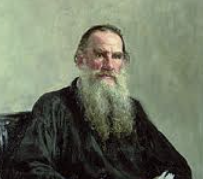
2 months 2 weeks ago
A king is history's slave.
▼
Source
source
Bk. IX, ch. 1
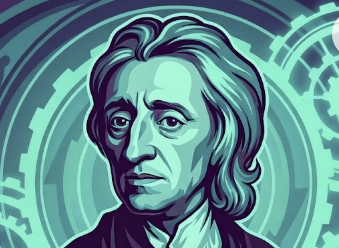
4 months 3 weeks ago
The only thing we are naturally afraid of is pain, or loss of pleasure. And because these are not annexed to any shape, colour, or size of visible objects, we are frighted of none of them, till either we have felt pain from them, or have notions put into us that they will do us harm.
▼
Source
source
Sec. 115
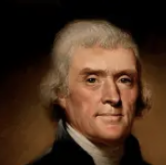
2 weeks 6 days ago
If a nation expects to be ignorant and free, in a state of civilization, it expects what never was and never will be. The functionaries of every government have propensities to command at will the liberty and property of their constituents. There is no safe deposit for these but with the people themselves; nor can they be safe with them without information. Where the press is free, and every man able to read, all is safe.
▼
Source
source
Letter to Colonel Charles Yancey (6 January 1816) ME 14:384
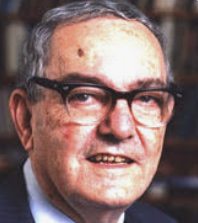
2 months 4 weeks ago
The principle of bounded rationality is the capacity of the human mind for formulating and solving complex problems is very small compared with the size of the problems whose solution is required for objectively rational behavior in the real world - or even for a reasonable approximation to such objective rationality.
▼
Source
source
p. 198.
3 months 2 days ago
It repudiates, as something vile and sinful, our deepest feelings; but being absolutely ignorant as to the real functions of human emotions, Puritanism is itself the creator of the most unspeakable vices.


3 months 3 days ago
Architecture is a way for power to achieve eloquence through form.

3 months 1 week ago
To all this, someone is sure to object that life ought to subject itself to reason, to which we will reply that nobody ought to do what he is unable to do, and life cannot subject itself to reason. "Ought, therefore can," some Kantian will retort. To which we shall demur: "Cannot, therefore ought not." And life cannot submit itself to reason, because the end of life is living and not understanding.

4 months 2 weeks ago
It is the magician's bargain: give up our soul, get power in return. But once our souls, that is, ourselves, have been given up, the power thus conferred will not belong to us. We shall in fact be the slaves and puppets of that to which we have given our souls.
3 months 1 week ago
In so far as words are not used obviously to calculate technically relevant probabilities or for other practical purposes, ... they are in danger of being suspect as sales talk of some kind.
▼
Source
source
p. 22.
1 month 5 days ago
Who, then, can be more ignorant of nature than he who classes this cruel and hurtful vice as belonging to her best and most polished work?

4 months 4 weeks ago
We must calm the mind of the common man, and tell him to abstain from the words and even the passions which lead to insurrection.
▼
Source
source
p. 62

5 months 2 weeks ago
It is my own experience ... that commentators are far more ingenious at finding meaning than authors are at inserting it.
3 months 1 week ago
Surrender of individuality by the many to someone who is taken to be a superindividual explains the retrograde movement of society. Dictatorships and totalitarian states, and belief in the inevitability of this or that result coming to pass are, strange as it may sound, ways of denying the reality of time and the creativeness of the individual.
2 months 3 weeks ago
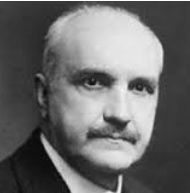
In many cases it is a matter for decision and not a simple matter of fact whether x understands y; and so on.
3 months 1 week ago
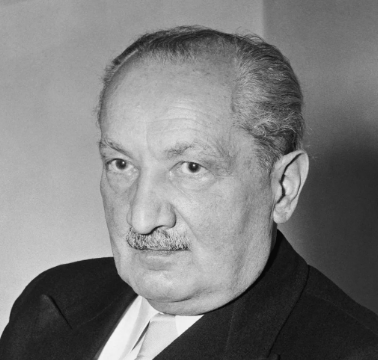
To covet truth is a very distinguished passion.
▼
Source
source
p. 48
4 months 2 weeks ago
Mathematics is as little a natural science as philosophy is one of the humanities. Philosophy in its essence belongs as little in the philosophical faculty as mathematics belongs to natural science. To house philosophy and mathematics in this way today seems to be a blemish or a mistake in the catalog of the universities. Plato put over the entrance to his Academy the words: "Let no one who has not grasped the mathematical enter here!"
▼
Source
source
p. 69,75

4 months 2 weeks ago
Shallow men believe in luck, believe in circumstances...Strong men believe in cause and effect.
▼
Source
source
Worship
1 month 2 weeks ago
A large plural society cannot be governed without recognizing that, transcending its plural interests, there is a rational order with a superior common law.
▼
Source
source
pp. 106-107
3 months 1 week ago
The application of scientific formulations of the principle of probability statistically determined is thus a logical corollary of the principle already stated, that the subject matter of scientific findings is relational, not individual. It is for this reason that it is safe to predict the ultimate triumph of the statistical doctrine.
3 months 2 weeks ago
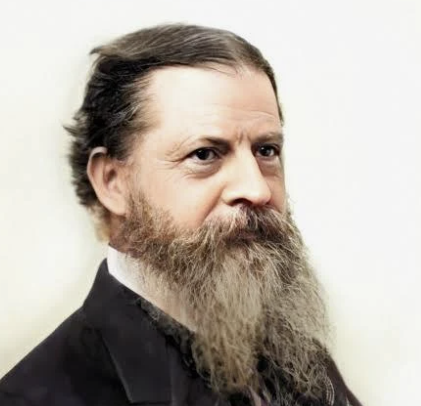
Mere imagination would indeed be mere trifling; only no imagination is mere.
▼
Source
source
Vol. VI, par. 286
2 weeks 3 days ago
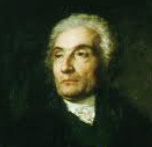
The Constitution of 1795, like its predecessors, was made for man. But there is no such thing as man in the world. In my lifetime I have seen Frenchmen, Italians, Russians, etc.; thanks to Montesquieu, I even know that one can be Persian. But as for man, I declare that I have never in my life met him; if he exists, he is unknown to me.
2 months 1 week ago
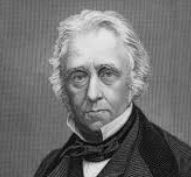
The object of oratory alone is not truth, but persuasion.
▼
Source
source
'On the Athenian Orators', Knight's Quarterly Magazine (August 1824), quoted in The Miscellaneous Writings of Lord Macaulay, Vol. I (1860), p. 135

4 months 2 weeks ago
The propagandist's purpose is to make one set of people forget that certain other sets of people are human.
▼
Source
source
"Words and Behaviour", The Olive Tree, 1936
1 month ago
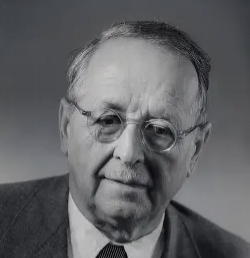
Physicists and philosophers stick stubbornly to the principles of a mechanistic interpretation of the world after physics has, in its factual structure, already outgrown the latter. They have the same excuse as the inhabitant of the mainland who for the first time travels on the open sea: he will desperately try to stay in sight of the vanishing coast line, as long as there is no other coast in sight, towards which he steers.
▼
Source
source
"Wissenschaft als symbolische Konstruktion des Menschen" Eranos-Jahrbuch (1948) GA IV, as quoted/translated by Erhard Scholz, "Philosophy as a Cultural Resource and Medium of Reflection for Hermann Weyl"
3 months 3 days ago
The erotic is never free of secrecy.
3 months 1 week ago
To understand this for sense it is not required that a man should be a geometrician or a logician, but that he should be mad. On the proposition that the volume generated by revolving the region under 1/x from 1 to infinity has finite volume.
▼
Source
source
Quoted in Mathematical Maxims and Minims by N. Rose
2 weeks 5 days ago
The metaphysical image that a definite epoch forges of the world has the same structure as what the world immediately understands to be appropriate as a form of its political organization.
3 months 1 week ago
The Spirit of the Laws became the nobleman's Bible all over Europe.
▼
Source
source
Catherine Behrens, The Ancien Régime (1967), p. 78
4 months 2 weeks ago
Monsters cannot be announced. One cannot say: 'here are our monsters', without immediately turning the monsters into pets.
▼
Source
source
Some Statements and Truisms about Neologisms, Newisms, Postisms, Parasitisms, and other small Seismisms, The States of Theory, ed. David Carroll, New York: Columbia University Press, 1989.
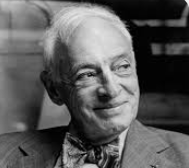
2 months 1 week ago
Our media make crisis chatter out of news and fill our minds with anxious phantoms of the real thing - a summit in Helsinki, a treaty in Egypt, a constitutional crisis in India, a vote in the U.N., the financial collapse of New York. We can't avoid being politicized (a word as murky as the condition which it describes) because it is necessary after all to know what is going on. Worse yet, what is going on will not let us alone. Neither the facts nor the deformations, the insidious platitudes of the media (tormenting because the underlying realities are so large and so terrible), can be screened out. The study of literature itself is heavily "politicized."
▼
Source
source
To Jerusalem and Back: A Personal Account (1976) [Viking/Penguin, 1998, ISBN 0-141-18075-7], p. 21
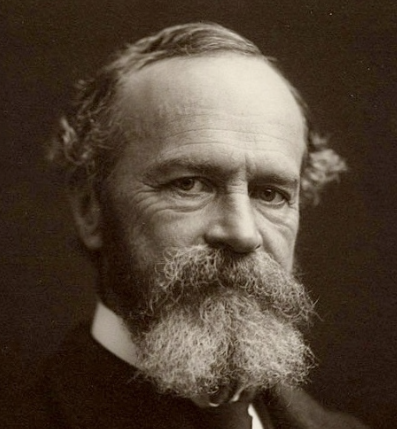
4 months 2 weeks ago
My thinking is first and last and always for the sake of my doing.
▼
Source
source
Sometimes paraphrased as "Thinking is for doing", perhaps originally by S.T. Fiske (1992) Ch. 22

1 month 1 week ago
All work, even cotton spinning, is noble; work is alone noble ... A life of ease is not for any man, nor for any god.
▼
Source
source
Bk. III, ch. 4.
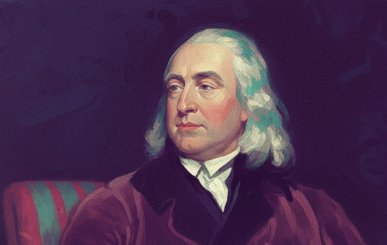
4 months 3 weeks ago
I am at heart more of a United-States-man than an Englishman.
▼
Source
source
Letter to Andrew Jackson (14 June 1830), quoted in Correspondence of Andrew Jackson, Volume 4, ed. David Maydole Matteson (1929), p. 146
2 months 4 weeks ago
When Nietzsche praises egoism it is always in an aggressive or polemical way, against the virtues, against the virtue of disinterestedness. But in fact egoism is a bad interpretation of the will, just as atomism is a bad interpretation of force. In order for there to be egoism it is necessary for there to be an ego.
▼
Source
source
p. 7

4 months 3 weeks ago
Custom, then, is the great guide of human life. It is that principle alone which renders our experience useful to us, and makes us expect, for the future, a similar train of events with those which have appeared in the past. Without the influence of custom, we should be entirely ignorant of every matter of fact beyond what is immediately present to the memory and senses. We should never know how to adjust means to ends, or to employ our natural powers in the production of any effect. There would be an end at once of all action, as well as of the chief part of speculation. Variant (perhaps a paraphrase of this passage): It is not reason which is the guide of life, but custom.

4 months 4 weeks ago
You must acquire the best knowledge first, and without delay; it is the height of madness to learn what you will later have to unlearn.
▼
Source
source
Letter to Christian Northoff (1497), as translated in Collected Works of Erasmus (1974), p. 114
4 months 3 weeks ago
There is no method of reasoning more common, and yet none more blameable, than, in philosophical disputes, to endeavour the refutation of any hypothesis, by a pretence of its dangerous consequences to religion and morality. When any opinion leads to absurdities, it is certainly false; but it is not certain that an opinion is false, because it is of dangerous consequence. Such topics, therefore, ought entirely to be forborne; as serving nothing to the discovery of truth, but only to make the person of an antagonist odious.
▼
Source
source
Of Liberty and Necessity, Part II
4 weeks ago
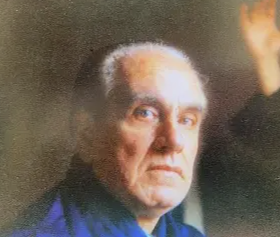
Not being able to ban sexuality altogether, Catholicism has tried to reduce it to a mere biological fact, allowing its use in marriage only for procreation. Unlike certain ancient traditions, Catholicism has recognized no higher value, not even a potential one, in the sexual experience taken in itself. There is lacking any basis for its transformation in the interests of a more intense life, to integrate and elevate the inner tension of two beings of different sexes, whereas it is in exactly these terms that one should conceive of a concrete "sacralization" of the union and the effect of a higher influence involved in the rite.
▼
Source
source
p. 190
3 months 6 days ago
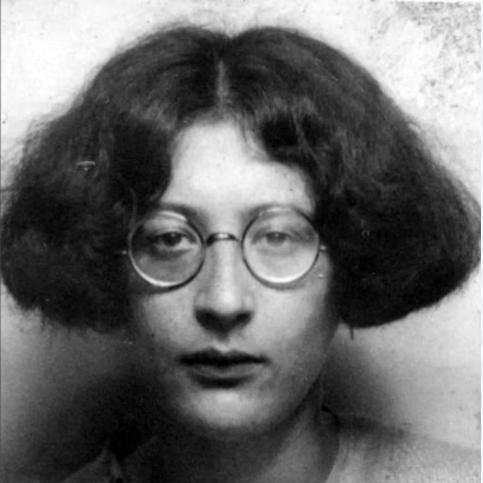
Those who keep the masses of men in subjection by exercising force and cruelty deprive them at once of two vital foods, liberty and obedience; for it is no longer within the power of such masses to accord their inner consent to the authority to which they are subjected. Those who encourage a state of things in which the hope of gain is the principal motive take away from men their obedience, for consent which is its essence is not something which can be sold.
▼
Source
source
p. 97
CivilSimian.com created by AxiomaticPanic, CivilSimian, Kalokagathia